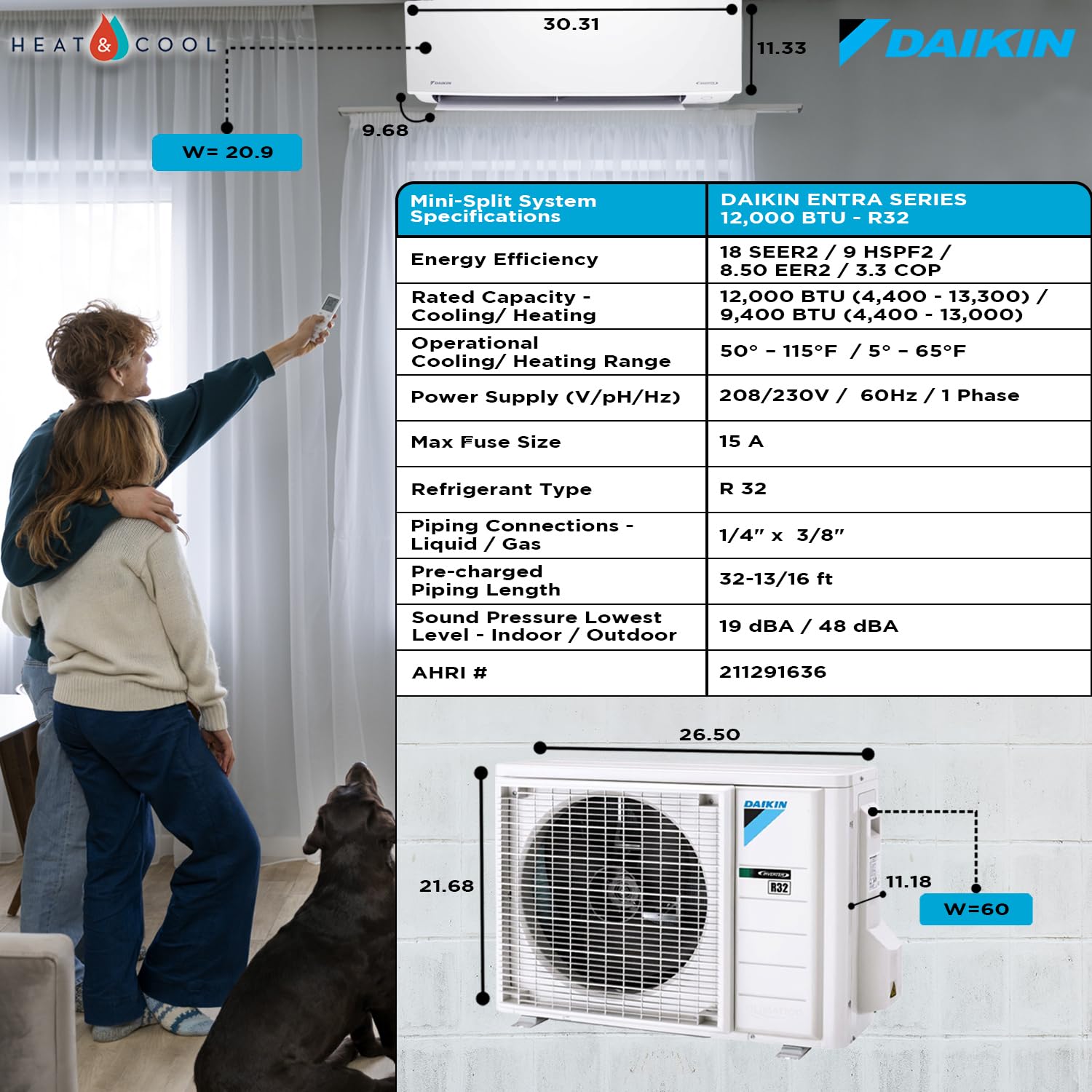
A 12,000-BTU (12k) Daikin mini split is a ductless heating and cooling system designed to condition spaces ranging from 400 to 650 square feet. It consists of an outdoor compressor paired with an indoor air handler, utilizing inverter technology to deliver precise temperature control, high energy efficiency, and whisper-quiet operation for residential and light commercial applications.
Introduction to Daikin 12k Ductless Systems
Daikin is a global leader in advanced air conditioning technology, known for developing reliable, energy-efficient climate control systems. Among their most popular residential offerings is the 12,000-BTU (commonly designated as "12k") mini split heat pump system. Designed for targeted zone conditioning, a 12k mini split fills the gap between small-room spot coolers and whole-home central HVAC systems.
Understanding the architecture, performance metrics, and operational capabilities of a 12k Daikin mini split helps homeowners and contractors determine whether this capacity matches their specific spatial and environmental demands. Whether used to condition a master suite, a converted garage, an addition, or a high-heat kitchen, these systems rely on inverter-driven compressors that adjust compressor speed dynamically rather than cycling on and off. This overview examines the engineering, operational characteristics, efficiency ratings, sizing rules, installation requirements, and maintenance protocols associated with Daikin’s 12k ductless lineup.
Understanding BTU Capacity and Room Sizing
When evaluating a 12k mini split, the primary metric is capacity: 12,000 British Thermal Units (BTUs) per hour. One BTU represents the amount of thermal energy required to raise the temperature of one pound of water by one degree Fahrenheit. In the context of air conditioning and heating, it measures the rate at which heat is removed from (cooling) or added to (heating) a space.
Spatial Guidelines for a 12k System
Under standard conditions, a 12,000-BTU heating and cooling system is rated to condition approximately 400 to 650 square feet of living space. However, sizing a mini split is not a simple linear calculation. Several environmental factors dictate whether a 12k unit will perform optimally in a given room:
- Climate Zone: Homes in hot, humid southern climates require more cooling capacity per square foot than homes in temperate or northern regions.
- Insulation Levels: Modern construction with high-R-value insulation and double-paned windows retains conditioned air effectively, allowing a 12k unit to cover a larger square footage. Older, drafty homes may require more capacity for the same area.
- Sun Exposure: Rooms with large west- or south-facing windows absorb substantial solar heat gain during peak afternoon hours, increasing the cooling load.
- Ceiling Height: Standard sizing charts assume an 8-foot ceiling. Vaulted or cathedral ceilings increase the total volume of air in the room, necessitating adjustments to sizing calculations.
- Internal Heat Loads: Kitchens, rooms with heavy electronics, and spaces frequently occupied by multiple people generate internal heat that must be offset by the HVAC system.
Core Technology: Inverter Compressors and Heat Pump Operation
Daikin’s reputation in the ductless market rests heavily on its engineering, particularly its variable-speed inverter compressors and advanced heat pump functionality.
Inverter Technology vs. Traditional Systems
Traditional single-stage air conditioners operate on a binary cycle: they run at 100% capacity until the target temperature is reached, shut completely off, and then turn back on when the room temperature drifts. This constant starting and stopping draws significant electrical surge current and causes noticeable temperature fluctuations.
By contrast, a Daikin inverter compressor uses a variable-speed direct current (DC) motor. The compressor modulates its rotational speed continuously to match the exact thermal load of the room. Once the desired temperature is achieved, the system scales down to a low-frequency maintenance mode, using minimal electricity. This continuous operation eliminates temperature swings, reduces mechanical wear on components, and maintains a stable indoor relative humidity.
Heat Pump Efficiency in Colder Climates
Daikin 12k mini splits are engineered as heat pumps, meaning they can both cool and heat a space. In heating mode, the refrigeration cycle reverses, absorbing thermal energy from ambient outdoor air—even when outdoor temperatures drop below freezing—and transferring it indoors.
Many modern Daikin systems utilize Hyper-Heating or equivalent low-ambient technologies that maintain high heating capacity at outdoor temperatures down to 5°F or lower, making them viable primary or supplemental heat sources in diverse climate regions.
Efficiency Metrics: SEER2, HSPF2, and ENERGY STAR
Evaluating the efficiency of an HVAC system requires examining standardized ratings established by organizations like the Air-Conditioning, Heating, and Refrigeration Institute (AHRI) and the U.S. Department of Energy (DOE). Updated testing protocols (SEER2 and HSPF2) provide more realistic measurements of real-world energy consumption.
Key Efficiency Ratings Explained
- SEER2 (Seasonal Energy Efficiency Ratio 2): Measures cooling efficiency over a standard cooling season. Higher SEER2 numbers indicate lower electricity consumption. Daikin 12k systems typically feature ratings ranging from 17 SEER2 up to over 20+ SEER2 depending on the specific product tier (e.g., Daikin 19 Series versus Daikin Cora or fit lines).
- HSPF2 (Heating Seasonal Performance Factor 2): Measures heating efficiency over a standard heating season. Higher HSPF2 ratings reflect superior thermal conversion efficiency during colder months.
- EER2 (Energy Efficiency Ratio): Measures cooling efficiency at specific outdoor test temperatures (typically 95°F), offering insight into performance during peak summer heat waves.
Operational Cost Implications
While higher SEER2 and HSPF2 systems carry a higher upfront equipment cost, they yield lower monthly utility bills. For spaces used continuously—such as home offices, master bedrooms, or rental units—investing in a higher-tier Daikin 12k model typically results in a shorter payback period through reduced electricity usage.
Major Daikin 12k Product Tiers and Series
Daikin structures its product catalog into distinct tiers to accommodate varying budget constraints, architectural requirements, and performance expectations.
| Series / Model Tier | Typical SEER2 Range | Key Features & Applications | Inverter Type |
|---|---|---|---|
| Daikin 19 Series | 17.0 – 20.0 | Economical, reliable standard performance; good for general residential zoning. | Variable-Speed Swing/Scroll |
| Daikin Fit / Premium | 18.0 – 22.0+ | Enhanced humidity control, quieter operation, high efficiency, compact footprint. | Variable-Speed Inverter |
| Daikin Aurora Series | 19.0 – 21.0+ | Extreme cold-climate heating performance; maintains capacity at sub-zero temperatures. | Variable-Speed Inverter |
Indoor Air Handler Options
Beyond the outdoor condenser, a 12k system can be paired with different indoor unit styles depending on interior design preferences:
- Wall-Mounted Units: The most common configuration; easy to install, highly accessible for maintenance, and equipped with adjustable louvers for horizontal and vertical airflow distribution.
- Floor-Mounted Consoles: Resembling traditional radiators, these units mount low on the wall, making them ideal for rooms with sloped ceilings, loft spaces, or attic conversions.
- Ceiling-Cassette Units: Designed to fit flush into a standard drop ceiling, offering multi-directional airflow and discreet visual integration.
Installation Requirements and Best Practices
Proper installation is critical for the performance, longevity, and warranty coverage of any Daikin mini split system. Unlike window units, ductless mini splits require specialized tools, technical knowledge, and adherence to electrical and mechanical codes.
Key Installation Steps and Technical Considerations
- Site Selection: The indoor unit must be mounted on a structurally sound wall with adequate clearance from corners, furniture, and heat sources to ensure proper airflow circulation. The outdoor condenser requires unobstructed airflow around the coils and must be elevated above expected snowfall or standing water lines on a solid pad or wall bracket.
- Line Set Routing: A 3-inch hole is typically cored through the exterior wall to pass the refrigerant lines (liquid and suction lines), condensate drain hose, and electrical communication cable. These lines are wrapped in protective tape or encased in line-set covers for aesthetic finish and weather protection.
- Electrical Requirements: Most 12k mini split systems operate on 208V-230V or 115V power supply, depending on the exact model. An independent dedicated electrical circuit with an external disconnect switch near the outdoor unit must be installed in compliance with the National Electrical Code (NEC) or local regulations.
- Pressure Testing and Evacuation: Once refrigerant lines are flared and torqued to manufacturer specifications, the technician must pressure-test the system with nitrogen to check for leaks. Following a successful pressure test, a deep vacuum pump must be used to evacuate all moisture and non-condensable gases from the copper lines before releasing the factory-charged refrigerant.
Maintenance Protocols for Optimal Performance
Routine maintenance preserves energy efficiency, prevents mechanical failures, and extends the operational lifespan of a Daikin 12k mini split. Because indoor air handlers pull room air through fine mesh filters, airborne dust and debris accumulate quickly.
Recommended Maintenance Schedule
- Bi-Weekly to Monthly (User Maintenance): Open the front panel of the indoor air handler and remove the washable plastic air filters. Rinse them gently with warm water and mild detergent, let them dry completely, and reinstall them. Operating a system with clogged filters restricts airflow, lowers efficiency, and can cause coil freezing.
- Bi-Annually (Visual and Functional Check): Inspect the outdoor condenser coil for leaves, grass clippings, and dirt accumulation. Ensure the condensate drain line is clear and draining freely to prevent indoor water overflows.
- Annually (Professional Service): Schedule a certified HVAC technician to perform a comprehensive tune-up. This includes checking refrigerant operating pressures, cleaning the indoor and outdoor coils with specialized coil cleaner, testing electrical terminal connections, and verifying thermostat calibration.
Common Troubleshooting Scenarios
Even reliable systems occasionally encounter operational hiccups. Understanding basic troubleshooting steps helps users identify whether an issue requires professional intervention.
Reduced Heating or Cooling Output
- Potential Cause: Dirty air filters restricting airflow.
- Action: Inspect, clean, and dry the indoor air filters.
Water Leaking from Indoor Unit
- Potential Cause: Clogged condensate drain line or an unlevel indoor mounting plate.
- Action: Check if the drain hose is kinked or blocked by algae/debris. Ensure the indoor unit is mounted perfectly level.
Error Codes Displayed on Remote Control
- Potential Cause: Communication faults between indoor and outdoor units, sensor failures, or refrigerant pressure faults.
- Action: Check the specific error code in the Daikin owner’s manual. Most error codes indicate precise sensor or electronic board anomalies that require trained technician diagnosis.
Comparison: 12k Mini Split vs. Other Capacities
Selecting the correct capacity is essential. Choosing a unit that is too small leaves the space under-conditioned, while an oversized unit short-cycles—cooling the air too quickly without removing sufficient humidity, resulting in a clammy indoor environment.
| Capacity (BTUs) | Ideal Room Size Range | Primary Common Applications |
|---|---|---|
| 9,000 (9k) | 150 – 400 sq. ft. | Small bedrooms, home offices, nurseries. |
| 12,000 (12k) | 400 – 650 sq. ft. | Large master bedrooms, open-concept living rooms, studio apartments, additions. |
| 18,000 (18k) | 650 – 1,000 sq. ft. | Large multi-room zones, small retail shops, spacious basements. |
| 24,000 (24k+) | 1,000+ sq. ft. | Open-plan main floors, large commercial workshops, multi-zone split branches. |
Conclusion and Next Actions
A 12k Daikin mini split offers an efficient, flexible, and quiet climate control solution for spaces between 400 and 650 square feet. By leveraging variable-speed inverter technology and robust heat pump engineering, these systems maintain precise temperatures while minimizing energy consumption. To ensure optimal results, homeowners should perform a professional load calculation (Manual J) to confirm that 12,000 BTUs matches their specific spatial and environmental requirements, and always hire a licensed HVAC professional for proper installation and commissioning.