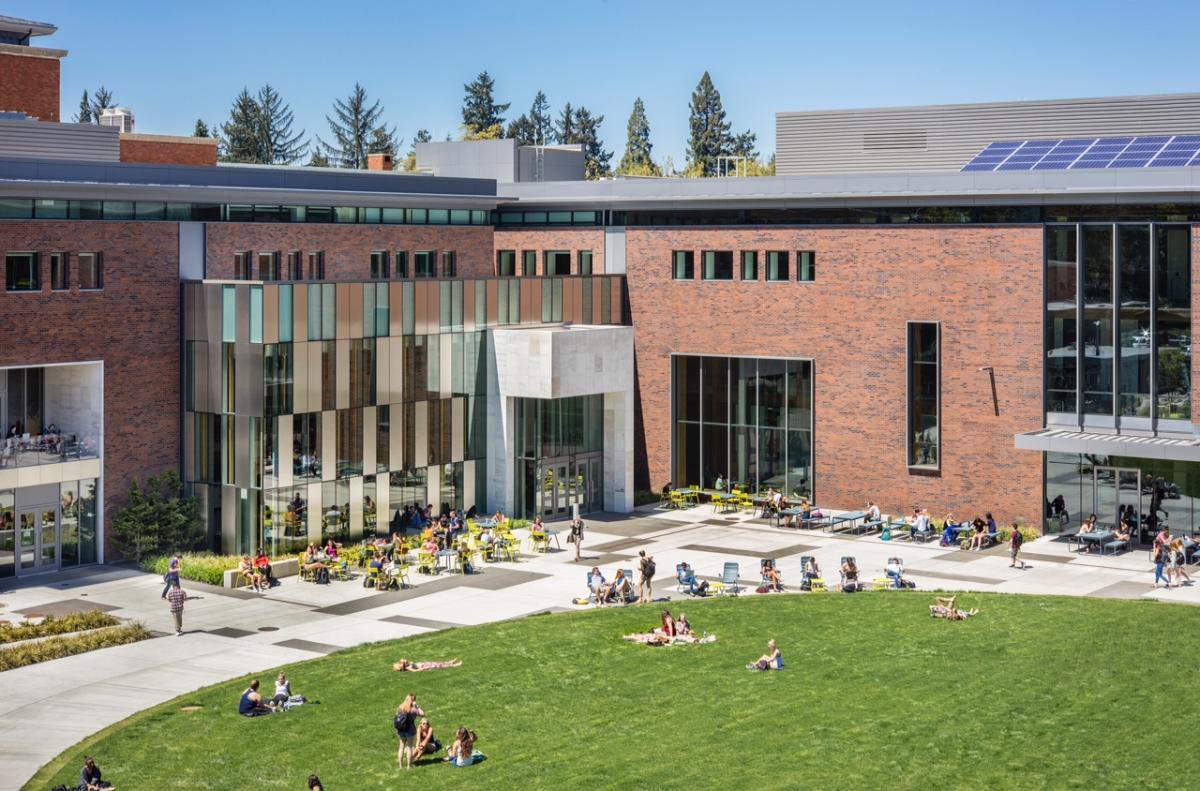
Western Oregon University (WOU) is a proud member of NCAA Division II and primarily competes within the Great Northwest Athletic Conference (GNAC). This division status allows the university to provide a highly competitive athletic environment while maintaining a core focus on academic achievement and the "Life in Balance" philosophy for its student-athletes.
For students, athletes, and fans, understanding the nuances of a university's athletic classification is essential for evaluating the collegiate experience. Western Oregon University, located in Monmouth, has a storied history in collegiate sports that reflects the evolving landscape of West Coast athletics. As of 2026, WOU continues to hold a unique position within the Oregon higher education system, bridging the gap between small-college intimacy and high-level athletic competition.
The following twelve facts provide a comprehensive look at Western Oregon University’s division status, its conference affiliations, and the impact these factors have on the university community.
1. NCAA Division II Membership and Philosophy
Western Oregon University is a dedicated member of NCAA Division II. Unlike Division I, which often focuses on high-revenue sports and massive media contracts, or Division III, which prohibits athletic scholarships, Division II offers a "partial-scholarship" model. This approach is designed to provide student-athletes with the opportunity to compete at a high level while ensuring they have the time and resources to succeed academically and engage in campus life.
The Division II philosophy is centered on the concept of "Life in Balance." At WOU, this means that athletic schedules are structured to minimize time away from the classroom. The university emphasizes that student-athletes should be students first, participants in the community second, and athletes third. This status is a significant draw for students who want a rigorous competitive experience without the professionalized pressure often associated with Division I programs.
2. Core Membership in the Great Northwest Athletic Conference (GNAC)
The primary conference home for Western Oregon University is the Great Northwest Athletic Conference (GNAC). WOU was a founding member of the GNAC when the conference was established in 2001. The conference currently includes a diverse array of institutions across the Pacific Northwest, including schools in Washington, Alaska, Montana, and even British Columbia, Canada.
Being part of the GNAC defines the majority of WOU’s athletic calendar. The conference provides a stable structure for sports such as basketball, soccer, cross country, volleyball, and track and field. The geographic footprint of the GNAC requires significant travel, but it also fosters regional rivalries that have become a staple of the WOU fan experience. The conference's reputation for academic excellence aligns perfectly with WOU’s institutional goals.
3. Football Affiliate Membership in the Lone Star Conference
While the GNAC is the primary home for most WOU sports, the football program operates under a different banner. Because the number of DII football-sponsoring schools in the West has fluctuated, WOU joined the Lone Star Conference (LSC) as an affiliate member for football.
This move, which became effective in 2022 and remains the status in 2026, allows WOU to maintain its football program at the Division II level by competing against powerhouse programs primarily located in Texas and New Mexico. This affiliation is a critical part of WOU’s division status strategy, as it ensures the football team has a full schedule of games and a path to the NCAA postseason, even when local regional options are limited.
4. The Historic Transition from NAIA to NCAA
Western Oregon University did not always belong to the NCAA. For much of its history, WOU (and its predecessor, Western Oregon State College) was a dominant force in the National Association of Intercollegiate Athletics (NAIA). The university made the strategic decision to transition to NCAA Division II in the late 1990s, officially completing the process in 2001.
This transition was motivated by a desire for greater national visibility and the perceived prestige of the NCAA brand. The move required the university to upgrade its compliance departments, adjust scholarship allocations, and meet stricter institutional requirements. Looking back from 2026, the move is viewed as a pivotal moment that elevated WOU’s profile and helped attract a higher caliber of student-athletes from across the Western United States.
5. Oregon’s Only Public NCAA Division II Institution
One of the most distinctive facts about WOU’s division status is its market position within the state of Oregon. WOU is the only public university in Oregon that competes at the NCAA Division II level. Oregon’s other public universities are either in Division I (University of Oregon, Oregon State University, Portland State University) or the NAIA (Southern Oregon University, Eastern Oregon University).
This unique status gives WOU a specific "niche" in the state’s educational landscape. It attracts students who find Division I too large and impersonal but want a more robust scholarship and competitive framework than what is typically offered in the NAIA or Division III. This positioning is a key part of WOU’s recruitment messaging for both athletes and general students.
6. The "Equivalency" Scholarship Model
In NCAA Division II, scholarships are handled differently than in Division I. Most DII sports are "equivalency sports," meaning the NCAA sets a limit on the total value of scholarships a team can award, but the school can divide that value among any number of student-athletes.
| Sport | NCAA DII Max Scholarships (Equivalency) | Typical WOU Approach |
|---|---|---|
| Football | 36.0 | Distributed across 100+ players |
| Men's Basketball | 10.0 | Focused on starters and key reserves |
| Women's Soccer | 9.9 | Often split into partial awards |
| Baseball | 9.0 | Highly fragmented across the roster |
| Track & Field | 12.6 | Shared between multiple event groups |
For WOU, this means that very few athletes receive a "full ride." Instead, the majority of Wolves receive a combination of athletic aid, academic scholarships, and need-based grants. This model encourages student-athletes to maintain high academic standing to supplement their athletic funding.
7. Stringent Academic Eligibility Standards
WOU’s status in Division II carries specific academic requirements mandated by the NCAA. To remain eligible for competition, student-athletes must meet "Progress-Toward-Degree" (PTD) requirements. This is more than just maintaining a minimum GPA; it involves completing a specific percentage of their degree requirements every year.
In 2026, the NCAA continues to enforce the 9/18/27 rule: student-athletes must earn at least 9 credits per term, 18 credits during the regular academic year, and 24 credits annually (though 27 is the recommended buffer). This ensures that WOU athletes are on track to graduate within four to five years, reinforcing the university's commitment to the "student" half of the student-athlete equation.
8. Participation in the NCAA Eligibility Center
Because WOU is a Division II school, every prospective student-athlete must be cleared by the NCAA Eligibility Center. This process involves a thorough review of the student’s high school academic record, including core-course requirements and standardized test scores (though the emphasis on testing has evolved).
For WOU, this means the athletic department works closely with the admissions office to ensure that every recruit meets both the university’s entrance standards and the NCAA’s amateurism and academic rules. This dual-verification process maintains the integrity of the university’s division status and ensures that all competitors are true amateurs.
9. Facility Standards and Infrastructure
Maintaining Division II status requires WOU to provide facilities that meet NCAA specifications for competition and safety. This includes venues like McArthur Field (football and track), the New P.E. Building (basketball and volleyball), and the WOU Baseball Field.
WOU has made significant investments in these facilities to keep pace with other GNAC members. In the 2020s, the university saw upgrades to playing surfaces and lighting, which are necessary not just for the athletes, but to host NCAA-sanctioned postseason events. The quality of facilities is a direct reflection of the university's commitment to its DII standing and its ability to host regional championships.
10. The Path to National Championships
As a Division II school, Western Oregon has a clear, merit-based path to national championships. Unlike some levels of college sports where "bowl games" or committees decide participants, Division II relies heavily on regional rankings and conference tournament results.
WOU competes in the West Region, which is generally considered one of the most difficult regions in the country. It includes the GNAC, the California Collegiate Athletic Association (CCAA), and the Pacific West Conference (PacWest). Success for WOU often means winning the GNAC tournament to earn an automatic bid to the NCAA West Regional, which is the stepping stone to the "Elite Eight" or the national title game.
11. Economic and Community Impact of DII Status
WOU’s division status has a tangible impact on the city of Monmouth and the surrounding Polk County area. Because WOU hosts regional competitors from across the West Coast, the athletic department serves as a significant driver of local tourism.
When WOU hosts a GNAC championship or a high-profile football game against a Lone Star Conference opponent, it brings hundreds of visitors to local hotels and restaurants. Furthermore, the presence of a Division II program allows the university to offer summer camps and youth clinics that are essential for community engagement. The "Wolves" brand is a point of pride for the local community, and the DII status ensures the level of play is high enough to attract a consistent fan base.
12. Strategic Planning and the Future of WOU Athletics
In 2026, Western Oregon University remains committed to its Division II status as part of its long-term strategic plan. The university periodically evaluates its athletic department to ensure that the costs of maintaining NCAA compliance and travel are balanced by the benefits of student recruitment and retention.
The future of WOU’s status depends on the stability of its conferences. While the GNAC has remained a stalwart of Western DII sports, WOU’s leadership continues to play an active role in conference governance to ensure the university’s interests are protected. The goal is to remain a premier destination for student-athletes in the Pacific Northwest who seek the perfect blend of high-level sport and meaningful education.
Comparison of Athletic Divisions at WOU
| Feature | NCAA Division I | NCAA Division II (WOU) | NAIA (Former Status) |
|---|---|---|---|
| Primary Focus | National Exposure / Revenue | Life in Balance / Academics | Character / Small College |
| Scholarships | Full-ride (Headcount) | Partial (Equivalency) | Variable (Scholarship-based) |
| National Governance | NCAA | NCAA | NAIA |
| Regional Rivals | UO, OSU, PSU | CWU, WWU, MSUB | SOU, EOU, OIT |
| Travel Scope | National / Global | Regional (West Coast) | State / Local |
Frequently Asked Questions
Is Western Oregon University a Division 1 school?
No, Western Oregon University is an NCAA Division II school. While Division I schools like the University of Oregon or Oregon State focus on high-revenue, nationally televised athletics, WOU emphasizes a balance between competitive sports and academic success, offering a more personalized experience for student-athletes.
What conference does Western Oregon play in?
WOU primarily competes in the Great Northwest Athletic Conference (GNAC) for most sports, including basketball, soccer, and volleyball. However, for football, the university is an affiliate member of the Lone Star Conference (LSC), which allows them to compete against schools in the Southern and Western U.S.
Does WOU offer athletic scholarships?
Yes, as a Division II institution, Western Oregon University offers athletic scholarships. Unlike Division III schools, which do not offer athletic aid, WOU coaches can award scholarships to talented athletes. These are often partial scholarships that can be combined with academic aid.
Why did WOU move from the NAIA to the NCAA?
WOU transitioned to the NCAA in 2001 to increase the university's national visibility and align itself with other institutions of similar size and academic mission. The move provided a more structured compliance framework and allowed WOU to compete for NCAA national championships.
Can WOU athletes compete in the Olympics?
Yes, student-athletes at the Division II level are eligible for Olympic competition. WOU has a particularly strong tradition in track and field, and its status as an NCAA member ensures that its athletes are competing under world-class standards that can prepare them for international trials.
Final Recommendations for Prospective Student-Athletes
If you are considering Western Oregon University for its athletic programs, your first step should be to register with the NCAA Eligibility Center. This is a mandatory requirement for any student intending to play at the Division II level. Additionally, because WOU utilizes an "equivalency" scholarship model, it is highly recommended that you maximize your high school GPA and test scores. High academic achievement often unlocks additional institutional aid that can be stacked on top of an athletic scholarship, significantly reducing the out-of-pocket cost of your education.
Finally, visit the campus in Monmouth. Understanding the "Life in Balance" philosophy is best done by speaking with current athletes and coaches. The DII experience at WOU is about more than just the scoreboard; it is about building a foundation for a career while competing at a level that few athletes ever reach.