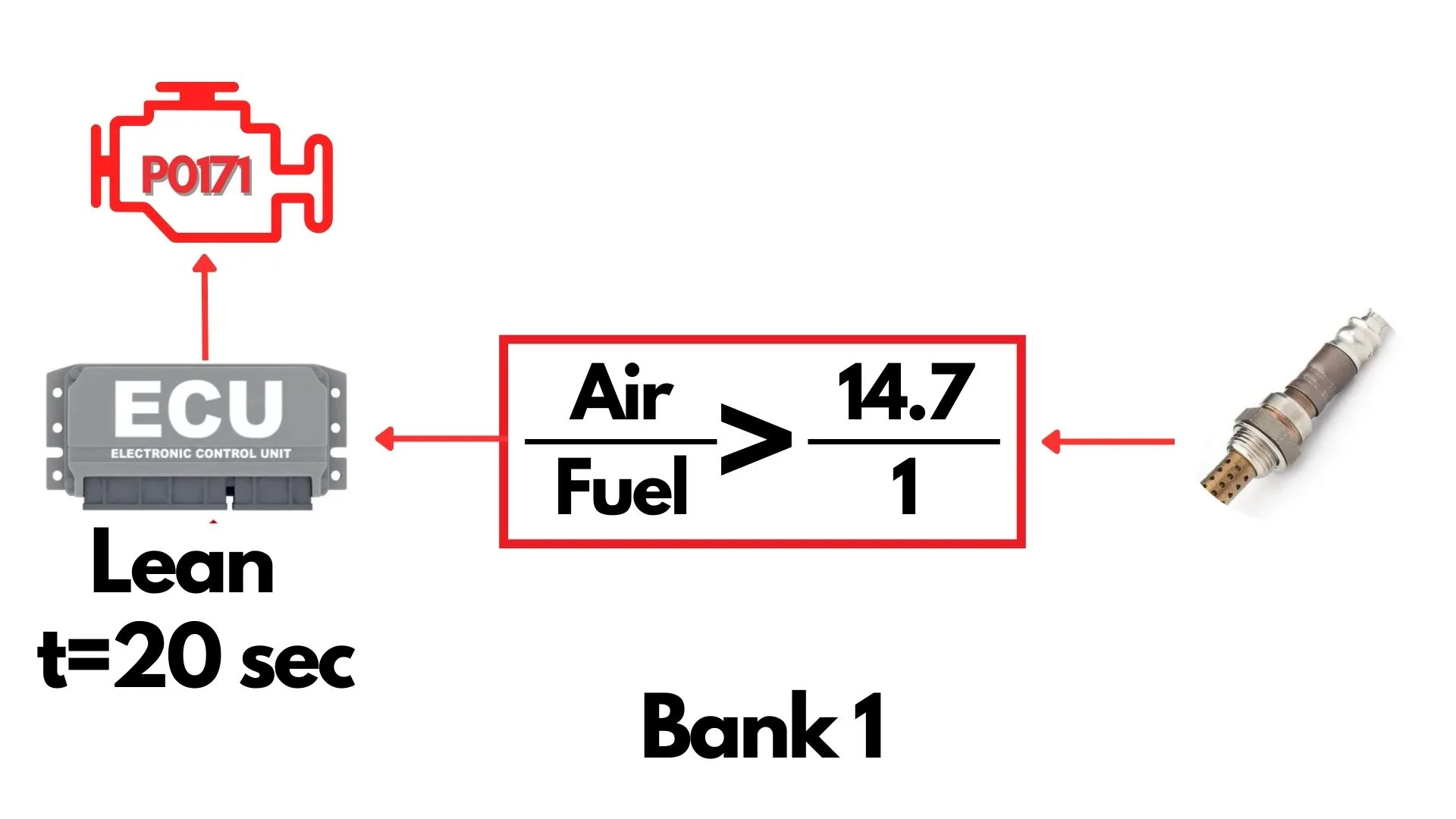
A P0171 diagnostic trouble code indicates that the engine control module has detected a lean air-fuel mixture—meaning too much air and not enough fuel—specifically in Bank 1 of your Toyota RAV4 engine. Resolving this issue requires systematically checking components responsible for metering air intake, measuring mass airflow, and delivering pressurized fuel.
Understanding the P0171 Code on a Toyota RAV4
The powertrain control module (PCM) constantly monitors the air-fuel ratio using data from the oxygen sensors and the air-fuel ratio sensor. An ideal stoichiometric ratio is roughly 14.7 parts air to 1 part fuel by weight. When the PCM detects that the short-term and long-term fuel trims have shifted excessively positive—usually exceeding +20% for a sustained period—it triggers a Diagnostic Trouble Code (DTC) P0171, defined as "System Too Lean (Bank 1)."
Because inline-four and V6 Toyota RAV4 engines only feature one cylinder bank (Bank 1), this code effectively points to a global metering issue across the entire engine block rather than a localized cylinder problem. Ignoring this code can lead to engine hesitation, poor fuel economy, rough idling, engine stalling, and potentially long-term damage to the catalytic converter due to misfires or elevated combustion temperatures. Troubleshooting requires methodical testing rather than replacing parts at random.
1. Inspect and Replace a Dirty Mass Air Flow (MAF) Sensor
The Mass Air Flow sensor measures the volume and density of the air entering the engine. Over time, dust, microscopic debris, and oil from aftermarket oiled air filters can coat the delicate wire or film inside the MAF sensor, causing it to underreport incoming airflow. When the computer thinks less air is entering than what is actually passing through, it injects too little fuel, resulting in a lean condition.
To fix this, locate the MAF sensor situated inside the air intake duct right after the air filter box. Carefully disconnect the electrical wiring harness, unscrew the sensor, and remove it from the housing. Spray the sensing elements thoroughly with a dedicated MAF sensor cleaner, avoiding brake cleaner or harsh solvents that can damage the plastic housing or thermistor. Let the sensor dry completely for at least 15 minutes before reinstalling it. If cleaning fails to alter the fuel trim readings, the sensor internal circuitry may be failing and requires total replacement.
2. Check for Vacuum Leaks in Intake Hoses and Gaskets
Unmetered air—air that enters the engine past the MAF sensor without being measured—is one of the primary culprits behind a P0171 code. On Toyota RAV4 models, the large rubber or plastic accordion intake boot connecting the air filter box to the throttle body is prone to cracking, dry rotting, or developing small tears in the accordion folds.
Perform a thorough visual and tactile inspection of the entire intake tract. Squeeze the flexible rubber boots to reveal hidden splits. Additionally, inspect the intake manifold gaskets where the manifold bolts to the aluminum cylinder head. As engines age through thousands of heat cycles, these rubber or composite gaskets flatten and harden, allowing ambient air to seep directly into the combustion chambers. A classic test for intake gasket leaks involves spraying a small amount of brake cleaner or water around the gasket mating surfaces while the engine idles; if the idle smooths out or changes speed momentarily, you have located a leak.
3. Test and Replace a Weak Fuel Pump or Clogged Fuel Filter
While air management gets the most attention during lean code diagnostics, fuel delivery limitations can equally trigger a P0171. If your fuel pump is losing pressure or the inline fuel filter (or the fuel pump sock strainer inside the gas tank) is restricted, the fuel injectors cannot deliver the correct volume of gasoline under load or at idle.
Connect a fuel pressure gauge to the Schrader valve on the fuel rail (if equipped, or inline depending on your specific RAV4 model year) and compare the readings to factory specifications. Low fuel pressure points directly toward a dying fuel pump, a failing fuel pressure regulator, or a restricted filter. Replacing a clogged filter or a weak fuel pump restores proper hydraulic pressure, ensuring the air-fuel mixture returns to factory parameters.
4. Inspect PCV Valve and Ventilation Hoses
The Positive Crankcase Ventilation (PCV) system routes blow-by gases from the crankcase back into the intake manifold to be burned during combustion. This system relies on a mechanical valve and several rubber hoses. If the PCV valve sticks wide open, or if the rubber hoses connecting it to the intake manifold become brittle, split, or disconnect entirely, it acts as a massive vacuum leak.
Locate the PCV valve on your RAV4 valve cover and trace its associated hoses. Remove the valve and shake it; a healthy PCV valve should rattle cleanly. If it is gummed up with oil sludge or stuck in position, replace it immediately. Inspect every inch of the rubber plumbing attached to it, as these lines routinely soften and collapse under engine vacuum, creating intermittent lean codes.
5. Clean or Replace Faulty Fuel Injectors
Over extended mileage, fuel injectors can become partially clogged with varnish and carbon deposits. When an injector nozzle is restricted, it atomizes fuel poorly or flows significantly less volume than its matched counterparts, starving specific cylinders and skewing the overall Bank 1 air-fuel ratio.
You can attempt to clean minor injector restrictions by running a professional-grade fuel injector cleaner through a full tank of gas. However, for stubborn P0171 codes, a professional bench cleaning, ultrasonic bath, or direct replacement of the fuel injectors may be necessary. If a single injector has a weak solenoid coil or an internal restriction, replacing the faulty unit resolves the fuel delivery imbalance.
6. Check the Exhaust System for Leaks Before the Oxygen Sensor
An exhaust leak upstream of the primary air-fuel ratio or oxygen sensor—such as a cracked exhaust manifold, a blown gasket at the cylinder head, or a loose pipe flange—draws ambient air into the exhaust stream during the engine's scavenging cycle.
The oxygen sensor detects this free ambient oxygen and mistakenly reports to the computer that the engine is running lean. In response, the PCM adds extra fuel, throwing off fuel trims and triggering the P0171 code even though the combustion chambers themselves might be running fine. Inspect the exhaust manifold for black soot marks, check the studs for breakage, and listen closely for a ticking sound that intensifies when the engine is cold.
7. Inspect and Test the Air-Fuel Ratio / Oxygen Sensor
Sensors degrade over time. The primary air-fuel ratio sensor (upstream oxygen sensor) on your Toyota RAV4 dictates how the computer adjusts short-term fuel trims. If the sensor becomes sluggish, biased, or contaminated with silicone or oil ash, it will send inaccurate voltage signals to the computer.
Using an advanced OBD2 scan scanner capable of live data streaming, monitor the upstream sensor voltage or equivalence ratio while the engine is running at operating temperature. A healthy sensor should switch rapidly back and forth. If the sensor output remains flat or responds sluggishly to throttle inputs, it is likely reporting false lean conditions and needs to be replaced with an OEM or high-grade equivalent sensor.
8. Clean the Throttle Body and Verify Proper Operation
Carbon buildup around the throttle plate and bore can disrupt idle air management. While a dirty throttle body more commonly causes rough idling or stalling, it can also disrupt the calculated airflow models used by modern engine computers, indirectly contributing to fuel trim discrepancies.
Remove the air intake duct to expose the butterfly valve inside the throttle body. Open the valve manually using the throttle linkage (or by having an assistant press the accelerator pedal with the key on, engine off) and spray throttle body cleaner onto a clean shop towel. Wipe away the dark ring of carbon carbon buildup around the edge of the plate and the bore. Avoid forcing electronic throttle bodies manually without proper procedure, as you can damage the internal gears.
9. Check for Restricted Air Filters and Airbox Leaks
Sometimes the solution is the simplest one. A heavily clogged, debris-filled engine air filter restricts total airflow, but an improperly installed air filter—or a loose airbox lid—allows unmetered air to bypass the filtration media entirely.
Open the air filter housing on your RAV4 and inspect the filter element. Ensure the housing is sealed properly around its perimeter and that all retaining clips or screws are fully secured. If the airbox is warped or a rubber seal is missing, air can sneak past the MAF sensor unnoticed, prompting the computer to log a P0171 lean code.
10. Perform an Electronic ECU Reset and Relearn Procedure
Once you have physically inspected, cleaned, or replaced the faulty components causing the lean condition, you must clear the diagnostic trouble code and reset the long-term fuel trim memory stored in the computer.
Use an OBD2 scan tool to clear the P0171 code. Afterward, perform an idle relearn procedure by starting the vehicle, turning off all accessories (such as the air conditioning and radio), and letting the engine idle undisturbed until it reaches normal operating temperature. This allows the computer to recalculate baseline fuel trims based on the newly restored air-fuel balance. Drive the vehicle through various speed ranges to ensure the code does not return.
| Component / Potential Cause | Common Symptoms | Estimated DIY Cost | Difficulty Level |
|---|---|---|---|
| Mass Air Flow (MAF) Sensor | Hesitation, poor fuel economy, rough idle | $10 – $150 | Easy |
| Intake Boot / Vacuum Hoses | Hissing sound, erratic idle, surging | $20 – $80 | Easy to Moderate |
| Intake Manifold Gasket | Lean code clears when engine is fully warmed up | $15 – $50 | Advanced |
| Fuel Pump / Filter | Engine surging under load, hard starting | $50 – $300 | Advanced |
| PCV Valve & Hoses | Oil consumption, whistling noise, rough idle | $10 – $30 | Easy |
Frequently Asked Questions
Can I drive my Toyota RAV4 with a P0171 code?
Yes, you can typically drive short distances, but it is not recommended for long periods. Driving with a severe lean condition can cause engine misfires, elevated combustion temperatures, and potential damage to your catalytic converter and engine valves over time.
Is a P0171 code expensive to fix?
It depends entirely on the root cause. If the issue is simply a dirty MAF sensor or a loose vacuum line, the fix can cost less than $15 in cleaning supplies or require zero parts cost. However, if you need a new fuel pump or professional intake gasket replacement, costs can rise significantly.
What is the difference between P0171 and P0174?
A P0171 code indicates a lean mixture on Bank 1, whereas a P0174 code indicates a lean mixture on Bank 2. Because most four-cylinder Toyota RAV4 models only have one cylinder bank, you will usually only see P0171. V6 RAV4 models may occasionally log both codes simultaneously if there is a global vacuum leak.
How do I know if my intake manifold gasket is leaking?
An intake manifold gasket leak often causes the engine to run rougher when cold. As the metal engine components expand with heat, the gap can temporarily seal, causing fuel trim numbers to improve slightly once the engine reaches normal operating temperature.
Should I replace the oxygen sensor first when I get a P0171 code?
No. Replacing the oxygen sensor should be a last resort unless live data or diagnostic testing explicitly proves the sensor has failed. In most cases, a P0171 code is caused by actual unmetered air or fuel delivery issues, meaning a new sensor will simply continue reporting the same lean condition.
Final Recommendation
Fixing a P0171 code on a Toyota RAV4 requires a systematic approach, starting with the simplest and most common solutions—cleaning the MAF sensor and inspecting vacuum lines—before moving on to fuel delivery components and mechanical gaskets. Begin with a visual inspection of your air intake tract, utilize an OBD2 scanner to monitor live fuel trims, and verify repairs by clearing the codes and completing a proper driving cycle.