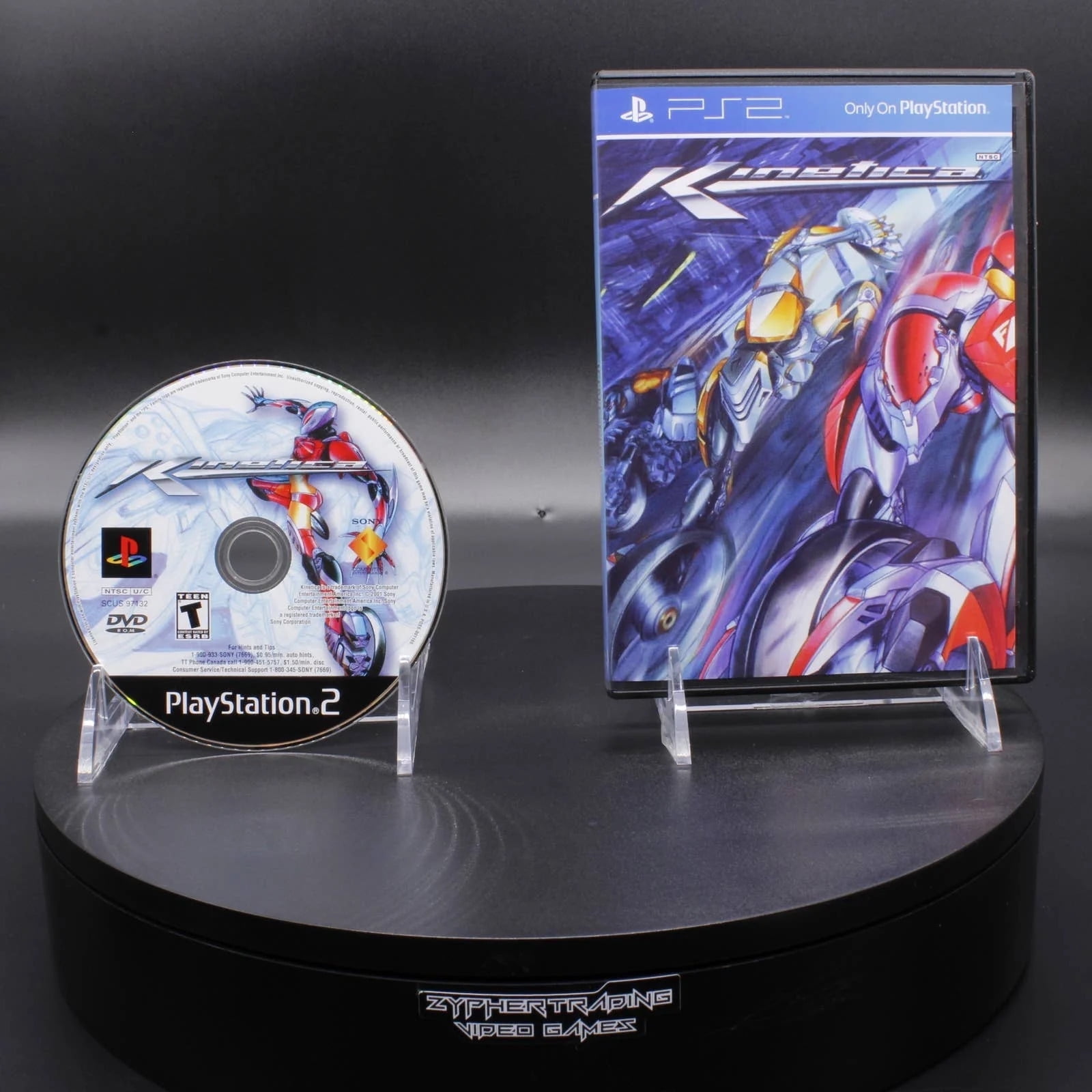
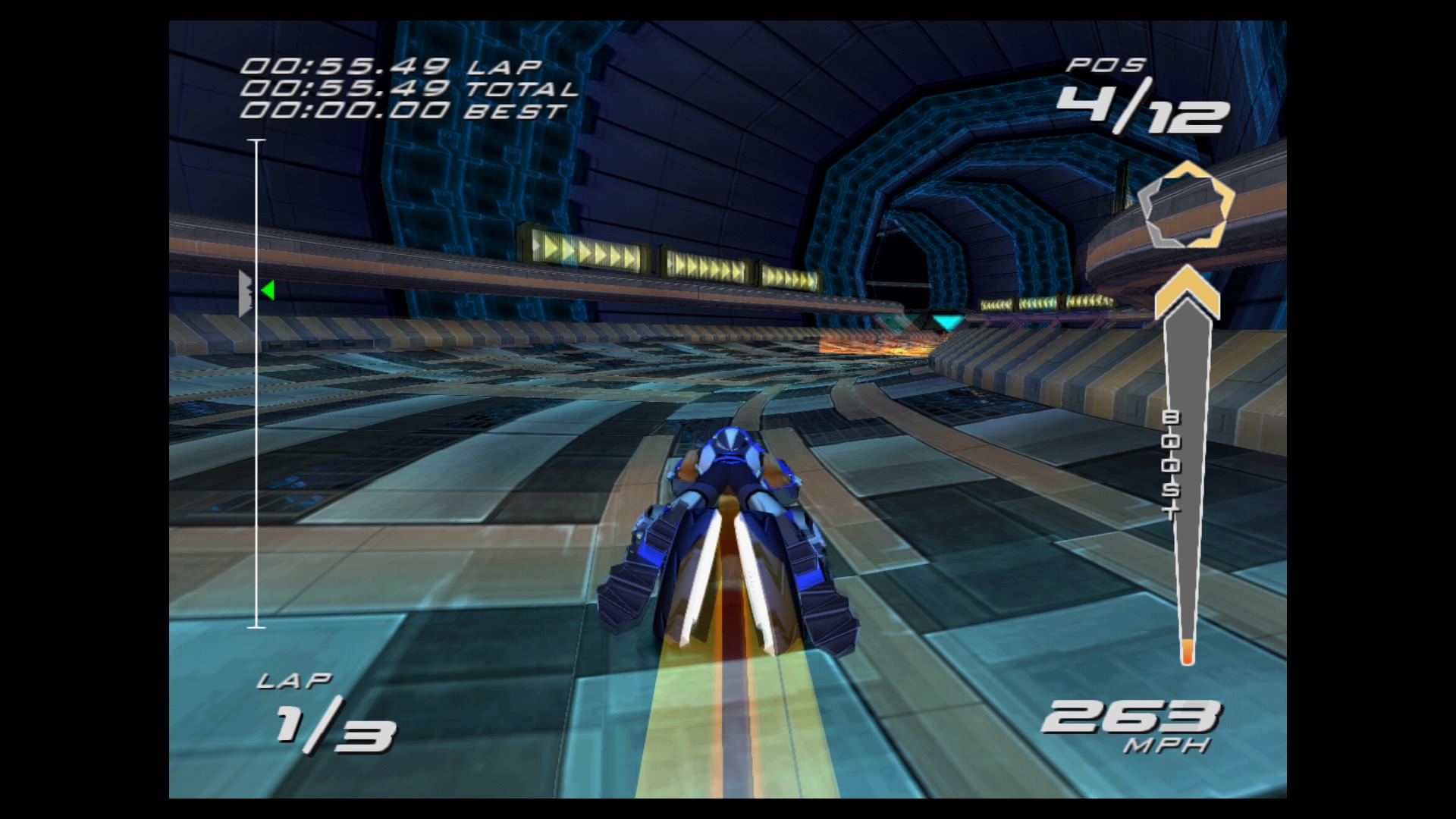
Kinetica, developed by Santa Monica Studio and released in 2001, remains a unique entry in the PlayStation 2 library that blends futuristic physics-based racing with intense kinetic combat. Players take control of specialized kinetic suits that function as both vehicles and armor, competing in high-velocity races across diverse, gravity-defying tracks that demand both technical precision and aggressive maneuvering to master.
Understanding the Roots of Kinetica
When discussing Kinetica on PlayStation 2, it is essential to recognize its significance as one of the early internal projects from Sony Computer Entertainment’s Santa Monica Studio. Released in October 2001, the title arrived during a period where developers were experimenting heavily with the raw power of the PlayStation 2’s Emotion Engine. Unlike traditional racing games of the era—which often focused on licensed cars or realistic asphalt circuits—Kinetica adopted a futuristic aesthetic heavily influenced by the "racer" sub-genre pioneered by titles like Wipeout or F-Zero.
The core concept centers on kinetic suits. In the game’s lore, racers don high-tech apparel that integrates directly with the track surface. These suits do not merely drive; they transform the athlete into the vehicle. This distinction is crucial because it influences the game's physics model. Because the "vehicle" is technically a humanoid form equipped with wheels on the limbs, the game allows for unique movement mechanics, such as wall-riding, performing stunts in mid-air, and executing combat maneuvers that would be impossible in a standard automobile.
The Physics and Mechanics of Kinetic Racing
The primary appeal of Kinetica lies in its proprietary physics engine. For players used to standard arcade racers, the game presents a learning curve rooted in momentum management. The suits rely on a "kinetic energy" system. By performing tricks, maintaining high speeds, and executing successful combat strikes against opponents, players fill their boost meter. This creates a loop of high-risk, high-reward gameplay.
Unlike other racers that might feature weapons pickups, Kinetica focuses on physical contact. You interact with opponents by slamming into them, effectively turning the race into a combat sport. The ability to tilt the suit in mid-air to stabilize landings and recover from impacts is the difference between leading the pack and spiraling into a collision. The game rewards players who understand the geometry of the tracks, particularly when navigating gravity-defying tunnels or vertical sections where the perspective shifts entirely.
Gameplay Modes and Progression
Kinetica provides several structured modes to facilitate player progression, ensuring that both newcomers and veterans have a path toward mastery.
- Season Mode: This is the primary campaign, where players compete in a series of tournaments. Success unlocks new suits, tracks, and performance upgrades. The progression is linear, starting with introductory courses that teach basic handling before moving to tracks that require precise gravity manipulation.
- Exhibition Mode: Allows for quick play on any unlocked track. This is the ideal environment for testing the nuances of different kinetic suits, as each suit possesses distinct statistical profiles regarding acceleration, handling, and top speed.
- Challenge Mode: A series of specific tasks that test specialized skills, such as time trials, stunt-based goals, or combat-focused missions. Completing these challenges is often necessary to unlock secret characters or advanced gear.
Comparing the Kinetic Suit Archetypes
To succeed in Kinetica, choosing the right suit for the track is paramount. While the differences may seem subtle initially, the variance in weight, grip, and speed significantly alters how you navigate tight turns versus long straightaways.
| Suit Class | Primary Strength | Best Usage | Handling Profile |
|---|---|---|---|
| Speedster | Top-end Velocity | Long, straight-heavy tracks | Low traction, high drift |
| Brawler | Impact & Mass | Combat-heavy, narrow tracks | Heavy, stable in collisions |
| Balanced | Versatility | General purpose racing | Predictable, neutral handling |
| Technical | Agility | Complex, vertical tracks | Sharp turn-in, rapid recovery |
Strategies for High-Level Competition
Mastering Kinetica requires moving beyond simple acceleration. The game’s design forces players to interact with the track as an extension of their movement.
Mastering the Boost System
The boost system is not just for speed; it is your primary tool for recovery. If you find yourself losing speed on a turn, hitting the boost at the apex can often pull the suit into a tighter line. However, the boost meter is finite. Using it effectively means saving it for critical straights or to recover momentum after being struck by an opponent.
Defensive and Offensive Combat
Combat in Kinetica is strictly melee-focused. When you are adjacent to an opponent, you can trigger a strike. Timing is everything. Striking too early leaves you vulnerable; striking too late means you miss your window and potentially sacrifice your own positioning. Defensive maneuvering involves "hooking" into the track walls. When you see an opponent gearing up for a side-swipe, shifting your suit to a higher or lower point on the track wall is the most effective way to evade the hit while maintaining your speed.
Track Memorization
Because many tracks in Kinetica feature unconventional geometry, such as loops and corkscrews, memorizing the layout is vital. Many tracks contain shortcuts that are only accessible by maintaining a specific speed or by utilizing the suit’s unique ability to stick to surfaces for longer durations. Experimentation with different wall-riding paths often yields the fastest lap times.
Common Troubleshooting and Setup
In 2026, playing Kinetica on original PlayStation 2 hardware requires attention to standard retro-gaming maintenance. Ensure that your DualShock 2 controller is in good condition, particularly the analog sticks. Because the game relies heavily on subtle pressure-sensitive inputs for steering and air-correction, a controller with worn-out potentiometers will make precision movement significantly more difficult.
- Disc Care: As with many early-era PS2 titles, the discs can be susceptible to surface scratches. If the game hangs during loading screens, gently cleaning the disc with a microfiber cloth is the first step.
- Memory Card Issues: Kinetica requires a standard PlayStation 2 Memory Card (8MB) to save game progress. Ensure you have sufficient space, as corrupted save files are a common cause of lost career progress.
- Video Output: To get the best experience, consider using high-quality component cables. While Kinetica was designed for CRT televisions, modern upscalers can provide a clearer image on flat-panel displays, though they may introduce input lag. If you feel the controls are "mushy," you may need to adjust your display's "Game Mode" settings.
Frequently Asked Questions
Does Kinetica support multiplayer racing? Yes, Kinetica features a split-screen mode for two players. This remains the quintessential way to play, as the game’s combat mechanics are significantly more engaging against a human opponent than the AI.
Can I use any PS2 controller for Kinetica? The game was designed for the DualShock 2, which utilizes analog pressure-sensitive buttons. While you can use a standard digital controller, you lose the fine-tuned control over acceleration and air-stunts that the original design intended.
Is it possible to unlock all characters in one playthrough? Yes, by completing the Season Mode on the higher difficulty settings, you can unlock the full roster of characters. Some hidden characters require completing specific challenge milestones rather than just finishing the tournament circuit.
What should I do if my suit keeps losing traction? This usually occurs when attempting to take turns at maximum speed without initiating a drift or adjusting your orientation on the wall. Practice the "air-correct" mechanic, which allows you to adjust the angle of your suit while in the air to ensure your wheels align properly with the track surface upon landing.
Final Recommendation
For those revisiting Kinetica in 2026, the game holds up as a technical showcase of early 2000s design ambition. To get the most out of the experience, focus on mastering the interaction between suit classes and track geometry rather than relying solely on speed. Start in Exhibition Mode to find a suit archetype that matches your playstyle, and utilize the training options to internalize the physics of gravity-defying movement before diving into the Season Mode.