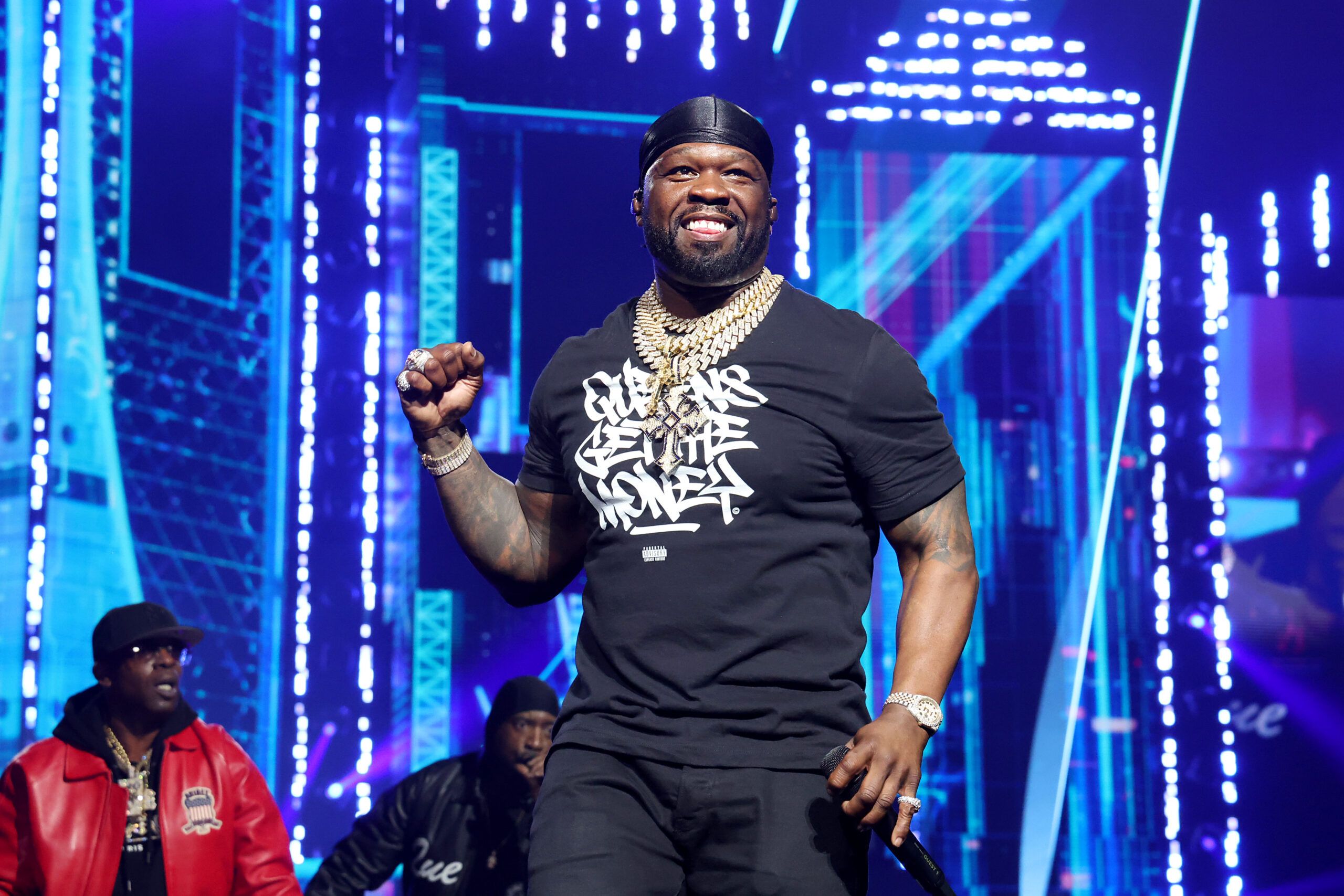
The intersection of Kendrick Lamar and 50 Cent brings together two titans of hip-hop who represent distinct eras, coastal legacies, and storytelling methods in rap music. While 50 Cent defined the gritty, commercial blockbuster era of early 2000s New York gangsta rap, Kendrick Lamar emerged as a West Coast visionary celebrated for complex lyrical narratives and Pulitzer Prize-winning conceptual albums. Examining their respective catalogues, cultural footprints, and occasional collaborative intersections highlights the evolution of modern hip-hop entrepreneurship, lyricism, and artistic reinvention.
The Foundations of Two Hip-Hop Eras
To understand the cultural weight of both artists, one must examine the distinct eras from which they arose. 50 Cent, born Curtis Jackson, burst onto the national consciousness with a fierce independent hustle during the early 2000s. Backed by Eminem and Dr. Dre, his major-label debut album, Get Rich or Die Tryin' (2003), transformed the commercial landscape of hip-hop. It combined raw street narratives with an undeniable ear for pop-accessible hooks, setting a commercial benchmark for rap dominance that blended high-stakes drama with corporate savvy.
Conversely, Kendrick Lamar Duckworth rose through the ranks of the Compton hip-hop scene during the late 2000s and early 2010s, refining his craft through critically acclaimed mixtapes like Overly Dedicated and his major-label breakthrough, good kid, m.A.A.d city (2012). While 50 Cent’s breakthrough was characterized by an invincible aura of street invulnerability and relentless bravado, Kendrick’s rise centered on vulnerability, introspection, and a cinematic exploration of systemic trauma. Despite these stylistic divergences, both artists share a foundational tie to Dr. Dre—a pivotal figure who executive produced Get Rich or Die Tryin' and later signed Kendrick Lamar to Aftermath Entertainment via Interscope Records.
Lyrical Styles and Narrative Techniques
The creative approaches of Kendrick Lamar and 50 Cent diverge significantly, offering listeners two entirely different philosophies of rap as an art form. 50 Cent relies heavily on cadence, menacing simplicity, and rhythmic phrasing designed to command attention. His delivery often projects supreme confidence and unshakeable composure, utilizing a trademark rhythmic pause and dark humor that made his verses instantly recognizable. His songs function as cinematic vignettes of street survival, corporate ambition, and consequence-free dominance.
Kendrick Lamar, on the other hand, approaches the microphone with the precision of a novelist and the urgency of an investigative journalist. His discography is defined by conceptual cohesion, shifting vocal inflections, and intricate rhyme schemes that reward multiple listens. Where 50 Cent might use a direct, punchy couplet to deliver a threat or a boast, Kendrick weaves internal rhymes, metaphors, and shifting perspectives—often embodying multiple characters or psychological states within a single track.
| Feature / Metric | 50 Cent (Curtis Jackson) | Kendrick Lamar Duckworth |
|---|---|---|
| Primary Era of Prominence | Early to mid-2000s | Early 2010s to present |
| Breakthrough Project | Get Rich or Die Tryin' (2003) | good kid, m.A.A.d city (2012) |
| Lyrical Style | Direct, rhythmic, menacing, hook-driven | Complex, introspective, conceptual, multi-layered |
| Key Mentor / Affiliate | Eminem, Dr. Dre, G-Unit | Dr. Dre, Top Dawg Entertainment (TDE) |
| Primary Artistic Focus | Street survival, luxury, business empire, resilience | Systemic trauma, identity, social commentary, spirituality |
Business Acumen, Media Ventures, and Industry Influence
Beyond their recorded music, both artists have fundamentally altered how hip-hop artists interact with corporate America, television, and independent business structures. 50 Cent transitioned from multi-platinum recording artist to a mogul spanning television production, premium spirits, vitamin-water investments, and book publishing. His executive production work on the Starz network—most notably the Power universe and its various spin-offs—demonstrated an unprecedented ability to translate street narratives into mainstream television gold, reshaping the Sunday night television landscape.
Kendrick Lamar has taken a different route toward institutional influence, focusing on artistic independence, curation, and high-profile multimedia execution. Through his co-founding of the creative company pgLang alongside Dave Free, Kendrick has fostered a multimedia approach that spans music videos, fashion collaborations, and visual storytelling. His landmark curation of the 2025 Apple Music Super Bowl LIX Halftime Show further cemented his cultural reach, proving that an artist deeply rooted in radical lyricism and West Coast community politics could command the largest mainstream stages in entertainment without compromising his artistic identity.
Cultural Intersections and Mutual Respect
Though they represent different coasts and generations, mutual respect has defined the historical relationship between 50 Cent and Kendrick Lamar. Over the years, 50 Cent has frequently praised Kendrick’s work ethic, stage presence, and lyrical dominance, acknowledging the Compton rapper as a vital torchbearer for authentic hip-hop storytelling. Conversely, Kendrick has often nodded to the foundational blueprint laid by 50 Cent regarding independence, branding, and survival within a notoriously cutthroat industry.
This generational bridge highlights a broader tradition within hip-hop: the passing of the baton from veterans who broke commercial ceilings to modern virtuosos who stretch artistic boundaries. When older titans like 50 Cent validate the technical and cultural mastery of artists like Kendrick, it reinforces the continuity of the genre across shifting digital and industrial landscapes.
Common Misconceptions Regarding the Comparison
When listeners or analysts group Kendrick Lamar and 50 Cent together in cultural discussions, several misconceptions often arise:
- The Rivalry Fallacy: Some casual observers assume a generational or regional rivalry exists between the two. In reality, their trajectories are complementary rather than competing, as they operated at peak commercial levels in entirely different decades.
- The Commercial vs. Critical Dichotomy: A common myth is that 50 Cent was purely a commercial pop-rap act while Kendrick is purely a critical darling. Both artists achieved massive commercial saturation while simultaneously securing deep critical acclaim within their respective spheres.
- Stylistic Overlap: While both artists frequently rap about the realities of urban poverty, crime, and survival in America, their narrative lenses are fundamentally different—one prioritizing calculated swagger and dramatic tension, the other emphasizing psychological excavation and communal healing.
Frequently Asked Questions
Did 50 Cent and Kendrick Lamar ever collaborate on a song?
While they share a strong mutual respect and a historical connection through Dr. Dre’s mentorship ecosystem, they have not released a major collaborative single together as primary artists. Their artistic universes remain distinct, anchored in their respective eras of East Coast and West Coast dominance.
How are 50 Cent and Kendrick Lamar connected to Dr. Dre?
Dr. Dre played a monumental role in the commercial ascent of both artists. He co-signed 50 Cent alongside Eminem in 2002, executive-producing Get Rich or Die Tryin'. Years later, Dr. Dre signed Kendrick Lamar to Aftermath Entertainment, helping propel good kid, m.A.A.d city to global acclaim.
What is the primary difference between their lyrical approaches?
50 Cent utilizes a direct, rhythmic, and intimidatingly simple delivery optimized for memorable hooks and stark realism. Kendrick Lamar utilizes dense, multi-syllabic rhyme schemes, shifting vocal cadences, and complex conceptual narratives that demand close listening.
How has 50 Cent influenced modern hip-hop entrepreneurship?
50 Cent pioneered the blueprint for rappers diversifying into equity partnerships—most notably his historic stake in Vitaminwater, which yielded a massive payout when Coca-Cola acquired Glacéau. He subsequently translated this business acumen into highly successful television production deals.
What role does pgLang play in Kendrick Lamar’s career?
pgLang is a creative company founded by Kendrick Lamar and Dave Free that operates as an umbrella for music, film, television, and artistic collaborations. It allows Kendrick to maintain creative control over his multimedia output while championing distinct visual and sonic art.
Conclusion and Next Steps
Analyzing the legacies of Kendrick Lamar and 50 Cent reveals the multi-dimensional nature of hip-hop excellence. Whether studying 50 Cent’s masterclass in gritty commercial dominance and television entrepreneurship or Kendrick Lamar’s Pulitzer-winning elevation of lyrical craft and conceptual depth, fans and aspiring artists alike can learn invaluable lessons in branding, resilience, and creative integrity. To further explore their impact, revisit their foundational sophomore releases (The Massacre and To Pimp a Butterfly) to witness firsthand how two generational masters shaped modern American music.