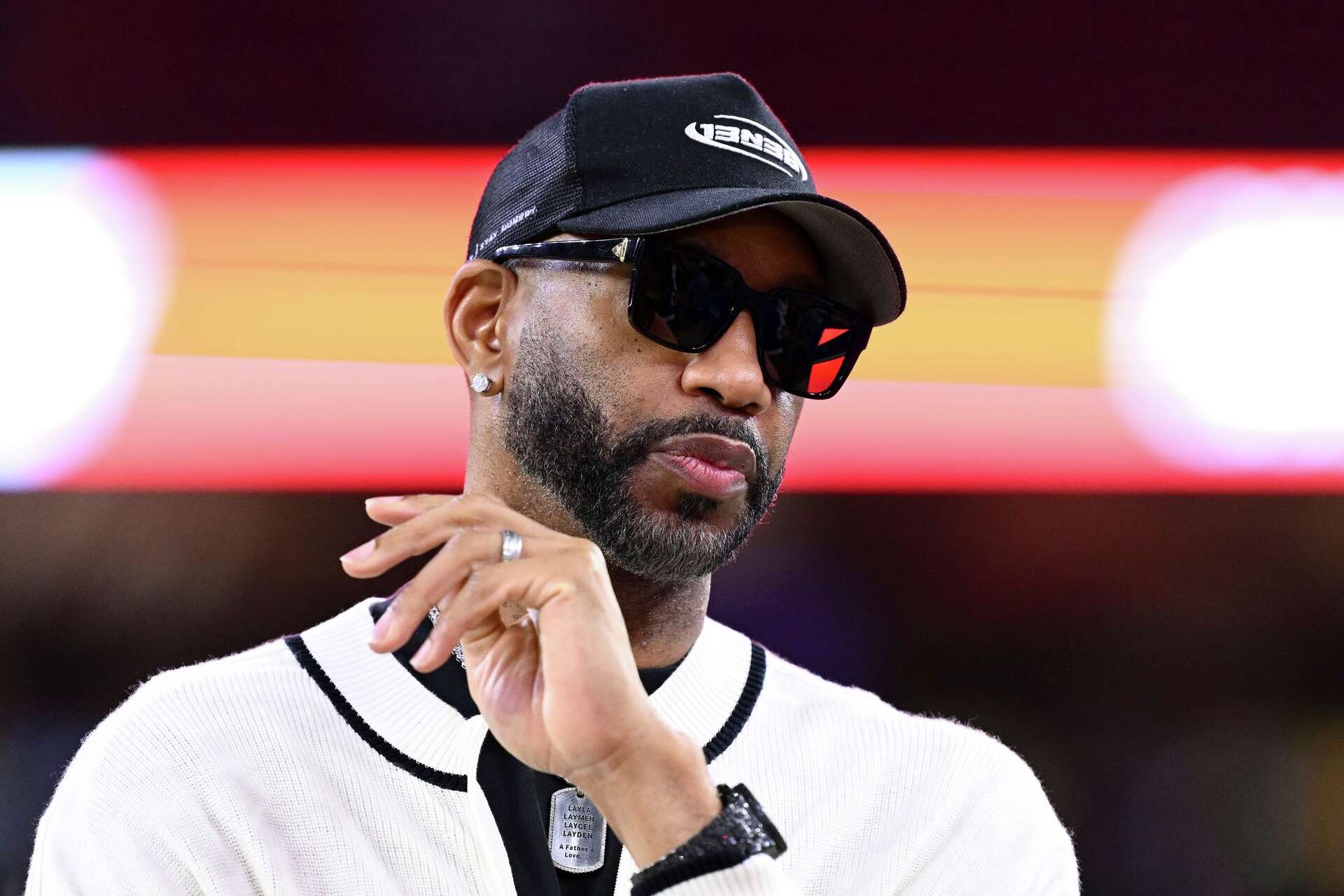
Asante Samuel, a four-time Pro Bowl cornerback and two-time Super Bowl champion, remains a polarizing figure in the discourse surrounding the Pro Football Hall of Fame. Despite his impressive statistics, particularly his knack for high-volume interceptions during his prime with the New England Patriots and Philadelphia Eagles, a critical analysis of his body of work and historical standing among peers suggests he falls short of the gold jacket criteria.
The Hall of Fame is designed to immortalize the most transformative players in professional football history. While Samuel was undoubtedly a standout defender during the 2000s and early 2010s, his career trajectory lacked the sustained dominance and league-wide historical impact required for enshrinement in Canton. Evaluating a player’s candidacy requires looking beyond individual box scores to assess peak duration, postseason legacy, and the broader context of his position group within his era.
The Statistical Trap: Why Interceptions Are Not Everything
The most common argument in favor of Asante Samuel centers on his interception totals. With 51 career interceptions, Samuel ranks among the most prolific ballhawks of his generation. However, modern analytical frameworks in the NFL have evolved to recognize that raw interception numbers can be deceptive. A high interception total often reflects a "gambler" style of play—one that prioritizes jumping routes and hunting for the big turnover over the fundamental responsibility of keeping wide receivers in front of the defender.
In the case of Samuel, his aggressive, high-risk approach often resulted in "all-or-nothing" outcomes. While this was incredibly beneficial for defenses when the gamble paid off, it frequently left his teammates exposed when he missed. Coaches often emphasize "containment" and "discipline" in cornerbacks—the ability to erase a side of the field regardless of whether the ball comes their way. Samuel’s legacy is defined by his high-octane playmaking, but his inability to consistently maintain top-tier coverage without the risk of allowing big plays creates a gap between his highlight reel and his overall utility.
Comparing Peers: The Cornerback Logjam
To determine Hall of Fame worthiness, one must compare a player against his contemporaries. The cornerback position is notoriously difficult for Hall of Fame voters, characterized by a significant backlog of qualified candidates. When placing Asante Samuel alongside cornerbacks who are already enshrined or currently dominating the discussion, the disparity becomes evident.
| Player | Career Interceptions | All-Pro Selections | Years Played |
|---|---|---|---|
| Champ Bailey | 52 | 3 | 1999–2013 |
| Charles Woodson | 65 | 3 | 1998–2015 |
| Ty Law | 53 | 2 | 1995–2009 |
| Asante Samuel | 51 | 1 | 2003–2013 |
As shown in the table above, Samuel’s statistical output mirrors that of legends like Champ Bailey or Ty Law, but the qualitative assessment differs. Bailey and Law were widely considered "shutdown" corners, capable of traveling with an opponent’s number one receiver for the duration of a game. Samuel primarily played in systems that encouraged zone-heavy schemes or off-man coverage, which allowed him the freedom to freelance and target the ball. While this is a skill in itself, it is rarely viewed by Hall of Fame committees as equal to the technical dominance exhibited by the top-tier cornerbacks of his era.
The Absence of All-Pro Recognition
One of the most objective metrics for Hall of Fame consideration is the frequency with which a player was recognized as the best at their position during their active career. The Associated Press (AP) All-Pro team represents the consensus of experts, coaches, and scouts. Asante Samuel’s career includes only one First-Team All-Pro selection (2007).
For a player to be considered a Hall of Fame lock, voters generally look for a consistent presence at the top of the league. Being the best corner in football for only one season, while making a few Pro Bowls in other years, does not build the "sustained excellence" narrative that usually characterizes a Canton-bound career. Many other cornerbacks who played during the same time frame have more accolades, higher rankings in career total passes defensed (a stat not tracked early in his career but eventually popularized), and more consistent rankings in defensive efficiency metrics.
The "Game-Changer" Argument and Its Limits
Proponents of Samuel often point to his role in the New England Patriots’ defensive backfield, which contributed to multiple Super Bowl runs. While he was a pivotal piece of those teams, he was rarely the singular anchor of the secondary. Players like Ty Law or Rodney Harrison often provided the stability that allowed Samuel the freedom to pursue the ball.
In the NFL, the difference between a "Great Player" and a "Hall of Famer" is often defined by whether the player made their team’s system work, or if the team’s system worked to enable the player. Samuel benefited immensely from playing behind dominant pass rushes and in complex, discipline-heavy schemes that prioritized keeping the play in front of the defense. When he transitioned to teams with less cohesive defensive fronts, his individual impact remained high in terms of interceptions, but his team-level defensive rankings often suffered. This suggests that Samuel was an excellent weapon for a defense, but perhaps not the foundational pillar that defines a Hall of Fame career.
The Evolution of Cornerback Evaluation
By 2026, the analytical movement in football has further marginalized the value of pure interception counting. Analytics departments now emphasize "Target Rating Against" and "Average Depth of Target" as better indicators of a cornerback's value.
When looking at these advanced metrics, Samuel’s profile is often lower than fans might expect. He allowed a higher completion percentage on passes thrown into his coverage than his peers who are considered "shutdown" cornerbacks. This nuance is crucial. The Hall of Fame is not merely an archive of statistics; it is a repository of the greatest performers who fundamentally changed how the game was played. Samuel was a master of the opportunistic takeaway, but he did not fundamentally change the game in the way that peers like Deion Sanders, Rod Woodson, or Charles Woodson did.
Frequently Asked Questions
1. Does Asante Samuel’s Super Bowl success count toward Hall of Fame eligibility?
While winning two Super Bowls with the Patriots is an accomplishment, it is viewed as a "career bonus" rather than a primary qualification. Voters look for individual dominance first; championships are used to break ties between players with similar statistical resumes. Samuel’s individual accolades are not robust enough to be significantly bolstered by his team’s success.
2. Is there a case for Samuel based on his peak performance?
One could argue that from 2006 to 2010, Samuel was among the most dangerous ballhawks in the NFL. However, a five-year peak is generally the minimum requirement to even be considered. For players without massive career-long accomplishments, that peak must be overwhelmingly dominant—an undisputed status as the league's top cornerback—which Samuel arguably never held against the likes of Nnamdi Asomugha or Darrelle Revis during those specific years.
3. How does the Hall of Fame treat cornerbacks compared to other positions?
The Hall of Fame is notoriously stingy with cornerbacks. Because the position is so heavily reliant on the quality of the pass rush and the scheme, voters are skeptical of stats accumulated in favorable environments. Only the most consistent "shutdown" corners—those who forced opposing quarterbacks to ignore their side of the field entirely—tend to get in.
4. Is it possible for Samuel to get in via a "Senior" committee later?
While the Senior Committee exists to address historical oversights, it is intended for players who were overlooked for decades. Given the current depth of the cornerback position and the incoming class of retired players who possess more comprehensive resumes, it is highly unlikely that Samuel’s standing will improve over time as more modern, high-impact cornerbacks become eligible.
Final Assessment: A Respected Career, Not a Canton Legacy
Asante Samuel’s career is one defined by excitement, high-risk playmaking, and a knack for the ball that few players in his era could replicate. He served as a vital component of successful defensive units and earned the respect of his peers for his instincts. However, respect and career longevity are not the sole benchmarks for the Pro Football Hall of Fame.
The threshold for enshrinement requires a level of consistency, technical dominance, and widespread recognition that Samuel simply did not achieve throughout his tenure. He falls into a category of "Very Good" NFL players—athletes who defined a specific role within a specific system—but he lacks the historical gravity required for the Hall of Fame. His legacy will be cemented as a premier playmaker of the late 2000s, but that legacy remains outside the walls of Canton.