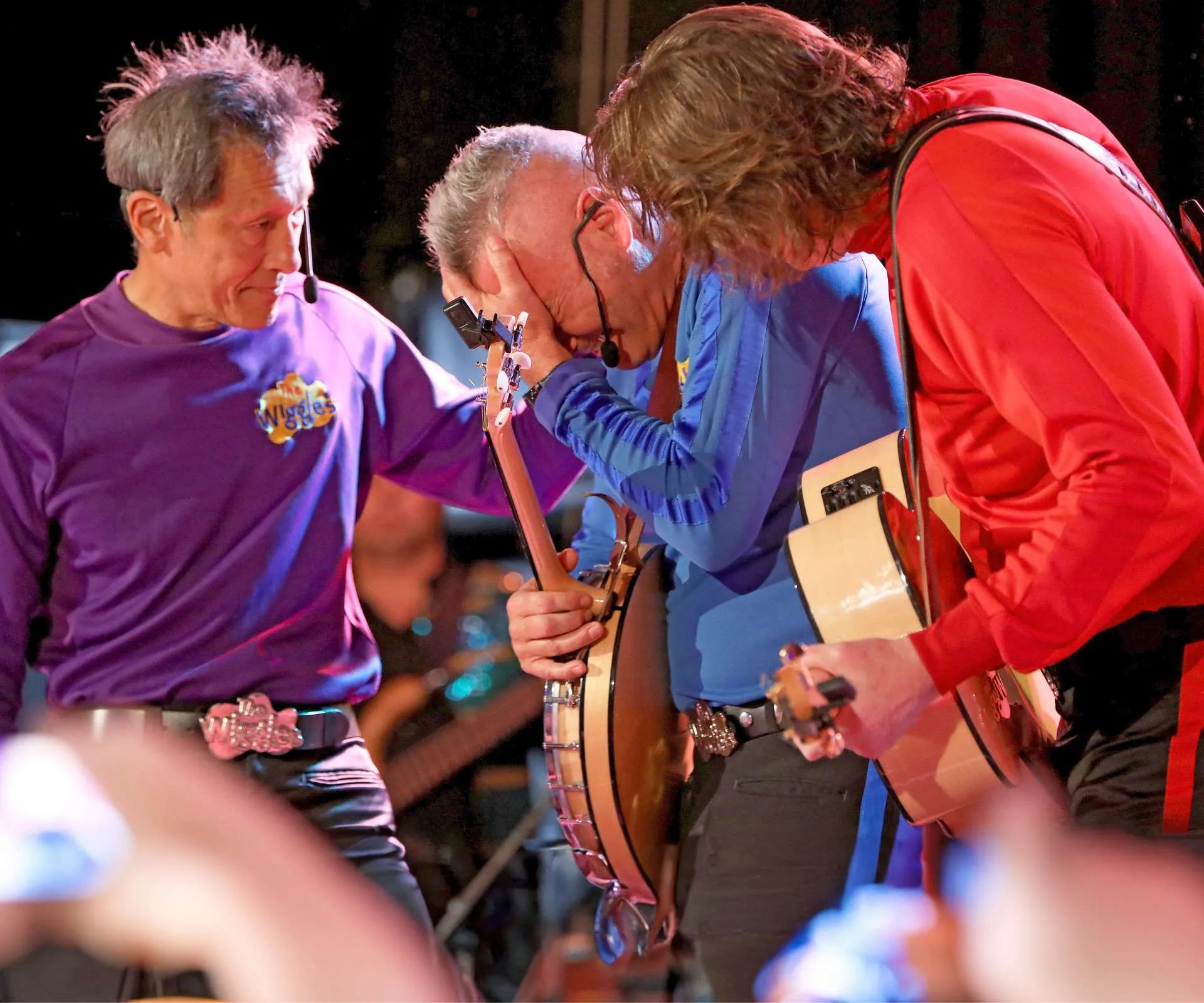
Before becoming globally recognized as the iconic Blue Wiggle, a young Anthony Field was an Australian Army Reserve soldier, a high-energy guitarist in the 1980s pop-rock band The Cockroaches, and a student of early childhood education at Macquarie University, where he co-founded The Wiggles in 1991.
Early Childhood and Family Background in Sydney
Anthony Patrick Field was born on May 8, 1963, in Sydney, Australia. Growing up in a large Catholic family of seven children in Sydney's northern suburbs, Field was immersed in a music-filled household from a young age. His parents, Marie and John Field, encouraged artistic expression, traditional folk tunes, and communal singing. This environment laid the foundational groundwork for his appreciation of rhythm, simple vocal melodies, and participatory performance.
During his secondary education at St Joseph's College in Hunter's Hill, Field developed a passion for guitar, traditional Irish folk music, and rock and roll. Unlike children who follow a straightforward path into formal music conservatories, Field's early exposure to music was driven by social connection, family gatherings, and live performance within community settings. This grassroots musical upbringing instilled in him an understanding of how music brings people together across generations.
The communal nature of the Field household meant that musical instruments were constantly circulating among siblings. Anthony and his brothers Paul and John frequently experimented with guitars, percussion, and vocal harmonies. This informal yet rigorous daily practice developed Field’s sense of arrangement and rhythm long before he began formal academic studies in music or early childhood development.
Military Service and Early Professional Discipline
Before establishing himself in the Australian music industry, Anthony Field served in the Australian Army Reserve during the early 1980s. He was posted to the 5th/7th Battalion, Royal Australian Regiment (5/7 RAR), a mechanized infantry unit based in New South Wales.
Field's military tenure provided him with a structural framework that heavily influenced his subsequent career as a touring musician and producer. The daily demands of infantry training taught him physical conditioning, operational discipline, and the logistics of teamwork under pressure.
Anthony Field's Early Life Timeline:
- 1963: Born in Sydney, New South Wales
- Early 1980s: Serves in 5th/7th Battalion, Royal Australian Regiment (Army Reserve)
- 1979–1990: Co-founds and tours with 1980s pop-rock band The Cockroaches
- 1989–1991: Studies Early Childhood Education at Macquarie University
- 1991: Co-founds The Wiggles, launching an educational entertainment career
During his time with 5/7 RAR, Field was involved in tactical field exercises, driving armored personnel carriers, and maintaining physical readiness. He has often attributed his work ethic, punctual touring schedule, and physical resilience during demanding multi-show days to the training he received in the Army Reserve. When later building the Wiggles' production operation—which involved managing hundreds of live shows annually across multiple continents—the operational habits learned during his military service proved essential.
The Cockroaches Era: Anthony Field’s 1980s Pub Rock Years
In 1979, while still in high school, Anthony Field co-founded the pop-rock group The Cockroaches alongside his brothers Paul Field (lead vocals) and John Field (rhythm guitar), along with school friend Tony Henry and keyboardist Jeff Fatt. Anthony played lead and rhythm guitar, helping shape the band’s energetic, 1950s-rock-and-roll-inspired sound.
- THE COCKROACHES
- Anthony Field (Guitar) • Paul Field (Vocals) • Jeff Fatt (Keys)
- Pivot to Early Childhood Studies
- THE WIGGLES
- Anthony Field (Blue) • Murray Cook (Red) • Greg Page (Yellow) • Jeff Fatt (Purple / Keys)
Throughout the 1980s, The Cockroaches became one of Australia's hardest-touring pub rock acts. They delivered up to 300 live performances a year in venues across the country. Their music combined infectious guitar hooks, party-style rhythm sections, and accessible lyrics, earning them a massive fan base in the Australian live circuit.
Commercial Success and Hits
The band achieved significant commercial success in Australia during the mid-to-late 1980s:
- Self-Titled Album (1987): Their debut studio album, The Cockroaches, reached Platinum status in Australia, selling over 70,000 copies independently.
- Hit Singles: Popular tracks such as "She's the One," "Hey What's Your Name!," and "Wait Up" received extensive radio airplay and featured regularly on national television music programs like Countdown.
- Live Energy: The band relied on high-energy, audience-engaging choreography and call-and-response showmanship—techniques Field later adapted directly into early childhood performances.
By the end of the 1980s, shifts in the Australian live music market, combined with venue closures and changing youth culture, caused pub rock attendance to decline. Despite releasing successful albums, including Fingertips (1988), the band faced economic pressures. This transition period prompted Field to re-examine his long-term career path.
Macquarie University and Early Childhood Education Studies
Recognizing the instability of the pub rock circuit, Field made a pivotal decision in 1989 to enroll at Macquarie University in Sydney to pursue a Diploma of Teaching (Early Childhood Education). Returning to tertiary education as a mature-age student, Field sought a meaningful career that combined his creative instinct with practical service.
At Macquarie University, Field studied under renowned early childhood academics and learned key theories of developmental psychology, including the works of Jean Piaget, Lev Vygotsky, and Erik Erikson. The curriculum emphasized child-centered learning, play-based education, and the use of music as a primary vehicle for early language acquisition, emotional regulation, and motor skill development.
Early Childhood Development Framework:
- Child-Centered Learning (Piagetian concepts)
- Play-Based Education (Kinesthetic movement)
- Music & Rhythmic Pedagogy (Language & motor skills)
- Interactive Media (Direct engagement & participation)
It was during these studies that Field met two key figures who would alter the trajectory of children's entertainment: Murray Cook and Greg Page. Cook was a fellow early childhood student with a deep background in rock guitar, while Page was a younger student with strong vocal talents and stage presence.
Together, Field, Cook, and Page realized that much of the existing children's music in the late 1980s was overly didactic, condescending, or musically simplistic. They recognized an opportunity to apply rigorous educational pedagogy to real, high-quality instrumentation—creating music that respected children's intelligence while remaining genuinely entertaining.
The Birth of The Wiggles (1991): Bridging Education and Music
In 1991, while still completing their studies at Macquarie University, Field conceived a project to record an album of developmentally appropriate children's songs. He recruited his university peers Cook and Page, brought in his former Cockroaches bandmate Jeff Fatt to play keyboards, and collaborated with Macquarie music instructor Phillip Wilcher.
The group adopted the name The Wiggles, referencing the natural movement of young children during musical activities. Their initial goal was modest: produce an educational cassette tape that could be sold to preschools, daycares, and local families.
Original Wiggles Lineup & Backgrounds (1991):
- Anthony Field: Guitar/Vocals (Early Childhood Student / The Cockroaches)
- Murray Cook: Guitar/Vocals (Early Childhood Student / Independent Musician)
- Greg Page: Lead Vocals (Early Childhood Student)
- Jeff Fatt: Keyboards/Vocals (The Cockroaches)
- Phillip Wilcher: Piano/Composition (Macquarie Music Instructor)
Educational Principles Applied to Early Wiggles Songs
Unlike mainstream pop acts transitioning to children's content as a marketing gimmick, young Anthony Field and his co-founders built their repertoire directly on early childhood education principles:
- Kinesthetic Engagement: Songs like "Get Ready to Wiggle" and "Rock-a-Bye Your Bear" were written with explicit physical actions to help young children develop gross motor skills and body spatial awareness.
- Clear Musical Structures: The group avoided complex, multi-layered electronic synthesizers in favor of clean acoustic guitars, clear brass, and organic rhythms that allowed young ears to distinguish individual instruments and vocal pitches.
- Open-Ended Lyrics: Rather than delivering abstract moral lectures, songs focused on concrete concepts relevant to a child's everyday world: animals, food, safety, family, and physical movement.
- Empathetic Stage Presence: The group performed at the child's eye level, speaking directly to the camera or audience without exaggerated condescension, establishing a relationship of trust and safety.
The Independent Grind (1991–1995)
The early years of The Wiggles required intense physical and financial sacrifice. The group self-funded their debut self-titled album, The Wiggles (1991), distributing copies out of the trunk of Field's car to local preschools and toy stores.
Field personally drove the group's van to shopping centers, community halls, and daycares across Australia. They often set up their own sound systems, performed up to four free or low-cost shows per day, and handed out promotional flyers.
The strategy paid off. Word-of-mouth among parents and early childhood educators spread rapidly. By the time the Australian Broadcasting Corporation (ABC) acquired the rights to broadcast Wiggles musical clips and home videos in the mid-1990s, Field's vision had transformed from an academic experiment into a national cultural movement.
Comparative Overview: Anthony Field's Early Career Stages
To understand how Anthony Field transitioned from high-energy pub rock to educational entertainment, the following table details his career stages from his late teens to the early years of The Wiggles.
| Feature / Metric | Military Service Period | The Cockroaches Era | Macquarie University Studies | Early Wiggles Era |
|---|---|---|---|---|
| Timeframe | Early 1980s | 1979–1990 | 1989–1991 | 1991–1998 |
| Primary Domain | Australian Army Reserve (5/7 RAR) | Australian Pub Rock Scene | Tertiary Education / Pedagogy | Children's Entertainment & Media |
| Key Roles | Infantry Soldier | Lead/Rhythm Guitarist, Songwriter | Early Childhood Student | Blue Wiggle, Producer, Director |
| Primary Audience | Military Personnel / Officers | Young Adults / Pub Audiences | University Faculty / Peers | Children (Ages 0–6) & Parents |
| Musical / Artistic Focus | Ceremonial & Tactical Coordination | 1950s Rock & Roll, Pop Hooks | Educational Music Theory | Kinesthetic Songs, Play Pedagogy |
| Key Collaborators | Battalion Officers & Squad Mates | Paul Field, John Field, Jeff Fatt | Murray Cook, Greg Page | Murray Cook, Greg Page, Jeff Fatt |
| Long-Term Impact | Work ethic, discipline, physical stamina | Stage presence, touring knowledge | Developmental mindset, core lyrics | Global enterprise, multi-gold albums |
Health, Fitness, and Personal Challenges in His Early Career
While the public saw a smiling, energetic young man in a blue jersey, Field faced severe physical and mental health battles throughout his twenties and thirties.
Physical Toll and Health Struggles
Years of relentless touring in cramped vans during the Cockroaches era, combined with the extreme physical demands of Wiggles stage performances (jumping, dancing, and playing guitar for several hours daily), severely impacted Field's spine and joints. By his early thirties, Field was suffering from chronic back pain, recurring low-grade infections, and severe fatigue.
Field's Early Health Transformation:
- 1980s–1990s: Relentless touring, poor diet, severe chronic back pain, and depression
- Late 1990s: Introduction to functional fitness, gymnastics, and chiropractic care
- 2000s–Present: Complete health recovery, authoring "How I Got My Wiggle Back"
In addition to physical pain, Field spoke openly in later years about his experience with clinical depression during the height of the Wiggles' early rise to fame. The contrast between his cheerful stage persona and his internal mental struggles created deep emotional strain.
The Fitness Transformation
In the late 1990s, Field realized that without a radical lifestyle shift, he would be physically unable to continue performing. He committed to a rigorous regime of functional fitness, gymnastics training, bodyweight resistance, chiropractic care, and nutritional adjustments.
Field converted the group's backstage areas into mobile training rooms, incorporating kettlebells, resistance bands, and gymnastic rings into daily pre-show routines. This physical overhaul transformed his personal health and altered the performance dynamic of The Wiggles, allowing Field to incorporate tumbling, handstands, and acrobatics into live shows well into his fifties and sixties.
His recovery journey was later documented in his 2012 autobiography, How I Got My Wiggle Back, which serves as a guide for managing chronic pain and mental illness through structured physical movement and professional care.
How Young Anthony Field’s Legacy Shaped Modern Children’s Entertainment
The early life choices of Anthony Field created a blueprint for modern children's media. By fusing three distinct aspects of his youth—military-grade operational discipline, professional rock-and-roll touring experience, and tertiary early childhood pedagogy—Field transformed children's music from an afterthought in the entertainment industry into a respected, high-production sector.
Core Pillars of Anthony Field's Legacy:
- Pedagogical Integrity: Respecting children's intellectual capacity
- Live Performance Rigor: Bringing rock concert energy to family shows
- Production Ownership: Retaining artistic independence and creative control
- Adaptability: Evolving line-ups while preserving core educational principles
Key Pedagogical Innovations
- Elimination of Condescension: Field established that performers should speak to young children in natural, reassuring tones rather than using exaggerated, patronizing speech patterns.
- Real Musicality: He insisted that recorded tracks feature real woodwinds, brass, acoustic guitars, and live percussion, proving that early music exposure directly influences long-term musical appreciation.
- Inclusive Visual Cues: The introduction of color-coded jerseys (blue, red, yellow, purple) made it easy for pre-literate children to identify characters, build cognitive recognition, and feel part of the performance community.
Today, as the sole remaining original founding member actively touring with the modernized, diverse Wiggles lineup, Field's early vision continues to guide the franchise. His initial realization at Macquarie University—that children deserve music that treats them as capable, active learners—remains the foundation of the group's global enduring success.
Frequently Asked Questions
What band was Anthony Field in before founding The Wiggles?
Before co-founding The Wiggles, Anthony Field was a founding member and guitarist for the popular Australian 1980s pop-rock band The Cockroaches. Formed alongside his brothers Paul and John Field, the group earned multi-platinum album sales and toured extensively across Australia throughout the decade.
What degree did young Anthony Field earn at Macquarie University?
Anthony Field earned a Diploma of Teaching (Early Childhood Education) from Macquarie University in Sydney during the late 1980s and early 1990s. His coursework in child development theory, play-based learning, and kinesthetic engagement served as the pedagogical foundation for creating The Wiggles.
Did Anthony Field serve in the military before his music career?
Yes, Anthony Field served in the Australian Army Reserve during the early 1980s. He was posted to the 5th/7th Battalion, Royal Australian Regiment (5/7 RAR), a mechanized infantry unit. He has credited his time in the Reserve for developing his strong work ethic, physical endurance, and operational discipline.
How did young Anthony Field meet the other original members of The Wiggles?
Field met Murray Cook and Greg Page while all three were studying early childhood education together at Macquarie University. To record their first educational album, Field recruited his former Cockroaches bandmate Jeff Fatt to play keyboards, along with university music instructor Phillip Wilcher.
What color jersey did Anthony Field wear when The Wiggles first started?
Anthony Field has always worn the blue jersey as the Blue Wiggle. In the very early days before the iconic primary-colored jerseys were introduced in the mid-1990s, the group performed in regular clothing, but Field adopted the blue shirt once character color-coding was established to help pre-literate viewers identify each member.
What inspired Anthony Field to move from pub rock to children's entertainment?
The combination of a declining Australian pub rock scene in the late 1980s and Field's growing desire for a stable, meaningful career led him to study early childhood education. Once he learned about child development theories, he realized that high-quality, live-instrument music specifically designed for toddlers was largely missing from the market.
Practical Takeaways for Fans, Educators, and Researchers
- Explore the Early Discography: To understand the transition from pop rock to educational music, compare the guitar arrangements on The Cockroaches' 1987 album The Cockroaches with the early acoustic arrangements on The Wiggles' debut 1991 album.
- Review Early Childhood Pedagogical Models: Educators looking to apply Field's methods should study Piaget's sensorimotor stage of development, which emphasizes how young children learn through body movement and physical interaction with their immediate environment.
- Read the Autobiographical Literature: For a detailed, firsthand account of Field's early career, health struggles, and physical recovery, consult his book How I Got My Wiggle Back (2012), which provides valuable insights into performance health and mental wellness.
- Examine Archival Australian Music Sources: Researchers interested in Australian pop culture history can explore the archives maintained by the National Film and Sound Archive of Australia (NFSA) to inspect television performances and recordings from The Cockroaches era.