As of 2026, most standard United States auto insurance policies provide valid coverage for policyholders driving their personal vehicles into Canada for tourism or short-term visits. To ensure compliance with Canadian provincial laws, American drivers should obtain a Non-Resident Inter-Province Motor Vehicle Liability Insurance Card (commonly known as the "Yellow Card") from their insurer before crossing the border. This document serves as official proof that your U.S. policy meets the minimum liability limits required by Canadian provinces, which are often higher than those in many U.S. states.
The Legal Framework: Reciprocity and the Power of Attorney and Undertaking
The ability for Americans to drive in Canada using their domestic insurance is not a matter of mere convenience; it is rooted in a formal legal framework known as the Power of Attorney and Undertaking (PAU). Most major U.S. insurance companies have filed a PAU with the Canadian Council of Insurance Regulators (CCIR).
By filing this document, a U.S. insurer officially agrees to several critical conditions:
- Recognition of Jurisdiction: The insurer agrees to appear in any Canadian province or territory where a legal action is brought against one of its policyholders.
- Minimum Coverage Standards: The insurer pledges that it will not provide less coverage than the minimum statutory requirements of the province where an accident occurs, even if the policyholder's domestic U.S. limits are lower.
- Compliance with Provincial Laws: The insurer agrees to settle claims according to the specific insurance laws of the province, which may include "no-fault" benefit systems that differ significantly from American tort systems.
Before traveling, it is essential to verify that your specific carrier is a signatory to the PAU. While almost all nationwide carriers (such as GEICO, Progressive, State Farm, and Allstate) are included, smaller regional or "non-standard" insurers might not be. Driving in Canada without insurance from a PAU-signatory company can result in vehicle impoundment, heavy fines, and the denial of claims.
The Non-Resident Inter-Province Motor Vehicle Liability Insurance Card
While your standard U.S. insurance ID card might be accepted by some Canadian law enforcement officers, it is not the legally recognized proof of financial responsibility in Canada. The Non-Resident Inter-Province Motor Vehicle Liability Insurance Card, or "Yellow Card," is the gold standard for cross-border travel.
Why You Need the Yellow Card
The Yellow Card is a physical (or sometimes digital, depending on the province) document that confirms your insurer is authorized to provide coverage in Canada. It bypasses the confusion that can arise when a Canadian officer looks at a U.S. ID card that lists liability limits below the Canadian provincial minimum. For example, if you carry the Florida state minimum of $10,000 in Property Damage Liability, a Canadian officer might see this as insufficient. The Yellow Card guarantees that your insurer will "step up" your coverage to meet the Canadian minimum—usually $200,000—while you are in the country.
How to Obtain the Card
In 2026, most insurers allow you to request a Yellow Card through their mobile app or website, though some still require a phone call to a local agent. It is recommended to request this at least two weeks before your trip. There is typically no additional premium cost for this card, as it is considered an extension of your existing territorial coverage.
Comparing Liability Limits: US vs. Canada
One of the most significant risks for American drivers in Canada is being underinsured. In the United States, many states allow drivers to carry "split limits" as low as 25/50/25 ($25,000 per person, $50,000 per accident for bodily injury, and $25,000 for property damage).
In contrast, almost every Canadian province (with the exception of Quebec) requires a minimum of $200,000 CAD in Third-Party Liability coverage. This is typically a "combined single limit" (CSL), meaning the total amount available for any combination of bodily injury and property damage.
Recommended Coverage Levels
While your insurer will automatically increase your coverage to the $200,000 minimum if you have an accident in Canada, this amount is often insufficient for serious accidents involving multiple vehicles or severe injuries. In 2026, the standard recommendation for Americans driving in Canada is to carry at least $1,000,000 in liability coverage. This provides a safety net against the high costs of medical care and legal fees in the event of a catastrophic collision.
| Feature | Typical U.S. Policy | Canadian Requirements (Most Provinces) |
|---|---|---|
| Minimum Liability | Varies by state (often $20,000–$50,000) | $200,000 CAD (Combined Single Limit) |
| Proof of Insurance | State-issued Insurance ID Card | Non-Resident Inter-Province Card (Yellow Card) |
| Insurance System | Primarily Tort (fault-based) | Mix of No-Fault and Tort |
| Territorial Scope | Usually includes 50 States & DC | Covered via PAU agreement |
| Property Damage | Specific limit (e.g., $25,000) | Part of the $200,000 CSL |
Navigating Provincial Insurance Systems
Canada does not have a single federal insurance law; instead, insurance is regulated at the provincial level. This leads to a patchwork of systems that American drivers must navigate.
Public vs. Private Insurance
In provinces like British Columbia (ICBC), Saskatchewan (SGI), and Manitoba (MPI), basic auto insurance is provided by government-owned corporations. While visitors are not required to buy policies from these crown corporations for short stays, they must understand that if they are involved in an accident in these provinces, the claims process will involve these government entities.
No-Fault Systems
Provinces like Ontario and Quebec utilize various forms of "no-fault" insurance. Under these systems, your own insurance company pays for your medical treatments and certain economic losses regardless of who caused the accident. However, the right to sue for "pain and suffering" is often limited to cases involving permanent serious impairment or disfigurement (this is known as a "verbal threshold").
If you are an American driving in Ontario, your U.S. insurer—by virtue of the PAU—agrees to provide you with the same "Statutory Accident Benefits" that an Ontario resident would receive. This is a significant benefit, as it ensures access to medical rehabilitation and income replacement even if the other driver is uninsured.
Rental Cars and Peer-to-Peer Sharing
The insurance dynamics change if you are not driving your personal vehicle.
Renting in the US and Driving to Canada
If you rent a car in the United States (e.g., in Seattle) and drive it across the border (e.g., to Vancouver), the rental company's insurance generally remains valid. However, you must inform the rental agency of your intent to cross the border. They will provide a specific Canadian insurance card for the rental vehicle. Failing to disclose cross-border travel may void your collision damage waiver (CDW) or supplemental liability insurance (SLI).
Renting in Canada
If you fly into Canada and rent a car locally, your U.S. personal auto policy usually extends to that rental car, provided it is a "non-owned" vehicle used for personal purposes. However, you should verify if your policy covers the "Loss of Use" fees that Canadian rental companies charge while a damaged vehicle is in the shop. Many U.S. credit cards that offer rental insurance exclude certain types of vehicles in Canada (like luxury SUVs or cargo vans) or have specific duration limits.
Peer-to-Peer Sharing (Turo, etc.)
In 2026, peer-to-peer car sharing is widely available across Canada. If you use a service like Turo, the insurance is typically bundled with the platform's service agreement. Do not assume your personal U.S. policy covers peer-to-peer sharing; many U.S. insurers explicitly exclude "commercial ride-sharing or car-sharing" platforms unless a specific endorsement is added.
Exclusions and Duration Limits
American auto insurance coverage in Canada is not indefinite. Most policies include a "territorial limit" clause that defines how long a vehicle can be outside the United States while maintaining coverage.
- The Six-Month Rule: Most insurers allow coverage in Canada for up to six months (180 days) within a 12-month period. If you are a "snowbird" or a student staying longer, you may be required to register your vehicle in a Canadian province and obtain a Canadian insurance policy.
- Commercial Use: If you are driving into Canada for business—such as making deliveries or transporting goods for sale—your personal auto policy will likely be void. You would need a commercial endorsement or a specific Canadian commercial policy.
- Vehicle Type Limitations: Standard policies cover passenger cars, SUVs, and light trucks. If you are driving a heavy-duty motorhome, a motorcycle, or towing a large trailer, verify that your specific policy's territorial extension applies to these vehicle types.
Steps to Take if an Accident Occurs in Canada
Experiencing an accident in a foreign country is stressful, but the process in Canada is similar to that in the U.S., with a few key differences.
- Report to Police: In many Canadian provinces, you are legally required to report any accident where the total damage appears to exceed a certain threshold (often $2,000 CAD) or if there are any injuries.
- Exchange Standard Information: Collect the name, address, phone number, driver’s license number, and insurance policy details of all parties.
- Use the Yellow Card: Present your Non-Resident Inter-Province Card to the responding officer. This prevents any dispute regarding the validity of your American insurance.
- Notify Your Insurer Immediately: Contact your U.S. carrier’s claims department. Because of the 2026 digital integration, many insurers can now assign a local Canadian adjuster to inspect your vehicle within 24–48 hours.
- Be Aware of the Exchange Rate: If you have a deductible (e.g., $500 USD), your insurer will convert the repair costs from Canadian Dollars to U.S. Dollars before applying the deductible.
Frequently Asked Questions
Does my US insurance cover me in Quebec?
Yes, but Quebec has a unique hybrid system. The government-run Société de l'assurance automobile du Québec (SAAQ) covers all bodily injury claims for everyone on the road, regardless of fault. However, your U.S. insurance is still required for property damage (damage to the cars) and for liability if you are involved in an accident outside of Quebec but involving Quebec residents.
Is my U.S. umbrella policy valid in Canada?
Generally, yes. Most personal umbrella liability policies (PUP) provide "worldwide" coverage. This is an excellent secondary layer of protection given that Canadian liability claims can be substantial. Ensure your primary auto policy meets the underlying limit requirements (usually $250,000 or $500,000) specified by your umbrella provider.
What happens if I am caught speeding or get a DUI in Canada?
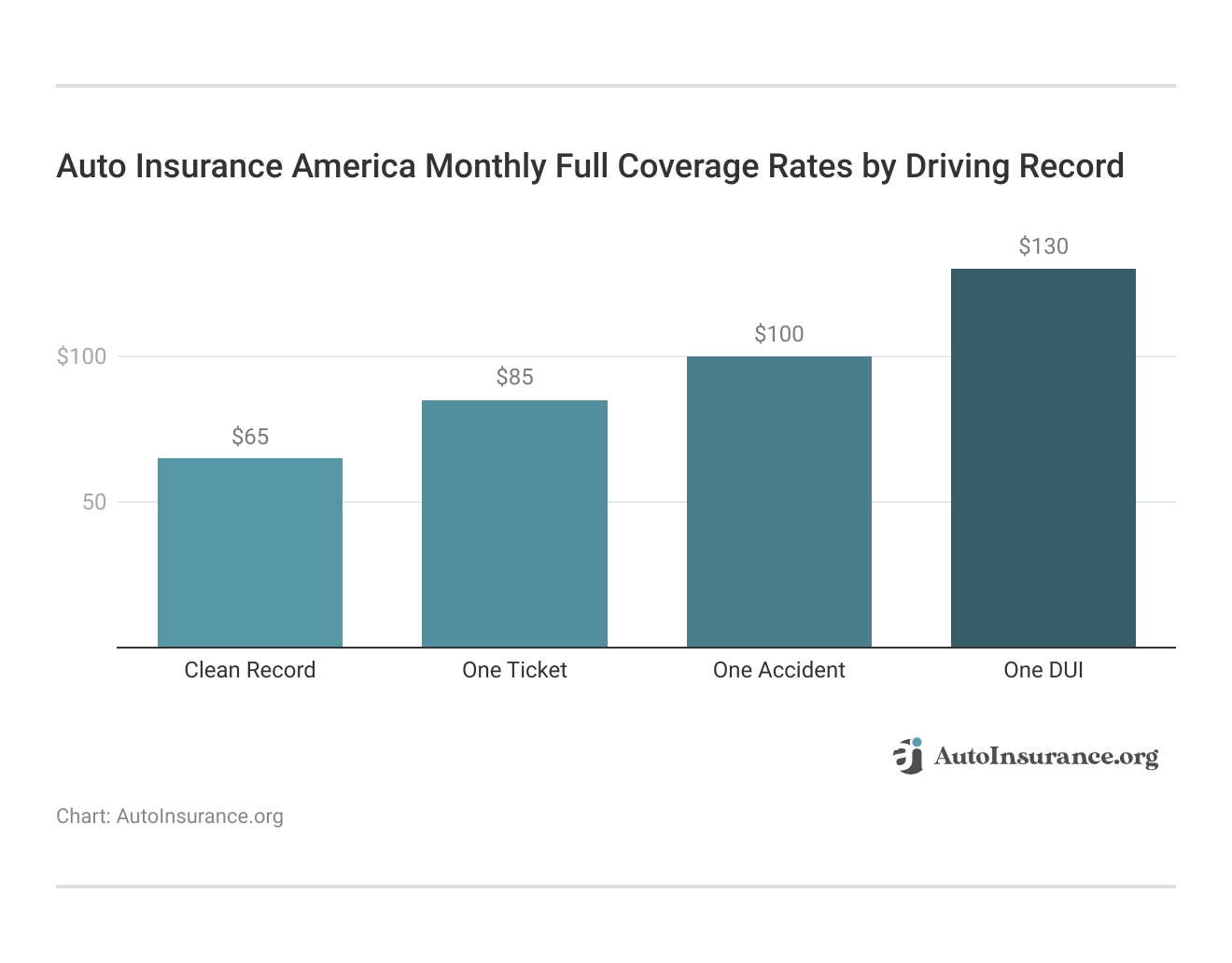
While insurance remains valid for accidental collisions, a DUI (Driving Under the Influence) in Canada is a criminal offense and can lead to immediate vehicle seizure and permanent inadmissibility to the country. Furthermore, many U.S. states have "reciprocal reporting" agreements with Canadian provinces; a speeding ticket in Ontario will likely appear on your New York or Michigan driving record and affect your insurance premiums at home.
Do I need extra insurance for a trailer or camper?
If you are towing a trailer, your U.S. liability coverage usually extends to the trailer while it is attached to your vehicle. however, physical damage coverage (Collision/Comprehensive) for the trailer itself must be specifically listed on your policy. Ensure your Yellow Card reflects that you are authorized for "towing" if your insurer provides that level of detail.
Can I buy "Short-Term" Canadian insurance at the border?
No. Canadian border agents do not sell insurance, and there are very few "port-of-entry" insurance providers. You must have your insurance arranged through your U.S. carrier before you arrive at the border. If you arrive without proof of insurance, you will likely be turned away or forced to leave your vehicle at the border.
Practical Recommendation for Travelers
Before departing for Canada in 2026, your primary action item is to contact your insurance agent or use your carrier’s digital portal to request a "Canada Non-Resident Inter-Province Card." Do not rely solely on your standard U.S. insurance card. Additionally, confirm that your liability limits are at least $500,000, though $1,000,000 is the safer professional recommendation for cross-border transit. Finally, download a digital copy of your policy and the PAU agreement (if available) to your smartphone so that it is accessible even without a cellular data connection at remote border crossings.