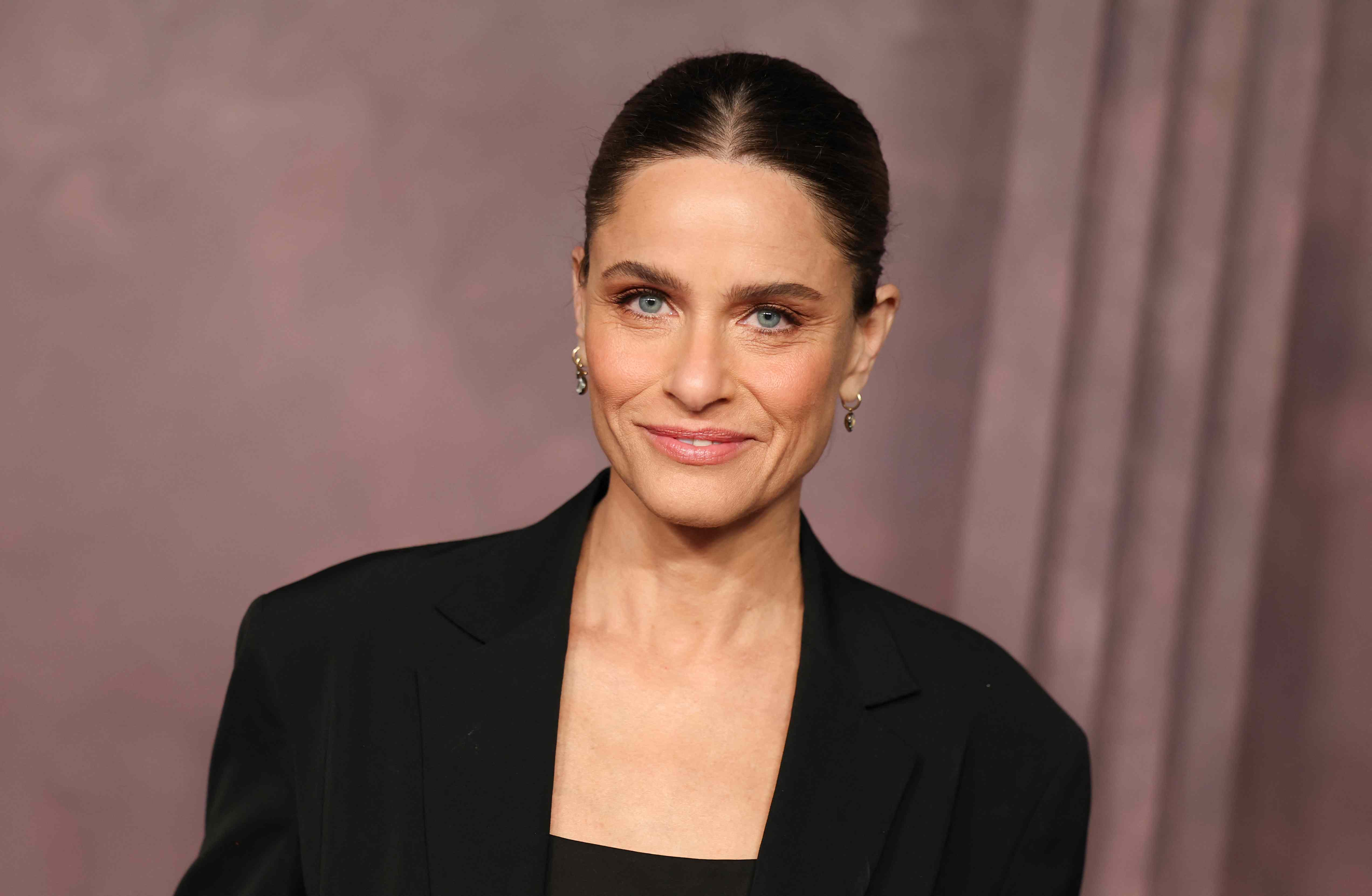
Amanda Peet is a versatile American actress and playwright whose career has spanned over three decades, characterized by a transition from comedic television roles to dramatic film performances and critically acclaimed writing. She is widely recognized for her work in projects such as The Whole Nine Yards, Studio 60 on the Sunset Strip, Togetherness, and The Chair, while also maintaining a notable career as a screenwriter for series like The Chair and Dirty John: The Betty Broderick Story.
Early Life and Educational Foundations
Born on January 11, 1972, in New York City, Amanda Peet was raised in an environment that valued intellectual and artistic pursuits. Her mother, Penny Levy, worked as a social worker, and her father, Charles Peet Jr., was a corporate lawyer. This blend of social consciousness and professional rigor provided a balanced foundation for her future career.
Peet attended the Friends Seminary, a Quaker school in Manhattan, which is known for its focus on community service and academic inquiry. After graduating from secondary school, she enrolled at Columbia University, where she majored in American history. It was during her time at Columbia that her interest in acting shifted from a casual pursuit to a serious professional focus. She studied under the tutelage of renowned acting coach Uta Hagen and began auditioning for various stage productions in New York City while completing her undergraduate degree.
The Breakthrough Years: Transitioning to Hollywood
Peet’s entry into the entertainment industry followed a conventional but competitive path. She started with guest appearances on television shows such as Law & Order and Seinfeld during the mid-1990s. These early roles provided the essential technical experience required to navigate a film set and understand the nuances of on-camera performance.
Her true breakthrough occurred in 1999 with the role of Jacqueline Barrett in the television series Jack & Jill. The show’s popularity allowed her to transition into mainstream feature films. In 2000, she appeared as Jill St. Claire in the hit crime comedy The Whole Nine Yards, starring alongside Bruce Willis and Matthew Perry. This performance solidified her reputation as a capable comedic actress with excellent timing, leading to a string of roles in various romantic comedies, including Something's Gotta Give and A Lot Like Love.
Diversifying Her Portfolio: Dramatic Turns and Television
While Peet initially gained fame for her roles in lighthearted comedies, she intentionally sought out roles that challenged her range. This shift was perhaps most evident in her television work. In 2006, she was cast as Jordan McDeere in Aaron Sorkin’s Studio 60 on the Sunset Strip. The show, while short-lived, received critical praise for its depiction of the behind-the-scenes world of a Saturday Night Live-style sketch comedy program.
In the following decade, Peet continued to gravitate toward complex, nuanced characters. Her performance in the HBO series Togetherness (2015–2016) showcased her ability to portray the fragility and humor of adult relationships. This project served as a turning point, signaling a transition toward creative control, as she began to express a deeper interest in the writing and production side of television.
Notable Filmography and Television Roles
To understand the scope of Amanda Peet’s impact on entertainment, one must examine the variety of projects she has undertaken. Her career is not defined by a single genre but by a consistent commitment to character-driven storytelling.
Select Performance Highlights
| Project | Role | Genre | Year |
|---|---|---|---|
| The Whole Nine Yards | Jill St. Claire | Comedy | 2000 |
| Something's Gotta Give | Marin Barry | Romantic Comedy | 2003 |
| Syriana | Julie Woodman | Political Thriller | 2005 |
| Studio 60 on the Sunset Strip | Jordan McDeere | Drama | 2006-2007 |
| Togetherness | Tina Morris | Comedy-Drama | 2015-2016 |
| The Chair | Creator/Writer | Drama | 2021 |
The table above illustrates the trajectory of her career. While her earlier work focused on mainstream cinema, her recent focus has expanded into television writing, demonstrating a shift from being a collaborator in front of the camera to an architect behind the scenes.
Shift to Screenwriting and Creative Control
In recent years, Peet has established herself as a significant creative force in television production. Her most notable contribution as a writer and showrunner came with the 2021 Netflix series The Chair. The series, which examines the internal politics of a university English department, received positive reviews for its sharp writing and its exploration of academic culture, gender, and aging.
Peet’s ability to write dialogue that is both intellectually stimulating and emotionally grounded was also demonstrated in her work as a writer for Dirty John: The Betty Broderick Story. By stepping into the role of a creator, she has been able to curate stories that reflect contemporary social issues, moving away from the archetypes she played earlier in her career.
Personal Life and Advocacy
Beyond her professional endeavors, Amanda Peet has been a long-time advocate for public health. She is perhaps best known in this sphere for her work with Every Child By Two, an organization dedicated to promoting the importance of childhood vaccinations. Her involvement in this cause stems from her own experiences as a mother and her desire to leverage her public platform to disseminate evidence-based information regarding global health initiatives.
She is married to David Benioff, the writer and producer best known for co-creating Game of Thrones. The two have three children, and Peet has been vocal about the challenges of balancing a high-profile career in the entertainment industry with the demands of family life.
Frequently Asked Questions (FAQ)
1. What was Amanda Peet’s first major film role?
Peet’s first major film role that garnered widespread recognition was as Jill St. Claire in the 2000 crime comedy The Whole Nine Yards. Before this, she appeared in various television roles and smaller independent films, but this particular role served as her breakout into mainstream Hollywood stardom.
2. Is Amanda Peet still acting, or has she moved entirely to writing?
As of 2026, Amanda Peet remains active in the industry as both an actor and a writer. While she has taken on a more significant role in the creative development and writing processes, she continues to accept acting roles that align with her creative interests, demonstrating that she maintains a dual focus on performance and production.
3. What is the significance of The Chair in her career?
The Chair represents a major transition for Peet from performer to showrunner and lead writer. By creating and executive producing the series, she took full control of the narrative tone and structure, earning critical acclaim for the show's nuanced take on academia and modern social pressures.
4. What cause is Amanda Peet most famously associated with?
Peet is widely recognized for her advocacy work with the organization Every Child By Two. She has been a vocal supporter of childhood immunization, frequently using her public presence to speak about the importance of vaccinations and to provide support for public health policies.
5. How has Amanda Peet’s acting style changed over time?
Her acting style has evolved from the high-energy, slapstick-adjacent comedic timing of her early career into a more internalized, dramatic approach. Her later work in shows like Togetherness highlights a preference for "dramedy," where the humor is rooted in the uncomfortable realities of human behavior rather than situational setups.
Conclusion and Looking Ahead
Amanda Peet’s career trajectory is a testament to the longevity one can achieve in Hollywood by evolving with the industry. By transitioning from a character actress in mainstream romantic comedies to a showrunner who shapes the cultural conversation through television writing, she has maintained relevance and creative satisfaction. Her work in 2026 continues to reflect a dedication to storytelling that explores the complexities of contemporary life. For those interested in following her professional output, monitoring her upcoming projects as a creator remains the best way to understand her current creative vision.