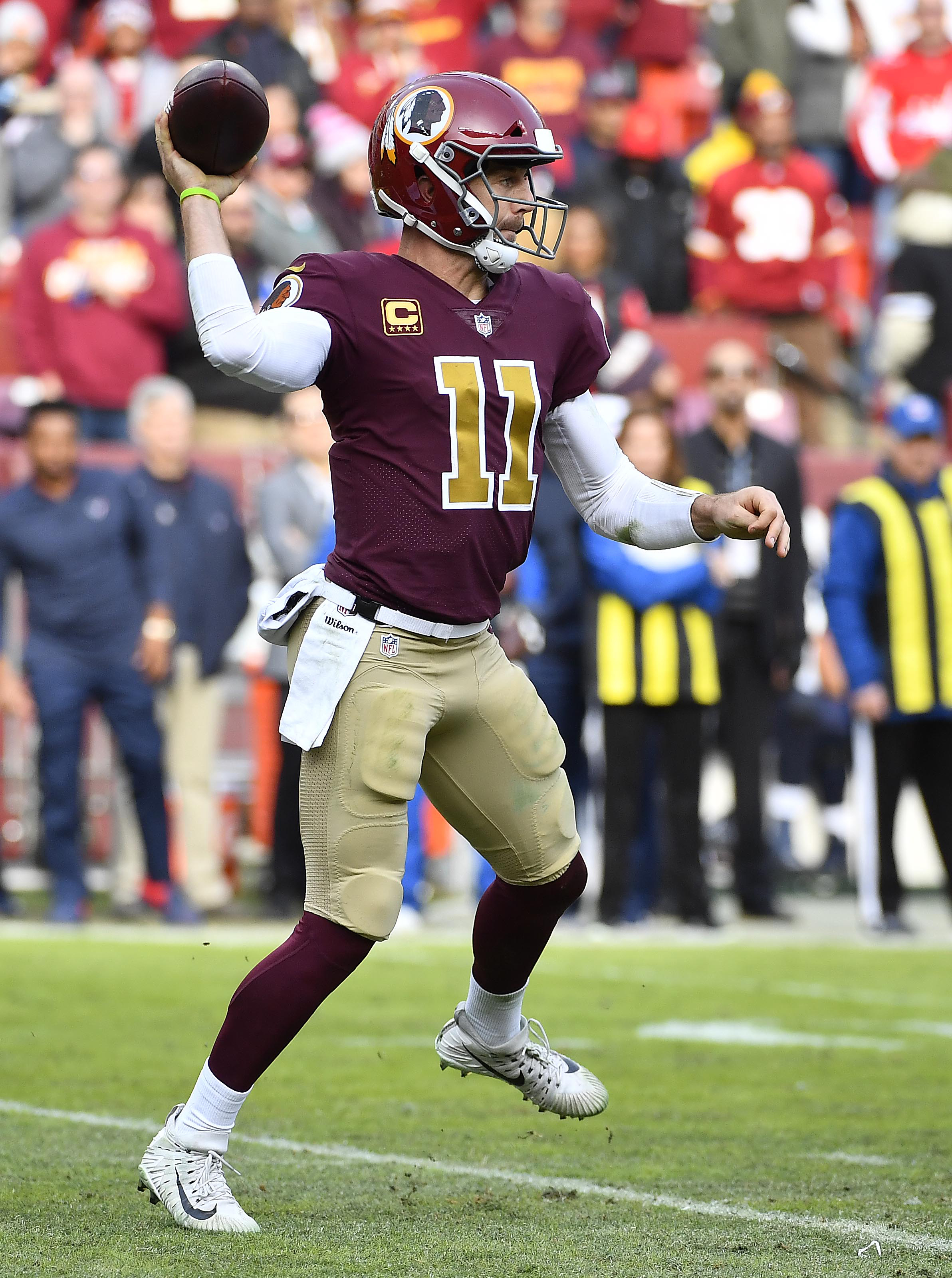
Alex Smith entered the NFL as the first overall pick in 2005 at the age of 21 and officially retired in 2021 at the age of 37. His 16-season career is defined by remarkable longevity, spanning from his early struggles in San Francisco to his veteran leadership in Kansas City and an inspirational comeback in Washington.
Throughout the history of the National Football League, few players have experienced a trajectory as volatile or as triumphant as Alex Smith. To understand the significance of Alex Smith’s age in the NFL, one must look beyond the mere numbers on a birth certificate. His career serves as a case study in athletic maturation, the evolution of the quarterback position, and the extraordinary limits of human recovery. As of 2026, Smith remains a symbol of perseverance, often cited by younger players as the gold standard for professional conduct and mental toughness.
The Early Years: A 21-Year-Old First Overall Pick
When the San Francisco 49ers selected Alex Smith with the first overall pick in the 2005 NFL Draft, he was just 21 years old. Entering the league at such a young age brought immense pressure, especially as he was frequently compared to Aaron Rodgers, who was drafted later in the same first round.
The Learning Curve of a Young Quarterback
In 2005, the NFL environment for rookie quarterbacks was significantly different than it is today. There were fewer protections for passers and less emphasis on collegiate-style spread offenses. Smith, a product of Urban Meyer’s system at Utah, found himself thrust into a struggling franchise. At age 21 and 22, Smith dealt with a revolving door of offensive coordinators—seven in his first seven seasons—which hindered his development.
Critics often pointed to his age and lack of "pro-style" experience during these years. However, his youth also allowed him to absorb significant physical punishment and remain the designated starter through several rebuilding phases. By the time he reached age 26, Smith began to show the flashes of efficiency that would later define his "Game Manager" (a term later reclaimed as a badge of efficiency) persona.
The 2011 Breakthrough at Age 27
The turning point for Smith’s career occurred under head coach Jim Harbaugh. At 27 years old, an age when many quarterbacks are entering their physical prime, Smith led the 49ers to a 13-3 record. His performance in the "Saints vs. 49ers" playoff game that season remains one of the most iconic moments in franchise history. At 27, he had finally married his physical tools with a sophisticated understanding of NFL defenses, proving that his early-career struggles were more a product of instability than a lack of talent.
The Kansas City Years: Peak Performance and Veteran Maturity
In 2013, at age 29, Alex Smith was traded to the Kansas City Chiefs. This transition marked the beginning of his statistical prime. Under the tutelage of Andy Reid, Smith transformed from a scrutinized former top pick into a consistent Pro Bowl-caliber starter.
Consistency Between Ages 29 and 33
From 2013 to 2017, Smith provided the Chiefs with high-level stability. While many quarterbacks begin to see a decline in mobility as they enter their 30s, Smith remained a dual-threat asset. His ability to execute a complex West Coast offense while minimizing turnovers became his trademark.
- Age 30: Led the Chiefs to a winning record while throwing only 6 interceptions.
- Age 33 (2017): Smith had arguably his best statistical season, leading the NFL in passer rating (104.7) and throwing for over 4,000 yards for the first time in his career.
The Mentorship of Patrick Mahomes
At age 33, Smith faced a new challenge: the arrival of first-round pick Patrick Mahomes. In a move that is still praised by NFL analysts in 2026, Smith embraced the role of mentor. His maturity at this stage of his career was vital. Rather than creating a toxic locker room environment, Smith showed Mahomes how to prepare like a professional. This "bridge" year at age 33 cemented Smith’s legacy as one of the ultimate teammates in sports history.
The Washington Era: The Injury That Defied Age
Following his trade to the Washington Football Team in 2018, Alex Smith was 34 years old. He was expected to provide a steady hand for a franchise in transition. However, the events of November 18, 2018, changed his life and the conversation around his career forever.
The Life-Threatening Injury at Age 34
During a game against the Houston Texans, Smith suffered a compound fracture of his tibia and fibula. The injury was gruesome, but the complications were worse. Smith developed necrotizing fasciitis (flesh-eating bacteria) and sepsis. At age 34, he wasn't just fighting for his career; he was fighting for his life and his leg.
Medical professionals performed 17 surgeries to save the limb. Most experts concluded that at his age, a return to the NFL was physically impossible. The recovery required a grueling two-year process involving specialized military rehabilitation centers normally reserved for wounded warriors.
The Impossible Comeback at Age 36
In 2020, at the age of 36, Alex Smith did the unthinkable. He not only returned to the active roster but took the field in a regular-season game. His return on October 11, 2020, is regarded as one of the most emotional moments in NFL history.
By the end of the 2020 season, Smith had led Washington to a 5-1 record as a starter and a playoff berth. His ability to win games at age 36, while playing with a reconstructed leg and a specialized brace, earned him the NFL Comeback Player of the Year award. This feat demonstrated that his football IQ and leadership could overcome physical limitations that would have sidelined players ten years younger.
Retirement and Legacy: Alex Smith at 37 and Beyond
Alex Smith officially announced his retirement on April 19, 2021. At the time of his announcement, he was 36, turning 37 just weeks later. He chose to retire while he still had health and could walk away on his own terms, despite having offers to continue playing as a high-value veteran backup.
Career Statistical Summary by Age Brackets
The following table illustrates how Smith's efficiency and usage evolved as he moved through different stages of his NFL career.
| Career Phase | Age Range | Primary Team | Key Characteristic | Notable Achievement |
|---|---|---|---|---|
| Early Career | 21–26 | SF 49ers | Development/Instability | 1st Overall Pick (2005) |
| Established Starter | 27–28 | SF 49ers | Tactical Efficiency | 2011 NFC Title Game Appearance |
| Veteran Peak | 29–33 | KC Chiefs | High Volume/Low Turnovers | 3x Pro Bowl Selection |
| The Comeback | 34–36 | Washington | Resilience/Leadership | 2020 Comeback Player of the Year |
| Retirement | 37+ | N/A | Broadcasting/Mentorship | Career Longevity Leader |
Life in 2026: The Post-NFL Chapter
As of 2026, Alex Smith is 42 years old. Since retiring, he has transitioned into a highly respected analyst role, providing deep technical insights into quarterback play and locker room dynamics. His journey—from a 21-year-old struggling rookie to a 36-year-old miracle—has made him a sought-after motivational speaker. He remains involved in philanthropic efforts, particularly those focused on foster youth and medical rehabilitation for athletes.
The Significance of Age in Quarterback Longevity
Alex Smith’s career timeline offers several lessons regarding age in the NFL. Unlike the "anomaly" of Tom Brady, who played until 45, Smith’s career represents a more realistic but still extraordinary example of longevity for a quarterback who suffered significant injuries.
- The 30-Year-Old Threshold: Smith proved that a quarterback's best intellectual years often begin after 30. His tenure in Kansas City (ages 29–33) saw a marked improvement in his ability to read defenses pre-snap.
- Physical vs. Mental Decline: While Smith lost some of his elite scrambling speed after his 2018 injury, his mental processing speed actually increased. This allowed him to remain effective at age 36 by getting the ball out faster and avoiding unnecessary hits.
- Mentorship Roles: Smith’s transition from starter to mentor at age 33 (to Mahomes) and age 36 (to the Washington QB room) highlighted the value of "elder statesmen" in an NFL locker room.
Frequently Asked Questions
How old was Alex Smith when he was drafted?
Alex Smith was 21 years old when the San Francisco 49ers selected him with the first overall pick in the 2005 NFL Draft. He was one of the youngest quarterbacks ever to be taken with the top pick at that time, having left the University of Utah after his junior year.
What was Alex Smith's age when he suffered his career-threatening injury?
Alex Smith was 34 years old when he suffered the compound fracture of his leg on November 18, 2018. The severity of the injury and the subsequent infections led many to believe his NFL career was over at an age when many quarterbacks are already considering retirement.
At what age did Alex Smith win Comeback Player of the Year?
Alex Smith won the NFL Comeback Player of the Year award following the 2020 season, when he was 36 years old. This followed a nearly two-year absence from the game and 17 surgeries to save his leg and life.
How old is Alex Smith now in 2026?
Born on May 7, 1984, Alex Smith is 42 years old in 2026. Since retiring at age 37, he has focused on his family, his health, and his career as a sports broadcaster and analyst.
Did Alex Smith play his entire career with the same team?
No. Alex Smith played for three primary organizations during his 16-season NFL career. He spent his first eight seasons with the San Francisco 49ers (ages 21–28), five seasons with the Kansas City Chiefs (ages 29–33), and his final three seasons with the Washington Football Team (ages 34–36).
Why did Alex Smith retire at age 37?
Smith retired at age 37 primarily to prioritize his long-term health and spend time with his family. After the grueling recovery from his 2018 injury and a successful 2020 season where he proved he could still play, he felt he had "conquered the mountain" and wanted to walk away while still physically capable.
Final Perspective on Alex Smith’s NFL Longevity
Alex Smith’s age in the NFL is a timeline of evolution. He survived the "bust" labels of his early 20s, mastered the efficiency of his early 30s, and showcased unparalleled grit in his mid-30s. For fans and analysts looking back from the vantage point of 2026, Smith is rarely remembered just for his stats; he is remembered for how he managed the clock of his career. He maximized every year he was given, proving that while age can limit the body, it often refines the mind.
For those tracking the careers of modern young quarterbacks, Smith’s journey serves as a reminder that the first five years do not always define a player’s legacy. Success in the NFL is a marathon, and as Alex Smith showed, sometimes the most important miles are the ones run in the twilight of a career.