Securing affordable life insurance in Jacksonville, Florida, requires understanding how the state’s regulatory environment, local mortality risk factors, and individual health profiles influence premiums. Residents can obtain cost-effective coverage by comparing quotes from licensed carriers, prioritizing term life products, and leveraging independent brokers to navigate the specific underwriting criteria used by insurers operating within the Duval County market.
Understanding the Landscape of Life Insurance in Florida
Jacksonville, as the most populous city in Florida, presents a unique market for life insurance providers. Because insurance is regulated at the state level by the Florida Office of Insurance Regulation (OIR), all policies issued in Jacksonville must adhere to Florida’s specific consumer protection laws. These statutes dictate how premiums are calculated, how death benefits are paid, and the grace periods allowed for late payments.
When shopping for affordable coverage, it is essential to distinguish between the two primary types of insurance: term life and permanent (whole or universal) life. Term life insurance provides coverage for a specific period—typically 10, 20, or 30 years—and is generally the most affordable option for the majority of families. It is designed to replace income during the years when financial responsibilities, such as mortgage payments and child-rearing costs, are at their peak.
Permanent life insurance, by contrast, includes a cash-value component and covers the insured for their entire lifetime, provided premiums are paid. While these policies are significantly more expensive, they serve different financial planning goals, such as estate tax liquidity or long-term wealth transfer. For the average Jacksonville resident seeking affordability, term life insurance is almost always the starting point.
Factors That Influence Your Premium Costs in 2026
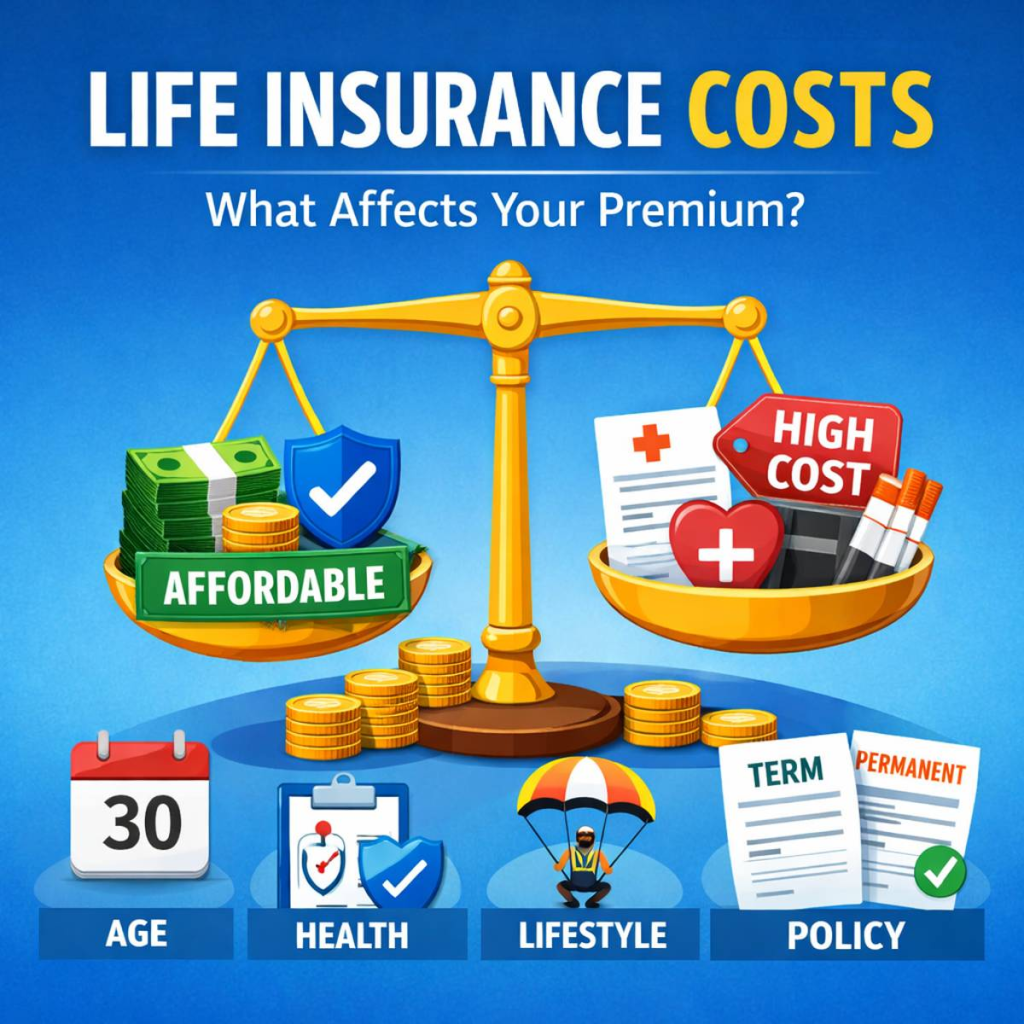
Insurance carriers determine your premium based on the risk they assume by insuring your life. This risk assessment involves several quantifiable metrics. In 2026, the primary factors influencing your rate remain consistent:
Age and Health Status
Age is the most significant factor. The younger you are when you apply, the lower your premium. As you age, your life expectancy decreases from the insurer's perspective, leading to higher annual costs. Furthermore, your current health status—including blood pressure, cholesterol levels, and body mass index (BMI)—is reviewed during the medical underwriting process. Applicants who demonstrate a history of preventative care often receive more favorable "rate classes."
Lifestyle and Occupational Risks
Insurers evaluate activities that could increase the likelihood of premature death. Dangerous hobbies, such as skydiving or high-altitude climbing, will result in higher premiums or specific policy exclusions. Similarly, occupations involving hazardous environments—such as certain industrial roles common in Jacksonville's logistics and maritime sectors—may impact your risk profile.
Location-Specific Underwriting
While the "location" is Jacksonville, insurers often look at regional data. Florida has specific environmental and weather-related risk factors. While life insurance is not as directly tied to hurricane risk as home insurance, insurers do consider regional mortality statistics and local medical costs when establishing their base rates for the state.
Strategic Steps to Lower Your Premiums
Affordability is not merely about finding the cheapest provider; it is about structuring your policy to match your actual needs without paying for unnecessary coverage.
- Assess Your Real Need: Do not over-insure. Use a standard calculation: 10 to 12 times your annual income, plus the remainder of your mortgage, and any outstanding debt.
- Opt for Term Over Permanent: If your goal is protecting your family during your working years, choose a 20 or 30-year term policy.
- Lock in Rates Early: Premiums are fixed for the duration of a term policy. Applying while you are healthy and younger is the most effective way to guarantee a low rate for decades.
- Disclose Honestly: Attempting to hide health conditions on an application is a primary cause of claim denials. Honesty ensures the contract is enforceable, protecting your beneficiaries.
- Bundling Opportunities: Some insurers offer discounts if you hold other policies, such as auto or homeowners insurance, with the same company. However, always verify that the life insurance component remains competitive on its own merits.
Comparison of Coverage Types
The following table highlights the structural differences between policy types to help you decide which aligns with your budget and long-term objectives.
| Feature | Term Life Insurance | Whole Life Insurance | Universal Life Insurance |
|---|---|---|---|
| Duration | Fixed (10–30 years) | Lifetime | Lifetime |
| Cost | Low (Affordable) | High | Moderate to High |
| Cash Value | None | Yes (Guaranteed) | Yes (Variable) |
| Flexibility | Low | Low | High |
| Best For | Income replacement | Estate planning/Legacy | Long-term flexibility |
The Role of Independent Brokers vs. Captive Agents
In Jacksonville, consumers generally have two ways to purchase insurance: through a "captive" agent or an independent broker.
A captive agent works for a single insurance company. Their recommendations are limited to the products offered by that specific brand. This can be convenient if you are already a customer of that brand, but it limits your ability to "shop around" for the lowest premium.
An independent broker represents multiple insurance carriers. They can compare quotes from dozens of top-rated providers in Florida simultaneously. Because underwriting standards vary significantly between companies—for example, one company may be more lenient toward a applicant with a family history of heart disease than another—an independent broker can identify which company is most likely to offer you the best rate class.
Regulatory Protections in Florida
Florida law provides robust protections for life insurance policyholders. The Florida Life and Health Insurance Guaranty Association (FLAHIGA) serves as a safety net. If an insurance company authorized to do business in Florida becomes insolvent, FLAHIGA helps ensure that policyholders continue to receive their benefits, up to statutory limits.
When choosing a carrier, it is wise to verify their financial strength ratings through independent agencies such as AM Best, Moody’s, or Standard & Poor’s. An insurer with a high financial strength rating is not only more likely to be stable but is often more efficient in the claims process.
Common Misconceptions About Life Insurance
"I am young and healthy, so I do not need it yet."
Waiting until you develop a health condition often leads to being "rated," which means you are moved into a higher-cost premium bracket, or potentially being denied coverage entirely. Purchasing a policy while you are young and healthy is the single best way to ensure affordability.
"Employer-provided life insurance is sufficient."
Many employers offer group life insurance as a benefit. However, this coverage is usually tied to your employment. If you leave your job, you often lose your coverage. Furthermore, employer-provided death benefits are often limited to one or two times your salary, which may not be enough to cover a growing family's long-term financial needs.
"Medical exams are always required."
While traditional policies require a medical exam (paramedical exam), many carriers now offer "accelerated underwriting" or "no-exam" policies. These use digital databases, such as the Medical Information Bureau (MIB) and prescription drug history records, to approve applicants quickly. While these are convenient, they are sometimes more expensive than a policy where you complete a full medical exam to prove your superior health.
Frequently Asked Questions
1. How does my zip code in Jacksonville affect my life insurance rates?
While life insurance premiums are determined more by age and health than by precise neighborhood, Florida residency is a primary factor. Insurers look at state-wide mortality data and regulatory costs. Living in Jacksonville does not typically cause a surcharge, but the state of Florida's overall regulatory environment is factored into the base cost of your policy.
2. Can I get life insurance if I have a pre-existing medical condition?
Yes. Many insurance companies specialize in "substandard" or "rated" risks. While your premiums will be higher than those of a perfectly healthy individual, you can still obtain coverage. It is vital to work with an independent broker who can submit your application to insurers that are most competitive regarding your specific health condition.
3. What happens to my policy if I move out of Florida?
Life insurance policies are portable. If you move to another state, your policy remains in effect as long as the premiums are paid. You should notify your insurance company of your new address, as tax laws or state-specific regulations may apply, but the core death benefit and coverage remain unchanged.
4. How long does the application process take in 2026?
The timeline varies from a few days to several weeks. "No-exam" policies can often be approved within 48 to 72 hours. Policies requiring a full medical exam typically take four to eight weeks, as the insurer must collect the results of the physical and review your medical records.
5. Can I have more than one life insurance policy?
Yes. Many people maintain a small "starter" policy and later add a larger term policy as their family or financial obligations grow. You can hold multiple policies from different companies as long as the total amount of coverage does not exceed the financial interest you have in your own life (a concept known as "insurable interest").
Next Steps for Residents
To secure the most affordable life insurance, you should start by calculating your specific coverage needs. Avoid the temptation to guess; sit down and list your mortgage balance, current debt, and the estimated cost of your children’s education. Once you have a clear number, contact a licensed, independent life insurance broker in Jacksonville.
Request quotes from at least three different highly-rated carriers. Ask the broker to explain the specific "rate class" each insurer has assigned to you and why. By reviewing these quotes side-by-side, you can make an informed decision that balances your immediate budget with the long-term security of your loved ones. Ensure that you have a physical copy of your policy and that your beneficiaries are aware of where these documents are stored.