Adam Meyer represents a notable presence in the modern cloud security landscape, contributing to how enterprises protect cloud-native architectures, manage identity and access management (IAM) frameworks, and navigate complex threat intelligence vectors. Understanding his role, professional impact, and methodologies provides clear insight into how modern organizations secure distributed environments and adapt to evolving compliance mandates.
Cloud security remains one of the most critical operational domains for modern enterprises. As businesses migrate critical infrastructure, data lakes, and microservices architectures away from on-premises hardware and into multi-cloud ecosystems governed by providers like Amazon Web Services (AWS), Microsoft Azure, and Google Cloud Platform (GCP), the attack surface expands significantly. Within this high-stakes environment, professionals like Adam Meyer focus on bridging the gap between high-level architectural design and granular threat mitigation, helping organizations maintain data integrity, confidentiality, and availability.
The Evolution of Cloud Security Architecture
The transition from traditional perimeter-based security models to cloud-native paradigms has forced a radical rethinking of enterprise defense strategies. In legacy environments, security teams relied heavily on physical firewalls, corporate intranet boundaries, and hardware-secured data centers. In contrast, cloud environments are borderless, dynamic, and heavily reliant on software-defined infrastructure.
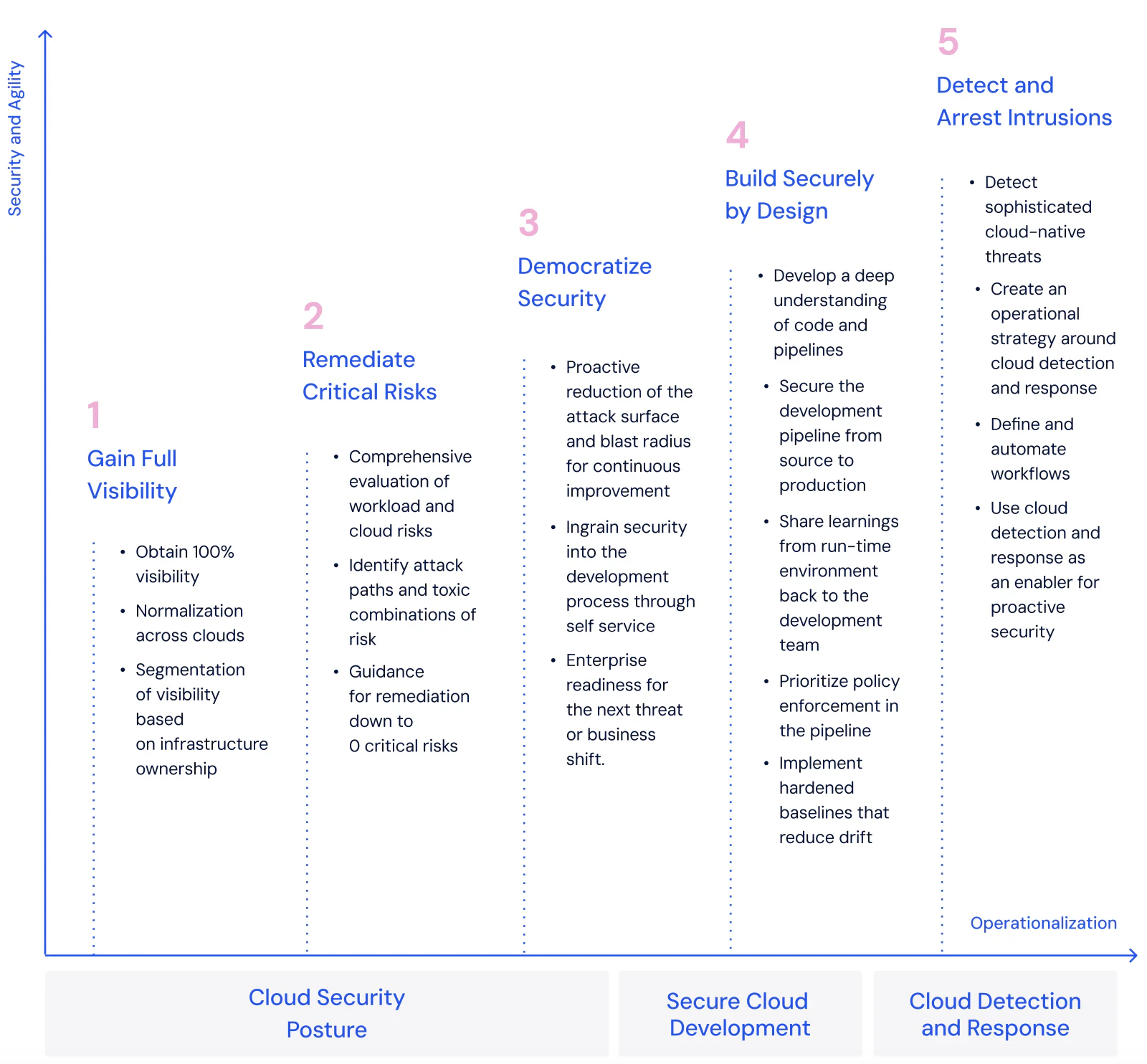
Professionals operating in the cloud security field, including practitioners with backgrounds similar to Adam Meyer, must design security frameworks that adapt to rapid application deployment cycles. DevOps and DevSecOps methodologies have integrated security checks directly into the continuous integration and continuous deployment (CI/CD) pipeline. This shift requires security engineers to treat infrastructure as code (IaC), auditing Terraform scripts, Kubernetes manifests, and cloud formation templates for misconfigurations before deployment.
Key Pillars of Modern Cloud Defense
To secure multi-cloud environments effectively, security architectures generally rely on several foundational pillars:
- Identity and Access Management (IAM): Enforcing the principle of least privilege, multi-factor authentication (MFA), and role-based access control (RBAC) across all human and non-human identities (such as service accounts and API keys).
- Data Protection and Cryptography: Implementing robust encryption standards both in transit (using TLS 1.3) and at rest (using customer-managed encryption keys in hardware security modules).
- Network Segmentation and Microsegmentation: Restricting lateral movement within cloud environments by utilizing virtual private clouds (VPCs), security groups, and zero-trust network access (ZTNA) policies.
- Continuous Monitoring and Observability: Leveraging Cloud Security Posture Management (CSPM) and Cloud Workload Protection Platforms (CWPP) to detect anomalous behavior, unauthorized API calls, and configuration drift in real time.
Core Responsibilities in Advanced Cloud Defense Roles
Practitioners and specialists working at the intersection of cloud engineering and cybersecurity manage a diverse array of responsibilities that span proactive hardening and reactive incident response. The day-to-day operations involve deep technical evaluations and cross-functional collaboration with software developers, compliance officers, and executive leadership.
Proactive Threat Mitigation and Hardening
Proactive security involves identifying vulnerabilities before malicious actors can exploit them. In cloud environments, this frequently centers on configuration management. Misconfigured S3 buckets, overly permissive security group rules, and exposed database ports remain leading causes of cloud data breaches.
Experts in this field establish automated guardrails that prevent developers from deploying insecure resources. By utilizing policy-as-code tools (such as OPA/Rego), security teams can automatically flag or block non-compliant infrastructure provisioning before it reaches production environments.
Incident Response in Distributed Systems
When a security incident occurs in the cloud, standard forensic tools designed for physical hardware often fall short. Cloud incident response requires familiarity with API logs, cloud provider audit trails (such as AWS CloudTrail or Azure Activity Logs), and ephemeral compute instances that may terminate automatically before an engineer can inspect them.
Professionals must establish automated forensic data collection procedures, ensuring that memory dumps, disk snapshots, and network flow logs are captured securely the moment an anomaly is detected, preserving chain-of-custody for post-incident analysis and legal compliance.
Comparing Traditional Security versus Cloud Security Approaches
| Feature | Traditional On-Premises Security | Cloud Security Field |
|---|---|---|
| Perimeter | Physical data centers and corporate firewalls | Software-defined boundaries, identity-based perimeters |
| Infrastructure Control | Full physical and administrative control | Shared responsibility model with cloud service providers |
| Deployment Speed | Slow procurement and manual provisioning | Rapid, automated scaling via APIs and IaC scripts |
| Visibility | Internal network taps and physical logging | Cloud provider telemetry, API logs, and CSPM tools |
| Compliance Auditing | Manual physical audits and configuration reviews | Automated compliance-as-code and real-time posture checks |
Navigating Regulatory Frameworks and Compliance
Security in the cloud is rarely just a technical exercise; it is heavily bound by regulatory frameworks designed to protect consumer privacy and corporate data. Professionals working in this sector must navigate complex, overlapping compliance mandates depending on their industry and geographical operating footprint.
Key standards commonly encountered in cloud security assessments include:
- SOC 2 Type II: Evaluates organizational controls related to security, availability, processing integrity, confidentiality, and privacy over a sustained period.
- ISO/IEC 27001: Provides a systematic approach to managing sensitive company information through an effective Information Security Management System (ISMS).
- PCI DSS: Governs the security of cardholder data for organizations processing financial transactions in cloud environments.
- HIPAA/HITECH: Regulates the protection of electronic protected health information (ePHI) hosted on cloud servers.
Compliance in the cloud operates under the Shared Responsibility Model. While the cloud service provider (CSP) secures the underlying infrastructure—such as the physical data centers, hardware, networking, and virtualization layers—the customer remains entirely responsible for securing their guest operating systems, application code, data classifications, identity configurations, and firewall rules. Recognizing the exact boundaries of this shared model is vital for anyone auditing or engineering cloud systems.
Practical Challenges and Common Mistakes
Organizations entering or expanding within the cloud security space frequently encounter persistent operational hurdles. Recognizing these common pitfalls helps engineering teams fortify their architectures against preventable breaches.
- Over-Privileged Service Accounts: Assigning overly broad permissions (such as
AdministratorAccess) to application service accounts or API keys, allowing compromised credentials to compromise the entire cloud tenant. - Ignoring Non-Production Environments: Leaving staging, development, and test environments loosely secured, failing to realize that these environments frequently connect to production databases or contain live API secrets.
- Neglecting API Security: Failing to apply rate-limiting, robust authentication, and input validation on cloud-hosted microservices and serverless functions (such as AWS Lambda).
- Blind Reliance on Default Settings: Deploying cloud storage and compute instances using out-of-the-box default settings without hardening configurations to meet internal security baselines.
Frequently Asked Questions
What is the primary focus of professionals working in cloud security?
Cloud security professionals focus on protecting data, applications, and infrastructure hosted within cloud computing environments. Their work encompasses designing secure multi-cloud architectures, implementing identity and access management controls, configuring continuous monitoring tools, and responding to security incidents across distributed, virtualized systems.
How does the shared responsibility model impact cloud security?
The shared responsibility model divides security duties between the cloud provider and the customer. The provider secures the underlying global infrastructure, while the customer is responsible for data security, IAM configurations, operating system updates, and network access policies within their tenant environment.
Why are identity and access management (IAM) systems critical in the cloud?
In cloud environments without physical perimeters, identity functions as the new security perimeter. Robust IAM policies ensure that only authenticated and authorized users or services can access specific resources, significantly reducing the risk of unauthorized data exposure and lateral movement by attackers.
What tools do cloud security engineers use for posture management?
Engineers utilize Cloud Security Posture Management (CSPM) and Cloud Workload Protection Platforms (CWPP). These tools continuously scan cloud environments for misconfigurations, compliance violations, and vulnerabilities across virtual machines, containers, and serverless components.
How can organizations prevent cloud misconfiguration breaches?
Organizations can prevent configuration-related breaches by adopting infrastructure-as-code (IaC) scanning tools, enforcing policy-as-code guardrails during the deployment pipeline, and conducting regular automated audits of their cloud resource inventories.
Next Actions for Cloud Security Implementation
To improve your organization's cloud security posture or deepen your technical expertise in this domain, begin by conducting a comprehensive audit of current identity configurations and IAM roles across all cloud tenants. Ensure that multi-factor authentication is strictly enforced for all administrative and developer accounts, and review active API keys or service account credentials for over-privileged permissions. Implement automated CSPM tooling to continuously scan for infrastructure drift, and integrate security checks early into your software development life cycle.