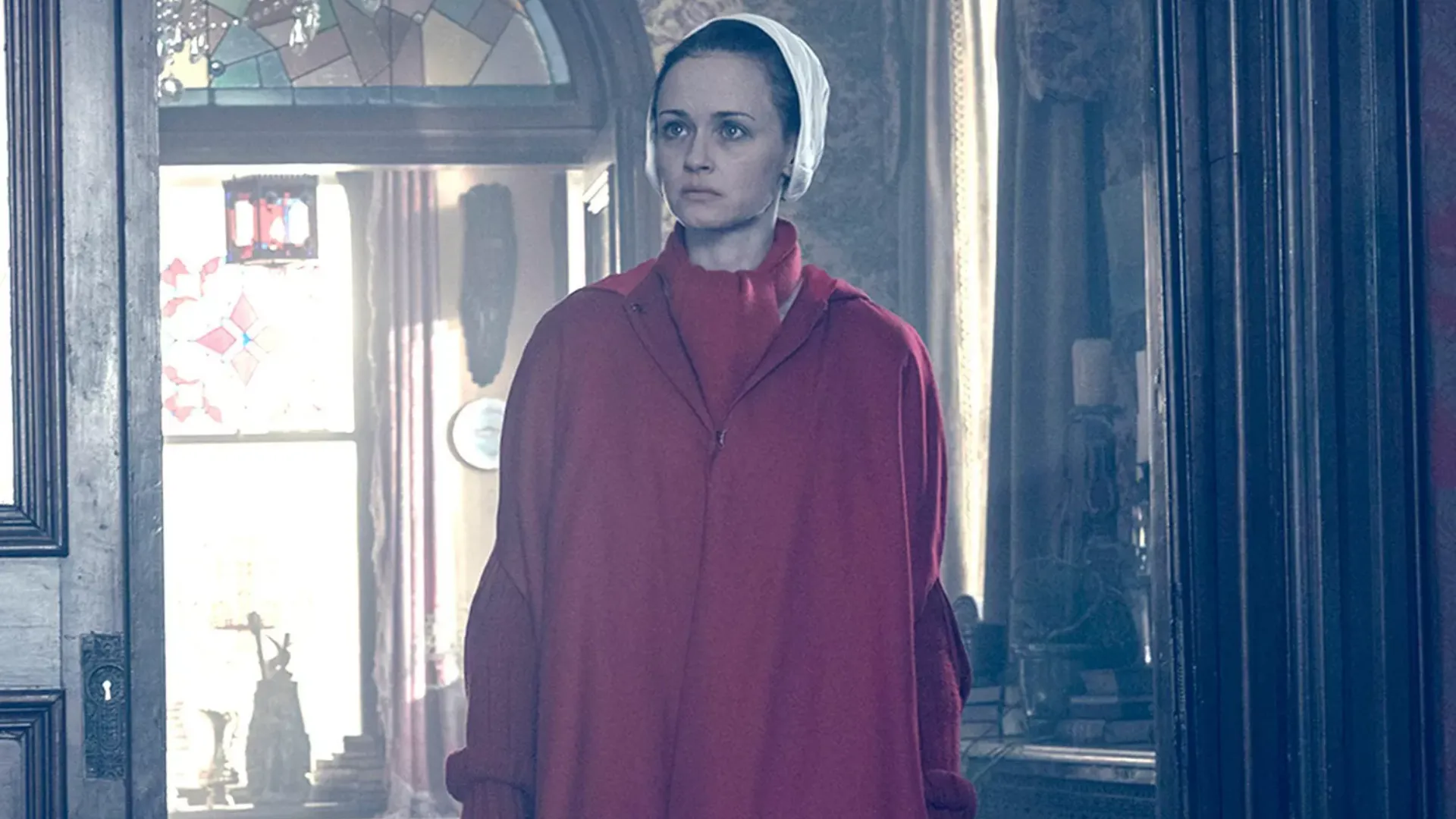
Elisabeth Moss portrays June Osborne, the central protagonist of the critically acclaimed television adaptation of Margaret Atwood’s novel, The Handmaid’s Tale. Over the course of the series, Moss’s performance has been widely recognized for its raw intensity, internal monologues, and the physical transformation of a woman resisting the oppressive regime of the Republic of Gilead.
The Casting and Artistic Approach to June Osborne
When The Handmaid’s Tale began production, the selection of the lead actress was paramount to the show’s success. The narrative relies heavily on the perspective of the Handmaid, a woman forced into reproductive servitude. Elisabeth Moss was cast not only for her acting range but for her capacity to convey complex, often contradictory emotions—fear, rage, maternal instinct, and calculated manipulation—without the need for extensive dialogue.
Moss’s approach to the character of June involves a deliberate focus on the "internal" performance. Much of the narrative in the television series is delivered through voiceover, a stylistic choice that mirrors the intimacy of Atwood’s original prose. Moss has frequently discussed in interviews the necessity of conveying June’s transition from a librarian and mother named June to "Offred," a Handmaid defined solely by her utility to her commander. This duality is the cornerstone of the character’s survival strategy: maintaining a sense of self while outwardly conforming to the brutal expectations of Gilead.
Character Evolution: From June to Resister
The transformation of June Osborne is a slow, methodical burn that spans the length of the series. At the start, the audience is introduced to a woman who is terrified and grieving, having been separated from her daughter, Hannah. The psychological weight Moss brings to the role in the early seasons is characterized by hyper-vigilance. Every flicker of her eyes suggests she is scanning for threats, constantly assessing her environment for potential escape routes or acts of defiance.
As the series progresses, June’s character evolves from a survivor into a revolutionary force. This shift is marked by a noticeable change in Moss’s physicality. The hunched, submissive posture of the early episodes gives way to a more defiant stance. The performance shifts from defensive to offensive, as June begins to orchestrate complex political maneuvers that destabilize Gilead’s leadership. Moss’s ability to portray this hardened exterior while simultaneously revealing the deep, unresolved trauma of a mother separated from her child is what critics have often cited as the defining element of her portrayal.
Key Moments of Performance
Several sequences throughout the series stand out as benchmarks of Moss’s acting. These moments often involve minimal dialogue, relying on close-up shots that emphasize the nuances of her facial expressions.
- The Rejection of Conformity: In scenes where June interacts with Aunt Lydia, Moss demonstrates a mastery of the "masked" performance—the ability to appear subservient while projecting a quiet, intense hatred that is visible to the audience but hidden from other characters.
- The Mother-Daughter Dynamic: Scenes involving June’s daughter, Hannah, represent the emotional core of the series. Moss performs these moments with a visceral, jagged vulnerability that contrasts sharply with the calculated coldness June exhibits when dealing with commanders or their wives.
- The Climax of Defiance: As June begins to dismantle the structures of Gilead, her demeanor becomes increasingly unpredictable. Moss captures the psychological cost of this radicalization, showing how the trauma of her captivity has essentially redefined her morality.
Comparison of Character Archetypes in Gilead
Understanding June Osborne requires comparing her experience to other individuals within the rigid hierarchy of Gilead. The table below illustrates the roles and typical motivations of key characters, which serves to highlight why June’s role as the "protagonist" is uniquely fraught with conflict.
| Character | Role | Primary Motivation | Interaction with June |
|---|---|---|---|
| June Osborne | Handmaid | Survival and Family | Protagonist / Focal point |
| Aunt Lydia | Instructor | Enforcement of Law | Antagonistic mentor |
| Serena Joy | Commander’s Wife | Maintaining Status | Power struggle/Mutual dependence |
| Commander Lawrence | Architect of Gilead | Guilt and Chaos | Strategic ally/Unpredictable force |
| Nick Blaine | Guardian/Driver | Personal Loyalty | Romantic/Information conduit |
Technical Challenges of Filming
The filming of The Handmaid’s Tale presents unique technical requirements that influence how the character of June is presented on screen. The use of natural light, combined with the restrictive nature of the Handmaid’s costume—the iconic red cloak and white bonnet—limits the actor’s ability to use body language to convey emotion.
Because the bonnet obscures the peripheral vision of the actors and limits the camera’s angle, Moss has had to rely heavily on her eyes and the set of her mouth to communicate June’s state of mind. This technical constraint has resulted in a style of filming that is deeply cinematic and claustrophobic, forcing the audience to remain in the literal and figurative headspace of June Osborne. The camera work is often tight, keeping the focus squarely on the face of the actress, which heightens the urgency of the narrative.
Themes of Power and Consent
Central to the role of June is the constant negotiation of power. In Gilead, consent is nonexistent, yet June consistently finds ways to reclaim agency. Moss’s performance navigates these themes by showing how power is reclaimed through small, often dangerous acts of rebellion. The nuance in her performance often lies in the "quiet" moments—the way she looks at a Commander, or how she handles a seemingly innocuous household object—which Moss imbues with symbolic weight.
Critics have noted that the show’s portrayal of systemic oppression relies entirely on the audience’s empathy for June. If the performance were to falter, the series might risk becoming a mere exercise in misery. Instead, by portraying June as a flawed, angry, and sometimes cruel survivor, Moss keeps the character relatable and grounded, even when the narrative reaches heights of political drama or extreme violence.
Impact on Cultural Discourse
The character of June Osborne has become a cultural touchstone. The visual of the Handmaid, made famous through the show, has been utilized in real-world protests globally. While the fictional character of June is an individual, her portrayal by Elisabeth Moss has served as a conduit for broader discussions regarding reproductive rights, authoritarianism, and the resilience of the human spirit.
By focusing on the specificities of June’s psychological trauma, the show avoids the trap of making her a one-dimensional "heroine." She is often complicit in the suffering of others, driven by a singular, obsessive focus on her own survival and the recovery of her family. Moss’s refusal to soften these edges is a testament to her dedication to the role’s integrity.
Frequently Asked Questions
Is Elisabeth Moss the producer of The Handmaid’s Tale? Yes, in addition to starring as June Osborne, Elisabeth Moss serves as an executive producer on the series. Her role behind the camera has allowed her to influence the character’s development and the overall narrative trajectory of the show.
How many seasons has Elisabeth Moss played June Osborne? As of 2026, Elisabeth Moss has portrayed June Osborne throughout the entire duration of the series. Her involvement has been continuous since the first season premiered in 2017.
Does June Osborne survive the events of the series? The series is structured as a complex narrative arc regarding resistance. While the series depicts numerous dangerous situations, the character’s journey is defined by her ongoing survival and the progression of her resistance against the state of Gilead.
Why is the performance of June Osborne considered so physically demanding? The performance is demanding due to the constraints of the costume, the long shooting days, and the emotional intensity required to portray a character living in a constant state of trauma and hyper-vigilance. Moss has often stated that the role requires total immersion.
How does the character of June in the show compare to the book? While the series remains grounded in the source material by Margaret Atwood, the show expands the character of June significantly beyond the events depicted in the novel. The series delves deeper into the mechanics of Gilead’s collapse and June’s role in the organized resistance.
Recommendations for Further Viewing
For those interested in the craft of acting or the thematic depth of The Handmaid’s Tale, it is recommended to observe the evolution of the camera work alongside Moss’s performance. Viewing the first season alongside the later seasons provides a clear look at how the character’s confidence and internal state are mirrored in the cinematography. Furthermore, exploring the behind-the-scenes interviews regarding the production design and the symbolic use of color—specifically the deep red of the Handmaid’s uniform—offers a better understanding of the environment in which June Osborne operates.