When it is 8 PM Eastern Time (ET), the local time in the Mountain Time Zone (MT) is 6 PM. This two-hour difference remains consistent throughout the year because both zones typically observe Daylight Saving Time (DST) on the same schedule, maintaining a fixed offset between the Atlantic coast and the Rocky Mountain region.
Calculating time across North America is a fundamental requirement for professionals, travelers, and media consumers. While the two-hour gap between Eastern Time and Mountain Time is generally straightforward, the complexity increases when accounting for specific geographic exceptions, the 2026 Daylight Saving Time transition dates, and the technical standards that govern global timekeeping. This guide provides an exhaustive breakdown of the conversion from 8 PM Eastern to Mountain Time, ensuring accuracy for any context in the 2026 calendar year.
Understanding the Two-Hour Gap
The primary reason for the difference between Eastern and Mountain Time is the physical distance and the rotation of the Earth. North America is divided into several time zones to ensure that "noon" occurs when the sun is at its highest point in the sky for a given longitude.
The Mechanics of Longitudinal Time
The Earth is divided into 24 longitudinal wedges, each representing approximately 15 degrees of the globe's 360-degree circumference. Each wedge corresponds to one hour of time. The Eastern Time Zone is centered roughly around 75°W longitude, while the Mountain Time Zone is centered around 105°W.
Because there is a 30-degree difference between these two central meridians, there is a natural two-hour difference in solar time. Between Eastern and Mountain Time sits the Central Time Zone, acting as a one-hour buffer. Thus, when you move westward from New York (Eastern) to Denver (Mountain), you "gain" two hours, effectively making the clock move backward from 8 PM to 6 PM.
Standard Time vs. Daylight Saving Time
In 2026, as in previous years, the designations for these zones change depending on the season:
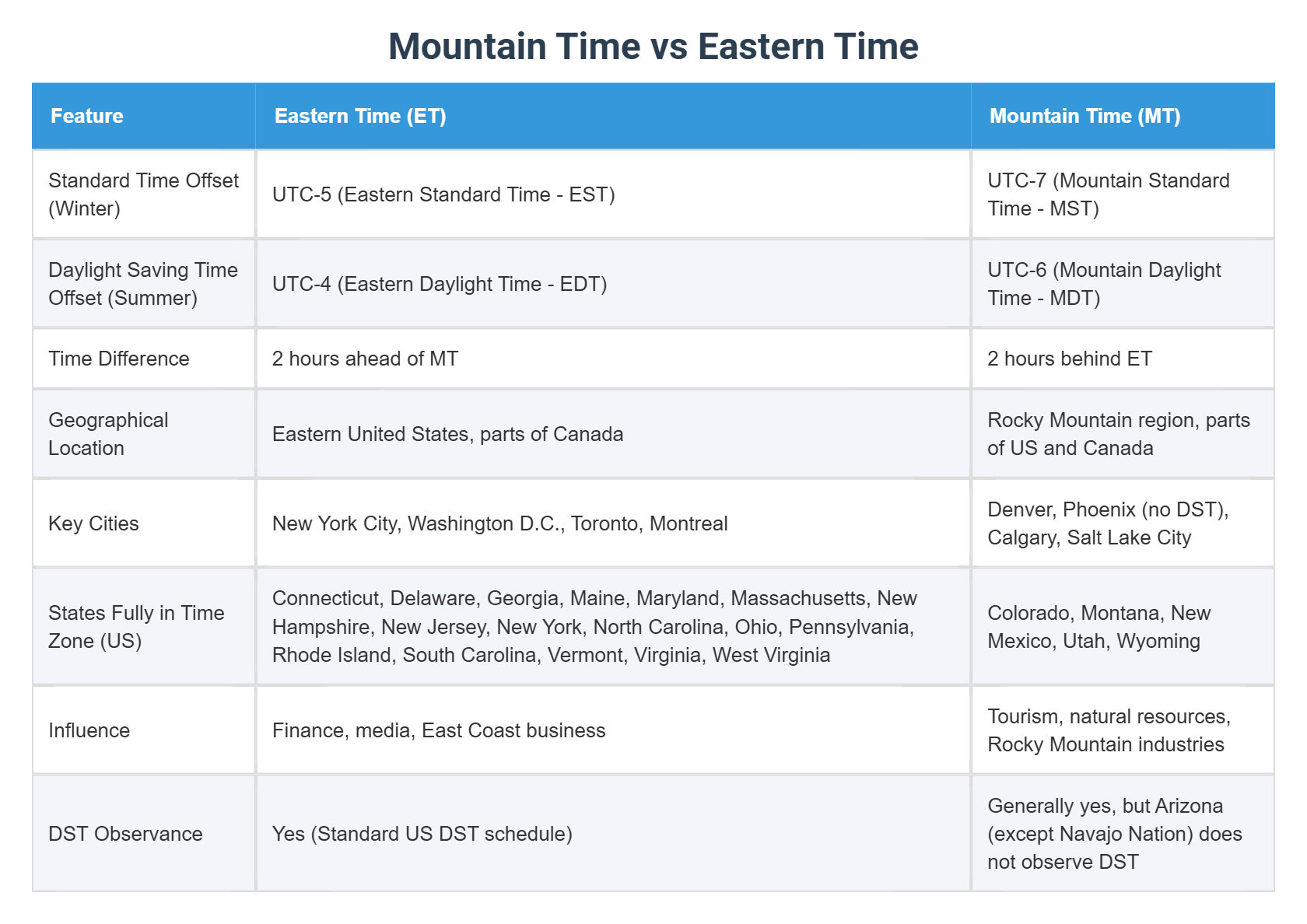
- Eastern Standard Time (EST) and Mountain Standard Time (MST): Used during the winter months. EST is UTC-5, and MST is UTC-7.
- Eastern Daylight Time (EDT) and Mountain Daylight Time (MDT): Used during the summer months. EDT is UTC-4, and MDT is UTC-6.
Regardless of whether the continent is observing Standard or Daylight time, the two-hour delta persists because both zones shift their clocks simultaneously. At 8 PM EDT, it is 6 PM MDT. At 8 PM EST, it is 6 PM MST.
The 2026 Daylight Saving Time Schedule
For 2026, it is essential to note the specific dates when clocks change. These transitions can occasionally cause confusion for scheduled events occurring late at night or early in the morning during the "spring forward" or "fall back" weekends.
| Event | Date in 2026 | Impact on 8 PM Conversion |
|---|---|---|
| DST Begins | Sunday, March 8 | Clocks move from EST/MST to EDT/MDT. 8 PM ET remains 6 PM MT. |
| DST Ends | Sunday, November 1 | Clocks move from EDT/MDT to EST/MST. 8 PM ET remains 6 PM MT. |
While the gap remains two hours, the "wall clock" time in Greenwich (Coordinated Universal Time or UTC) changes. For international teams coordinating with North America, 8 PM Eastern will be 00:00 UTC during the summer and 01:00 UTC during the winter.
The "Arizona Exception" and Other Nuances
The most significant complication when converting 8 PM Eastern to Mountain Time is the state of Arizona. With the exception of the Navajo Nation, Arizona does not observe Daylight Saving Time.
How Arizona Affects Your Conversion
Because Arizona remains on Mountain Standard Time (MST) all year, its relationship with Eastern Time changes twice a year:
- From March 8 to November 1, 2026: Eastern Time is on EDT (UTC-4). Arizona is on MST (UTC-7). The difference becomes three hours. Therefore, 8 PM Eastern is 5 PM in Phoenix, Arizona.
- From November 1, 2026, to March 14, 2027: Eastern Time is on EST (UTC-5). Arizona is on MST (UTC-7). The difference returns to two hours. Therefore, 8 PM Eastern is 6 PM in Phoenix, Arizona.
Regional Variations in Canada and Mexico
The Mountain Time Zone also extends into Canada and Mexico, where different rules may apply.
- Canada: Most of Alberta and parts of British Columbia observe the standard two-hour offset from the Eastern Time zones in Ontario and Quebec. However, portions of Saskatchewan reside in the Central Time Zone but do not observe DST, effectively putting them on Mountain Time during the summer.
- Mexico: As of recent legislative changes, much of Mexico has abolished Daylight Saving Time. This means that regions in the Mountain Time equivalent (Tiempo del Pacífico) may have a shifting offset compared to the U.S. Eastern Time zone depending on the time of year.
Geographic Reach of Eastern and Mountain Time
To accurately apply the 8 PM to 6 PM conversion, one must know which regions fall under these jurisdictions. Both zones span vast areas with diverse economies.
Eastern Time Zone Coverage
The Eastern Time Zone is the most populous in North America. In the United States, it includes:
- The entire Atlantic Coast states from Maine down to Florida.
- Major metropolitan hubs: New York City, Washington D.C., Atlanta, Miami, and Boston.
- Inland states such as Ohio, Pennsylvania, and parts of Michigan, Indiana, and Kentucky.
Mountain Time Zone Coverage
The Mountain Time Zone is characterized by its mountainous terrain and expansive rural areas. It includes:
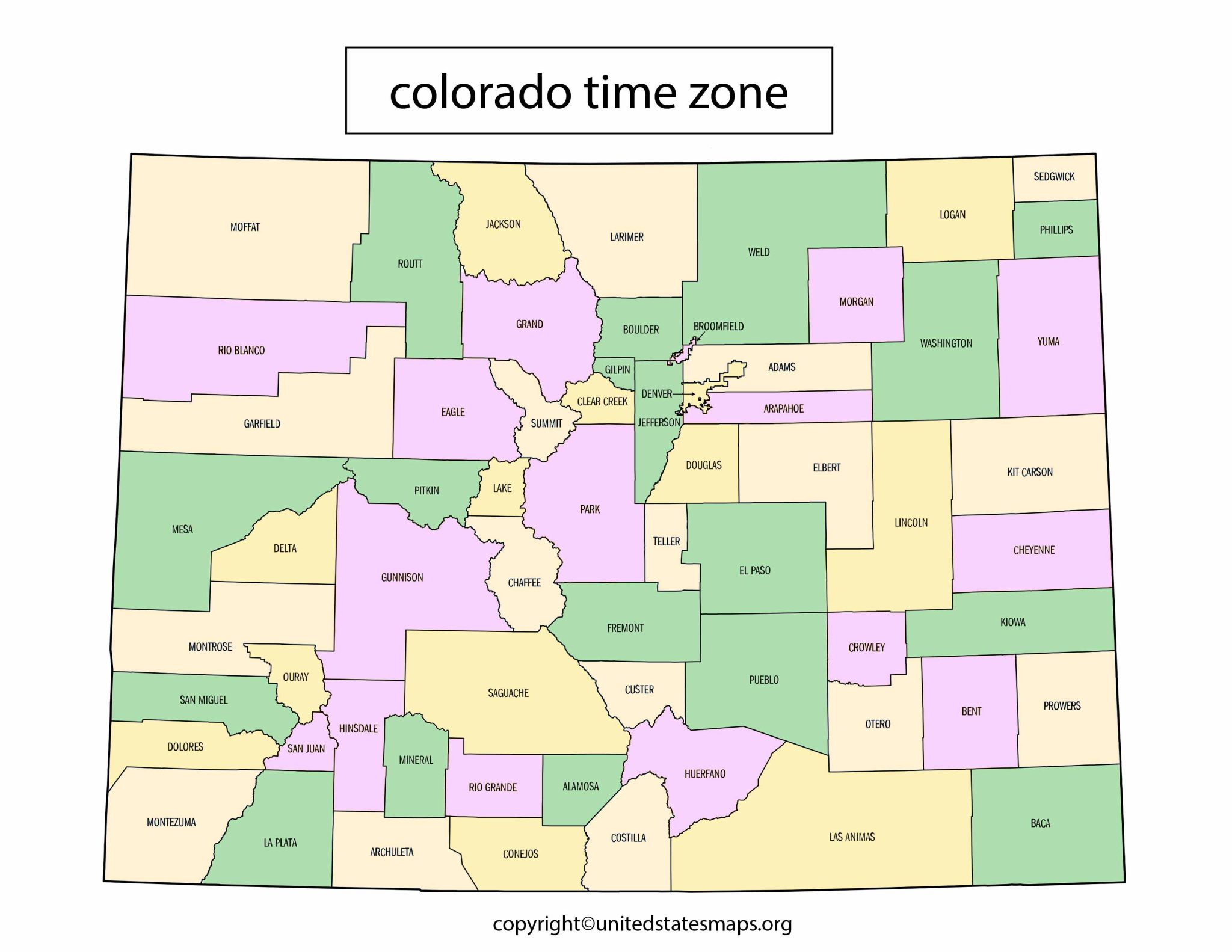
- Entire States: Arizona (with the DST caveat), Colorado, Montana, New Mexico, Utah, and Wyoming.
- Split States: Parts of Idaho, Kansas, Nebraska, Nevada, North Dakota, Oregon, South Dakota, and Texas.
For example, if you are scheduling a call for 8 PM Eastern with a colleague in El Paso, Texas, or Boise, Idaho, you must verify their specific local time, as these states straddle the border between Mountain and either Central or Pacific time.
Hourly Conversion Table: ET to MT
To assist with broader scheduling needs beyond the 8 PM hour, the following table provides a quick reference for the two-hour offset typically observed in 2026.
| Eastern Time (ET) | Mountain Time (MT) | Context/Application |
|---|---|---|
| 8:00 AM | 6:00 AM | Early morning briefings/Start of day |
| 10:00 AM | 8:00 AM | Standard business opening crossover |
| 12:00 PM (Noon) | 10:00 AM | Mid-morning Mountain / Lunch Eastern |
| 2:00 PM | 12:00 PM (Noon) | Lunch Mountain |
| 5:00 PM | 3:00 PM | Late afternoon / End of ET work day |
| 8:00 PM | 6:00 PM | Prime time TV / Evening events |
| 10:00 PM | 8:00 PM | Late night ET / Evening MT |
| 12:00 AM (Midnight) | 10:00 PM | Date change in ET |
Practical Implications for Media and Business
Converting 8 PM Eastern to Mountain Time is not just a mathematical exercise; it has real-world consequences for how society functions across the continent.
Broadcasting and Streaming
In the United States, television networks often advertise shows as "8/7 Central." Interestingly, Mountain Time viewers often see a "tape delay" for non-live broadcasts. While a live sporting event at 8 PM ET will air at 6 PM MT, a scripted drama scheduled for 8 PM ET might not air in the Mountain Time Zone until 7 PM or 8 PM local time, depending on the network's regional feed strategy. However, with the rise of global streaming services in 2026, "simultaneous release" has become more common, making the two-hour conversion critical for fans wanting to avoid spoilers.
Corporate Etiquette and Scheduling
For businesses operating across both zones, the 8 PM ET to 6 PM MT window represents a significant crossover point.
- Late Meetings: A meeting set for 8 PM Eastern is often considered "after hours" for East Coast employees, while it sits at the very end of the dinner hour or late afternoon for those in the Mountain zone.
- Deadlines: If a project is due at "end of day" without a specified time zone, an Eastern-based company may expect it by 5 PM ET. A Mountain-based contractor might assume they have until 5 PM MT (which is 7 PM ET), leading to potential friction.
- Communication: In 2026, asynchronous communication tools (like Slack or Microsoft Teams) are standard. It is a best practice to include the time zone abbreviation (e.g., "8 PM ET") in all correspondence to prevent the Mountain Time recipient from showing up two hours late or early.
Technical Foundations: UTC and Atomic Time
Behind the simple clock on your wall is a sophisticated network of timekeeping. All North American time zones are defined by their offset from Coordinated Universal Time (UTC).
UTC is maintained using high-precision atomic clocks that measure the vibrations of cesium atoms. This is known as International Atomic Time (TAI). Because the Earth’s rotation is slightly irregular, "Leap Seconds" are occasionally added to keep UTC in sync with solar time.
When you convert 8 PM Eastern to Mountain Time, you are essentially performing the following calculation:
- 8 PM ET = UTC - 5 (Standard) or UTC - 4 (Daylight).
- 6 PM MT = UTC - 7 (Standard) or UTC - 6 (Daylight).
Since both equations result in a relative difference of 2 hours, the technical synchronization of your smartphone or computer via the Network Time Protocol (NTP) ensures that when your iPhone in New York says 8:00:00, your colleague's laptop in Denver says 6:00:00 with millisecond accuracy.
Common Pitfalls in Time Conversion
Even with a two-hour rule, errors frequently occur. Here are the most common mistakes to avoid in 2026:
- Ignoring the Arizona Gap: As discussed, assuming Arizona is always two hours behind the East Coast is a mistake. During the summer of 2026, the gap is three hours.
- Confusion with "Mountain Standard Time": Many people use the term "MST" year-round. Technically, during the summer, Mountain Time users are on "MDT" (Daylight Time). Using the wrong acronym can occasionally lead to confusion with international partners who may not realize the U.S. observes DST.
- The Midnight Boundary: When converting times near midnight, remember that the date can change. 1 AM Eastern on Tuesday is 11 PM Mountain on Monday. Fortunately, at 8 PM ET, the date is the same across all of North America.
- Manual Clock Setting: In 2026, most devices update automatically. However, manual overrides (often used for travel or "gaming" certain software) can lead to desynchronization. Always rely on a verified source like NIST (Time.gov) for official U.S. time.
Frequently Asked Questions
Is 8 PM Eastern the same as 6 PM Mountain all year?
Yes, for the vast majority of the Mountain Time Zone, the two-hour difference is maintained year-round. The only major exception is Arizona (excluding the Navajo Nation), which does not observe Daylight Saving Time. In Arizona, 8 PM Eastern is 5 PM during the summer and 6 PM during the winter.
What states are in the Mountain Time Zone?
The Mountain Time Zone includes Colorado, Montana, New Mexico, Utah, Wyoming, and Arizona. Additionally, parts of Idaho, South Dakota, North Dakota, Nebraska, Kansas, Texas, and Oregon observe Mountain Time.
How do I schedule a meeting for 8 PM Eastern in 2026?
The most effective way is to use a calendar invite that automatically adjusts for the recipient's local time. If writing an email, specify "8 PM ET / 6 PM MT" to ensure absolute clarity for participants in both regions.
Does 8 PM ET mean 6 PM MT in Canada?
Generally, yes. In Canada, the Eastern Time Zone (covering most of Ontario and Quebec) is two hours ahead of the Mountain Time Zone (covering Alberta and parts of the Northwest Territories and Nunavut). However, local municipalities in some provinces may have unique timekeeping bylaws.
What is 8 PM Eastern in UTC?
In 2026, 8 PM Eastern Time is 00:00 UTC during Daylight Saving Time (March to November) and 01:00 UTC during Standard Time (January to March and November to December).
Final Recommendation
To ensure you never miss a deadline or broadcast, always confirm whether your Mountain Time contact is located in Arizona or a state-split region. For all other locations, simply subtract two hours from the Eastern Time. Using digital tools that sync with atomic time, such as those provided by the National Institute of Standards and Technology (NIST), is the best way to verify the current time across these zones in 2026.