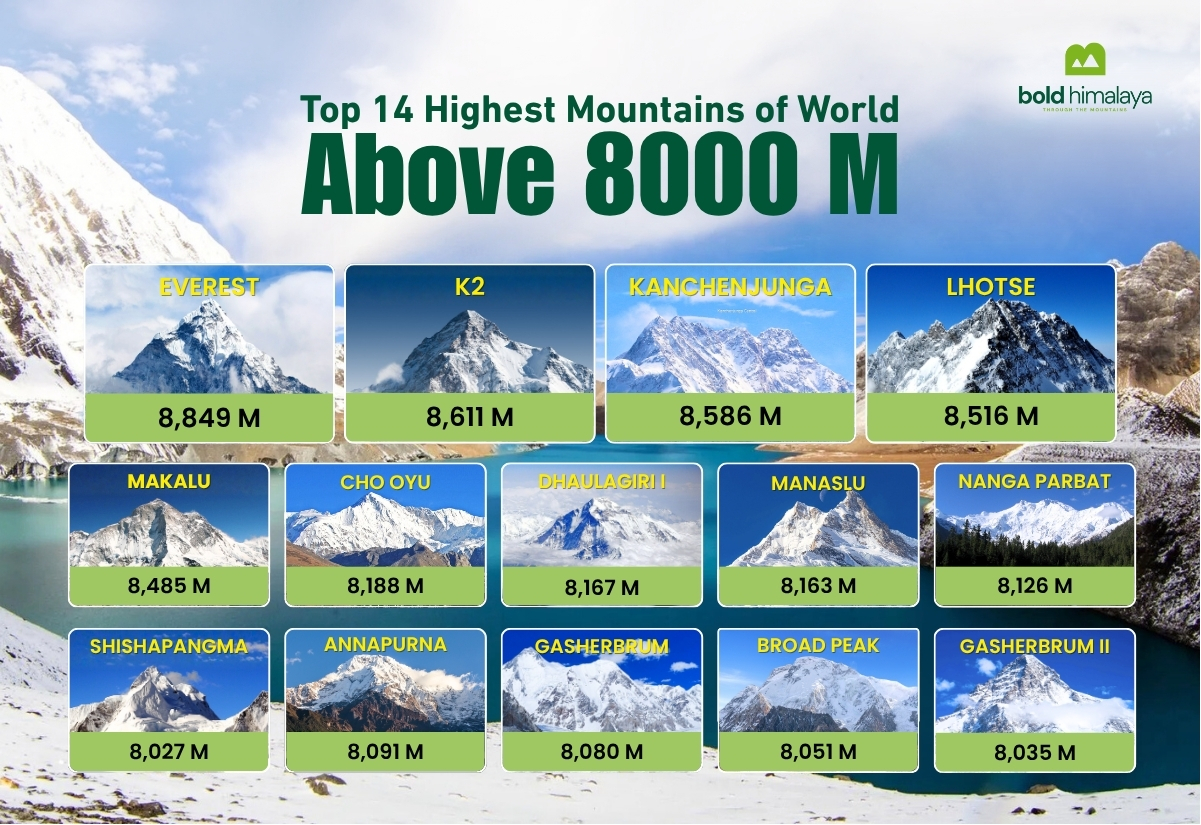
Climbing the world's fourteen 8 000-meter peaks represents the absolute pinnacle of high-altitude mountaineering, yet these mountains vary drastically in technical challenge, objective danger, and physiological toll. Evaluating them by difficulty requires balancing steep ice climbing, unpredictable weather systems, extreme remote isolation, and historical accident statistics to establish a clear hierarchy from the most accessible giant to the ultimate test of human endurance.
Understanding the Hierarchy of the Eight-Thousanders
To understand why certain 8 000-meter peaks are considered substantially harder than others, mountaineers look beyond mere altitude. While thin air and the debilitating effects of the "death zone" above 8 000 meters affect every climber uniformly, the path to the summit dictates the true risk profile. Factors such as extreme avalanche hazard, technical rock and ice climbing sections, erratic local meteorology, and the availability of emergency rescue operations fundamentally separate straightforward glacial trudges from death-defying vertical labyrinths.
Mountaineering authorities and historical statistics generally group these peaks into tiers. However, individual experiences vary wildly depending on seasonal weather windows, commercial expedition support, and whether a climber uses supplemental oxygen. Below is a comprehensive breakdown of the fourteen 8 000-meter peaks ranked contextually from least technically demanding to the most lethal and complex.
Tier 1: The "Accessible" Giants (Standard Routes)
These peaks feature the most established commercial routes, extensive fixed-rope networks, and relatively straightforward terrain compared to their peers. While altitude sickness, high winds, and severe cold remain lethal threats, the technical climbing requirements on the normal routes are minimal.
Cho Oyu (8 188 meters)
Frequently cited as the easiest of the 8 000-meter peaks, Cho Oyu sits on the border of China and Nepal. Its standard route via the northwest face is largely a high-altitude walk up a broad, glaciated plateau. Technical sections are rare, making it the premier choice for mountaineers transitioning from 7 000-meter peaks to the death zone.
Shishapangma (8 027 meters)
Located entirely within Tibet, China, Shishapangma is the lowest of the fourteen giants. Its normal route via the north face is technically uncomplicated, featuring gentle snow slopes and moderate ridges. However, geopolitical restrictions on permits and unpredictable logistical access frequently complicate expeditions here.
Tier 2: High-Volume Commercial Peaks
These mountains see heavy traffic and feature well-trodden commercial paths, but they introduce significantly greater objective dangers—primarily avalanches, serac fall, and severe physiological challenges due to sheer height or variable weather.
Mount Everest (8 848 meters)
As the highest mountain on Earth, Everest demands immense respect, but its standard routes (the Southeast Ridge from Nepal and the North Col from Tibet) are heavily engineered with fixed lines, ladders across crevasses, and massive team infrastructure. The main challenges are severe altitude, extreme crowding, and navigating the perilous Khumbu Icefall or the technical steps of the upper ridge.
Gasherbrum II (8 035 meters)
Situated in the Karakoram range of Pakistan, Gasherbrum II is often considered one of the more manageable 8 000-meter peaks outside of the Himalayas. The normal route ascends the southwest ridge over straightforward snow and ice fields. Crevasse navigation is the primary hazard, alongside the remote and rugged logistics of the Pakistani Karakoram.
Broad Peak (8 051 meters)
Neighboring K2, Broad Peak offers a long, exposed ridge climb. While its standard route features minimal technical rock climbing until near the summit ridge (the notorious "Rocky Summit"), the immense length of the push, unpredictable Karakoram weather, and false summits make it physically exhausting.
Tier 3: Technical Challenges and Objective Dangers
Climbing peaks in this category requires solid mountaineering skills, proficiency with mixed rock and ice climbing at high altitudes, and the ability to manage severe objective hazards like falling ice and massive avalanches.
Manaslu (8 163 meters)
Manaslu has seen a surge in popularity, but its lower sections are plagued by treacherous, shifting seracs and high avalanche risk, particularly around Camp 1 and Camp 2. Recent years have seen increased debate regarding true summit verification due to false pre-summits along the undulating ridge.
Dhaulagiri I (8 167 meters)
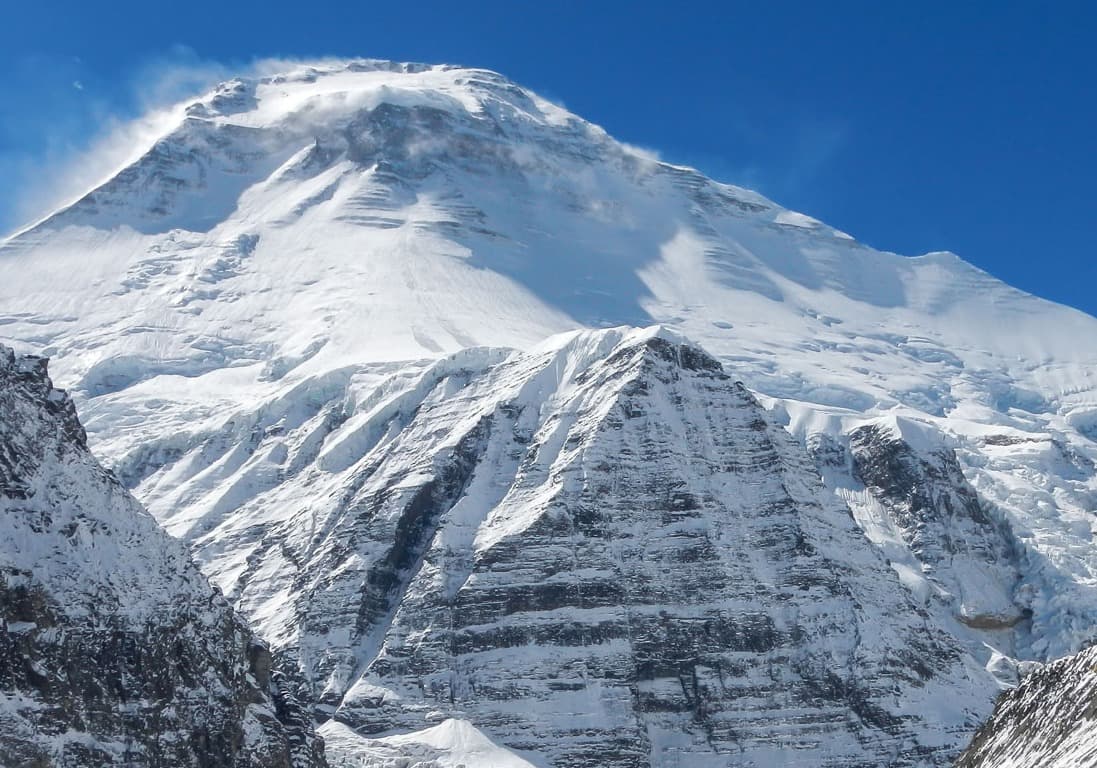
Known as the "White Mountain," Dhaulagiri features complex glaciated terrain and severe avalanche potential, especially on the notorious "Pear Route" and the standard northeast ridge. The mountain's weather patterns are notoriously volatile, creating sudden, violent storms that trap climbers on exposed ridges.
Gasherbrum I (8 080 meters)
Also known as Hidden Peak, Gasherbrum I demands advanced technical competency. The Japanese Couloir and standard routes involve steep ice climbing, complex crevasse fields, and extreme wind exposure. Rescue infrastructure in this remote part of Pakistan is virtually non-existent.
Makalu (8 485 meters)
Makalu is a massive, isolated pyramid of black rock and ice. Its normal route (the Northwest Ridge) requires sustained technical climbing on steep granite and sharp ridges, combined with high exposure and intense winds. It is widely considered a major step up in difficulty from Everest or Cho Oyu.
Tier 4: The Most Dangerous and Technically Demanding Peaks
These mountains boast the lowest success rates, highest fatality ratios, and most intricate technical climbing challenges on the planet. They are reserved exclusively for elite alpine mountaineers.
Nanga Parbat (8 126 meters)
The "Naked Mountain" of Pakistan features the largest rock and ice face in the world—the Rupal Face—which rises 4 500 meters from its base. Even the standard Kinshofer Route on the Diamir Face requires steep ice verticality, technical mixed climbing, and relentless navigation of crumbling rockfall zones.
Annapurna I (8 091 meters)
Annapurna I was the first 8 000-meter peak ever summited (in 1950), yet it remains one of the deadliest. The standard north face route is an absolute gauntlet of active serac falls, unpredictable avalanches, and steep, unstable snow slopes. There are very few safe resting places on the entire ascent.
K2 (8 611 meters)
The "Savage Mountain" is the second-highest peak in the world and universally feared for its uncompromising technical difficulty. Whether climbing the Abruzzi Spur or the Cesen Route, mountaineers face vertical rock walls, unrelenting exposure, severe rockfall, and terrifying bottlenecks like the Bottleneck serac, which hangs menacingly just below the summit.
Comparative Matrix of 8 000 Meter Peaks
The following table summarizes key characteristics of select prominent 8 000-meter peaks, comparing their general difficulty tier, primary hazards, and approximate historical safety profiles.
| Peak Name | Elevation (m) | Mountain Range | Difficulty Tier | Primary Objective Hazard | Typical Technical Challenge |
|---|---|---|---|---|---|
| Cho Oyu | 8 188 | Himalayas | Tier 1 (Accessible) | High altitude, wind | Broad glacial walking |
| Mount Everest | 8 848 | Himalayas | Tier 2 (Commercial) | Crowding, extreme cold, icefall | Fixed-rope ladder navigation |
| Manaslu | 8 163 | Himalayas | Tier 3 (Technical) | Avalanches, shifting seracs | Steep snow slopes, ridge navigation |
| Makalu | 8 485 | Himalayas | Tier 3 (Technical) | Extreme wind, rockfall | Steep granite, exposed ridges |
| Annapurna I | 8 091 | Himalayas | Tier 4 (Extreme) | Constant avalanches, serac fall | Unstable snow, vertical ice |
| K2 | 8 611 | Karakoram | Tier 4 (Extreme) | Rockfall, extreme avalanches | Vertical rock walls, The Bottleneck |
Frequently Asked Questions
Which 8 000-meter peak is the easiest to climb?
Cho Oyu is widely accepted by the mountaineering community as the least technically demanding 8 000-meter peak. Its standard route lacks steep vertical technical sections, relying instead on a long, high-altitude walk up a glaciated plateau. However, "easy" is relative; the altitude and weather still pose severe, life-threatening challenges.
Why is K2 considered harder than Mount Everest?
K2 lacks the heavily managed commercial infrastructure found on Everest's standard routes and features significantly steeper, more technical rock and ice climbing. Furthermore, K2's weather is drastically more volatile, and its geographic profile exposes climbers to continuous rockfall and avalanche danger from base camp to summit.
Do all 8 000-meter peaks require supplemental oxygen?
No. While the vast majority of commercial clients use supplemental oxygen to mitigate the debilitating effects of hypoxia in the death zone, elite mountaineers frequently climb these peaks without supplemental oxygen (known as climbing "purist style" or "fair means"). Doing so exponentially increases physical exhaustion, frostbite risk, and cognitive impairment.
How many 8 000-meter peaks are there in total?
There are officially fourteen 8 000-meter peaks in the world. All of them are located in Asia, specifically across the Himalayan and Karakoram mountain ranges spanning Nepal, China (Tibet), Pakistan, and India.
What is the "death zone" on an 8 000-meter peak?
The death zone is any altitude above 8 000 meters (approx. 26 247 feet) where the atmospheric pressure is so low that the human body cannot take in enough oxygen to sustain long-term physiological function. Brain cells begin to die, organs deteriorate, and climbers can only survive for a limited duration before irreversible damage or death occurs.
Strategic Next Steps for Aspiring High-Altitude Climbers
Attempting an 8 000-meter peak requires a methodical, multi-year progression. Beginners should start by mastering technical mountaineering fundamentals in local ranges, followed by successful expeditions on 6 000-meter peaks in South America or the Alps, and ultimately testing physiological resilience on challenging 7 000-meter giants like Muztagh Ata or Peak Lenin. Partnering with reputable, certified international mountain guides and investing in rigorous physical endurance training are non-negotiable prerequisites before booking an expedition to the world's highest summits.