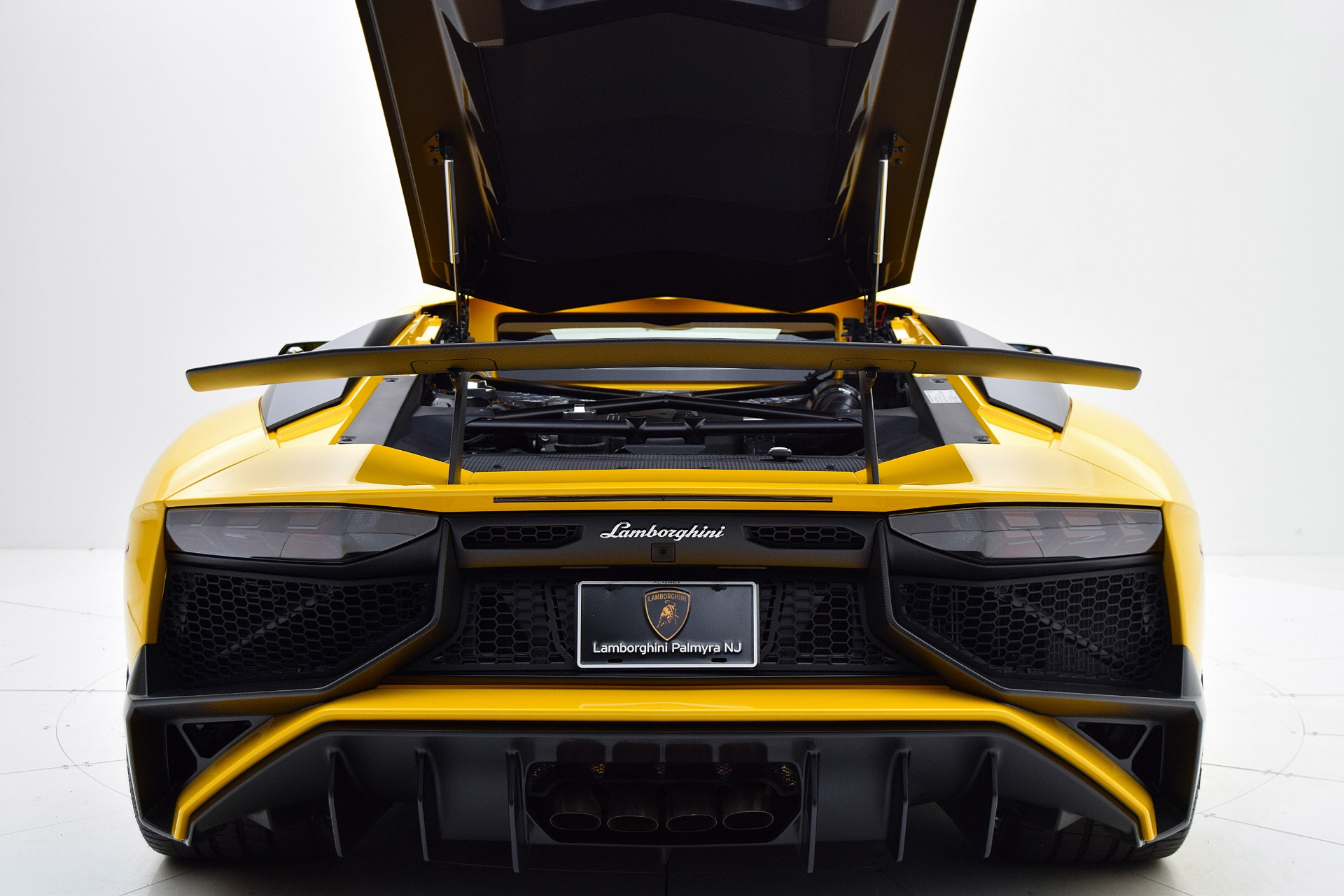
The Lamborghini Aventador LP 750-4 Superveloce (SV) represents the ultimate expression of the naturally aspirated V12 era, combining a 750 PS engine with advanced lightweight engineering. This track-focused masterpiece utilizes a Haldex Generation IV four-wheel-drive system and aggressive aerodynamics to deliver a 2.8-second 0–100 km/h acceleration and a top speed exceeding 350 km/h.
The Genesis of the 750-4 Superveloce Label
To understand why the Aventador LP 750-4 Superveloce is considered a performance pinnacle, one must first decode its nomenclature. In Lamborghini's naming convention, "LP" stands for Longitudinale Posteriore, referring to the longitudinal rear-mid engine orientation. The "750" denotes the metric horsepower (PS), while the "4" signifies its permanent four-wheel-drive system. Finally, "Superveloce"—literally "super fast" in Italian—is a title reserved only for the most extreme, lightened, and powerful iterations of Lamborghini’s flagship V12 models.
When the LP 750-4 SV debuted at the 2015 Geneva Motor Show, it was tasked with a difficult mission: to surpass the already formidable Aventador LP 700-4 while maintaining the raw, emotional soul of a naturally aspirated V12. In 2026, as the automotive world shifts toward hybridization and forced induction, the 750-4 SV stands as a historical benchmark for "pure" internal combustion performance. It was the first production Lamborghini to break the seven-minute barrier at the Nürburgring Nordschleife, clocking a time of 6:59.73—a feat that cemented its status as a true engineering marvel.
The V12 Heart: Engineering the 750 PS Powerplant
At the core of the Superveloce’s dominance is the L539 6.5-liter V12 engine. This engine is not merely a tuned version of the standard Aventador unit; it is a refined instrument of power. To achieve the 750 PS (740 hp) output at 8,400 rpm, Lamborghini engineers reworked the Variable Valve Timing (VVT) and the Variable Intake System (VIS).
The optimization focused on the top end of the rev range. By reducing backpressure in the exhaust system—which also resulted in a more visceral, higher-pitched acoustic signature—the engine breathes more freely. The torque peak of 690 Nm (509 lb-ft) arrives at 5,500 rpm, providing a linear but explosive power delivery that modern turbocharged engines struggle to replicate.
In the context of 2026, the LP 750-4 SV’s engine is a relic of a "golden age." It lacks the instant torque fill of an electric motor found in the newer Revuelto, but it offers a mechanical purity that collectors prize. The 8,500 rpm redline creates a sensory experience that defines the Lamborghini brand identity, characterized by a crescendo of sound and vibration that permeates the carbon-fiber monocoque.
Lightweighting and the Science of Carbon Fiber
Weight is the enemy of performance, and for the Superveloce, Lamborghini implemented a strict "diet" to shave 50 kilograms (110 lbs) off the standard Aventador's mass. This was achieved through the extensive use of carbon fiber and the removal of non-essential amenities.
Structural Modifications
The Aventador’s foundation is a carbon-fiber monocoque, but the SV extends this material to the door panels, rocker covers, and the massive fixed rear wing. Inside the cabin, the "Carbon Skin" material—a highly specialized carbon-fiber fabric—is used for the headlining and parts of the seats. This material is both incredibly strong and lighter than traditional Alcantara or leather.
Minimalist Interior
To reach the 1,525 kg dry weight target, the interior was stripped of soundproofing and carpets. The infotainment system was originally an "option" (though most buyers included it) to save weight on the base specification. The seats themselves are lightweight carbon shells, offering immense lateral support for high-G cornering while sacrificing the plushness of a daily driver. This uncompromising approach ensures that every gram of weight contributes to the power-to-weight ratio, which sits at an impressive 2.03 kg/hp.
Aerodynamic Efficiency and Downforce
The "performance pinnacle" designation is justified not just by speed, but by stability. The LP 750-4 Superveloce features an aerodynamic package that provides a 170% increase in downforce compared to the standard Aventador.
The most striking feature is the large, manually adjustable rear wing. It can be set to three different positions (Low, Mid, and High Drag) depending on whether the driver prioritizes top speed or cornering grip. This wing works in tandem with a redesigned front splitter and a massive rear diffuser to "suck" the car to the tarmac.
The front end features open mesh and larger intakes to improve cooling for the V12 and the massive carbon-ceramic brakes. Every vent and fin on the SV serves a dual purpose: reducing lift and managing the immense heat generated by the high-output engine. At high speeds, the aerodynamic balance of the car shifts toward the rear, ensuring that the four-wheel-drive system can effectively put all 750 horsepower to the ground without losing traction.
Dynamic Handling: Suspension and Steering
A common criticism of early Aventadors was their "heavy" feel in tight corners. Lamborghini addressed this in the Superveloce by introducing Magneto-rheological Suspension (MRS) and Lamborghini Dynamic Steering (LDS).
Magneto-rheological Pushrod Suspension
The pushrod suspension system, inspired by Formula 1, uses dampers filled with a synthetic oil containing magnetic particles. By applying an electromagnetic field, the viscosity of the fluid changes in milliseconds. This allows the car to remain flat during aggressive cornering (minimizing body roll) while still being able to absorb mid-corner bumps that might otherwise upset the chassis.
Lamborghini Dynamic Steering (LDS)
The LDS system varies the steering ratio based on the car’s speed and the chosen driving mode (Strada, Sport, or Corsa). In Corsa mode, the steering becomes incredibly direct, requiring minimal input for high-speed maneuvers. While some purists initially felt the variable ratio reduced "feel," the sheer lap times achieved by the SV proved that the electronic integration allowed for higher entry speeds and more precise apex hunting.
Comparison of Lamborghini Aventador V12 Variants
To see where the LP 750-4 SV sits in the hierarchy, we must compare it to its predecessor and its more extreme successor.
| Feature | Aventador LP 700-4 | Aventador LP 750-4 SV | Aventador LP 770-4 SVJ |
|---|---|---|---|
| Engine | 6.5L V12 | 6.5L V12 | 6.5L V12 |
| Max Power | 700 PS | 750 PS | 770 PS |
| Weight (Dry) | 1,575 kg | 1,525 kg | 1,525 kg |
| 0-100 km/h | 2.9 Seconds | 2.8 Seconds | 2.8 Seconds |
| Aero System | Active Rear Spoiler | Fixed/Manual Wing | ALA (Active Aero) |
| Nürburgring Time | ~7:25 | 6:59.73 | 6:44.97 |
| Production Count | Unlimited (Series) | 600 Coupe / 500 Roadster | 900 Coupe / 800 Roadster |
While the SVJ (Superveloce Jota) eventually took the performance crown with its ALA (Aerodinamica Lamborghini Attiva) active aero system, many enthusiasts in 2026 prefer the 750-4 SV for its simpler, more aggressive aesthetic and the absence of complex active wing flaps, which some feel provides a more consistent "analog" aerodynamic feel.
The 2026 Perspective: Rarity and Collector Value
As of 2026, the Lamborghini Aventador LP 750-4 Superveloce has transitioned from a contemporary supercar to a blue-chip collector's item. With only 600 Coupes and 500 Roadsters produced globally, it is significantly rarer than the standard Aventador or even the later SVJ.
The market value for these vehicles has remained robust, often exceeding their original MSRP. This is driven by the realization that the LP 750-4 SV represents one of the final iterations of a non-hybrid, naturally aspirated V12 Lamborghini. For collectors, the SV is the "sweet spot"—it offers significantly more performance and drama than the base model without the extreme complexity and somewhat divisive styling of the SVJ.
Maintenance and Ownership in 2026
Maintaining an LP 750-4 SV in 2026 requires specialized care. The Independent Shifting Rods (ISR) transmission, while iconic for its "sledgehammer" shifts, requires regular clutch wear monitoring. Additionally, the carbon-ceramic braking system, though durable, is expensive to replace. Owners typically prioritize low-mileage preservation, though the car is robust enough for occasional track use, provided the cooling systems and specialized Pirelli P Zero Corsa tires are properly managed.
Common Challenges and Driving Characteristics
Driving a 750-4 SV is an exercise in managed violence. Unlike modern dual-clutch supercars that are "easy" to drive, the SV demands attention.
- The ISR Transmission: The single-clutch automated manual gearbox is significantly lighter than a dual-clutch unit but can be jerky at low speeds. In Corsa mode, the shifts are brutal, which Lamborghini intentionally tuned to provide an emotional connection to the car's mechanical nature.
- Visibility and Width: Like all Aventadors, the SV is exceptionally wide and has poor rear visibility. The large rear wing further obscures the view, making a rearview camera an essential tool rather than a luxury.
- Low Ground Clearance: Despite the nose-lift system, the aggressive front splitter is prone to scraping on steep driveways or speed bumps. The splitter is made of carbon fiber, making any damage a costly repair.
- Ergonomics: The fixed-back carbon bucket seats are not designed for long-distance touring. They are designed to hold the driver in place under high lateral loads, which they do perfectly, albeit at the cost of lumbar comfort.
Frequently Asked Questions
How many Lamborghini Aventador LP 750-4 SVs were made?
Lamborghini limited the production of the Aventador LP 750-4 Superveloce to 600 Coupe units and 500 Roadster units worldwide. This limited production run is a key factor in the car's high resale value and desirability among collectors in 2026.
What is the difference between the SV and the SVJ?
The SV (Superveloce) has 750 PS and uses a manual three-position rear wing for downforce. The SVJ (Superveloce Jota) has 770 PS and introduced the ALA (Aerodinamica Lamborghini Attiva) system, which uses electronically controlled flaps to stall the wing or provide vectoring for better cornering. The SVJ is faster on a track, but the SV is often praised for its purer design.
Is the Aventador SV a good investment in 2026?
Historically, limited-edition V12 Lamborghinis like the Miura SV, Countach QV, and Murciélago SV have appreciated significantly. The Aventador SV follows this trend, especially as it is one of the last "pure" V12 models before the brand introduced hybrid assistance with the Revuelto.
How fast is the 750-4 SV?
The car can accelerate from 0 to 100 km/h (62 mph) in 2.8 seconds and 0 to 200 km/h (124 mph) in 8.6 seconds. Its top speed is officially rated as "over 350 km/h" (217 mph), though some independent tests have pushed it slightly higher on closed courses.
Can the Aventador SV be used as a daily driver?
While technically possible, it is not recommended. The lack of soundproofing, the harshness of the ISR transmission in traffic, and the extreme width make it difficult to navigate in urban environments. It is a vehicle designed for open roads and track days.
Practical Recommendations for Prospective Owners
If you are looking to acquire or experience a Lamborghini Aventador LP 750-4 Superveloce in 2026, keep the following steps in mind:
- Pre-Purchase Inspection (PPI): Always secure a PPI from a certified Lamborghini technician. Focus specifically on the clutch life percentage of the ISR transmission and any signs of stress on the carbon-fiber monocoque or suspension mounting points.
- Service History: Ensure the "LDS" and "MRS" systems have received software updates. Early versions of the steering software were less refined than the final production iterations.
- Tire Management: The SV is highly sensitive to tire pressure and age. Even with low mileage, tires older than five years should be replaced to maintain the grip levels required to handle 750 horsepower safely.
- Storage: Given the value of the vehicle, climate-controlled storage is essential to prevent the degradation of the specialized interior materials and the various electronic control modules.
The Lamborghini Aventador LP 750-4 Superveloce is more than just a fast car; it is a technical milestone. It represents the point where traditional mechanical engineering met modern carbon-fiber technology to create a vehicle that is as much a piece of performance art as it is a road-going machine.