Finding the right juicer depends heavily on your daily routine, budget, and the types of produce you plan to process, with centrifugal models offering speed and affordability, slow masticating juicers maximizing nutrient retention and juice yield, and citrus or twin-gear machines catering to specialized culinary needs.
Understanding Your Juicing Needs Before Buying
Selecting a juicer is rarely a one-size-fits-all endeavor. The appliance market is saturated with various designs, each engineered to address specific preparation styles, flavor profiles, and nutritional goals. Before committing to a purchase, it is vital to evaluate how much time you are willing to spend on preparation and cleanup, as well as the types of ingredients you intend to use.
For instance, if your mornings are rushed and you want a quick glass of apple or carrot juice, a high-speed machine might be your best option. Conversely, if you plan to incorporate wheatgrass, leafy greens, and fibrous vegetables into your routine, you will need a machine capable of handling tough cellular structures without clogging or overheating.
Furthermore, kitchen counter space and storage availability dictate the physical footprint you can accommodate. Some heavy-duty masticating units are remarkably bulky and heavy, making them ill-suited for compact apartments. Budget considerations also play an essential role; while entry-level models start under one hundred dollars, premium commercial-grade options can exceed several hundred dollars. Balancing these variables ensures that your investment matches your actual lifestyle rather than an idealized routine.
Categorizing Juicer Technologies: Centrifugal vs. Masticating vs. Citrus
To make an informed choice, you must understand the mechanical differences between the primary types of juicers available on the market. Each technology extracts juice through distinct physics, directly impacting preparation time, yield, oxidation rate, and maintenance.
Centrifugal Juicers
Centrifugal juicers are the most common and accessible models found in consumer kitchens. They operate by feeding produce through a chute into a flat-bottomed mesh basket that spins at high speeds—often between 6,000 and 14,000 RPM. The centrifugal force shreds the fruits and vegetables against the mesh, separating the juice from the pulp.
- Pros: Exceptionally fast operation, wider feed chutes that reduce prep time by accommodating whole fruits, and a generally lower price point.
- Cons: Loud operation, poor performance with leafy greens and wheatgrass, and high speeds introduce heat and oxygen, which can cause rapid juice separation and nutrient degradation.
Masticating (Slow) Juicers
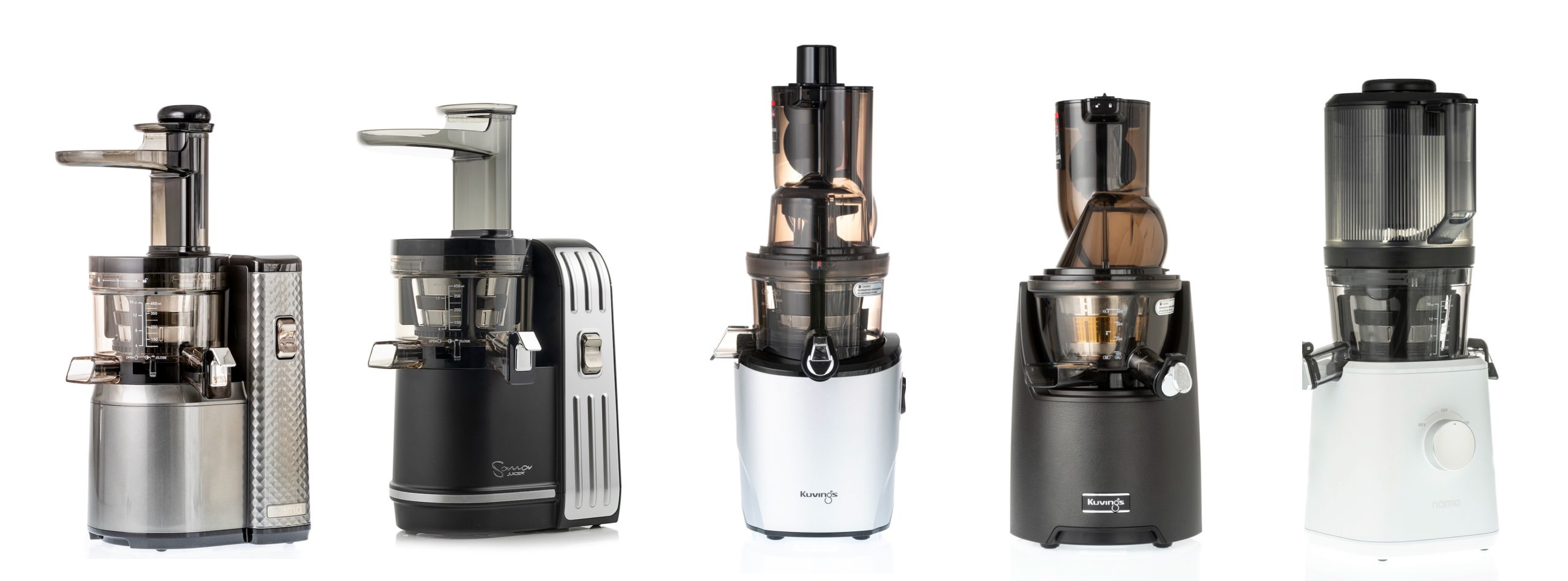
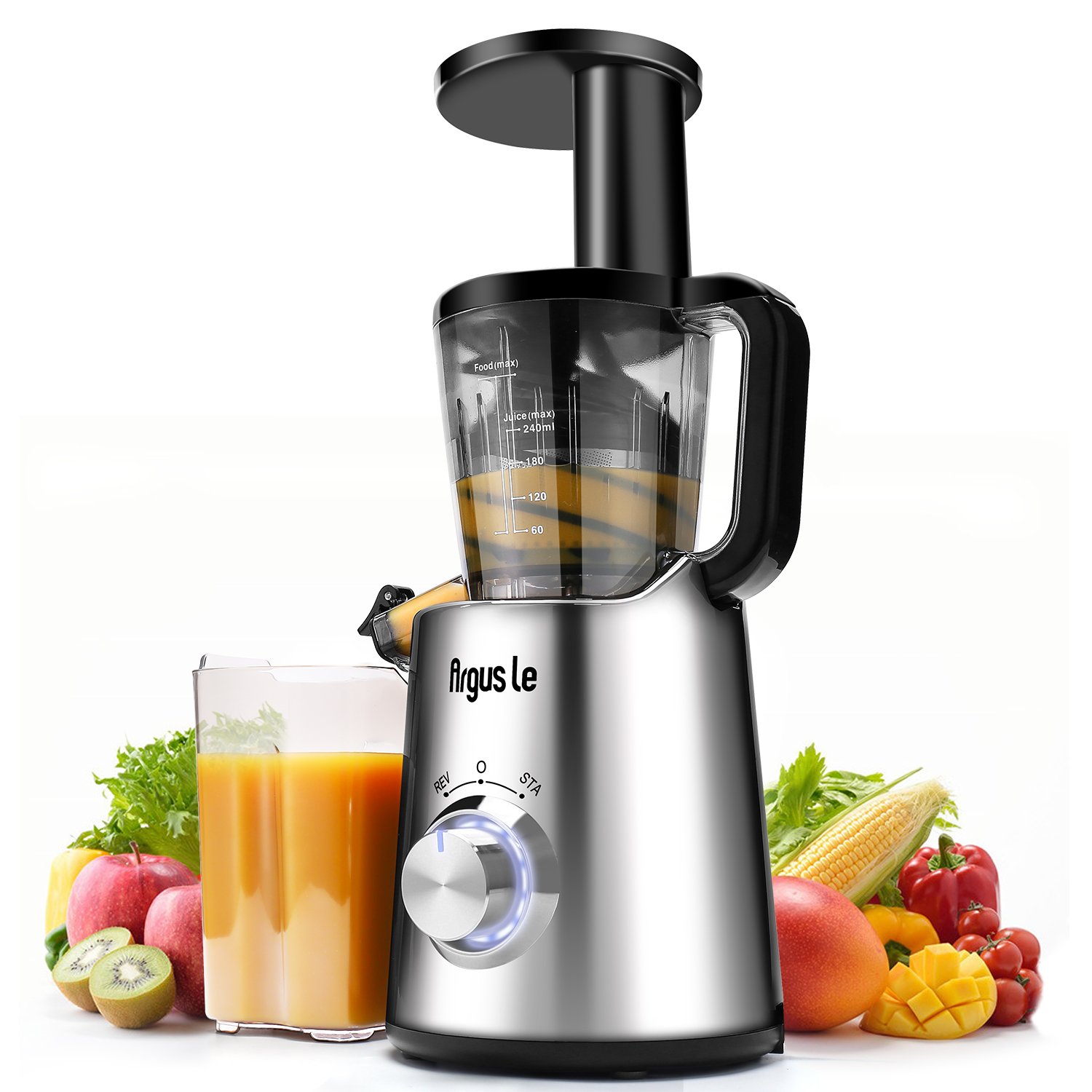
Often referred to as cold-press or slow juicers, masticating machines use a single or dual auger to crush, grind, and squeeze produce at much lower speeds—typically between 40 and 100 RPM. This gentle compression forces juice through a stainless-steel screen while expelling dry pulp out of a separate chute.
- Pros: Exceptional juice yield, particularly with leafy greens, herbs, and wheatgrass; lower oxidation rates that allow juice to be stored for up to 72 hours; and much quieter operation.
- Cons: Slower processing times, smaller feed chutes that require more pre-cutting of produce, and higher initial purchase costs.
Citrus Juicers
Citrus juicers are specialized appliances dedicated solely to extracting juice from oranges, lemons, limes, and grapefruits. They feature a reamer that spins either automatically when pressure is applied or manually through hand leverage.
- Pros: Highly efficient for citrus fruits, extremely easy to clean, compact, and very affordable.
- Cons: Completely incapable of handling hard vegetables, roots, or leafy greens.
The 5 Best Juicers on the Market for Every Kitchen
Based on performance metrics, build quality, ease of cleaning, and user feedback, we have evaluated the top options currently available to suit diverse kitchen environments and user preferences.
1. Breville Juice Fountain Cold Plus (Best Overall Centrifugal)
The Breville Juice Fountain Cold Plus is widely recognized as the gold standard for centrifugal extraction. It bridges the gap between speed and quality by utilizing Cold Spin Technology, which Breville claims prevents heat transfer that could destroy sensitive enzymes.
- Key Features: Extra-wide 3.5-inch feed chute, custom 70.1 fl. oz. jug with a built-in froth separator, and a powerful 1000-watt motor.
- Performance: It can process whole apples and large beetroots in seconds. The dual-speed control allows users to manage hard and soft fruits effectively.
- Best For: Busy households and individuals who want fast, high-volume juice without lengthy prep work.
2. Nama J2 Cold Press Juicer (Best Overall Masticating)
The Nama J2 has revolutionized home cold-press juicing through its innovative batch-feeding hopper. Instead of feeding produce piece by piece down a narrow chute, users can load the entire hopper, close the lid, and let the machine process everything automatically.
- Key Features: Large hopper capacity, powerful low-speed AC motor, auto-cutting mechanism, and reverse function to clear jams.
- Performance: Delivers an exceptionally high yield of smooth, vibrant juice with virtually no pulp. It handles celery, carrots, and leafy greens with ease.
- Best For: Health enthusiasts, daily juicers, and anyone seeking maximum nutrient extraction with minimized hands-on preparation time.
3. Omega NC900HDC Premium Dual-Stage Masticating Juicer (Best Versatility)
Omega is a legendary name in slow juicing, and the NC900HDC model stands out for its multi-functional capabilities. Beyond standard fruit and vegetable extraction, it functions as a food processor, mincer, and pasta extruder.
- Key Features: Adjustable end cap with five pressure settings, low 80 RPM motor, and an extra-large feed tray.
- Performance: The low rotation speed preserves enzymes and prevents heat buildup. Its adjustable pressure nozzle ensures that hard roots like ginger and turmeric are squeezed to absolute dryness.
- Best For: Culinary hobbyists who want a multi-use kitchen appliance that excels at making nut milks, baby food, and nut butters alongside green juice.
4. Magic Bullet Kitchen Express Juicer (Best Compact & Budget Choice)
For those with limited counter space or strict financial budgets, the Magic Bullet Kitchen Express offers a streamlined, entry-level solution. It converts seamlessly from a food processor to a dedicated centrifugal juicer.
- Key Features: Compact footprint, lightweight construction, and dishwasher-safe removable parts.
- Performance: While it lacks the power of commercial-grade units, it handles soft fruits, cucumbers, and citrus efficiently for single-serving portions.
- Best For: Students, studio apartment dwellers, and beginners testing the waters of home juicing without a major financial commitment.
5. Cuisinart CCJ-500 Pulp Control Citrus Juicer (Best Specialized Citrus Extractor)
If your primary objective is morning orange juice or fresh lemonade, a dedicated citrus machine outperforms multi-purpose units. The Cuisinart CCJ-500 features an adjustable reamer with custom pulp control settings.
- Key Features: Auto-reversing reamer, final-spin feature to extract extra juice from leftover pulp, and brush-finished stainless-steel housing.
- Performance: Quiet, efficient, and capable of processing large bags of citrus in minutes without straining the motor.
- Best For: Citrus lovers and bakers who regularly require fresh lemon or lime juice for recipes.
Comprehensive Comparison of Top Juicers
| Model Name | Juicer Type | Motor Power / Speed | Key Advantage | Maintenance & Cleaning |
|---|---|---|---|---|
| Breville Juice Fountain Cold Plus | Centrifugal | 1000W / High Speed | Ultra-wide chute for whole produce | Moderate; mesh basket requires scrubbing brush |
| Nama J2 Cold Press Juicer | Masticating | Low Speed (approx. 50 RPM) | Hands-free batch feeding hopper | Low-Moderate; self-feeding reduces active loading time |
| Omega NC900HDC | Masticating | 150W / 80 RPM | Exceptional versatility (pasta, mincing, nut milk) | Moderate; multiple attachments to rinse |
| Magic Bullet Kitchen Express | Centrifugal | 400W / High Speed | Compact footprint and dual-function processor | Easy; minimal parts and dishwasher safe |
| Cuisinart CCJ-500 | Citrus Reamer | Low Wattage / Auto-Reversing | Adjustable pulp control and final-spin feature | Very Easy; few components to wash |
Maintenance, Cleaning, and Operational Best Practices
Owning a juicer requires a commitment to post-use cleaning. Neglecting this step allows residual fruit and vegetable sugars to dry inside the fine mesh screens or augers, making subsequent extraction inefficient and unsanitary.
- Immediate Rinsing: Always rinse detachable parts under warm water immediately after juicing. Allowing pulp to dry turns organic matter hard like cement, complicating cleanup.
- Use Specialized Brushes: Most quality juicers come with a custom-engineered cleaning brush. Use the bristle end to clear pulp fibers from stainless-steel micro-mesh screens, moving in a outward motion to avoid bending the delicate wires.
- Avoid Overfeeding: Forcing produce into the chute faster than the motor can process causes jams, strains the internal gears, and forces wet pulp out into the juice container. Maintain a steady, moderate feeding rhythm.
- Prep Produce Properly: Remove hard pits, thick rinds (such as pineapple or citrus skins unless specified by the manufacturer), and large stems that could damage internal blades or clog expulsion ports.
Common Mistakes to Avoid When Buying and Using a Juicer
Navigating the appliance market often leads to common pitfalls that can frustrate new users. Recognizing these errors helps preserve your equipment and ensures a satisfying daily experience.
- Buying Based Solely on Price: Choosing the cheapest model available often results in frustration due to frequent clogging, poor yields with greens, and short motor lifespans. Conversely, buying a top-tier commercial masticating machine when you only want occasional orange juice is an unnecessary expense.
- Ignoring Pulp Dryness: A good juicer expels relatively dry pulp. If your pulp is wet and dripping, the machine is failing to extract maximum value from your produce, wasting grocery money.
- Expecting Juicers to Replace Whole Foods: While fresh juice provides concentrated vitamins and minerals, the extraction process removes dietary fiber. Juicing should complement, not entirely replace, eating whole fruits and vegetables.
- Neglecting Counter Space Limitations: Large vertical and horizontal masticating juicers demand significant permanent counter space. If you must store them in a high cabinet every day, you are less likely to use the appliance regularly.
Frequently Asked Questions
Is a cold-press juicer really better than a centrifugal juicer?
Cold-press (masticating) juicers are generally considered superior for nutritional retention, juice longevity, and leafy greens because they operate at low speeds without generating heat or excessive oxidation. However, centrifugal juicers remain popular due to their significantly faster operation and lower upfront cost, making them ideal for users prioritizing speed over maximum yield.
Can I store fresh juice in the refrigerator?
Yes, but the storage duration depends entirely on the type of juicer used. Juice extracted with a masticating juicer can typically be stored in an airtight glass container for up to 72 hours with minimal nutrient loss. Juice made in a centrifugal juicer oxidizes rapidly and is best consumed immediately or within 24 hours to prevent separation and flavor degradation.
Why does my juicer clog when I make green juice?
Green juices contain long, fibrous strands that easily wrap around fast-spinning centrifugal blades or jam tight auger teeth. To prevent this, cut leafy greens like kale and spinach into smaller ribbons, alternate feeding greens with harder vegetables like carrots or cucumbers, and consider investing in a masticating juicer if greens make up the core of your routine.
Do I need to peel fruits and vegetables before juicing?
It depends on the produce and the juicer. Organic apples, carrots, cucumbers, and pears can be juiced with their skins intact after a thorough wash. However, citrus fruits (oranges, lemons, grapefruits) have bitter white pith and waxy rinds that should be peeled, and hard pits from stone fruits like peaches and cherries must always be removed to prevent severe mechanical damage.
How can I make cleanup faster after juicing?
Line the pulp collection container with a small biodegradable produce bag before you begin juicing. This captures the dry waste instantly, leaving the plastic bin clean. Additionally, soaking removable parts in a sink filled with warm soapy water while you enjoy your fresh beverage eliminates stubborn dried residue.
Conclusion and Final Recommendation
Choosing the right juicer ultimately depends on aligning appliance mechanics with your personal routine. If you value speed, ease of use, and a budget-friendly entry point, a centrifugal option like the Breville Juice Fountain Cold Plus is an excellent choice. If your priority is maximum nutritional value, high yields from leafy greens, and the ability to store juice for days, investing in a slow masticating machine like the Nama J2 will yield superior long-term satisfaction. Assess your kitchen space, daily schedule, and culinary preferences carefully to select the model that will become a seamless part of your healthy lifestyle.