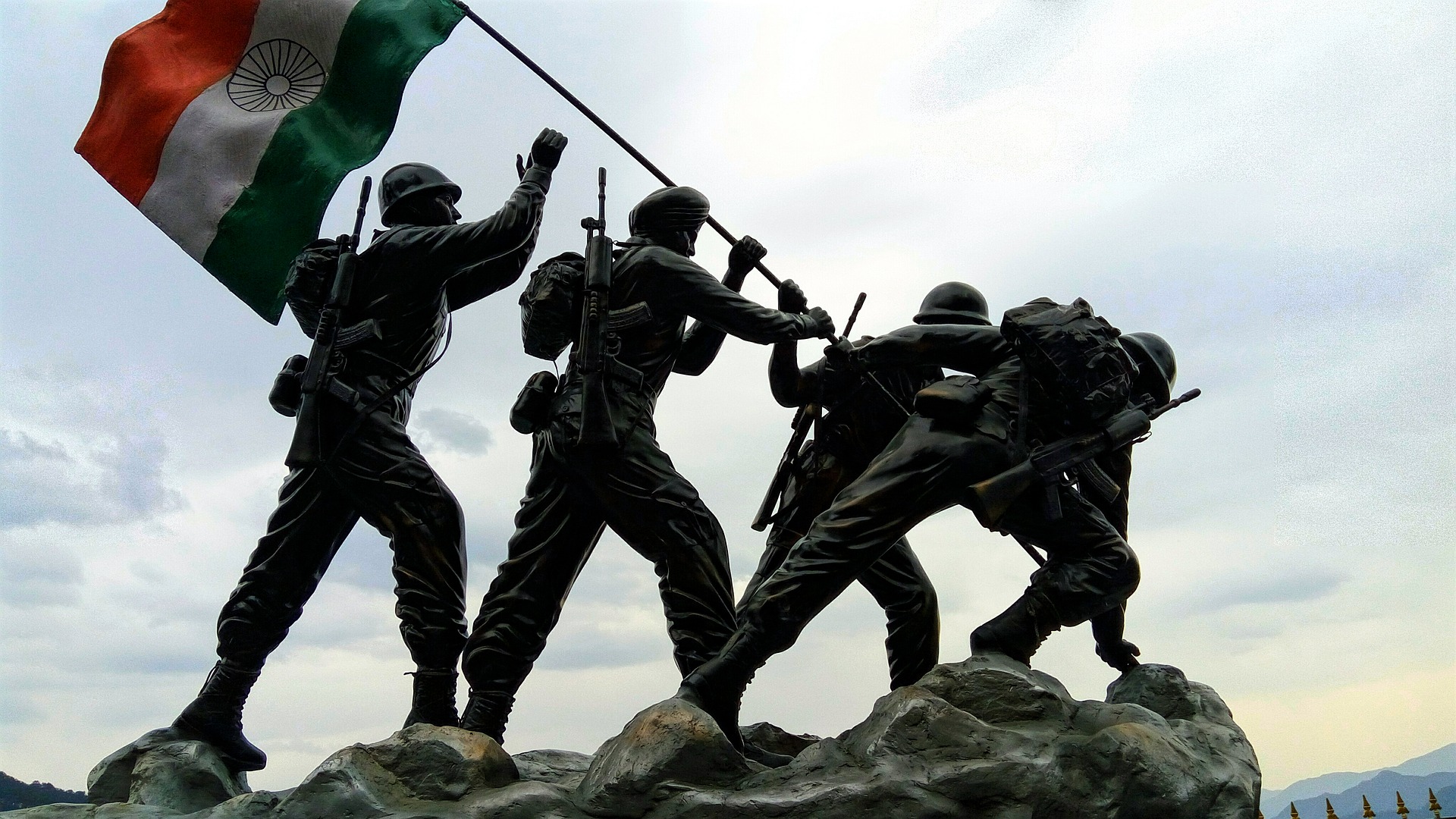
The 24 spokes featured in the Ashoka Chakra at the center of the Indian national flag represent the concept of 'Dharma' or righteousness, symbolizing the continuous cycle of time and the 24 hours in a day. Adopted on July 22, 1947, this design serves as a bridge between India’s ancient spiritual heritage and its modern aspirations as a democratic republic.
The Origins of the Ashoka Chakra
The emblem at the center of the Indian flag is a visual representation of the Ashoka Chakra, also known as the Dharma Chakra or the Wheel of Law. It is derived from the Lion Capital of Ashoka, a massive sculpture located at Sarnath, Uttar Pradesh, which dates back to the 3rd century BCE during the reign of Emperor Ashoka the Great.
When the Constituent Assembly of India was tasked with selecting a national flag, they sought a symbol that would unite the diverse populace while acknowledging the country's profound history. The Chakra was chosen not merely for its aesthetic balance but for its deep-rooted philosophical implications. Unlike the spinning wheel (Charkha) that appeared on earlier versions of the flag designed during the freedom struggle—which represented the dignity of labor and economic self-reliance—the Ashoka Chakra represents the timeless moral order that governs the universe.
The 24 Spokes: A Mathematical and Philosophical Convergence
The inclusion of exactly 24 spokes is far from arbitrary. It is a precise architectural choice that reflects both cosmic order and human duty. Each spoke serves as a reminder of the various principles that a citizen and a nation should uphold to ensure progress and justice.
1. The Concept of Time
The most immediate interpretation of the 24 spokes is their correspondence to the 24 hours of a single day. This represents the idea that time is continuous and that a nation must move forward relentlessly. It signifies that progress does not cease, and the nation is always in a state of active engagement with the present moment.
2. The 24 Virtues of Life
In Buddhist and Hindu traditions, which heavily influenced the iconography of the Ashoka Chakra, the 24 spokes are often associated with 24 specific virtues that human beings should cultivate. These virtues serve as a framework for an ethical life, contributing to both personal development and social harmony.
| Spoke | Virtue/Meaning | Description |
|---|---|---|
| 1 | Love | Unconditional affection for all living beings. |
| 2 | Courage | The strength to stand for truth despite obstacles. |
| 3 | Patience | The ability to remain calm during adversity. |
| 4 | Peacefulness | Maintaining inner and outer tranquility. |
| 5 | Kindness | Practicing empathy and compassion toward others. |
| 6 | Goodness | Acting with pure intentions. |
| 7 | Faithfulness | Loyalty to one's duties and principles. |
| 8 | Gentleness | Moving through life with softness and care. |
| 9 | Self-Control | Disciplining the mind and impulses. |
| 10 | Selflessness | Prioritizing the welfare of others over the self. |
| 11 | Sacrifice | Being ready to give up comforts for the greater good. |
| 12 | Truthfulness | Honesty in thought, speech, and action. |
| 13 | Righteousness | Adherence to the path of justice (Dharma). |
| 14 | Justice | Ensuring fairness for all citizens. |
| 15 | Mercy | Extending forgiveness to those who err. |
| 16 | Gracefulness | Living with elegance and humility. |
| 17 | Humility | Recognizing one’s place in the broader cosmic order. |
| 18 | Empathy | The ability to understand another's perspective. |
| 19 | Sympathy | Sharing the burden of others' suffering. |
| 20 | Spiritual Knowledge | Seeking deeper truths beyond the material. |
| 21 | Moral Knowledge | Distinguishing right from wrong. |
| 22 | Political Knowledge | Understanding duties toward the state. |
| 23 | Economic Knowledge | Managing resources for the public good. |
| 24 | Social Knowledge | Engaging constructively with the community. |
The Integration into National Identity
The transition from the Charkha (spinning wheel) to the Chakra (wheel of law) was a pivotal moment in the formation of the modern Indian state. As the country transitioned from British colonial rule to sovereignty, the national flag needed to represent a unified, law-abiding, and forward-looking society.
The 24 spokes transform the flag into more than just a patriotic banner; it becomes a mandate. Every time the flag is hoisted, it reminds citizens of the 'Dharma'—the duty—required to maintain a free society. It suggests that the progress of the nation is not merely measured by industrial or economic output, but by the moral fiber of its people.
Historical Significance of the Sarnath Capital
To understand why the 24 spokes carry such weight, one must examine the source. The Lion Capital of Ashoka was erected to commemorate the site where Siddhartha Gautama, after attaining enlightenment, gave his first sermon—the 'Dharmachakra Pravartana' or the "Setting in Motion of the Wheel of Law."
By placing this wheel at the center of the flag, India reclaimed its identity as a civilization that values intellectual growth and moral discourse. The 24 spokes act as a silent reminder of the democratic ideals that the Indian Constitution would eventually codify. The choice was deliberate, reflecting a desire to move away from factionalism and toward a shared, ancient heritage that emphasizes truth and non-violence.
Technical Specifications and Display Standards
In 2026, the display of the Indian flag, including the Ashoka Chakra, is strictly governed by the Flag Code of India. Organizations and citizens must adhere to these guidelines to ensure the dignity of the national symbol.
- Coloring: The Ashoka Chakra must be depicted in Navy Blue. This color is chosen for its representativeness of the sky and the ocean, suggesting vastness and depth.
- Proportions: The chakra must be positioned at the center of the white band of the flag and must be printed or embroidered on both sides so that it is visible correctly regardless of which way the wind blows.
- Integrity: The 24 spokes must be clearly demarcated. A flag with a faded, blurred, or incorrectly numbered chakra is considered damaged and must be disposed of in a respectful, private manner.
These technical requirements ensure that the symbolism remains consistent across the country. Whether displayed at government offices, schools, or private homes, the uniformity of the 24 spokes reinforces the sense of collective identity.
Common Questions Regarding the Flag’s Design
Does the Ashoka Chakra imply a religious bias?
No. While the symbol originates from Buddhist and Indian historical traditions, it is interpreted in the context of the Indian Constitution as a symbol of 'Dharma' in the sense of moral duty, law, and justice, rather than as a symbol of any specific religious dogma.
Why was the Charkha removed from the final design?
The original design favored by Mahatma Gandhi included the Charkha to symbolize rural self-sufficiency and the independence movement. However, the Constituent Assembly felt that a symbol of the rule of law (the Chakra) was more appropriate for a modern, sovereign nation-state that needed to represent unity across diverse groups, rather than a single economic philosophy.
What happens if the spokes are drawn incorrectly?
The Flag Code of India requires that the national flag be manufactured in accordance with strict Bureau of Indian Standards (BIS) specifications. An improperly depicted chakra, such as one with an incorrect number of spokes, is a violation of the protocol for the respectful display of the flag.
Is the Ashoka Chakra a unique design?
While wheels are common symbols in many cultures, the specific configuration of 24 spokes in navy blue on a white background is unique to the Indian national flag. It represents a specific synthesis of Indian history and democratic aspiration.
Conclusion and Next Actions
The 24 spokes of the Indian flag provide a profound blueprint for civic and individual conduct. They serve as a bridge between the historical legacy of the Mauryan Empire and the current democratic fabric of 2026. For those wishing to learn more or ensure they are displaying the flag correctly, it is recommended to review the official "Flag Code of India" documentation provided by the Ministry of Home Affairs. By understanding the meaning behind these spokes, citizens can better appreciate the depth of their national identity and the weight of the values the flag represents.