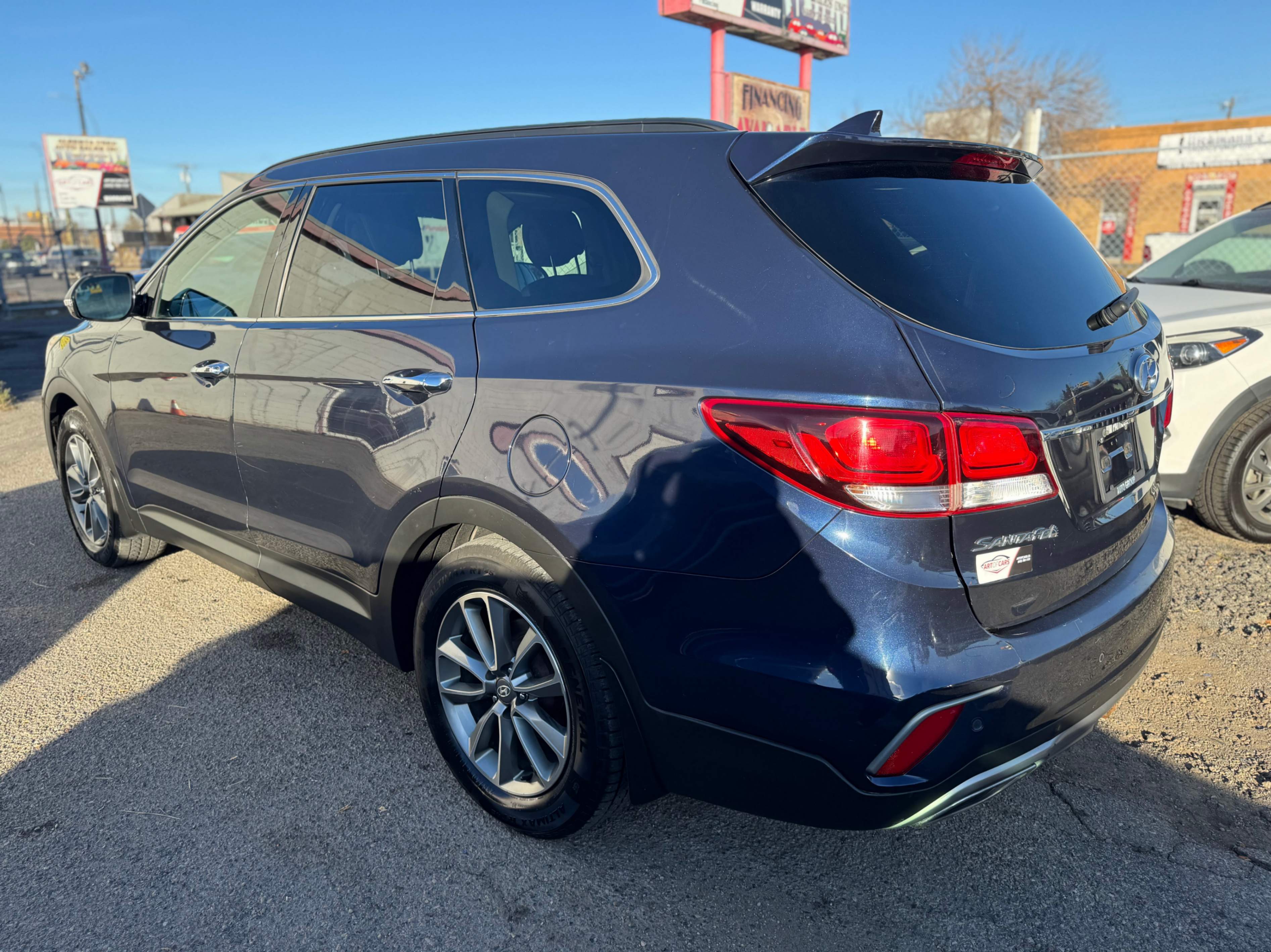
The 2017 Hyundai Santa Fe offers a generally favorable reliability profile, backed by strong safety ratings and solid initial build quality, though prospective buyers must watch for engine oil consumption issues, electrical glitches, and past safety recall campaigns.
When evaluating a used midsize SUV, understanding long-term mechanical dependability, common failure points, maintenance costs, and owner satisfaction metrics is vital. The 2017 model year represents the final iteration of the vehicle's third generation before a subsequent redesign, meaning Hyundai had several years to refine its manufacturing processes. However, like any complex modern automobile, it has specific mechanical nuances that demand attention from anyone considering a purchase or managing ongoing maintenance.
Overview of the 2017 Hyundai Santa Fe Lineup
To understand the reliability profile of the 2017 Santa Fe, it is necessary to examine how the lineup was structured. Hyundai split the vehicle into two distinct configurations for this model year: the standard Santa Fe (a three-row model seating up to seven passengers) and the Santa Fe Sport (a slightly smaller, two-row configuration seating five).
While both shared styling cues and interior design paradigms, they utilized different platform lengths and mechanical setups. The standard three-row Santa Fe was powered exclusively by a robust 3.3-liter V6 engine producing 290 horsepower, paired with a six-speed automatic transmission. The Santa Fe Sport offered a choice between a 2.4-liter naturally aspirated four-cylinder engine (185 horsepower) and a more spirited 2.0-liter turbocharged four-cylinder engine (240 horsepower), also matched to a six-speed automatic.
Because mechanical components differ significantly between the trims, reliability trends vary. V6 models generally enjoy a reputation for mechanical fortitude, whereas certain four-cylinder iterations, particularly the 2.0L turbo and select 2.4L units from this era, have faced scrutiny across Hyundai’s broader corporate portfolio regarding oil consumption and internal engine wear.
Powertrain Durability and Engine Performance
The mechanical heart of the 2017 Santa Fe dictates its long-term viability. Consumer reporting agencies and automotive forums highlight distinct performance trends for each engine option.
The 3.3L V6 Engine
Found in the larger three-row Santa Fe, this Lambda-series V6 is widely considered the most dependable powerplant available for this model year. Owners frequently report high mileage accumulation without major catastrophic failures, provided routine fluid changes are maintained. Timing chain longevity is generally good, and the six-speed automatic transmission shifts smoothly over extended mileage intervals.
The 2.4L and 2.0L Turbocharged Engines
The Santa Fe Sport’s four-cylinder engines require closer inspection. While the naturally aspirated 2.4-liter engine is relatively simple and easy to service, some owners have reported higher-than-average oil consumption as mileage climbs past 100,000 miles. The 2.0-liter turbocharged engine provides excellent mid-range torque and acceleration, but turbochargers inherently introduce additional thermal stress and component complexity. Regular synthetic oil changes at strict intervals are non-negotiable for keeping these forced-induction powerplants healthy.
Common Mechanical and Electrical Issues
No vehicle is completely immune to mechanical hiccups. Reviewing historical complaint data from the National Highway Traffic Safety Administration (NHTSA) and automotive diagnostic networks reveals several recurrent trouble spots for the 2017 model year.
- Excessive Oil Consumption: Some owners of four-cylinder models report needing to top off engine oil between scheduled service intervals. Ignoring this can lead to premature internal component wear or low-oil pressure warnings.
- Electrical and Infotainment Glitches: The touchscreen interface, Bluetooth connectivity, and backup camera systems occasionally freeze, require software updates, or experience intermittent display failures.
- Air Conditioning Compressor Failures: A subset of owners have experienced premature failure of the AC compressor or climate control actuator motors, leading to inconsistent cabin temperatures.
- Sunroof Shuddering and Binding: Panoramic sunroofs equipped on upper trim levels (like the Limited and Ultimate) can develop mechanical binding, strange noises, or require track lubrication and calibration to operate correctly.
Safety Recalls and Technical Service Bulletins (TSBs)
When assessing used car reliability, safety recalls are a critical metric. The 2017 Santa Fe was subject to several notable campaigns managed by the National Highway Traffic Safety Administration. Buyers should verify that all open recalls have been completed by a certified dealership.
| Campaign / System | Description | Corrective Action |
|---|---|---|
| Engine Knock Sensor | Potential for premature bearing wear leading to engine failure. | Software update for the Engine Control Unit (ECU) and engine inspection/replacement if necessary under extended warranty. |
| Anti-Lock Braking System (ABS) | Electrical short in the ABS module could potentially cause an engine compartment fire while parked or driving. | Installation of a revised relay fuse kit in the engine junction box. |
| Seat Belt Latch | Front passenger seat belt anchor pretensioner cable may separate in a high-impact collision. | Dealership inspection and securement or replacement of the pretensioner assembly. |
For detailed documentation on specific VIN status and recall completion, owners and prospective buyers should consult the NHTSA Recalls Lookup Tool.
Maintenance Costs, Parts Availability, and Ownership Experience
Long-term reliability is closely tied to how easy and affordable a vehicle is to maintain. The 2017 Santa Fe benefits from widespread parts availability, as many mechanical components are shared with concurrent Hyundai and Kia models (such as the Kia Sorento).
Routine maintenance items—including brake pads, rotors, spark plugs, filters, and suspension components—are reasonably priced and readily accessible through independent mechanics as well as official dealerships. Unlike luxury European imports, which often require specialized diagnostic tools for basic upkeep, the Santa Fe can be serviced efficiently by any competent automotive technician.
Fuel economy for the front-wheel-drive V6 models typically hovers around 18 mpg city and 25 mpg highway, while front-wheel-drive four-cylinder variants perform better, averaging roughly 21 to 22 mpg city and 27 to 28 mpg highway. All-wheel-drive (AWD) configurations incur a modest fuel economy penalty of 1 to 2 mpg across the board.
Frequently Asked Questions
Is the 2017 Hyundai Santa Fe considered a reliable used SUV?
Yes, overall the 2017 Santa Fe scores above average for reliability in the midsize SUV segment, particularly when equipped with the 3.3L V6 engine. However, its long-term condition depends heavily on how meticulously the previous owner adhered to oil change intervals and whether manufacturer safety recalls were performed.
Which engine is the most reliable in the 2017 Santa Fe?
The 3.3-liter V6 engine found in the standard three-row Santa Fe is widely regarded as the most durable and trouble-free option. It avoids some of the oil consumption concerns reported by a portion of owners driving the smaller four-cylinder Santa Fe Sport models.
What are the most common problems with a 2017 Santa Fe?
The most frequently reported issues include higher-than-average oil consumption on four-cylinder engines, minor electrical and infotainment glitches, and occasional climate control component failures. Major safety recalls related to the ABS module and engine knock sensor software must also be verified.
Does the 2017 Santa Fe hold its resale value well?
Midsize crossovers generally experience standard depreciation curves. While luxury brands depreciate faster in absolute terms, mass-market SUVs like the Santa Fe hold steady residual values, provided the vehicle has a clean title, documented service history, and no structural accident damage.
How do I check if a used 2017 Santa Fe has outstanding safety recalls?
You can verify any open safety campaigns by obtaining the vehicle identification number (VIN) and checking it directly on the official NHTSA recall database or through a Hyundai franchise dealership service department.
Final Recommendation and Buying Advice
If you are currently shopping for a used 2017 Hyundai Santa Fe, your best approach is to prioritize models equipped with the 3.3-liter V6 engine, provided your fuel economy requirements accommodate a slightly thirstier powerplant. Always request a comprehensive vehicle history report (such as CARFAX or AutoCheck) to confirm regular service intervals and verify that all safety recalls have been addressed. Have an independent mechanic perform a pre-purchase inspection to evaluate suspension health, check for fluid leaks, and scan the onboard computer for stored diagnostic trouble codes. By selecting a well-maintained example, you can expect dependable, comfortable family transportation.