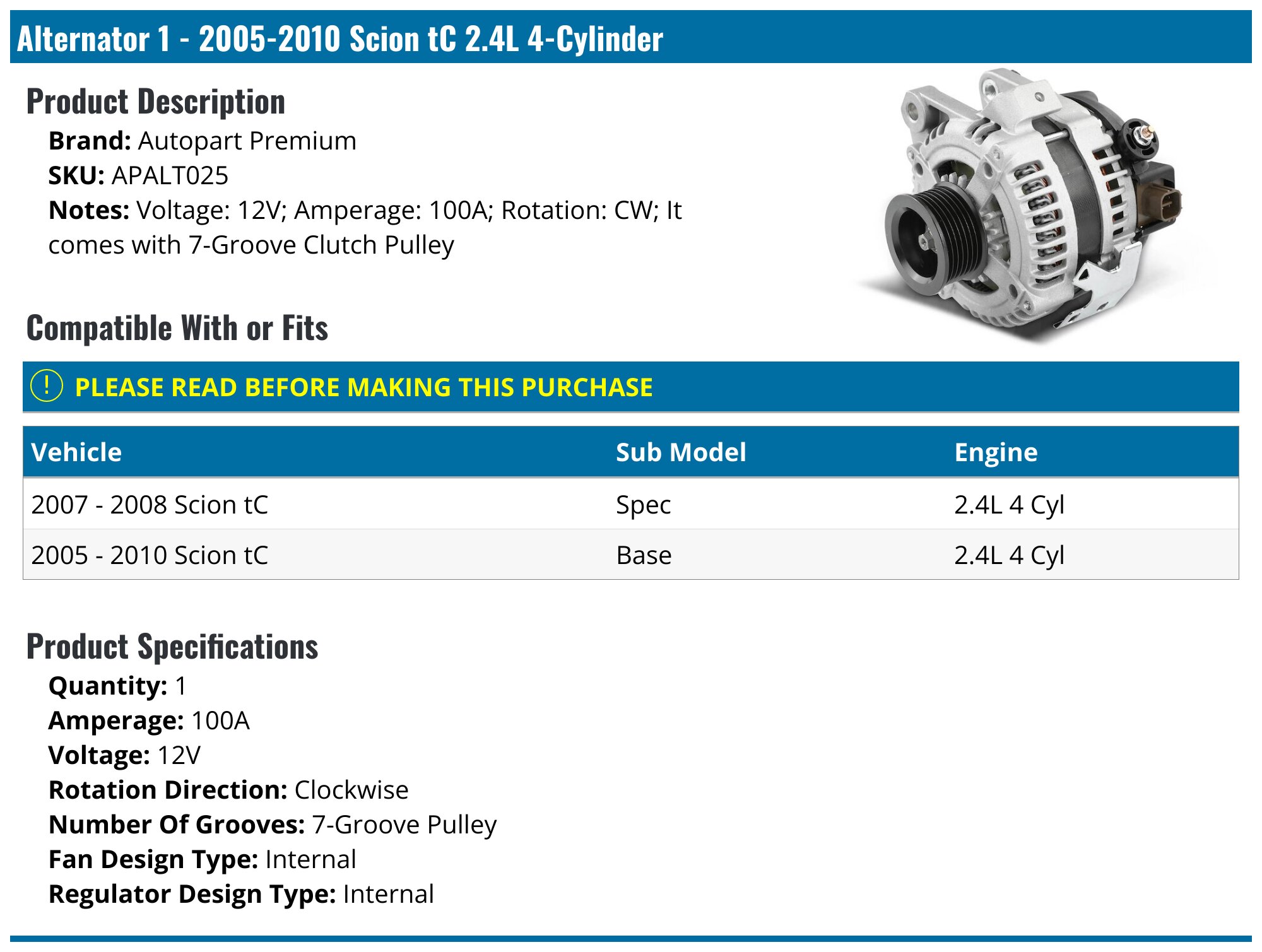
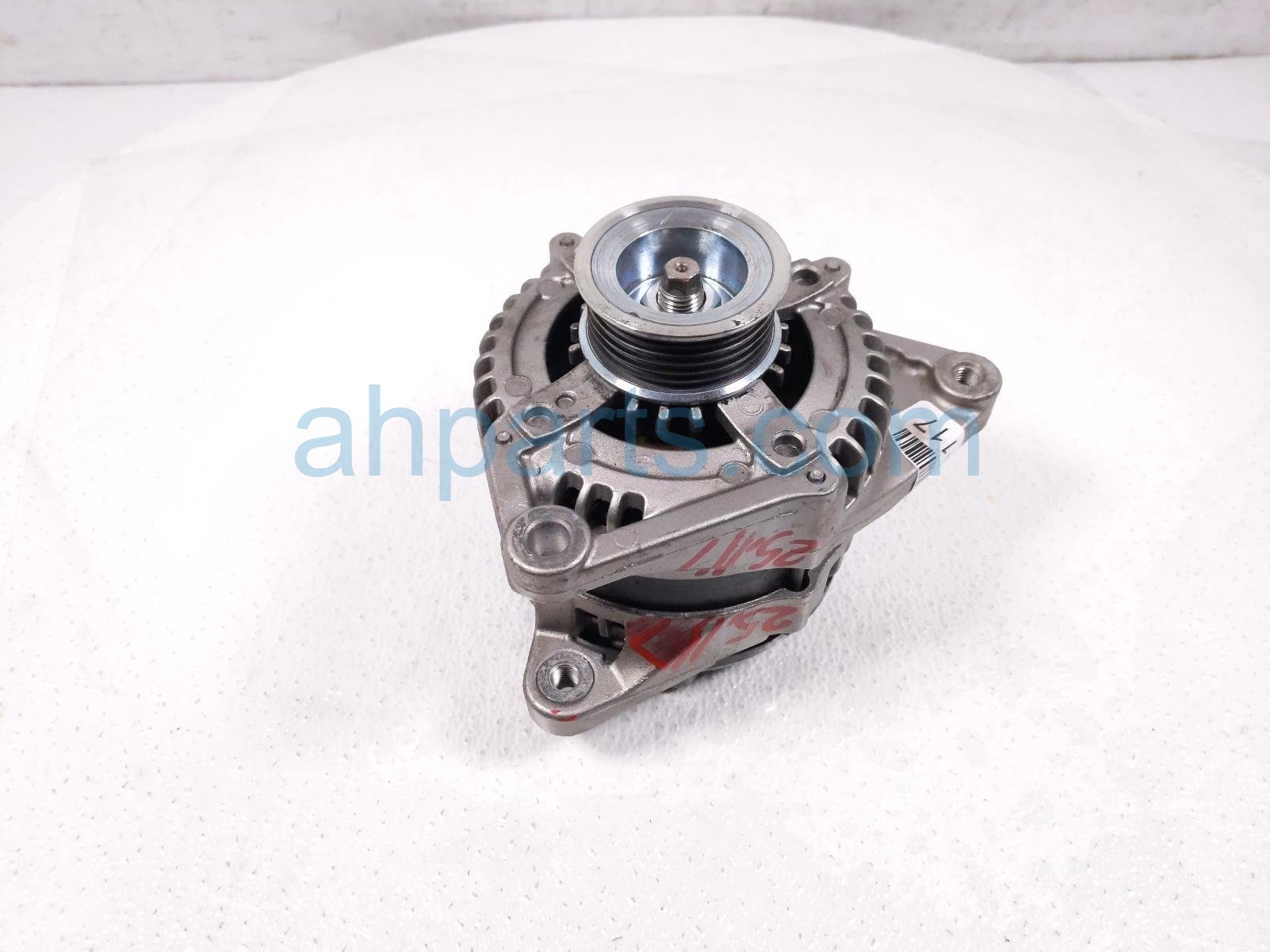
The 2007 Scion tC uses a 100-amp alternator powered by the 2.4L 2AZ-FE engine to maintain the vehicle's electrical system and charge the battery. When this component fails, symptoms typically include dimming headlights, a battery warning light on the dashboard, audible whining noises from the engine bay, or the engine stalling due to a loss of electrical power. Replacing this unit requires mechanical aptitude, a set of metric sockets, and careful attention to safety protocols regarding the vehicle's electrical system.
Understanding the 2007 Scion tC Charging System
The alternator in a 2007 Scion tC is an electromechanical device that converts mechanical energy from the engine’s crankshaft into electrical energy through the serpentine belt. It serves two primary purposes: powering the car’s electrical accessories while the engine is running and recharging the lead-acid battery after the high-amperage draw of the starter motor.
In this specific vehicle, the alternator is mounted on the passenger side of the engine block. Because the 2AZ-FE engine is shared across several Toyota models from the mid-2000s, parts are relatively accessible. However, the unit is tucked behind the power steering reservoir and various engine hoses, necessitating a systematic approach to removal.
Diagnostic Verification: Is the Alternator Truly Faulty?
Before committing to a replacement, it is crucial to verify that the fault lies with the alternator rather than the battery or the drive belt. A weak battery can mimic the symptoms of a failed alternator, as can a loose or frayed serpentine belt that is failing to spin the alternator pulley at the required speed.
- Battery Voltage Test: With the engine off, a healthy 12V automotive battery should read approximately 12.6 volts. Start the engine and measure the voltage again; if the alternator is functioning correctly, the reading should jump to between 13.5 and 14.8 volts. Anything below 13 volts suggests the alternator is not outputting a charge.
- Visual Inspection: Inspect the serpentine belt for cracks, glazing, or signs of slippage. If the belt is loose, it cannot transfer rotational force to the alternator.
- Audible Cues: Listen for a high-pitched metallic whining or grinding sound emanating from the pulley area. This often indicates the internal bearings of the alternator have failed.
- Dashboard Indicators: The battery light (a red battery symbol) is the most direct signal. Unlike a low-battery light that might flicker at startup, a constant, steady red light indicates a failure in the charging circuit.
Preparation and Safety Requirements
Working on an automotive electrical system presents inherent risks, primarily related to short circuits and accidental discharge. Before beginning any work on the 2007 Scion tC, observe these safety measures:
- Disconnect the Battery: Always remove the negative terminal of the battery first. This prevents the possibility of a short circuit if your wrench accidentally contacts the alternator’s positive terminal post while the battery is connected.
- Engine Temperature: Ensure the engine is cool. The alternator is located in close proximity to the exhaust manifold and cooling system components, which can cause severe burns if the vehicle has been running recently.
- Clearance: The 2007 Scion tC engine bay is relatively compact. You may need to remove the plastic engine cover and potentially move the power steering reservoir aside to gain adequate clearance for the bolts. Do not disconnect the power steering lines unless absolutely necessary, as this will require a system bleed.
Step-by-Step Replacement Process
Replacing the alternator on a 2007 Scion tC is a task that typically takes 2 to 4 hours for a DIY mechanic. You will need a metric socket set (specifically 10mm, 12mm, and 14mm), a serpentine belt tool, and a pry bar.
- Relieve Belt Tension: Locate the belt tensioner pulley. Use a serpentine belt tool or a long-handled 14mm wrench to rotate the tensioner, which will create enough slack to slip the belt off the alternator pulley.
- Electrical Disconnection: Remove the rubber cap from the alternator’s positive terminal post and unscrew the nut holding the cable. Unplug the small plastic connector that controls the alternator’s regulation signal.
- Remove Mounting Bolts: The alternator is secured by two primary bolts. These are typically 14mm bolts. Once removed, the unit may be stubborn due to the pressure of the mounting bushings. Use a soft-faced mallet or a small pry bar to wiggle the unit free from the bracket.
- Extraction: Carefully slide the old unit out of the engine bay. Note the path of the wiring to ensure the new unit is oriented identically.
- Installation: Place the new alternator into the bracket. Install the mounting bolts by hand first to ensure they are not cross-threaded, then tighten them to the manufacturer’s torque specifications. Reattach the electrical connections, ensuring the terminal nut is snug but not overtightened to prevent stripping the stud.
- Reinstall Belt: Carefully route the serpentine belt back over the pulleys, ensuring it sits correctly in the grooves of the crank, water pump, and alternator pulleys. Rotate the tensioner again to slide the belt back onto the alternator pulley.
Comparison of Replacement Options
When sourcing a replacement, you will generally encounter three categories of parts. Choosing the right one depends on your budget and how long you intend to keep the vehicle.
| Option | Pros | Cons |
|---|---|---|
| OEM New | Highest reliability, exact fit. | Most expensive option. |
| Remanufactured | Cost-effective, often carries a warranty. | Quality varies by rebuilder. |
| Aftermarket New | Affordable, widely available. | May not meet OEM electrical output specs. |
Common Troubleshooting Post-Installation
If, after installing a new alternator, you still experience issues, consider these common pitfalls:
- Loose Connections: A loose ground cable or a poorly tightened terminal nut will prevent the current from reaching the battery. Check the connections at both the alternator and the battery terminals.
- Belt Slippage: If you did not replace the serpentine belt during the procedure, a worn or stretched belt may slip under load, preventing the alternator from spinning at the required RPM.
- Fuses: Check the main alternator fuse (often found in the engine bay fuse box). If the old alternator shorted out, it may have blown this fuse, preventing the new unit from charging the system.
Professional Advice Limitation
While this guide provides standard mechanical procedures for a 2007 Scion tC, automotive repair involves risks of fire, electrical shock, and mechanical injury. If you are uncomfortable working with high-amperage electrical components or lack the proper tools, consult a certified automotive technician. Always refer to the official factory service manual for specific torque settings and wiring diagrams relevant to your VIN.
Frequently Asked Questions
1. Can I drive the car with a bad alternator? It is not recommended. Once the alternator stops charging, the car is running entirely on the remaining energy in the battery. Once that energy is depleted, the car will stall unexpectedly, often resulting in a complete loss of power while driving, including headlights and power steering assist.
2. Should I replace the serpentine belt while replacing the alternator? Yes. Since you are already removing the belt to access the alternator, it is standard practice to replace the belt simultaneously if it shows any signs of wear. This saves labor time in the future.
3. Does the 2007 Scion tC require a specific brand of alternator? While OEM (Denso) parts are preferred for their durability, high-quality aftermarket brands that provide a warranty are acceptable. Ensure the unit is rated for at least 100 amps to match the factory specifications.
4. Why is the battery light still on after installing a new alternator? This could indicate a failed voltage regulator, a blown fuse, or a damaged wire in the charging harness. Verify that the alternator's signal connector is fully seated and that the main positive cable is clean and tight.
5. How long should an alternator last on a 2007 Scion tC? Alternators typically last between 80,000 and 150,000 miles. Many owners find themselves replacing the factory unit after the 100,000-mile mark, though this can vary based on electrical load, such as the use of high-powered aftermarket audio systems.
Next Action: Begin by testing your battery voltage with a multimeter. If the battery is healthy but the charging system remains below 13.5 volts while the engine is running, proceed to inspect the drive belt and wiring before purchasing a replacement alternator.