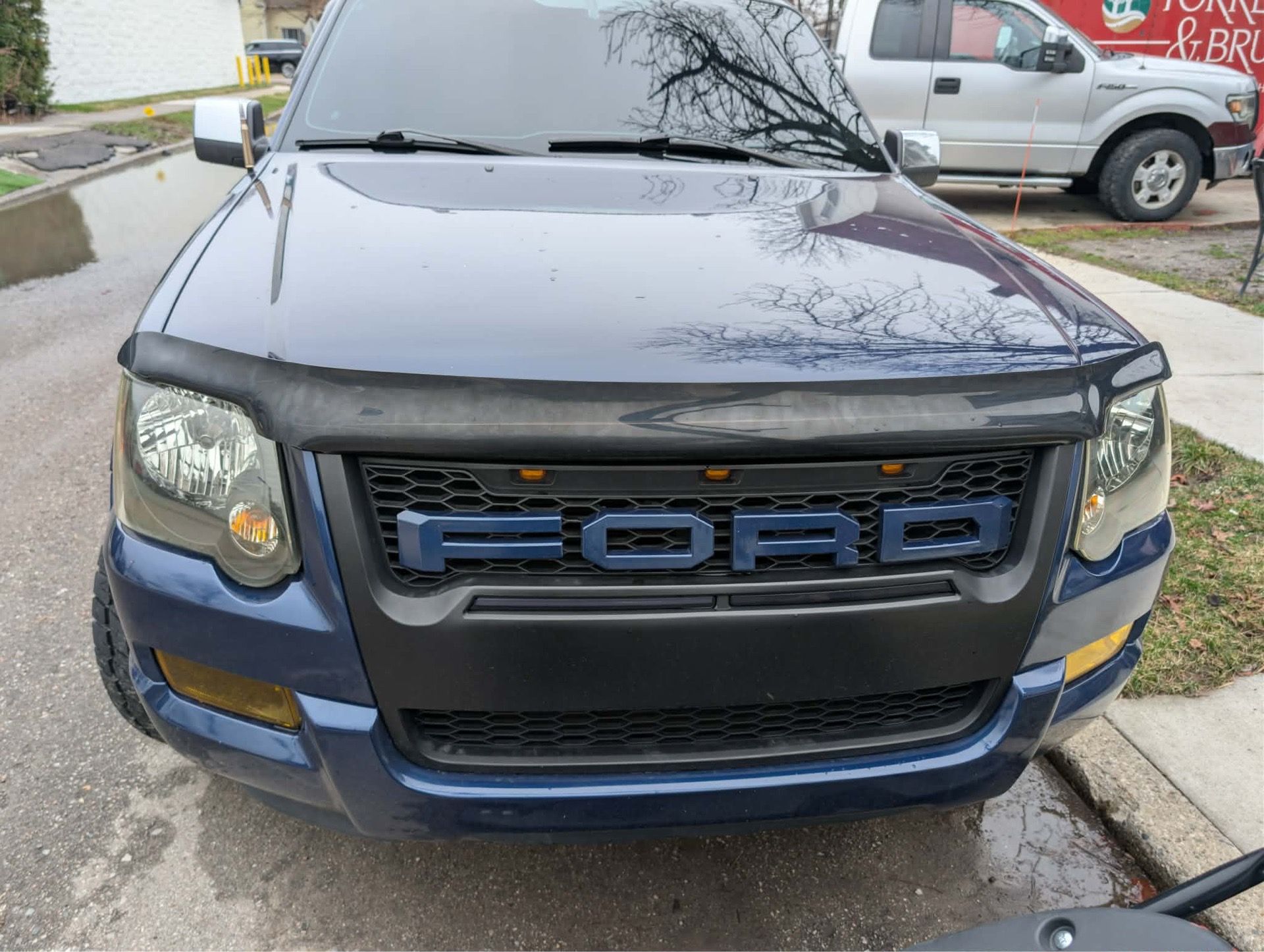
The 2007 Ford Explorer Sport Trac represents a unique bridge between a traditional SUV and a compact pickup, offering a distinct four-door configuration with a composite-lined cargo bed. Released as the first year of the second-generation model, this vehicle is defined by its independent rear suspension, refined interior, and capable V6 or V8 engine options, making it a versatile choice for buyers prioritizing light-duty utility and cabin comfort over heavy-duty towing capacity.
Understanding the 2007 Ford Sport Trac Identity
The 2007 redesign of the Ford Sport Trac was a significant departure from its predecessor. While the first generation was based on the original Ford Explorer platform, the 2007 model shared its architecture with the then-current Explorer SUV. This shift was paramount for ride quality; the inclusion of an independent rear suspension replaced the archaic leaf-spring setup of the earlier model, drastically improving handling, steering precision, and road-noise isolation.
From a design perspective, the vehicle occupies a niche that Ford termed the "Sport Utility Truck." It features a crew-cab style seating arrangement capable of accommodating five passengers comfortably, coupled with a 4-foot-long cargo bed. The bed itself is constructed from a dent-resistant, rust-proof composite material, which includes integrated storage compartments and cargo tie-downs. For the target audience—those who need a daily driver that can occasionally haul dirty gear or oversized equipment—this vehicle functions as a hybrid solution that avoids the cumbersome size of a full-size truck while providing more utility than a standard SUV.
Technical Specifications and Mechanical Capability
The 2007 Ford Sport Trac was offered with two distinct powertrain configurations, each serving a different type of driver. Understanding these specifications is critical for prospective owners, as they dictate the maintenance schedule and functional capabilities of the truck.
The Standard 4.0L V6
The base engine was the long-running 4.0-liter Cologne V6. This engine produces 210 horsepower and 254 pound-feet of torque. It is paired with a five-speed automatic transmission. This setup is generally considered adequate for highway commuting and light-duty tasks. However, owners frequently note that while the engine is reliable, it lacks the punch required for heavy towing or high-altitude driving.
The Optional 4.6L 3V V8
The standout performance option for the 2007 model year is the 4.6-liter 3-valve V8, which produces 292 horsepower and 300 pound-feet of torque. This engine is mated to a six-speed automatic transmission, which offers smoother shifting and better power distribution compared to the five-speed unit in the V6. For buyers looking to maximize the Sport Trac’s 6,800-pound maximum towing capacity (when properly equipped), the V8 is the necessary choice.
Suspension and Drivetrain
The chassis benefits significantly from a hydroformed frame, which provides increased rigidity compared to the first-generation Sport Trac. The switch to a four-wheel independent suspension system allows each wheel to move vertically without affecting the others, which is the primary reason the 2007 model handles significantly better on uneven pavement and cornering compared to its direct competitors of the same era.
Performance and Real-World Utility
Evaluating the Sport Trac as a daily driver requires looking beyond paper specifications. In real-world conditions, the vehicle functions exceptionally well as a suburban utility vehicle. The four-door cabin layout is spacious, offering rear-seat legroom that is sufficient for adults—a common complaint with single-cab or extended-cab pickup trucks.
The cargo bed, while limited in length, is highly functional for lifestyle use. Because it is made of composite materials, it is immune to the rust issues that plague traditional steel beds. However, users should be aware of the "Sport Trac" limitation: it is not a work truck designed for heavy commercial loading. The bed is best suited for camping equipment, yard waste, or sporting goods. Attempting to load heavy, industrial-grade construction materials may exceed the payload capacity, which typically ranges around 1,400 pounds depending on the specific trim level and drivetrain.
Handling and Ride Quality
The vehicle’s turning radius is surprisingly tight for a truck-based platform, making it maneuverable in parking lots and urban settings. The inclusion of electronic stability control (AdvanceTrac with Roll Stability Control) provides an added layer of safety, which was a vital feature for a vehicle with a higher center of gravity.
Comparative Overview: The Sport Trac Landscape
To understand where the 2007 Sport Trac sits in the automotive market, it is helpful to compare it against other vehicles of that period.
| Feature | 2007 Ford Sport Trac | 2007 Toyota Tacoma | 2007 Honda Ridgeline |
|---|---|---|---|
| Platform | Explorer-based | Body-on-frame | Unibody |
| Rear Suspension | Independent | Leaf Springs | Independent |
| Max Towing | 6,800 lbs | 6,500 lbs | 5,000 lbs |
| Bed Construction | Composite | Steel | Composite |
| Seating | 5 Adults | 4-5 Adults | 5 Adults |
The table above illustrates that the Sport Trac offers a middle ground. It possesses the towing capability of a traditional body-on-frame truck like the Tacoma, but provides the refined road manners of the unibody-based Ridgeline.
Reliability and Maintenance Considerations
As of 2026, the 2007 Ford Sport Trac is a legacy vehicle, and prospective owners must account for long-term wear. Maintenance is generally straightforward because the mechanical components are shared with the Ford Explorer, which was mass-produced in high volumes.
Common Mechanical Points to Inspect:
- Spark Plugs: The 4.6L 3V V8 engine is known for spark plugs that can seize in the cylinder head. If you are inspecting a vehicle with this engine, verify that the plugs have been serviced or replaced recently.
- Transmission Fluid: Both the five-speed and six-speed automatic transmissions are durable, but they rely heavily on fluid quality. Regular flushing intervals are essential to prevent solenoid issues.
- Rust and Body Integrity: While the cargo bed is composite, the frame and body mounts are steel. Corrosion on the undercarriage can be significant if the vehicle resided in a region that uses road salt. Always inspect the frame rails for deep scaling.
- Suspension Components: Bushings and ball joints are wear items. Given the age of the vehicle, these components may require replacement to restore the original ride quality.
Frequently Asked Questions
1. Is the 2007 Sport Trac considered a reliable vehicle? Yes, it is generally considered reliable, especially with the 4.6L V8 engine. The platform is well-documented, meaning parts are widely available, and the major mechanical systems (engine and transmission) share DNA with other high-volume Ford products, simplifying repair logistics for independent mechanics.
2. Can I use the 2007 Sport Trac for daily commuting? The Sport Trac is highly suitable for commuting. Its cabin is insulated well enough to reduce wind and road noise, and the four-door configuration makes it as practical as a standard midsize SUV for passenger transport, provided the fuel economy—which is average for a 2007-era V6 or V8 truck—meets your requirements.
3. What is the primary advantage of the composite cargo bed? The composite cargo bed is the standout feature for utility. It eliminates the risk of "bed rot" (corrosion from sitting moisture), requires no bed-liner, and is highly resistant to dents and scratches compared to traditional stamped steel truck beds.
4. How does the 2007 model differ from the 2006 Sport Trac? There was no 2006 model year for the Sport Trac. The 2007 model represented the launch of the second generation. The 2007 redesign brought the vehicle from the aging Ranger-based platform to the modern Explorer platform, significantly improving ride quality, safety features, and available horsepower.
5. Is the 4WD system on the 2007 Sport Trac effective? The Control Trac 4WD system is highly capable for light off-roading, snow, and rain. It offers an "Auto" mode that transfers power to the front wheels only when slippage is detected, which is ideal for changing road conditions, alongside a traditional "4WD High" and "4WD Low" setting for more difficult terrain.
Final Recommendation and Next Actions
The 2007 Ford Sport Trac remains a highly relevant vehicle for individuals who need a dual-purpose tool: a comfortable passenger cabin for daily travel and a rugged, corrosion-proof bed for active lifestyles.
If you are currently evaluating a purchase, follow these steps to ensure you are buying a sound vehicle:
- Request Service Records: Specifically check for evidence of transmission fluid changes and spark plug maintenance.
- Conduct a Pre-Purchase Inspection (PPI): Have a certified technician perform a thorough check of the undercarriage for frame rust and test the 4WD engagement on a low-friction surface.
- Prioritize the V8: If towing is a priority, do not compromise with the V6. The added power and the six-speed transmission of the V8 model offer a noticeably superior driving experience and greater longevity for towing tasks.
By focusing on these mechanical checkpoints, you can secure a vehicle that effectively bridges the gap between a family SUV and a utility truck, providing years of reliable service for your specific transport and hauling needs.