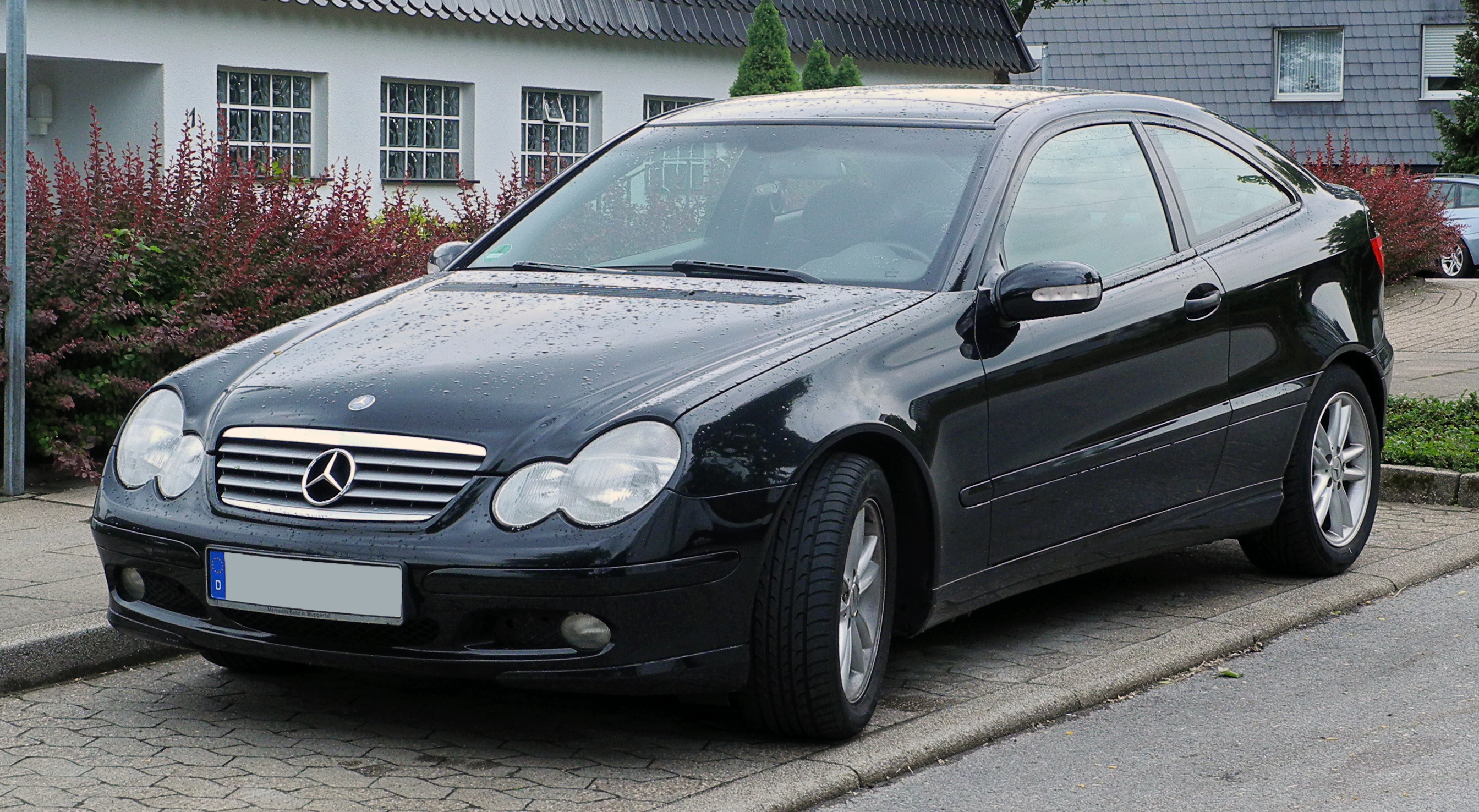
The 2004 Mercedes-Benz C 230 Kompressor delivers a balanced performance profile centered around its 1.8-liter supercharged inline-four engine, which generates 189 horsepower and 192 lb-ft of torque, enabling 0-60 mph acceleration in roughly 7.2 to 7.5 seconds while maintaining a stable, composed highway ride.
The automotive landscape of the early 2000s saw luxury automakers aggressively pursuing younger demographics and higher volume numbers through compact executive sedans, coupes, and sport wagons. Within the Mercedes-Benz stable, the W203 generation C-Class occupied this critical volume-driving space. Among the various engine configurations offered during the mid-cycle refresh of this generation, the 2004 Mercedes-Benz C 230 Kompressor holds a unique position. It replaced the earlier supercharged 2.3-liter engine with a more modern, smaller-displacement forced-induction powerplant.
Evaluating the performance capabilities of this vehicle requires examining its powertrain architecture, real-world driving dynamics, fuel efficiency figures, and mechanical nuances. Understanding how this compact luxury machine behaves on the road provides prospective buyers, automotive enthusiasts, and DIY restorers with a realistic baseline of what to expect from a two-decade-old German sport sedan.
Powertrain Architecture and Engine Specifications
At the heart of the 2004 C 230 Kompressor is the M271 engine family. Specifically, this model utilizes a 1.796-liter (1.8L) inline-four engine equipped with an Eaton Roots-type supercharger (indicated by the traditional Mercedes-Benz Kompressor moniker). This configuration represented a technological shift away from the older M111 engine, bringing improved refinement, reduced emissions, and better thermal efficiency.
The supercharger forces compressed air into the combustion chambers, allowing a relatively small engine to punch well above its displacement class. The forced induction system operates mechanically, driven by a belt connected to the crankshaft. This eliminates the turbo lag commonly associated with exhaust-driven turbos of that era, providing immediate throttle response at lower RPM ranges.
Core Performance Metrics
- Engine Displacement: 1,796 cc (1.8 liters)
- Induction Type: Roots-type supercharger with an intercooler
- Horsepower: 189 hp (141 kW) at 5,800 rpm
- Torque: 192 lb-ft (260 Nm) available from 3,500 to 4,000 rpm
- Transmission Options: 6-speed manual or 5-speed electronic automatic (5G-Tronic)
- Drivetrain: Front-engine, rear-wheel drive (RWD)
The flat torque curve is a defining characteristic of the M271 engine in this application. Because peak torque is sustained across a broad band from 3,500 to 4,000 rpm, the car feels responsive during passing maneuvers without demanding frantic downshifting.
Transmission Dynamics and Power Delivery
Power routing in the 2004 C 230 Kompressor was managed by either a traditional 6-speed manual transmission or a 5-speed automatic transmission with Touch Shift manual control. Each transmission changes the character of the vehicle's performance delivery.
| Transmission Type | Key Advantages | Operational Characteristics |
|---|---|---|
| 6-Speed Manual | Better driver engagement, improved acceleration times | Heavier clutch pedal feel, notchy shift gates |
| 5-Speed Automatic | Smoother highway cruising, relaxed urban commuting | Slower gear changes, durable torque converter |
The 6-Speed Manual Experience
The rare 6-speed manual gearbox offers a more engaging drive, allowing drivers to keep the M271 engine spinning in its optimal power band. The clutch pedal is moderately weighted, and the shifter features relatively long throws typical of Mercedes-Benz manual gearboxes of this period. While it does not possess the crisp, mechanical precision of contemporary Japanese sport compacts, it transforms the C 230 into a more purposeful driver's car.
The 5-Speed Automatic Experience
The vast majority of C 230 Kompressor models sold were equipped with the 5-speed 5G-Tronic (W5A580) automatic transmission. Known for robust mechanical durability, this transmission prioritizes smooth gear changes over rapid shifts. When paired with the supercharged engine, it masks turbo/supercharger transitions seamlessly, making it well-suited for daily commuting and sustained highway cruising. However, kick-down response can exhibit a slight hesitation compared to modern multi-speed automatics.
Acceleration, Speed, and Track-Style Performance
In terms of straight-line velocity, the 2004 C 230 Kompressor delivers respectable performance for a compact executive car of its era.
- 0–60 mph (0–96 km/h): ~7.2 seconds (Manual) / ~7.5 seconds (Automatic)
- Standing Quarter-Mile: ~15.5 seconds at roughly 90 mph
- Top Speed: Electronically governed at 130 mph (209 km/h)
While these figures do not challenge contemporary high-performance variants like the C 32 AMG or later C 63 models, the car provides adequate power for highway merging and spirited backroad driving. The linear power delivery ensures that speed accumulates smoothly rather than in abrupt surges.
Handling, Suspension, and Ride Quality
The chassis dynamics of the W203 generation strike a deliberate compromise between traditional Mercedes-Benz ride comfort and agile handling capabilities. Most C 230 Kompressor models—particularly those equipped with the optional Sport package—benefited from lowered, stiffer suspension tuning, larger stabilizer bars, and performance-oriented brake components.
Suspension Setup
- Front: Independent three-link suspension with coil springs, gas-pressurized shock absorbers, and an anti-roll bar.
- Rear: Independent multi-link independent suspension with coil springs, gas-pressurized shock absorbers, and an anti-roll bar.
In practice, the suspension absorbs road imperfections with German composure while maintaining flat cornering attitudes during aggressive steering inputs. The rack-and-pinion steering system offers reasonable feedback, though it feels slightly muted compared to hydraulic systems found in purely sports-focused rivals of the same era, such as the BMW E46 3 Series.
Braking Performance
Stopping power is handled by ventilated disc brakes up front and solid discs in the rear, supplemented by Anti-lock Braking System (ABS), Brake Assist (BAS), and Electronic Stability Program (ESP). Pedal feel is progressive and confidence-inspiring, hauling the roughly 3,300-pound vehicle down from highway speeds without noticeable fade during normal driving conditions.
Fuel Economy and Efficiency
Fuel efficiency is a primary justification for utilizing a forced-induction four-cylinder engine over a larger naturally aspirated V6. According to historical EPA estimates adjusted for modern testing standards, the 2004 C 230 Kompressor achieves competitive fuel economy figures:
- City: Approximately 21 to 23 mpg
- Highway: Approximately 30 to 32 mpg
- Combined: Approximately 24 to 25 mpg
Achieving these figures in real-world driving heavily depends on maintaining clean air filters, properly functioning spark plugs, and avoiding excessive aggressive acceleration, which spins up the supercharger continuously and increases fuel consumption.
Common Mechanical Considerations Impacting Performance
Because this vehicle is well past its initial production lifecycle, long-term performance retention depends heavily on addressing known mechanical vulnerabilities associated with the M271 engine and W203 platform.
1. Timing Chain Wear
The M271 engine uses a single-row timing chain that can stretch prematurely if oil changes are neglected or if inferior oil is used. Worn timing chains can damage the engine valves and sprockets, leading to severe power loss or catastrophic engine failure. Inspecting the timing chain stretch during routine maintenance is critical.
2. Camshaft Adjuster Leaks
Oil can migrate through the camshaft adjuster magnets into the engine wiring harness via capillary action. This oil contamination can eventually foul the engine control unit (ECU), causing erratic performance, rough idling, and diagnostic trouble codes.
3. Supercharger Oil and Intercooler Efficiency
While the Eaton supercharger is mechanically robust, the internal needle bearings and oil reservoirs require monitoring at high mileages. Additionally, heat soak can affect performance during prolonged high-ambient-temperature driving if the front-mounted intercooler or coolant pump loses efficiency.
Comparison With Contemporary Rivals
To contextualize the performance of the 2004 C 230 Kompressor, it helps to examine how it stacked up against its primary German competitors during the mid-2000s.
- BMW 325i (E46): Powered by a 2.5-liter naturally aspirated inline-six producing 184 hp. The BMW offered sharper steering and a more balanced rear-wheel-drive chassis feel, but the C 230 Kompressor countered with broader mid-range torque thanks to supercharging.
- Audi A4 1.8T (B6): Utilized a 1.8-liter turbocharged inline-four producing 170 hp. While the Audi featured standard front-wheel drive or optional Quattro all-weather traction, the rear-wheel-drive C 230 offered a more dynamic driving posture and higher standard output.
Frequently Asked Questions
Is the 2004 Mercedes-Benz C 230 Kompressor considered a fast car?
By modern standards, it is moderately quick rather than fast. With 189 horsepower and a 0-60 mph time in the low-7-second range, it provides adequate acceleration for daily driving and highway passing, but it is outpaced by modern turbocharged four-cylinder entry-level luxury vehicles.
Does the supercharger require premium fuel?
Yes. The high compression ratio and forced induction system mandate the use of 91 octane (or higher) premium unleaded gasoline to prevent engine knocking, optimize ignition timing, and preserve maximum power output.
What is the difference between the C 230 Kompressor and the C 320 of the same year?
The C 230 Kompressor uses a supercharged 1.8L four-cylinder engine focused on efficiency and light handling, whereas the C 320 features a larger 3.2-liter naturally aspirated V6 producing 215 horsepower. The V6 offers smoother power delivery and higher top-end output at the expense of heavier front-end weight and slightly higher fuel consumption.
Can the performance of the M271 engine be upgraded?
Yes. The aftermarket supports performance modifications such as smaller supercharger pulleys (which increase boost pressure), upgraded intercoolers, free-flowing exhaust systems, and custom ECU software tunes. However, modifications should only be applied after ensuring the base mechanical health of the timing chain and cooling systems.
Final Recommendation
The 2004 Mercedes-Benz C 230 Kompressor represents an intriguing intersection of old-school Mercedes build quality and efficient forced-induction engineering. For buyers or enthusiasts evaluating this vehicle today, it serves as a comfortable, reasonably responsive daily driver with distinct classic-sedan styling. Prioritize models with comprehensive service documentation verifying regular synthetic oil changes and proactive timing chain maintenance to ensure the supercharged powertrain delivers dependable performance.