The Intel Core i5-13400, often referred to in technical procurement as the 134-AI series due to its integrated hardware acceleration, is a 10-core, 16-thread processor based on the Raptor Lake architecture. Designed for LGA 1700 sockets, it features a hybrid core configuration (6 Performance-cores and 4 Efficient-cores) and supports ECC memory when paired with a W680 chipset, making it a premier choice for entry-level servers and edge AI applications in 2026.
Understanding the "134-AI" Architecture in 2026
By 2026, the landscape of server hardware has shifted toward high-efficiency hybrid architectures. The Intel Core i5-13400 (the core of the 134-AI specification) represents a significant milestone in this evolution. Unlike traditional server CPUs that rely solely on high-power performance cores, the 13400 utilizes Intel’s specialized hybrid topology to balance heavy computational loads with background administrative tasks.
In a server environment, the Performance-cores (P-cores), based on the Golden Cove microarchitecture, handle high-priority threads such as active database queries, virtual machine (VM) primary processes, or real-time AI inference. Conversely, the Efficient-cores (E-cores), based on the Gracemont architecture, manage background telemetry, file indexing, and lightweight containerized services. This distribution ensures that the server remains responsive even under peak load, a critical requirement for modern "always-on" edge deployments.
The "AI" designation often attached to this specification refers to the processor’s robust support for the Intel OpenVINO toolkit and Intel Deep Learning Boost (DL Boost). These technologies allow the i5-13400 to perform complex mathematical operations, such as Vector Neural Network Instructions (VNNI), directly on the CPU, reducing the need for discrete GPU accelerators in small-scale surveillance or data-processing nodes.
Comprehensive Technical Specifications: The 13400 Matrix
To properly integrate the 13400 into a server rack or industrial enclosure, administrators must account for its precise electrical and thermal characteristics. The following data represents the standardized specifications for the 13400 series as utilized in 2026 deployments.
| Feature | Specification Detail |
|---|---|
| Total Cores / Threads | 10 Cores (6P + 4E) / 16 Threads |
| Max Turbo Frequency | 4.60 GHz (P-core) / 3.30 GHz (E-core) |
| Intel Smart Cache (L3) | 20 MB |
| Total L2 Cache | 9.5 MB |
| Processor Base Power | 65 W |
| Maximum Turbo Power | 148 W |
| Memory Support | DDR5 4800 MT/s / DDR4 3200 MT/s |
| Max Memory Capacity | 192 GB (with 2026 high-density modules) |
| ECC Memory Support | Yes (Requires Intel W680 Chipset) |
| Integrated Graphics | Intel UHD Graphics 770 (32 EUs) |
| PCI Express Revision | 5.0 and 4.0 |
| Socket | FCLGA1700 |
Core Configuration and Thread Management
The 6 Performance-cores are hyper-threaded, while the 4 Efficient-cores are single-threaded, resulting in a 16-thread ceiling. For server administrators using Linux-based kernels (such as Proxmox or Ubuntu Server), proper thread pinning is essential. In 2026, most modern schedulers are fully "hybrid-aware," automatically directing latency-sensitive workloads to the P-cores. However, in legacy environments, manual intervention may be required to prevent high-priority tasks from being assigned to the lower-clocked E-cores.
Memory Architecture and ECC Requirements
A common misconception regarding the "i" series (like the i5-13400) is that they lack Error Correction Code (ECC) support. In fact, the 13400 fully supports ECC memory, provided it is seated in a motherboard with a server-grade chipset, specifically the Intel W680. For 2026 data integrity standards, ECC is non-negotiable in server environments to prevent "bit-flip" errors that can lead to database corruption. The processor supports up to two memory channels, and with the 48GB and 64GB DIMMs available in 2026, a 13400-based server can reach a maximum of 192GB of RAM.
The Role of Integrated AI and QuickSync in Server Workloads
The "134-AI" nomenclature highlights the processor’s utility in media and machine learning. The integrated Intel UHD Graphics 770 is not merely for display; it is a powerful co-processor for specific server-side tasks.
Intel QuickSync Video (QSV)
For media servers (such as Plex, Jellyfin, or enterprise video content delivery networks), the i5-13400 is a gold standard. The UHD 770 includes dual Multi-Format Codec (MFC) engines. In practical 2026 benchmarks, a single i5-13400 can handle upwards of 15-18 simultaneous 4K HDR transcodes. This hardware-level encoding and decoding offloads the CPU cores entirely, allowing the server to maintain high performance for other applications while serving high-bitrate video.
OpenVINO and Edge Inference
In 2026, edge computing often involves local AI processing. The i5-13400 supports Intel DL Boost, which accelerates AI inference workloads like image recognition, natural language processing (NLP), and anomaly detection in industrial IoT. By utilizing the OpenVINO toolkit, developers can run models across the P-cores, E-cores, and the integrated GPU simultaneously. This "AI on a budget" approach makes the 13400 ideal for regional office servers that require local data scrubbing before sending results to the central cloud.
Deployment Scenarios: From NAS to Edge Computing
The 13400-series CPU is rarely found in multi-socket enterprise blades; instead, it dominates the Single-Socket Server and High-End NAS markets.
- SME Virtualization: With 16 threads, the 13400 can comfortably host 5-8 lightweight virtual machines. It is commonly used in small business environments to run a domain controller, a file server, and a local web host on a single physical machine.
- Network Attached Storage (NAS): High-end NAS manufacturers frequently specify the 13400 (or its low-power variant, the 13400T) for units with 8 or more bays. The combination of high PCIe lane counts and QuickSync makes it perfect for storage arrays that also serve as media libraries or surveillance hubs.
- Industrial Edge Nodes: The 13400E (Embedded) variant of this CPU is designed for 24/7 operation in harsher environments. These are found in factory floor controllers where they process sensor data using AI models to predict equipment failure.
Comparison: Intel Core i5-13400 vs. Xeon and 14th Gen
When selecting a 134-series CPU in 2026, it is vital to compare it against its contemporary alternatives to ensure the best performance-to-cost ratio.
| CPU Model | Target Market | Core Count | TDP | Primary Advantage |
|---|---|---|---|---|
| i5-13400 | Entry Server / AI | 10 (6+4) | 65W | Best value/QuickSync |
| i5-13400T | Small Form Factor | 10 (6+4) | 35W | Low heat/Thermal efficiency |
| Xeon E-2436 | Enterprise Entry | 6 (P-only) | 65W | Native server validation |
| i5-14400 | Mid-Range Server | 10 (6+4) | 65W | Marginal clock speed boost |
While the 14th Gen (i5-14400) offers slightly higher clock speeds, the 13400 remains the preferred "stable" choice in 2026 due to its lower cost and identical core architecture. Compared to the Xeon E-series, the 13400 actually offers more total cores due to the inclusion of E-cores, making it superior for multi-tasking and containerized workloads, even if the Xeon brand carries more "prestige" in the data center.
Thermal Management and Power Efficiency in Racks
Despite its 65W base power, the i5-13400 can draw up to 148W during peak turbo periods. In a 1U or 2U server chassis, this necessitates robust cooling.
- Air Cooling: In standard 2U racks, a high-static pressure blower fan paired with a copper-base heatsink is sufficient. However, in 1U chassis, the 13400 may experience thermal throttling if the Maximum Turbo Power (MTP) is not capped in the BIOS.
- Power Limiting: For server stability, many administrators set the Long Duration Power Limit (PL1) to 65W and the Short Duration Power Limit (PL2) to 90W. This prevents the "heat spikes" typical of consumer Raptor Lake chips, ensuring a consistent thermal profile for the server rack.
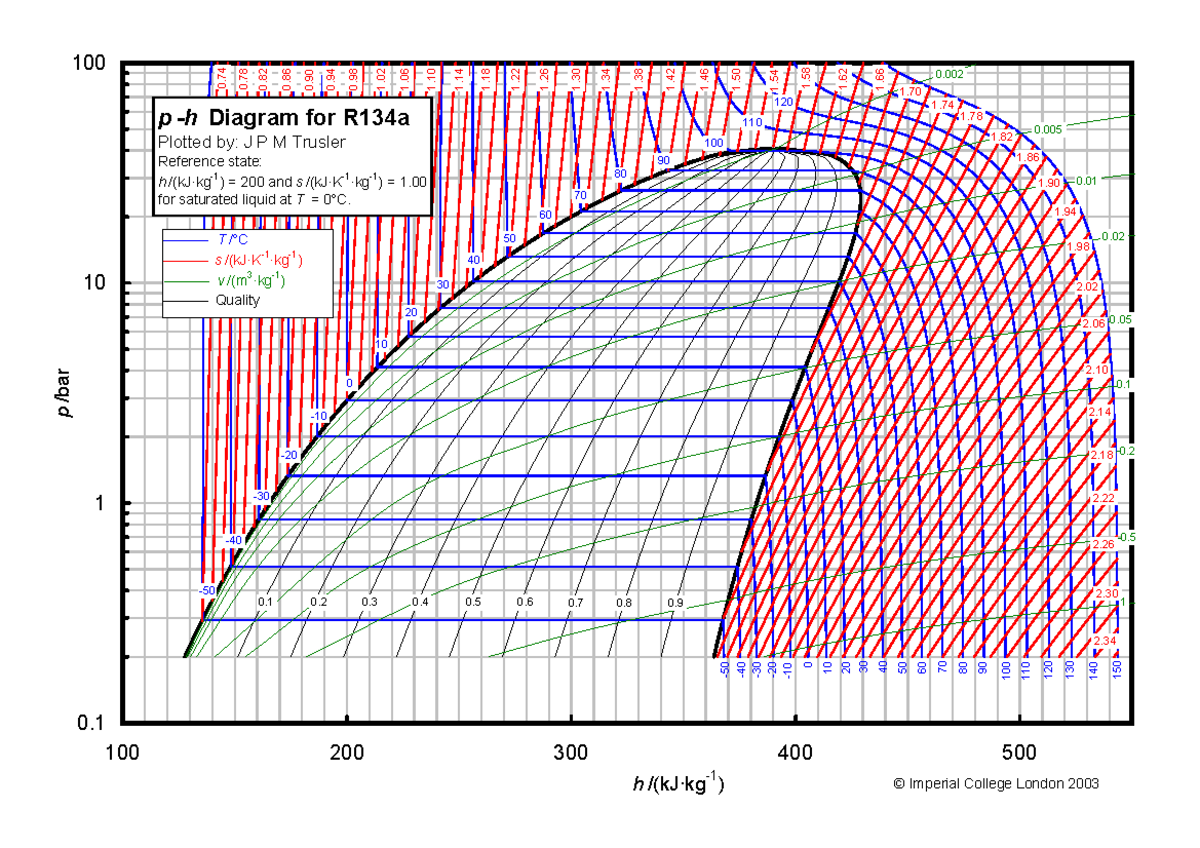
- Cooling Mediums: While R134a refrigerant systems are common in large-scale data center chillers, the i5-13400 is typically air-cooled or integrated into closed-loop liquid systems in high-density edge enclosures.
Common Implementation Mistakes
- Using Consumer Motherboards: Deploying a 13400 on a B660 or Z790 motherboard for server use is a common error. These boards lack the W680 chipset required for ECC memory and often do not support 24/7 remote management features like IPMI (Intelligent Platform Management Interface).
- Ignoring the E-Cores: Some older hypervisors do not distinguish between P-cores and E-cores, which can lead to "jitter" in time-sensitive applications. Always ensure the OS kernel is updated to a version released after 2023 to ensure proper thread scheduling.
- Power Supply Under-provisioning: Because the 13400 can spike to 148W, using a low-quality or "gold" rated PSU without sufficient 12V rail headroom can cause system reboots during heavy AI inference or video transcoding tasks.
FAQ
Does the i5-13400 support hardware virtualization (VT-x and VT-d)?
Yes. The i5-13400 fully supports Intel Virtualization Technology (VT-x), VT-d for directed I/O (critical for GPU passthrough in servers), and EPT (Extended Page Tables). These features are mandatory for running platforms like VMware ESXi, Microsoft Hyper-V, or Proxmox VE.
Can I run the 13400 without a dedicated GPU in a server?
Absolutely. One of the primary advantages of the 13400 is the integrated UHD 770 graphics. This allows for a "headless" server setup that can still perform video transcoding and AI acceleration without the power draw or space requirements of a discrete PCIe graphics card.
Is the i5-13400 compatible with Windows Server 2025/2026?
Yes, the 13400 is fully compatible with Windows Server 2022 and the subsequent 2025/2026 releases. However, to take full advantage of the hybrid core architecture, the "High Performance" power plan or specific thread-director updates from Microsoft are recommended.
How many PCIe lanes does the 13400 provide for NVMe storage?
The CPU provides 20 PCIe lanes in total: 16 PCIe 5.0 lanes (usually used for a high-speed NIC or GPU) and 4 PCIe 4.0 lanes specifically dedicated to an NVMe SSD. Additional lanes are provided by the motherboard's chipset (W680), allowing for expansive storage arrays.
Is there a difference between the i5-13400 and the i5-13400F for servers?
Yes, and it is a critical one. The 13400F lacks integrated graphics. In a server context, this means you lose Intel QuickSync and AI acceleration via the GPU. Unless you are installing a high-end discrete Tesla or Quadro card, the standard i5-13400 is almost always the better choice for server applications.
Final Recommendation
For organizations building or upgrading entry-level servers in 2026, the Intel Core i5-13400 (134-AI) remains one of the most versatile options on the market. Its balance of 10 physical cores, ECC memory support (via W680), and powerful QuickSync engine provides a level of utility that specialized enterprise chips often struggle to match at this price point. When deploying, prioritize a motherboard with the W680 chipset to enable ECC and ensure your cooling solution can handle the 148W turbo transients to maintain long-term system stability.