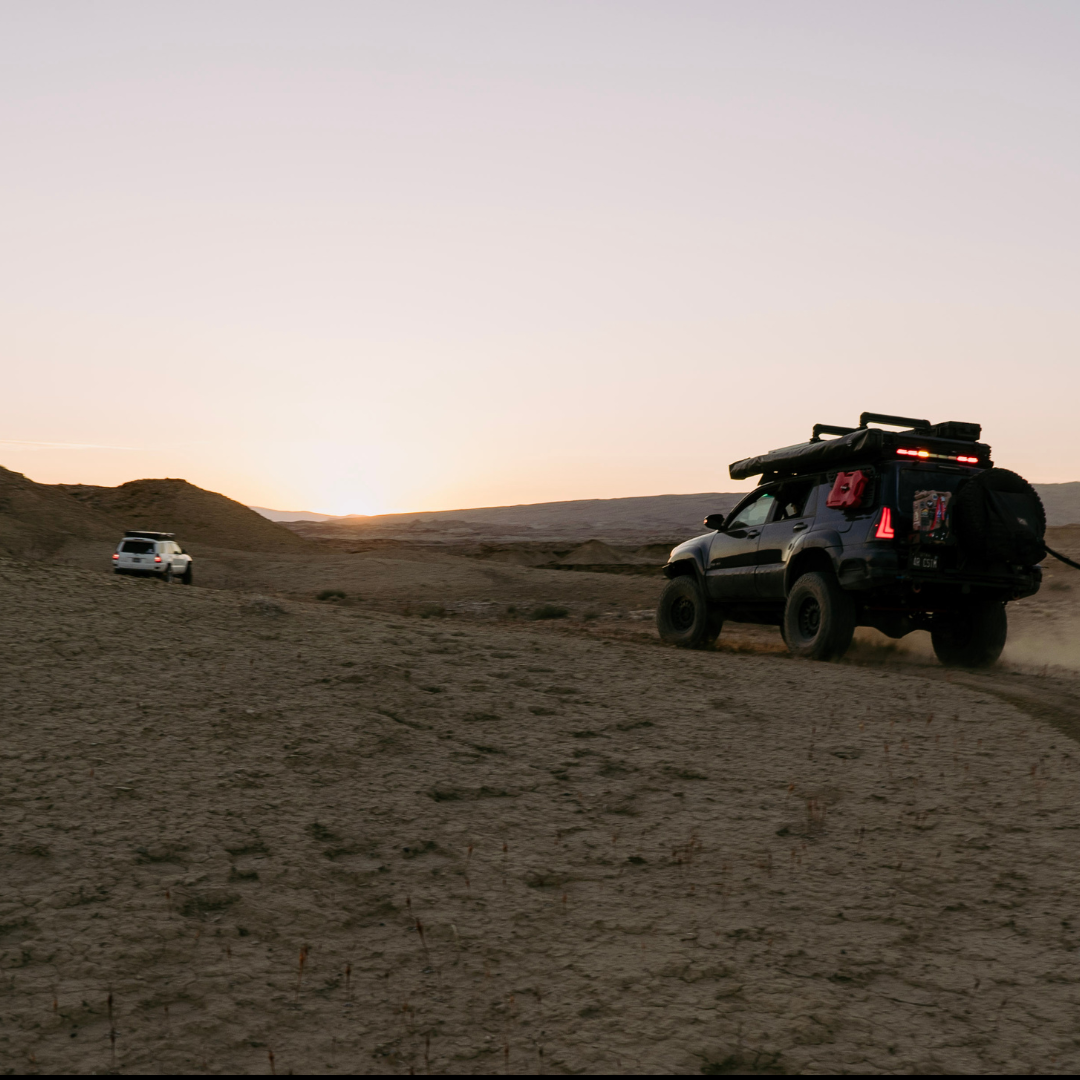
Active Traction Control, commonly known as A-TRAC, is a specialized off-road software system designed by Toyota to help the 4Runner maintain forward momentum in low-traction environments. By utilizing the vehicle’s Anti-lock Braking System (ABS) sensors and actuators, A-TRAC identifies wheel slip and applies braking force to the spinning wheel, effectively transferring torque to the wheels that still have grip.
Understanding A-TRAC: The Engineering Behind the System
To understand A-TRAC, one must first understand the limitations of a standard "open" differential. In a traditional 4WD system with open differentials, torque follows the path of least resistance. If one wheel is in the air or on a patch of ice, the differential will send 100% of the power to that wheel, causing it to spin uselessly while the wheel with traction remains stationary.
A-TRAC is Toyota's sophisticated solution to this "cross-axle" problem. While standard Traction Control (TRAC) is designed for on-road safety—often cutting engine power to prevent skidding—A-TRAC is an off-road performance tool. It does not reduce engine RPM; instead, it maintains throttle input while using the brake calipers as a tool for torque distribution.
When the system detects that a wheel’s rotational speed significantly exceeds that of the other wheels on the same axle, the hydraulic brake booster pulses the brakes on that specific wheel. This creates "artificial resistance." Because the differential now sees resistance on the spinning side, it naturally diverts the engine’s torque through the spider gears to the opposite wheel. In practice, this mimics the behavior of a mechanical limited-slip or locking differential without the mechanical complexity and steering bind associated with traditional lockers.
The Evolution of A-TRAC in the 4Runner Lineage
The Toyota 4Runner has seen several iterations of traction aids. Understanding which version your vehicle possesses is critical for proper operation in the field as of 2026.
The Fourth Generation (2003–2009)
The 4th Gen 4Runner was the first to truly democratize A-TRAC. In these models, A-TRAC was often "always on" when the vehicle was shifted into 4-Low (4L). There was no dedicated button for A-TRAC in many early 4th Gen models; the system was part of the standard stability control suite, though its behavior changed significantly between 4-High (4H) and 4-Low. It was highly effective but could be somewhat "intrusive" for drivers who preferred more manual control.
The Fifth Generation and Beyond (2010–2026)
With the launch of the 5th Generation and the subsequent updates leading into the mid-2020s, Toyota refined the interface. A-TRAC became a selectable feature via a physical button, usually located on the overhead console. This allowed drivers to choose exactly when they wanted the computer to intervene. In more recent models, A-TRAC serves as the foundational logic for the Multi-Terrain Select (MTS) system, which provides specific "tunes" for mud, sand, or rock crawling.
How to Activate and Operate A-TRAC Correctly
Operating A-TRAC is not as simple as pressing a button while driving down the highway. It has specific prerequisites that must be met to engage the hydraulic logic required for off-road recovery.
- Shift to 4-Low (4L): A-TRAC is almost exclusively designed to work in the 4-Low transfer case range. Ensure your vehicle is stopped, shifted into Neutral, and the 4WD selector is moved to 4L.
- Press the A-TRAC Button: Once in 4L, press the button (usually located on the overhead console near the Crawl Control or MTS dials). An "A-TRAC" indicator light will illuminate on the instrument cluster.
- Maintain Steady Throttle: This is the most common mistake for new users. A-TRAC requires "wheel speed" to gather data. If you let off the gas as soon as a wheel slips, the system cannot build enough hydraulic pressure to stop the spin. You must maintain a steady, moderate throttle.
- Listen for the System: When A-TRAC engages, you will hear a distinct rapid-fire "grinding" or "clicking" noise. This is the ABS pump and solenoid valves cycling at high speed. It is a normal operational sound, not a sign of mechanical failure.
A-TRAC vs. Mechanical Locking Differentials
A frequent debate among 4Runner enthusiasts is whether A-TRAC can replace a traditional mechanical rear locker. While both serve to provide traction, they do so through very different means.
| Feature | A-TRAC (Electronic) | Mechanical Locker |
|---|---|---|
| Torque Distribution | Transfers torque by braking the slipping wheel. | Forces both wheels to turn at the same speed. |
| Steering Impact | Minimal; allows for easier turning while active. | Significant "bind"; makes steering difficult. |
| Wear and Tear | High wear on brake pads/rotors; heat buildup in ABS. | Minimal wear if used correctly; high stress on axles. |
| Reliability | Depends on sensors and electrical health. | Physical engagement; very robust but can fail. |
| Availability | Works on both front and rear axles simultaneously. | Usually limited to the rear axle only on factory 4Runners. |
The primary advantage of A-TRAC is its "four-wheel" capability. Most 4Runners (TRD Off-Road and TRD Pro trims) come with a factory rear locker. However, the front differential remains open. A-TRAC can be used in conjunction with a rear locker to manage traction on the front wheels, providing a "three-wheel drive" or "simulated four-wheel drive" experience that is incredibly capable on technical trails.
Limitations and Practical Constraints
Despite its prowess, A-TRAC is not an infinite resource. Because the system relies entirely on the vehicle’s friction brakes, it generates a significant amount of heat.
- Brake Fade and Heat: During extended use—such as a long, technical climb—the brake pads and rotors can become extremely hot. To protect the ABS actuator and master cylinder, the 4Runner’s computer may temporarily disable A-TRAC if it detects overheating. If this happens, a warning chime will sound, and you must wait for the system to cool down.
- Momentum vs. Crawling: A-TRAC works best at slow speeds. It is a "crawling" aid. If you are trying to power through deep mud or sand at higher speeds, the constant braking action of A-TRAC can actually bog the vehicle down. In those scenarios, standard 4H or 4L without A-TRAC (allowing for wheel spin to clear mud from tires) is often more effective.
- Sensor Dependency: Since the system relies on wheel speed sensors (located at each hub), a broken wire or a sensor fouled by heavy mud can disable the system. Regular cleaning of the undercarriage after off-roading is essential for maintaining A-TRAC reliability.
Troubleshooting Common A-TRAC Issues
If you find that your A-TRAC system is not engaging or is behaving erratically, the following checklist can help identify the culprit:
- Dashboard Light Sequence: If the A-TRAC light flashes along with the ABS and Multi-Terrain Select lights, the vehicle has likely stored a fault code. This often points to a wheel speed sensor failure or an issue with the ABS actuator.
- Transfer Case Switch: The system needs to "know" the vehicle is in 4L. If the transfer case position sensor is faulty, the computer won't allow A-TRAC to engage even if the lever is physically in the 4L position.
- Brake Fluid Levels: Because A-TRAC uses the hydraulic system extensively, low brake fluid or air in the lines can lead to poor performance. Ensure your brake system is properly bled and the reservoir is full.
- Battery Voltage: Modern Toyota electronics are sensitive to voltage drops. An aging battery can cause the traction control computer to "glitch" or refuse to engage under heavy load.
Complementary Systems: Crawl Control and MTS
In the 2026 landscape, most 4Runners equipped with A-TRAC also feature Crawl Control and Multi-Terrain Select (MTS). It is helpful to view A-TRAC as the "manual" version of these automated systems.
Crawl Control is essentially an "off-road cruise control." It uses the A-TRAC logic to manage both the brakes and the throttle automatically, allowing the driver to focus entirely on steering. MTS, on the other hand, adjusts the sensitivity and "aggressiveness" of the A-TRAC braking pulse based on the terrain type (e.g., "Rock" mode uses a very aggressive brake pulse to prevent any wheel spin, while "Sand" mode allows for more spin to maintain momentum).
Understanding these relationships allows a 4Runner owner to select the right tool for the job. For purists, A-TRAC remains the preferred choice because it provides the help needed to clear an obstacle while still leaving the driver in control of the throttle.
Frequently Asked Questions
Does A-TRAC work in 4-High?
In most 4Runner generations, A-TRAC is specifically tuned for 4-Low. While the vehicle has standard traction control (TRAC) in 4-High, it functions differently—primarily by cutting engine power to stop skidding. The aggressive "brake-only" logic of A-TRAC is reserved for 4-Low to ensure the engine doesn't stall or lose power when you need it most.
Will A-TRAC wear out my brakes faster?
Yes. Because A-TRAC uses the brakes to create traction, frequent use on technical trails will accelerate brake pad wear. Owners who off-road regularly should inspect their pads and rotors more frequently than those who stay on pavement. However, for most users, the wear is negligible compared to the utility the system provides.
Can I use A-TRAC and the Rear Locker at the same time?
Yes, on most 5th Generation (and newer) 4Runners, you can engage both simultaneously. This is a "cheat code" for extreme off-roading: the rear locker ensures both rear wheels turn together, while A-TRAC manages the front wheels to ensure torque is sent to the front tire with the most grip.
Why does my 4Runner make a loud grinding noise when A-TRAC is on?
The noise is caused by the ABS pump and the rapid opening and closing of the solenoid valves within the brake booster. It is the sound of the system working to independently brake wheels hundreds of times per minute. It is completely normal.
Is A-TRAC better than a front locker?
A front locker is mechanically superior because it provides a 100% physical link between the wheels. However, a front locker makes the vehicle very difficult to steer. A-TRAC provides about 80-90% of the capability of a front locker while still allowing the driver to steer comfortably, making it a better all-around solution for most trail enthusiasts.
Final Recommendation for 4Runner Owners
For any Toyota 4Runner owner looking to maximize their vehicle's off-road potential, mastering A-TRAC is essential. It is arguably the most powerful electronic tool in the Toyota arsenal. The next time you find yourself on a trail with uneven terrain, skip the high-speed approach. Instead, shift into 4-Low, engage A-TRAC, and apply steady, consistent throttle. Let the computers do the heavy lifting of finding traction, and you will find that the 4Runner can conquer obstacles that would stop many other SUVs in their tracks.