One tablespoon of honey is generally equivalent to about 3/4 tablespoon to 1 tablespoon of brown sugar, depending on the desired sweetness and moisture balance. Because honey is a liquid sweetener with a distinct chemical composition, replacing dry brown sugar requires adjustments to liquid levels and oven temperatures to achieve the correct texture, rise, and caramelization in your recipe.
Understanding the Fundamental Differences Between Honey and Brown Sugar
When substituting sweeteners in baking and cooking, understanding the physical and chemical properties of each ingredient is essential for success. Brown sugar is a granulated sucrose product composed of refined white sugar crystals coated in molasses, typically containing about 2 to 10 percent molasses depending on whether it is light or dark. This molasses content gives brown sugar its characteristic caramel flavor, acidic pH, and moisture-retaining hygroscopic properties. Granulated brown sugar adds bulk, aeration when creamed with fats, and structure to baked goods.
Honey, on the other hand, is a natural liquid sweetener created by bees from floral nectar. Chemically, honey is a supersaturated solution consisting primarily of fructose and glucose, along with water, trace enzymes, amino acids, and minerals. Because honey is roughly 17 to 20 percent water, introducing it into a recipe means adding significant moisture. Furthermore, fructose is sweeter than sucrose, meaning honey often tastes perceptually sweeter than an equal volume of brown sugar.
Another critical difference lies in how these sweeteners react with leavening agents. Brown sugar is slightly acidic due to the presence of molasses, which can activate baking soda to help baked goods rise. Honey is also mildly acidic, with a pH generally ranging between 3.4 and 6.1, meaning it can similarly participate in acid-base reactions. However, the absence of solid sugar crystals means you cannot cream honey with butter to trap air bubbles, altering the potential crumb structure and density of cakes and cookies.
Calculating Ratios: 1 Tablespoon of Honey Equals How Much Brown Sugar?
Determining the exact volumetric equivalence between honey and brown sugar depends on whether you are matching sweetness, volume, or structural behavior in a recipe. From a strict volumetric standpoint, 1 tablespoon of honey is roughly equal to 1 tablespoon of packed brown sugar. However, because honey packs more sweetening power per unit and contains water, using a direct 1:1 volumetric substitution without any other recipe adjustments can lead to overly sweet, wet, or dense results.
To balance sweetness and moisture when substituting honey for brown sugar, a more precise conversion ratio is applied. For every 1 cup of brown sugar called for in a recipe, bakers typically use about 2/3 to 3/4 cup of honey. Scaling this down to smaller measurements, 1 tablespoon of brown sugar can be replaced by approximately 3/4 tablespoon of honey. Conversely, if you are substituting honey with brown sugar, you would use 1 tablespoon of packed brown sugar for every 1 tablespoon of honey, while slightly increasing the liquid content of the recipe to make up for the missing moisture.
| Sweetener Conversion | Equivalent Volume | Moisture Impact | Flavor Profile |
|---|---|---|---|
| 1 tbsp Brown Sugar | 1 tbsp Honey (approx. 3/4 to 1 tbsp) | Low moisture addition | Rich, caramel, molasses undertones |
| 1 cup Brown Sugar | 2/3 to 3/4 cup Honey | High moisture addition (+ 3 to 4 tbsp liquid) | Floral, distinct honey notes |
| 1 tbsp Honey | 1 tbsp Packed Brown Sugar | Absorbs moisture from dough | Deep caramel, dense texture |
Recipe Adjustments for Moisture, Liquid, and Leavening
Switching from a dry, crystalline sweetener like brown sugar to a liquid sweetener like honey requires compensatory adjustments to the other ingredients in your formula. If you simply swap 1 tablespoon of honey for 1 tablespoon of brown sugar without making other changes, your dough or batter will contain excess moisture, which can ruin cookies, cakes, and quick breads.
To correct for the liquid content in honey, you must reduce the other liquids in the recipe. As a general rule of thumb, for every cup of honey added, you should reduce the total liquid (such as milk, water, or oil) by about 1/4 cup (or roughly 1/2 teaspoon of liquid reduction per tablespoon of honey). If the recipe contains no other measurable liquids, you may need to increase the dry flour content slightly to absorb the extra moisture.
Additionally, because honey lacks the creaming ability of brown sugar, baked goods may not rise as high or spread as much during baking. To combat dense textures, you can add a pinch of baking soda—approximately 1/4 teaspoon of baking soda per cup of honey—to neutralize the acidity and provide an extra lift, even if the recipe already contains baking powder.
Managing Oven Temperature and Caramelization
Baking with honey introduces unique thermal behaviors that do not occur with brown sugar. Because honey contains high concentrations of simple sugars (fructose and glucose) and amino acids, it undergoes the Maillard reaction and caramelization at much lower temperatures than sucrose-based brown sugar.
When you substitute honey for brown sugar, your baked goods will brown and caramelize significantly faster in the oven. If left unchecked, this rapid browning can result in burnt edges or a dark crust while the interior remains underbaked. To prevent this, professional bakers typically recommend lowering the oven temperature by about 25°F (approx. 15°C) when baking with honey-substituted recipes.
Monitoring your goods closely during the final minutes of baking is vital. Utilizing aluminum foil to tent the top of cakes, quick breads, or casseroles can prevent excessive surface browning while allowing the center to finish cooking thoroughly.
Flavor Implications and Culinary Applications
Beyond chemistry and texture, swapping brown sugar for honey drastically alters the flavor profile of the final dish. Brown sugar imparts a deep, warm, butterscotch-like flavor derived from the concentrated molasses coating. Honey introduces a complex floral, herbal, or fruity flavor profile that varies wildly depending on the floral source of the honey, such as clover, wildflower, buckwheat, or orange blossom.
| Culinary Application | Brown Sugar Characteristics | Honey Substitution Effects |
|---|---|---|
| Chocolate Chip Cookies | Chewy, caramel-forward, flat spread | Crisp edges, slightly cakey center, distinct floral notes |
| Barbecue Sauces & Glazes | Deeply caramelized, thick, rich finish | Glossy sheen, rapid burning risk, floral sweetness |
| Quick Breads & Muffins | Tender crumb, moist structure | Heavier texture, requires liquid reduction |
| Marinades | Balanced sweetness, subtle molasses flavor | Excellent browning agent, sticky consistency |
In savory applications, such as marinades, barbecue sauces, and glazes, honey often performs exceptionally well as a substitute for brown sugar. It dissolves instantly without requiring heat, creates a brilliant glossy sheen, and promotes beautiful charring on grilled meats. However, in delicate pastries or spiced cakes where the deep, earthy notes of brown sugar are central to the recipe's identity, honey will noticeably alter the sensory experience.
Frequently Asked Questions
Can I substitute honey for brown sugar on a 1:1 ratio in all recipes?
No. While a 1:1 volumetric swap works for small amounts (like 1 tablespoon), doing so in larger quantities will add too much liquid to your batter or dough. For larger amounts, reduce the honey to 3/4 cup for every 1 cup of brown sugar and decrease other liquids accordingly.
Will honey make my baked goods burn faster?
Yes. Honey contains high levels of fructose and glucose, which caramelize and brown at lower temperatures than the sucrose found in brown sugar. It is recommended to lower your oven temperature by 25°F when baking with honey to prevent burning.
Do I need to adjust leavening agents when using honey instead of brown sugar?
Because honey is acidic, it can react with baking soda. If you are replacing a significant amount of brown sugar with honey, adding a small pinch of baking soda (about 1/4 teaspoon per cup of honey) helps ensure proper rising and neutralizes excess acidity.
Does the type of honey matter when substituting for brown sugar?
Yes, flavor matters. Mild honeys like clover or acacia blend seamlessly into most sweet recipes without overpowering other ingredients. Stronger honeys like buckwheat or dark wildflower will impart a robust, distinct flavor that significantly alters the taste of the final dish.
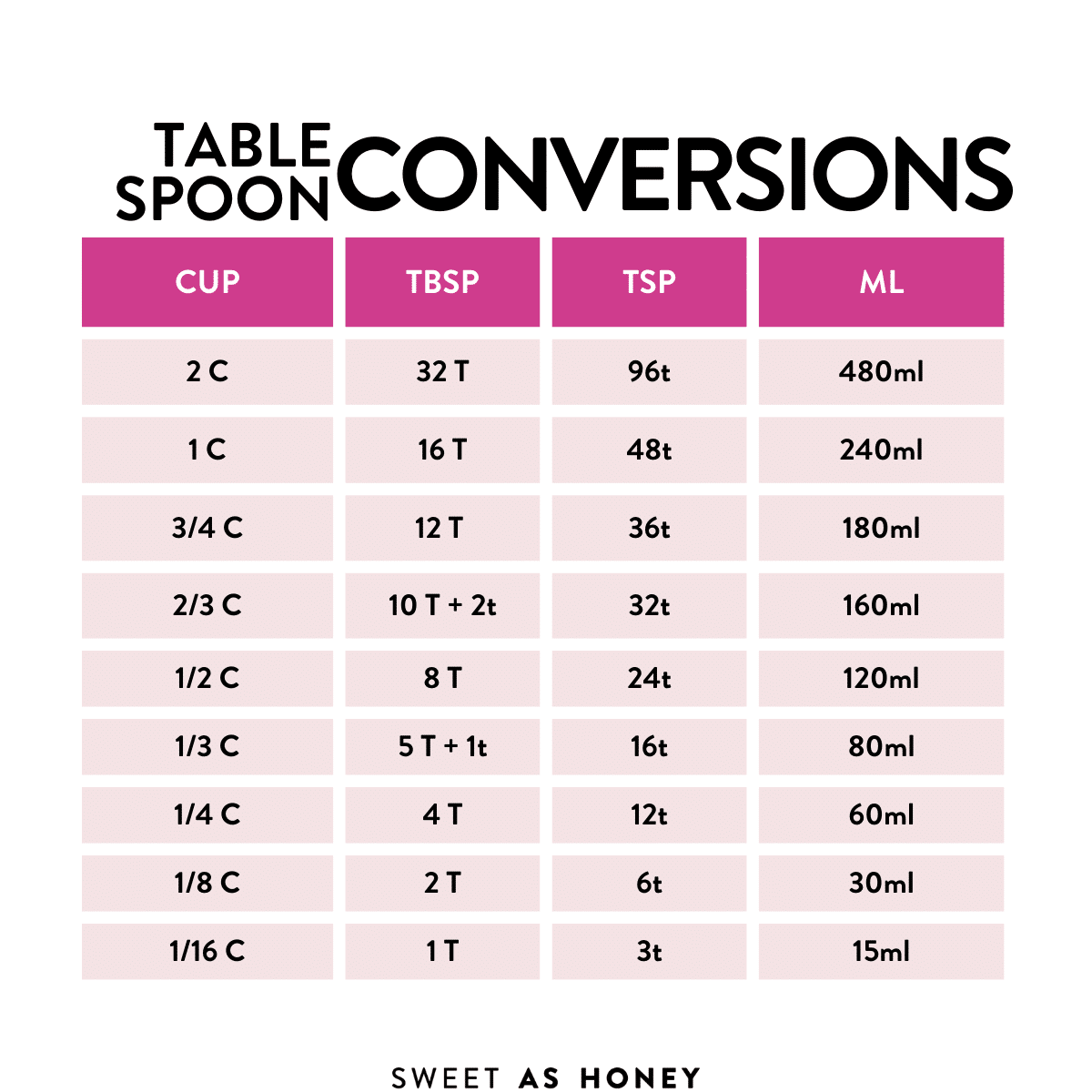
How do I measure sticky honey accurately for tablespoon conversions?
To measure sticky liquids like honey accurately without wasting product, lightly coat your measuring spoon with a neutral cooking oil or non-stick spray before dipping it into the honey container. The honey will slide right out cleanly.
Practical Next Actions and Summary Recommendations
When replacing 1 tablespoon of brown sugar with honey, use roughly 3/4 to 1 tablespoon of honey depending on how sweet you want the final dish to be. For large-batch baking, remember to reduce your liquid ingredients by roughly 1/2 teaspoon for every tablespoon of honey added, lower your oven temperature by 25°F to prevent premature browning, and consider adding a tiny pinch of baking soda to maintain the correct structural rise and texture.