Preparing for the General Securities Representative Examination, commonly known as the Series 7 exam, requires a structured approach and comprehensive study materials. Kaplan Financial Education provides a multi-tiered suite of prep packages—such as the Essential, Essential Self-Study, and Premium packages—designed to accommodate different learning styles, timelines, and budget constraints, helping candidates master complex broker-dealer regulations, municipal bonds, options, and margin accounts.
Understanding the Kaplan Series 7 Prep Ecosystem
The Series 7 exam is administered by the Financial Industry Regulatory Authority (FINRA) and serves as the definitive qualification for individuals seeking to become general securities representatives. Because the exam tests a vast breadth of technical financial concepts, securities laws, and product knowledge, relying on a single textbook is rarely sufficient. Kaplan's curriculum is built around a blend of physical books, digital learning management systems (LMS), interactive performance trackers, and live or on-demand instruction.
When evaluating Kaplan's offerings, candidates must understand that the study materials are modular. The core engine of the system is the Securities Licensing Exam Manual (SLEM), supplemented by QBank software, practice exams, and mastery exams. By integrating these components, Kaplan attempts to bridge the gap between rote memorization and practical application, which is crucial given FINRA's emphasis on situational judgment and suitability questions.
Core Components of Kaplan Series 7 Packages
Kaplan structures its study materials around several foundational assets. Depending on the tier chosen, candidates receive a mix of print and digital resources engineered to guide them from initial content consumption to final exam simulation.
1. The Securities Licensing Exam Manual (SLEM)
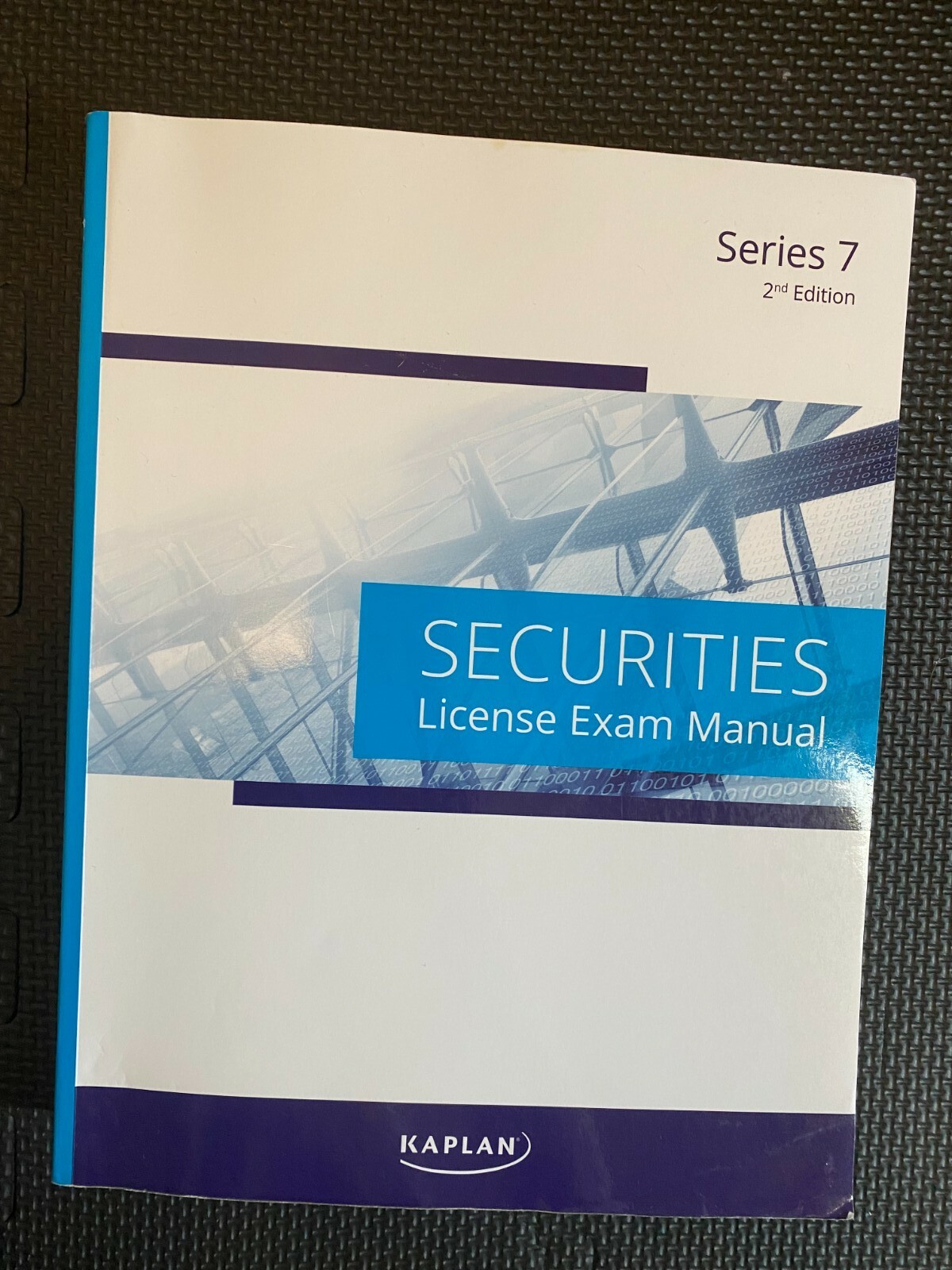
Often referred to as the "Kaplan text," the SLEM is the primary textbook for the course. It breaks down the massive FINRA content outline into digestible chapters covering equity and debt instruments, investment company products, direct participation programs (DPPs), municipal securities, options strategies, customer accounts, and regulatory frameworks. The textbook features marginal notes, key definitions, and end-of-chapter check-in questions to test immediate comprehension.
2. The Kaplan QBank (Question Bank)
The QBank is widely regarded by candidates as one of the most vital assets in the study ecosystem. It is an adaptive online database containing thousands of practice questions. Users can custom-build quizzes based on specific chapters, difficulty levels, or exam weights. The QBank provides detailed rationales for both correct and incorrect answers, explaining the underlying rule or mathematical formula.
3. Performance Tracker and Mid-Term/Final Exams
To measure readiness, Kaplan includes benchmark exams, mid-term assessments, and simulated final exams. The Performance Tracker software evaluates user data in real-time, identifying weak topic areas—such as complex spread calculations or margin requirements—and recommending targeted review blocks.
4. Interactive Study Calendar
Time management is often the biggest hurdle for candidates juggling full-time employment and exam preparation. Kaplan's interactive study calendar prompts users to input their test date and daily availability, automatically generating a customized day-by-day reading and quizzing schedule.
Comparison of Kaplan Series 7 Study Packages
Kaplan offers different packages tailored to how candidates prefer to learn. The following table outlines the primary differences between the most popular configurations:
| Package Name | Core Textbook & QBank | Study Calendar | Instruction / Classes | Performance Tracker |
|---|---|---|---|---|
| Basic Self-Study | Included (Print or eBook) | Included | None (Self-paced only) | Included |
| Essential Package | Included (Print and eBook) | Included | Access to recorded video library | Included |
| Premium / Master Package | Included (Print and eBook) | Included | Live or On-Demand Live Class + Masterclasses | Included |
Note: Package titles and exact feature inclusions may vary slightly by promotion or updates from Kaplan Financial Education.
Self-Study Versus Instructor-Led Pathways
Choosing between a self-directed study package and an instructor-led package depends heavily on an individual's background in finance and personal learning habits.
Self-Study Pathway
Candidates with a degree in finance, economics, or practical experience in banking may find self-study sufficient. This route relies heavily on reading the SLEM, taking extensive notes, and grinding through the QBank. The primary advantage is cost-efficiency and schedule flexibility. However, it requires immense self-discipline to parse dense regulatory language without external clarification.
Instructor-Led Pathway
For candidates who are new to the financial services industry or struggle with self-paced accountability, instructor-led packages—such as Kaplan's Live Online or On-Demand classes—provide significant value. Instructors walk through high-yield concepts like options break-evens, tax implications of municipal bonds, and customer account types, offering mnemonic devices and real-world context that bring the textbook pages to life.
Evaluating Material Depth and Technical Scope
The Series 7 exam covers four primary job functions: seeking business for the broker-dealer, evaluating customers' profiles and investment strategies, providing customers with information on investments, and obtaining and verifying customer purchase and sales instructions. Kaplan structures its materials to mirror these exact weightings:
- Municipal Securities and Debt Instruments: Given the numerical and regulatory complexity of municipal bonds and corporate debt, Kaplan dedicates substantial space to bond calculations, yield-to-maturity, and tax-equivalent yields.
- Options Strategies: Options can be a make-or-break section for many test-takers. Kaplan utilizes visual graphs, debit/credit matrix tables, and step-by-step logic formulas to help candidates master covered calls, protective puts, and advanced spreads.
- Customer Accounts and Margin: The rules governing margin accounts, pattern day trading, retirement accounts (IRAs, Roths, qualified plans), and estate accounts require meticulous attention. Kaplan's text provides practical examples of Regulation T requirements and maintenance calls.
Common Mistakes When Using Kaplan Materials
Maximizing the utility of Kaplan study materials requires avoiding several common pitfalls observed among Series 7 candidates:
- Over-relying on memorization rather than application: FINRA designs questions that test suitability rather than definitions. Memorizing flashcards without understanding why a particular investment fits a specific customer profile will lead to failing scenario-based questions.
- Ignoring low-weight sections: While options and municipal securities carry heavy weight, ignoring investment companies or direct participation programs (DPPs) can cost valuable points.
- Memorizing QBank answers: Taking the same QBank exams repeatedly until scoring 90% or higher creates a false sense of security. Candidates should focus on reading the detailed rationales for missed questions rather than recognizing familiar prompt phrasing.
Frequently Asked Questions
How long does it take to complete the Kaplan Series 7 study program?
Most candidates require between 80 to 120 hours of study time spread across 4 to 6 weeks. The exact duration depends on prior industry experience and whether the candidate is studying full-time or balancing a current job.
Are Kaplan's practice exams harder than the actual FINRA Series 7 exam?
Kaplan is intentionally designed to be slightly more granular and challenging than the actual FINRA exam. Scoring consistently in the mid-to-high 70s or low 80s on Kaplan simulated exams is generally considered a strong indicator of readiness for test day.
Can I purchase the QBank separately without buying the textbook?
Yes, Kaplan frequently offers standalone purchases of the QBank and mastery exams for candidates who may have obtained a textbook secondhand or require additional practice questions.
Does Kaplan provide physical textbooks or only digital access?
Depending on the specific package selected, Kaplan provides both physical softcover textbooks and digital eBook formats through their online portal. Physical books typically ship within a few business days of purchase.
What is the best way to handle the options section using Kaplan materials?
Candidates should complete the dedicated options chapter in the SLEM, watch the accompanying video lectures if included in their package, and use the QBank's custom quiz builder to generate targeted practice sets focused exclusively on options spreads and calculations.
Strategic Next Steps
To begin your preparation, assess your schedule and baseline financial knowledge to select the appropriate Kaplan package. Once your materials arrive, map out a realistic timeline using the interactive study calendar, commit to daily QBank question blocks, and utilize performance analytics to shore up weak chapters well before your scheduled exam date.