In 2019, the standard monthly premium for Medicare Part B rose to $135.50, representing a modest increase of $1.50 from the 2018 rate of $134.00. This adjustment was largely driven by the 2.8% Social Security Cost-of-Living Adjustment (COLA), which enabled the "hold harmless" provision to lapse for most beneficiaries, ensuring they paid the full standard rate.
The 2019 Medicare Part B Premium Landscape
Medicare Part B, which covers outpatient services, physician visits, and preventive care, is funded through a combination of general federal revenue and beneficiary premiums. By law, these premiums are designed to cover approximately 25% of the projected costs of the Part B program. In 2019, the Centers for Medicare & Medicaid Services (CMS) determined that a slight increase was necessary to maintain the solvency of the Supplementary Medical Insurance (SMI) Trust Fund.
For the vast majority of seniors, the $1.50 increase was the "1 clear answer" to what they would see deducted from their monthly checks. However, the calculation of Medicare premiums is rarely a one-size-fits-all figure. To understand the 2019 rise, one must look at the interplay between healthcare inflation, legislative mandates, and the Social Security Administration's annual adjustments.
The Standard Premium and the Part B Deductible
The standard monthly premium is the baseline for most beneficiaries. In 2019, this was $135.50. Along with the premium, the annual deductible for Medicare Part B also saw a slight uptick. In 2018, the deductible stood at $183; for 2019, it rose by $2 to reach $185. This deductible is the amount a beneficiary must pay out-of-pocket for covered Part B services before Medicare begins to pay its share (typically 80% of the Medicare-approved amount).
The stability of these numbers in 2019 was a relief to many, especially following the significant fluctuations seen in the mid-2010s. The modest $1.50 rise reflected a period where healthcare spending growth was somewhat tempered, though the cost of physician-administered drugs—often categorized under Part B—continued to exert upward pressure on the trust fund.
Why Did Medicare Premiums Rise in 2019?
The determination of Medicare premiums is a complex actuarial process. Several primary factors contributed to the $1.50 increase in 2019:
- Increased Utilization of Services: As the "Baby Boomer" generation continued to age into the Medicare system, the sheer volume of beneficiaries increased. Furthermore, there was a documented trend toward more frequent use of outpatient hospital services and physician-administered injectable drugs, which are more expensive than traditional oral medications.
- The SMI Trust Fund Reserves: CMS is required to maintain a contingency reserve in the Supplementary Medical Insurance Trust Fund. This reserve acts as a buffer against unexpected increases in healthcare costs. In 2019, the premium was set to ensure the reserve remained at a level recommended by the CMS Office of the Actuary.
- Legislative Changes: Specific provisions in the Bipartisan Budget Act of 2018 influenced the premium structure, particularly for high-income earners. These legislative mandates required Medicare to adjust how it calculated income-related adjustments, which indirectly affects the baseline premium for all users.
- Economic Inflation: While broader economic inflation remained relatively low, the "Medical CPI" (Consumer Price Index for medical care) historically outpaces the general CPI. This discrepancy necessitates periodic adjustments to premiums to keep pace with the rising costs of medical technology, labor, and supplies.
The "Hold Harmless" Provision and the 2.8% COLA
One of the most critical factors in the 2019 premium rise was the Social Security Cost-of-Living Adjustment (COLA). To protect seniors from declining net income, the Social Security Act contains a "hold harmless" provision. This rule prevents a person's Social Security benefits from decreasing from one year to the next due to an increase in the Medicare Part B premium.
How it Worked in 2019
In years with a very small COLA, many beneficiaries are "held harmless," meaning their Part B premium increase cannot exceed the dollar amount of their Social Security raise. In 2018, for example, many people paid less than the standard $134.00 because their Social Security increase wasn't large enough to cover the jump.
However, for 2019, the Social Security Administration announced a 2.8% COLA, the largest in several years. This significant increase meant that for almost all beneficiaries, the dollar amount of their Social Security raise was much higher than the $1.50 Medicare premium increase. Consequently:
- Most beneficiaries who were previously "held harmless" (paying less than $134.00) moved up to the full 2019 standard rate of $135.50.
- Those already paying the standard rate saw their net Social Security check increase because the 2.8% raise far outweighed the $1.50 premium hike.
This alignment was significant because it brought most Medicare recipients back to a "uniform" premium level, simplifying the administration of the program and stabilizing the SMI Trust Fund's revenue stream.
High-Income Adjustments: IRMAA in 2019
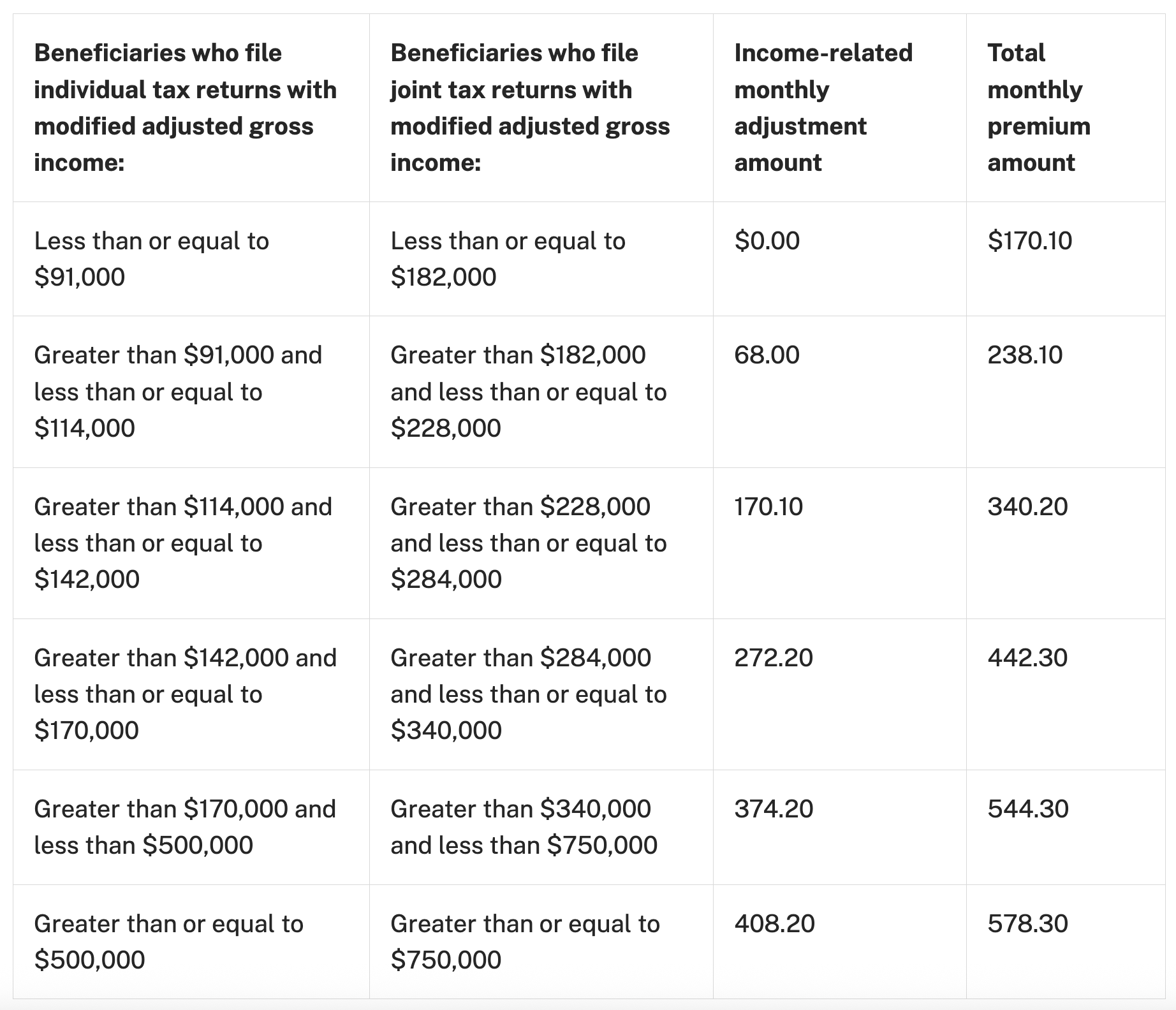
While $135.50 was the standard, higher-income beneficiaries paid more due to the Income-Related Monthly Adjustment Amount (IRMAA). IRMAA is a surcharge added to both Part B and Part D premiums for individuals and couples with Modified Adjusted Gross Income (MAGI) above certain thresholds.
The 2019 IRMAA brackets were influenced by the Bipartisan Budget Act of 2018, which introduced a new top tier for those with extremely high incomes. Medicare uses tax returns from two years prior to determine IRMAA; therefore, 2019 premiums were based on 2017 tax filings.
| Individual Income (2017 Tax Return) | Joint Income (2017 Tax Return) | 2019 Part B Monthly Premium |
|---|---|---|
| $85,000 or less | $170,000 or less | $135.50 |
| $85,001 – $107,000 | $170,001 – $214,000 | $189.60 |
| $107,001 – $135,000 | $214,001 – $270,000 | $270.90 |
| $135,001 – $160,000 | $270,001 – $320,000 | $352.20 |
| $160,001 – $499,999 | $320,001 – $749,999 | $433.40 |
| $500,000 or more | $750,000 or more | $460.50 |
The 2019 adjustments were notable because the income thresholds were not adjusted for inflation that year (a freeze mandated by law until 2020), which meant more people "bracket-crept" into higher IRMAA categories as their incomes grew nominally.
Medicare Part A: Deductibles and Coinsurance for 2019
Medicare Part A covers inpatient hospital stays, care in a skilled nursing facility, hospice care, and some home health care. While about 99% of Medicare beneficiaries do not pay a monthly premium for Part A (having earned it through at least 40 quarters of Medicare-covered employment), the out-of-pocket costs for using the services did rise in 2019.
- Inpatient Hospital Deductible: This rose to $1,364 in 2019, an increase of $24 from the 2018 rate of $1,340. This deductible covers the beneficiary's share of costs for the first 60 days of Medicare-covered hospital care in a benefit period.
- Daily Coinsurance for Days 61–90: Beneficiaries paid $341 per day in 2019 (up from $335 in 2018).
- Lifetime Reserve Days: For hospital stays lasting beyond 90 days, the coinsurance was $682 per day (up from $670 in 2018).
- Skilled Nursing Facility Coinsurance: For days 21 through 100 of a stay in a skilled nursing facility, the daily coinsurance rose to $170.50 (up from $167.50 in 2018).
These increases, while incremental, were a direct reflection of the rising daily costs of acute inpatient care and the specialized labor required in post-acute settings.
Medicare Part D and Advantage Trends in 2019
While the federal government sets Part B and Part A rates, Part D (Prescription Drug Plans) and Medicare Advantage (Part C) rates are set by private insurance companies, subject to CMS approval.
In 2019, the average basic Part D premium was approximately $32.50. This was a slight decrease compared to 2018, primarily due to increased competition among plan providers and the continued transition of more drugs into generic versions. However, beneficiaries still faced IRMAA surcharges for Part D if their income exceeded the same thresholds used for Part B.
Medicare Advantage remained a popular alternative in 2019, with average premiums actually trending downward. Many Advantage plans offered a $0 premium (beyond the standard Part B premium), though these plans often came with more restrictive provider networks compared to Original Medicare.
Historical Context: Comparing 2019 to Other Years
To appreciate the $1.50 rise in 2019, one must look at the volatility of the years surrounding it. In 2017, the premium was $134.00, but because of the hold harmless rule, the average person was actually paying closer to $109.00. The jump to $134.00 for everyone in 2018 was a significant "catch-up" year.
By contrast, 2019 was a year of relative stability. The $1.50 increase was one of the smallest percentage increases in the history of the program. It represented a "breather" for seniors, allowing the 2.8% Social Security COLA to actually increase their purchasing power rather than having the entirety of the raise consumed by healthcare costs.
Looking back from 2026, the 2019 rates serve as a baseline for the pre-pandemic healthcare economy. Following 2019, the healthcare landscape underwent massive shifts that eventually led to much more significant premium adjustments in the early 2020s.
FAQs about 2019 Medicare Premiums
Why did some people pay more than $135.50 for Part B in 2019?
High-income earners paid more due to the Income-Related Monthly Adjustment Amount (IRMAA). If an individual's modified adjusted gross income from 2017 was higher than $85,000, they were required to pay a surcharge ranging from $54.10 to $325.00 in addition to the standard $135.50 premium. Additionally, those who did not sign up for Part B when first eligible might have paid a late-enrollment penalty, which adds 10% to the premium for every 12-month period they were eligible but not enrolled.
Was the 2019 Part B premium increase higher than the Social Security COLA?
No. For the vast majority of beneficiaries, the 2.8% Social Security COLA was significantly larger than the $1.50 premium increase. For an average Social Security benefit of $1,400, a 2.8% increase amounted to roughly $39 per month. After deducting the $1.50 Medicare premium increase, the beneficiary still saw a net increase of $37.50 in their monthly check.
Did the "Donut Hole" change in 2019?
Yes, 2019 was a pivotal year for the Part D "donut hole" or coverage gap. Due to the Bipartisan Budget Act of 2018, the gap for brand-name drugs closed one year earlier than originally planned. In 2019, beneficiaries in the coverage gap paid 25% of the cost for brand-name drugs and 37% for generic drugs. This was a major step toward the total closure of the gap that reached its final stage in 2020.
How was the 2019 premium calculated?
The CMS Office of the Actuary projects the total costs of Part B benefits and administrative expenses for the coming year. By statute, the standard premium must equal 25% of the expected average per-capita cost for aged beneficiaries. They also factor in the need for a "contingency margin" to protect against unexpected spending increases. The $135.50 figure was the result of these projections for the 2019 fiscal year.
Could I appeal the 2019 IRMAA surcharge?
Yes, beneficiaries could appeal the IRMAA surcharge if they experienced a "life-changing event" that significantly reduced their income. Examples of such events include marriage, divorce, death of a spouse, work stoppage (retirement), or loss of income-producing property. To do this, beneficiaries had to file Form SSA-44 with the Social Security Administration.
Final Recommendation for Reviewing Past Rates
If you are reviewing 2019 Medicare data in 2026 for tax purposes, retirement planning, or estate settlement, ensure you are referencing the Modified Adjusted Gross Income (MAGI) from the correct tax year (which would be 2017 for 2019 premiums). Understanding the "hold harmless" status and IRMAA tiers for that specific year is essential for accurate financial reconstruction. For those currently planning for future Medicare costs, the 2019 data highlights how a healthy Social Security COLA can mitigate the impact of premium rises, a trend that remains a central pillar of retirement financial security.