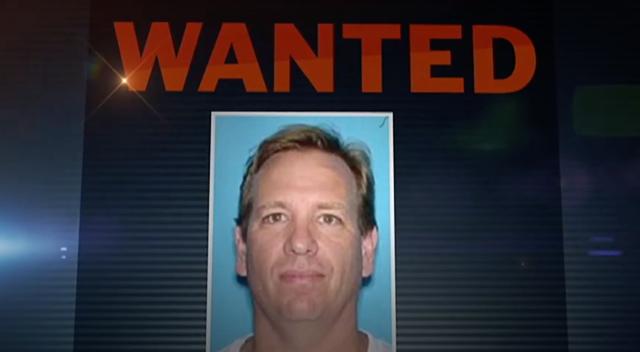
The Aubrey Lee Price life insurance case represents one of the most notorious instances of staged death, financial fraud, and insurance deception in modern American legal history. Price, a former Georgia banker and investment advisor, faked his suicide in 2012 after embezzling tens of millions of dollars, prompting a legal declaration of death that cleared the way for claims on $15 million in life insurance policies before he was captured alive.
| Timeframe | Event |
|---|---|
| 2010–2012 | Misappropriated ~$21M from Montgomery Bank & Trust & ~$20M from clients |
| June 2012 | Disappeared; sent suicide letter; faked drowning off Key West, FL |
| May 2013 | Florida probate court issued presumptive death declaration |
| Dec 2013 | Arrested during routine traffic stop in Glynn County, Georgia |
| June 2014 | Sentenced to 30 years in federal prison; ordered to pay $35M+ rest. |
Who Was Aubrey Lee Price? The Roots of the $40 Million Fraud
Before becoming the subject of an international manhunt and high-profile insurance investigation, Aubrey Lee Price operated as a minister, financial planner, and hedge fund manager. Operating through various entities, including PFG LLC (PFG Coin Investment Fund), Price solicited funds from retail investors, church members, and acquaintances throughout Georgia and Florida, promising stable returns through capital market investments.
In 2010, Price and his investment group acquired controlling interest in Montgomery Bank & Trust, a small, troubled community bank headquartered in Ailey, Georgia. Price assumed the role of director and managed the bank's investment portfolio. Rather than stabilizing the institution, he utilized his access to bank funds to cover massive trading losses sustained in his private hedge funds.
Between 2010 and mid-2012, Price embezzled approximately $21 million from Montgomery Bank & Trust, concealing the missing assets by posting falsified financial statements and bogus wire transfer confirmations to the bank's board and regulatory oversight bodies. Simultaneously, Price lost an estimated $20 million of client funds through unauthorized, high-risk trading. By mid-2012, with federal regulators auditing Montgomery Bank & Trust and investor redemptions mounting, the financial collapse of his operation was imminent.
The Staged Suicide and the Presumptive Death Ruling
In June 2012, as state and federal authorities closed in on his fraudulent activities, Aubrey Lee Price vanished. Prior to his disappearance, he distributed a multi-page document titled "To My Family" to his family members, colleagues, and regulatory agencies, including the U.S. Securities and Exchange Commission (SEC).
In the letter, Price confessed to committing extensive financial fraud, expressing profound remorse and stating that he had lost all of his investors' money. Crucially, the letter asserted that he intended to end his life by jumping off a ferry traveling between Key West and Fort Myers, Florida.
| Step | Mechanism |
|---|---|
| 1. Confession Letter | Mailed to family & regulators admitting fraud/suicide intent |
| 2. Physical Trail | Boarded Key West ferry; left wallet, phone, and clothing |
| 3. Search Operations | U.S. Coast Guard conducted extensive ocean search (no body) |
| 4. Legal Filing | Estate petitioned court for legal death ruling based on note |
Following the delivery of the letter, Price boarded a ferry in Key West. He left behind personal belongings, including his wallet, identification, and clothing, creating a deliberate physical paper trail suggesting he had jumped overboard into the Gulf of Mexico. The U.S. Coast Guard initiated an extensive search and rescue operation, but no body was recovered.
The Legal Process of Presumptive Death
Under state law, establishing death normally requires physical proof, such as a body or a death certificate issued by a medical examiner. However, when a person vanishes under circumstances indicating a high probability of death—such as a catastrophic accident or documented suicide at sea—state statutes allow interested parties to petition a probate court for an order of presumptive death (or legal death).
In May 2013, less than a year after his disappearance, a Florida probate court granted a petition declaring Aubrey Lee Price legally dead. The court relied on the suicide confession letter, the abandoned personal items on the ferry, and the Coast Guard's failure to locate a survivor. This legal ruling had immediate, monumental consequences: it opened probate proceedings for his estate and triggered the right for listed beneficiaries to file claims on his life insurance policies.
The $15 Million Life Insurance Policies: Claims, Clauses, and Verification
Prior to his disappearance, Aubrey Lee Price had amassed multiple high-value life insurance policies across several commercial insurance carriers, carrying an aggregate death benefit estimated at $15 million.
When a policyholder is declared legally dead, life insurance carriers face legal obligations to process claims submitted by named beneficiaries. However, high-value life insurance policies carry rigorous verification standards, particularly when a claim involves a missing body or alleged suicide.
| Category | Details |
|---|---|
| Insurer Obligations | - Investigate circumstantial claims- Evaluate suicide & contestability clauses- Hold disbursements during active law enforcement oversight |
| Risk Management Tools | - Rescission ab initio for material misrepresentation- Forensic accounting & lifestyle auditing- Interpleader actions to delay or withhold payouts |
Key Clauses Governing the Price Policies
- The Suicide Exclusion Clause: Standard life insurance contracts contain a suicide clause, typically lasting one to two years from the policy issuance date. If the insured dies by suicide within this window, the insurer is only obligated to refund the premiums paid, rather than paying the full face value. Several of Price's policies had passed this two-year contestability window, meaning that a valid suicide claim would theoretically force insurers to pay the full death benefit.
- The Contestability Period: Under state insurance regulations, insurers retain a two-year window from policy inception to contest a policy or deny a claim based on material misrepresentation in the application. If Price lied about his income, net worth, or pending legal/financial liabilities when applying for coverage, the insurer possessed grounds to rescind the coverage completely.
- Missing Body and Fraud Investigations: Because Price was actively under federal indictment for bank fraud and wire fraud by the time the death ruling was issued, insurance carriers held the claims in abeyance or initiated deep-dive fraud investigations. Insurers worked alongside the Federal Bureau of Investigation (FBI) and the Federal Deposit Insurance Corporation Office of Inspector General (FDIC-OIG) to verify whether the death was genuine or staged to enrich his estate and family.
Because of pending civil asset forfeiture actions, federal freezes on assets tied to the financial fraud, and active insurance fraud investigations, major payouts under the $15 million policies were stalled or held in legal limbo prior to Price's unexpected capture.
The Traffic Stop and Arrest: Decentering the Presumed Dead
On December 31, 2013—roughly 18 months after his staged suicide and seven months after being declared legally dead—Aubrey Lee Price was pulled over by a Glynn County Sheriff's deputy in Brunswick, Georgia. The routine traffic stop was initiated due to illegally tinted windows on the pickup truck Price was driving.
When questioned, Price presented false identification under an alias. Suspicious of his behavior and the conflicting identification documents, officers took him into custody. Fingerprint analysis conducted during booking definitively identified the driver as Aubrey Lee Price—the federal fugitive and legally deceased former banker.
| Finding | Details |
|---|---|
| Real-World Identity | Operating as "Jason" in Marion County, Florida |
| Covert Operations | Working as a handyman; cultivating marijuana plants |
| Fake Documentation | Possessed multiple fraudulent state driver's licenses |
| Direct Consequence | Immediate voiding of probate court's death decree |
Subsequent investigations revealed that after jumping off the ferry into a waiting getaway vessel or swimming ashore, Price had established an alternative life in Marion County, Florida. He lived under assumed names, worked odd jobs as a handyman, engaged in marijuana cultivation, and regularly traveled through Georgia and Florida using fake credentials.
Legal Prosecution, Sentencing, and Monetary Restitution
Following his arrest, Price was transferred to federal custody to face prosecution in the U.S. District Court for the Southern District of Georgia. The legal proceedings addressed both his core bank fraud scheme and the elaborate evasion tactics that caused substantial financial harm to Montgomery Bank & Trust, which ultimately failed and was closed by regulators in July 2012 as a direct result of his embezzlement.
In June 2014, Price pleaded guilty to federal charges of bank fraud, wire fraud, and mail fraud. During sentencing, federal prosecutors highlighted the extraordinary nature of his crimes, emphasizing how he abused his position of trust, fabricated elaborate financial documents, staged his death, and attempted to exploit life insurance structures and probate courts to escape accountability.
| Category | Details |
|---|---|
| Federal Conviction | Bank Fraud, Wire Fraud, Mail Fraud (18 U.S.C. §§ 1341, 1343, 1344) |
| Custodial Sentence | 30 Years (360 Months) in Federal Prison |
| Financial Penalty | Restitution Order exceeding $35 Million |
| Forfeiture Orders | Immediate forfeiture of all seized real/personal assets |
U.S. District Judge Dudley H. Bowen Jr. sentenced Price to 30 years in federal prison without parole. In addition to the prison term, the court ordered Price to pay over $35 million in restitution to the FDIC, Montgomery Bank & Trust receivership, and individual investor victims.
Insurance Recovery, Policy Nullification, and Asset Forfeiture
The discovery that a policyholder is alive instantly nullifies any legal basis for a life insurance claim. When Aubrey Lee Price was apprehended, the legal and financial mechanisms governing his insurance policies shifted dramatically from claim processing to total policy nullification and civil recovery.
- Apprehension of Legally Deceased Policyholder
- Probate Court Vacates Presumptive Death Order
- Insurance Carriers Execute Policy Rescission
- Contract rendered void ab initio
- Premiums forfeited or seized for restitution
- Civil Asset Forfeiture & Clawback Actions
- Federal receiver moves on all fraud-linked funds
Rescission Ab Initio and Policy Voidance
In life insurance law, when a contract is obtained through intentional deceit or when a fraudulent claim is submitted, the insurer executes a rescission ab initio (treating the policy as if it never existed).
Because Price staged his death to trigger policy payouts, the insurance contracts were rendered completely void. Had any death benefit payouts been disbursed to beneficiaries prior to his capture, the insurance companies would have had the absolute legal right to initiate clawback actions under state common law fraud and unjust enrichment statutes to recover every dollar disbursed.
Comparing Fraudulent Claims vs. Standard Insurance Protocols
To understand how the Aubrey Lee Price case contrasts with standard life insurance operations, consider the operational and legal differences outlined below:
| Feature / Scenario | Standard Life Insurance Claim | Staged Death Fraud (Aubrey Lee Price Case) | Legal & Financial Impact |
|---|---|---|---|
| Proof of Loss | Official Death Certificate from medical examiner or state registrar. | Presumptive death petition based on suicide letter and disappearance at sea. | Triggers heightened carrier investigation; payouts delayed pending law enforcement review. |
| Status of Insured | Verified deceased. | Alive; residing under false identity. | Voided claim; immediate reversal of probate court death order. |
| Policy Validity | Valid contract; death benefit paid to named beneficiaries. | Nullified via rescission ab initio due to civil/criminal fraud. | Policy terminated; no death benefits paid; premiums subject to forfeiture. |
| Contestability & Suicide Clauses | Claims paid if death occurs after the 2-year contestability/suicide window. | Clauses rendered irrelevant because no actual death occurred. | Fraud invalidates coverage regardless of how long the policy was in force. |
| Consequences for Policyholder | None (deceased). | Criminal prosecution for mail/wire fraud, bank fraud, and insurance fraud. | Federal imprisonment (30-year sentence) and mandatory restitution orders ($35M+). |
| Treatment of Disbursed Funds | Legal property of beneficiaries; income-tax-free under IRC § 101(a). | Subject to immediate civil clawbacks, federal asset forfeiture, and restitution liens. | Beneficiaries forced to return all funds; criminal exposure if complicit in fraud. |
Impact on Modern Insurance Underwriting and Fraud Prevention
The Aubrey Lee Price case highlighted severe vulnerabilities in financial auditing, high-value life insurance underwriting, and death verification protocols. Following this case and similar high-profile financial fraud schemes, life insurance underwriters and anti-fraud organizations implemented stricter controls:
1. Advanced Financial Underwriting Controls
When individuals apply for large life insurance policies (e.g., $5 million to $15 million), carriers now perform extensive financial underwriting to ensure the requested coverage aligns with the applicant's verified net worth and income. Insurers demand audited tax returns, CPA-verified financial statements, and corporate balance sheets to prevent insolvent individuals from purchasing massive policies as an exit strategy for financial crime.
2. Heightened Standards for Missing Persons Claims
Insurers and probate courts have raised the evidentiary threshold required to grant presumptive death claims. In cases involving drowning or disappearance at sea without a physical body:
- Insurers conduct exhaustive independent financial background checks to determine if the missing person was facing criminal indictment, bankruptcy, or regulatory action.
- Claims are routinely placed in administrative hold while private investigative agencies work alongside federal law enforcement agencies like the FBI and National Insurance Crime Bureau (NICB).
3. Cross-Agency Data Sharing
Modern insurance fraud prevention relies heavily on automated database cross-referencing. Tools maintained by the MIB Group (formerly Medical Information Bureau), the NICB, and federal law enforcement databases ensure that high-value policy applications, suspicious suicide notes, and unexpected legal death petitions are automatically flagged across carriers nationwide.
Key Takeaways and Lessons from the Price Case
- A Legal Death Order Does Not Guarantee Policy Payouts: A probate court's declaration of presumptive death satisfies estate distribution requirements, but insurance carriers maintain independent rights to investigate claims and withhold disbursements when fraud or suspicious circumstances exist.
- Fraud Voids All Coverage: Staging a death or making material misrepresentations completely invalidates life insurance contracts. The standard two-year contestability limit does not protect policyholders or beneficiaries against intentional, ongoing fraud schemes.
- Clawbacks Are Absolute: If an insurer disburses funds based on a fake death and the policyholder is subsequently found alive, civil courts enforce full clawbacks against beneficiaries, and federal asset forfeiture teams can seize assets purchased with insurance proceeds.
- Severe Criminal Penalties: Staging a death to escape debt or enable life insurance claims escalates civil financial disputes into major federal felony convictions carrying decades in prison.
Frequently Asked Questions
Did Aubrey Lee Price's family receive the $15 million life insurance payout?
No. While a Florida probate court initially declared Price legally dead in 2013, insurance carriers delayed and contested the policy claims due to ongoing federal bank fraud investigations and the lack of physical proof of death. Price was captured alive in December 2013 before any insurance benefits were distributed, leading to the immediate voiding of all pending claims.
How can a person be declared legally dead without a body?
State probate laws allow courts to issue an order of presumptive death if a missing person vanished under circumstances suggesting a strong likelihood of death—such as an unrecovered drowning, plane crash, or suicide note left at a scene of disappearance. Petitioners must present clear circumstantial evidence, law enforcement search logs, and proof of extended absence to satisfy the court.
What happens to a life insurance policy if the insured stages their death?
Staging a death constitutes insurance fraud and material breach of contract. The insurance policy is rescinded ab initio, meaning it is treated as null and void from its inception. The carrier is released from all payout obligations, paid premiums may be forfeited, and the individual faces severe state and federal criminal charges.
Does the life insurance suicide clause apply in staged death cases?
No. The suicide clause governs real deaths resulting from self-destruction after a policy's two-year contestability window expires. In staged death cases, no actual death occurred, making suicide clauses legally irrelevant. The governing legal principle becomes civil and criminal fraud, which completely nullifies the insurance contract.
What was Aubrey Lee Price's federal prison sentence?
In June 2014, Aubrey Lee Price was sentenced in the U.S. District Court for the Southern District of Georgia to 30 years (360 months) in federal prison without parole. He was also ordered to pay over $35 million in restitution for bank fraud, wire fraud, and mail fraud related to his embezzlement from Montgomery Bank & Trust and private hedge fund investors.
Final Recommendation for Policyholders and Advisors
Financial planners, attorneys, and consumers must recognize that life insurance policies are legally binding contracts designed strictly for lawful risk management and family protection. Attempting to leverage life insurance policies to resolve corporate insolvency, evade federal law enforcement, or discharge criminal liabilities is ineffective and illegal.
Individuals experiencing severe financial distress or facing legal inquiries should consult qualified criminal defense attorneys and bankruptcy specialists rather than taking actions that compromise their families' financial and legal standing. Modern forensic accounting, federal inter-agency cooperation, and biometric identification make successfully staging a death virtually impossible.