ASI, now widely recognized as Progressive Home Advantage, is a specialized property insurance provider that offers homeowners, condo, and rental property coverage across the United States. As a subsidiary of the Progressive Corporation, the company operates by underwriting property-specific risks, providing integrated policy options for those seeking to bundle home and auto protection through the broader Progressive insurance ecosystem.
Understanding the Identity of ASI
American Strategic Insurance (ASI) was founded in 1997 in Florida, originally established to provide property insurance solutions in regions frequently affected by complex weather patterns and catastrophic risks. Over the decades, the company expanded its footprint significantly, eventually being acquired by the Progressive Corporation in several stages, culminating in a full acquisition.
By 2026, the brand identity has largely transitioned to "Progressive Home Advantage." When you encounter "ASI Insurance," you are interacting with the underwriting entity that backs many of the homeowners' policies sold by Progressive agents. Understanding this relationship is crucial for policyholders, as it clarifies that your claims and customer service interactions are handled through the infrastructure of a major national carrier, leveraging the financial stability of the Progressive brand.
Core Insurance Products Offered
ASI provides a modular approach to property insurance. Because the company focuses on residential risks, its products are designed to cover various ownership structures.
- Homeowners Insurance (HO-3): This is the flagship product, designed for single-family homes. It covers the structure, personal belongings, and liability. It is typically structured to protect against named perils such as fire, windstorm, hail, and theft.
- Condominium Insurance (HO-6): Specifically for owners of condos or co-ops, this policy focuses on "walls-in" coverage, protecting the interior components, fixtures, and personal property not covered by the master association policy.
- Renters Insurance (HO-4): Designed for tenants, this covers personal property and provides liability protection, which is essential given that the landlord’s insurance does not cover a tenant's belongings.
- Landlord/Dwelling Fire Insurance (DP-3): This is a specialized policy for individuals who own residential property but do not reside in it full-time. It covers the physical structure and provides loss-of-rent coverage if the property becomes uninhabitable due to a covered loss.
Navigating the Coverage Tiers
One of the defining features of the ASI/Progressive Home model is the use of tiered coverage options. These tiers allow policyholders to balance premium costs against the breadth of protection.
- Basic/Essential Coverage: Focuses on standard protection against common perils, often including depreciated or "Actual Cash Value" (ACV) settlements for personal property.
- Replacement Cost Coverage: A preferred upgrade for many, this ensures that if your home or belongings are damaged, the settlement is based on the cost to purchase new items of similar quality, rather than the depreciated market value.
- Extended/Guaranteed Replacement Cost: Some policies offer an additional percentage (often 25% or 50%) above the dwelling coverage limit to account for sudden spikes in construction costs or materials, which is particularly relevant in the 2026 economic landscape.
Comparison of Property Coverage Types
The following table outlines how the different policies address ownership risks.
| Policy Type | Target Audience | Primary Focus | Key Inclusions |
|---|---|---|---|
| HO-3 | Homeowners | Full Structure | Dwelling, Liability, Personal Property |
| HO-6 | Condo Owners | Interior/Assets | Walls-in, Fixtures, Personal Property |
| HO-4 | Tenants | Personal Assets | Personal Property, Liability |
| DP-3 | Landlords | Rental Property | Structure, Loss of Use/Rent, Liability |
How to Evaluate Your Policy
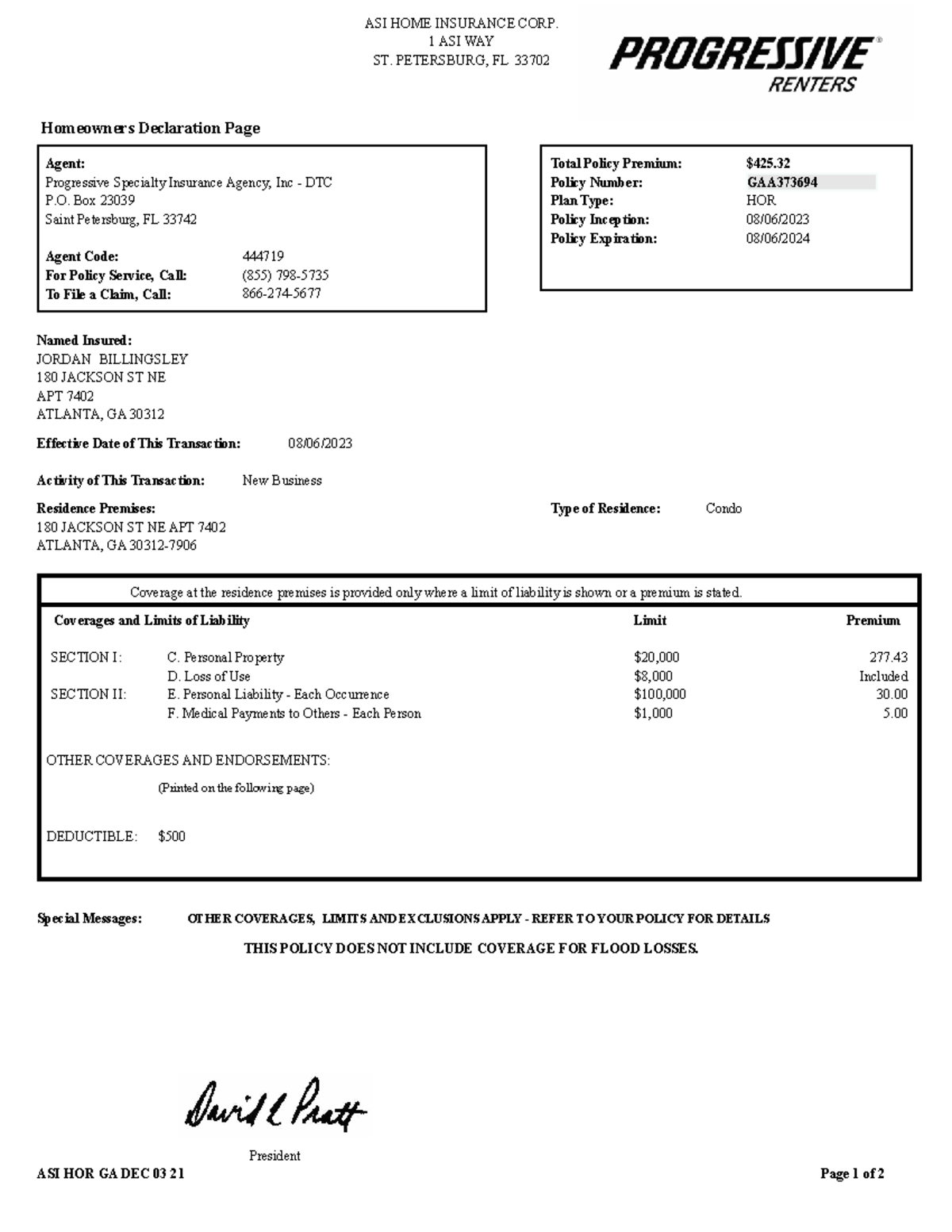
When reviewing your policy, it is important to go beyond the premium price. You must analyze the "Declarations Page." This document outlines your specific coverage limits, deductibles, and endorsements.
Deductible Strategies
Your deductible is the amount you pay out-of-pocket before insurance kicks in. In areas prone to hurricanes or severe storms—regions where ASI/Progressive has a significant history—you may see a "Wind/Hail Deductible" that differs from your standard "All Other Perils" deductible. This is often expressed as a percentage of the dwelling limit (e.g., 2%, 5%) rather than a flat dollar amount. Understanding how these percentages translate into actual dollars is vital to avoiding financial shock during a claim.
Endorsements and Exclusions
Standard policies have exclusions. Common exclusions include flood damage, earth movement (earthquakes), and wear-and-tear or maintenance issues. If you live in a flood-prone zone, your standard ASI policy will not cover flood events; you would require a separate policy, often issued through the National Flood Insurance Program (NFIP) or a private flood market. Check your policy for "Water Backup" or "Service Line" endorsements, which are optional coverages that add protection for specific, often expensive, failures.
The Claims Process
If you face a loss, the efficacy of the insurance provider is tested. The Progressive/ASI claims process is integrated into the online portal and mobile app infrastructure.
- Reporting: You can file a claim via the mobile app, online, or by phone. In 2026, digital submission is preferred for speed, as it allows for the uploading of photos and documents immediately.
- Assignment: A claims adjuster is assigned to review the damage. They will evaluate the cause of loss to determine if it is a "covered peril."
- Inspection: For significant structural damage, the adjuster will visit the property. They will prepare an estimate based on local construction costs.
- Settlement: Once the estimate is approved and the deductible is subtracted, funds are issued. If you have a mortgage, the check may be made out to both you and the mortgage lender.
Troubleshooting Common Issues
Policyholders often face challenges during the life of their policy. Addressing these proactively saves time and frustration.
- Premium Hikes: If your premium increases, it is often due to local environmental risk assessments or rising reconstruction costs in your zip code. Request an "Account Review" from your agent to see if you have missed any eligible discounts, such as those for deadbolt locks, security systems, or smoke detectors.
- Denied Claims: If a claim is denied, you have the right to request a formal explanation in writing. Review the specific exclusion cited. If you believe the adjuster made an error, you may hire an independent public adjuster to re-evaluate the damage, though this typically carries a fee.
- Updating Coverage: Life events—such as installing a new roof, adding a pool, or finishing a basement—materially change your risk profile. Contacting your agent to update your coverage limits prevents being "under-insured" in the event of a total loss.
Frequently Asked Questions
Is ASI the same as Progressive? Yes. ASI (American Strategic Insurance) is a subsidiary of the Progressive Corporation. Most home insurance policies sold under the Progressive brand are underwritten by ASI. They function as a single unit for customer service and claims management.
Does my policy cover flood damage? Standard ASI homeowners policies typically exclude flood damage. You generally need a separate flood insurance policy to cover rising water, storm surges, or external water intrusion. You should verify your specific policy wording, as definitions of "water damage" can be nuanced.
What is a windstorm deductible? A windstorm deductible is a specific amount you must pay toward a claim involving wind or hail damage. In high-risk states, this is often a percentage of your total dwelling coverage. Ensure you calculate this percentage based on your current home value to understand your maximum exposure.
How can I lower my property insurance premiums? Discounts are often available for bundling home and auto policies. Additionally, installing home safety devices (fire alarms, security cameras, smart water leak detectors) or upgrading systems like your roof or electrical panel may lead to lower premiums. Always inquire about "loss-free" discounts if you have maintained a claims-free history.
What happens if my mortgage company pays my insurance? If your insurance is paid through an escrow account, the invoice is sent to your lender. However, you should still receive a copy of the renewal declarations page. Review it annually to ensure the coverage limits remain sufficient to rebuild your home at current 2026 construction costs.
Next Steps for Policyholders
To ensure your property is protected, perform an annual "insurance check-up." First, access your online account via the Progressive portal to review your current declarations page. Confirm that your dwelling coverage limit reflects the current cost to rebuild your home, not just the market value. Second, document your high-value personal items using video or photo evidence stored in a secure cloud location. Finally, if you have questions regarding specific coverage gaps, contact a licensed agent who can explain your policy’s nuances based on your local state regulations.