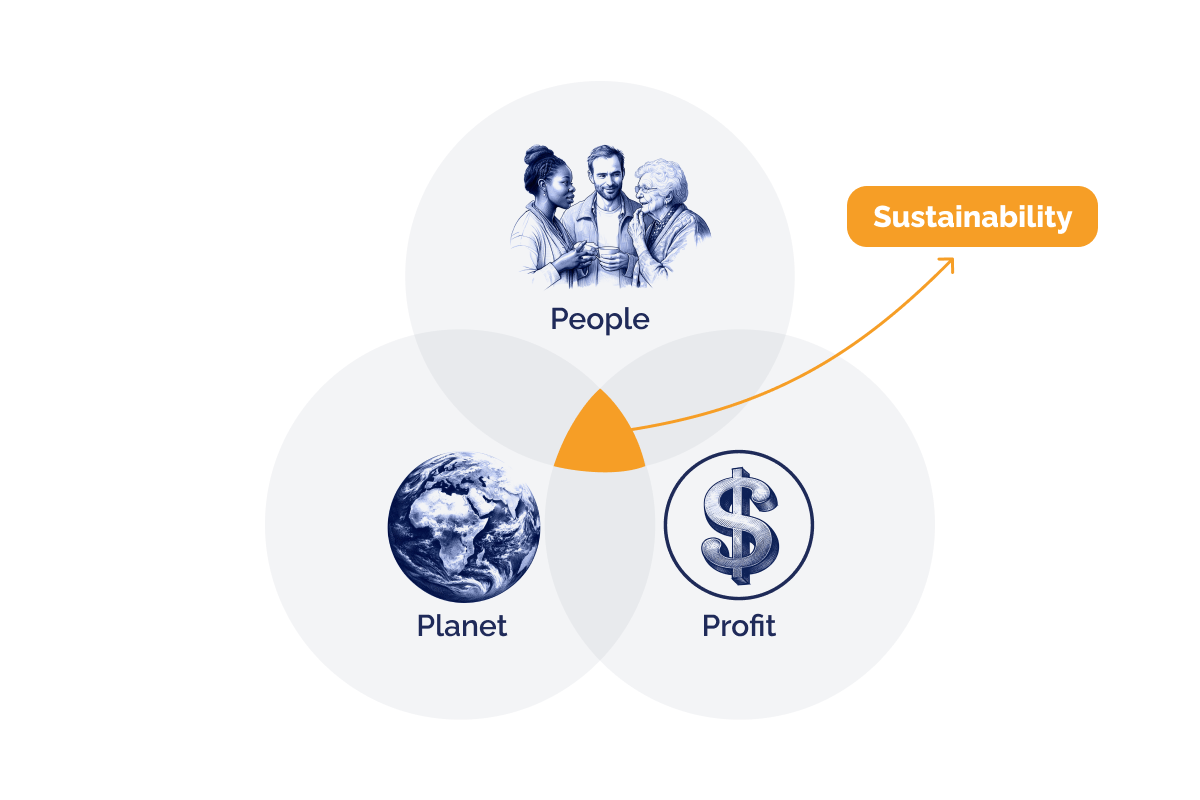
AXA Equitable Life Insurance Company—operating primarily under its flagship brand, Equitable—balances corporate profitability and environmental sustainability by integrating Environmental, Social, and Governance (ESG) principles into its multi-billion-dollar general account investment portfolio, lowering operational greenhouse gas emissions, expanding green asset allocations, and offering climate-conscious variable investment subaccounts to policyholders without compromising long-term fiduciary obligations.
Entity Disambiguation and Corporate Evolution: AXA Equitable to Equitable
When evaluating "ANX Equitable Life Insurance Company" or "AXA Equitable," it is essential to understand the organizational structure and recent corporate transformations. The entity historically recognized as AXA Equitable Life Insurance Company was established in 1859 as The Equitable Life Assurance Society of the United States. Following decades of growth, French global insurer AXA Group acquired majority control in the 1990s, operating the U.S. business under the name AXA Equitable.
Between 2018 and 2020, AXA completed a public spin-off of its U.S. operations, culminating in the independent entity known today as Equitable Holdings, Inc. (NYSE: EQH). The primary life insurance underwriting entity remains Equitable Financial Life Insurance Company (alongside Equitable Financial Life and Annuity Company). Search queries referencing "ANX Equitable" reflect common typographical variations of the legacy AXA Equitable brand name.
As one of the largest financial protection and wealth management institutions in the United States, Equitable manages hundreds of billions of dollars in total assets under management and administration. Because life insurance companies serve as long-term stewards of policyholder capital, their investment strategies carry systemic economic weight. The central challenge facing the firm is maintaining robust financial solvency and yield for policyholders while systematically addressing long-term environmental risks, commonly summarized as balancing "profit and planet."
- Equitable Holdings, Inc. (EQH)
- Equitable Financial Life Insurance Co. (General Account Portfolio & Policying)
- AllianceBernstein (AB) Asset Mgmt (Majority-owned Asset Mgmt Subsidiary)
- ESG Integration & Sustainable Capital Allocation
The Dual Imperative: Fiduciary Duty vs. Environmental Stewardship
A life insurance company operates under strict legal and financial constraints. Its primary mandate is fiduciary: guaranteeing that capital is available decades into the future to fulfill death benefits, pay annuity income streams, and maintain financial stability across fluctuating market cycles.
Historically, corporate profit and environmental preservation were viewed as competing priorities. Traditional portfolio management focused purely on risk-adjusted yields, often ignoring the negative externalities of industrial carbon emissions or resource depletion. However, modern actuarial science and institutional asset management recognize that climate change represents a material risk to long-term asset values and financial stability.
Equitable addresses this dual imperative through a dual-track strategy:
- Risk Management and Capital Preservation: Protecting policyholder reserves from climate-related financial risks, including stranded asset risks in fossil fuel industries, physical infrastructure damages from extreme weather, and regulatory transition risks.
- Value Creation and Impact Allocation: Directing general account assets into high-yielding green bonds, clean infrastructure projects, renewable energy projects, and sustainable commercial real estate that deliver predictable income while advancing global decarbonization goals.
By embedding ESG criteria into capital allocation decisions, Equitable seeks to demonstrate that risk-adjusted investment returns do not need to be sacrificed to achieve positive environmental outcomes.
Sustainable Asset Management in the General Account Portfolio
The general account of a life insurer contains the capital backing fixed annuities, whole life policies, and capital reserves. Because life insurance liabilities span 20 to 40 years, the general account is heavily weighted toward long-duration fixed-income securities, municipal bonds, corporate bonds, and commercial mortgages.
Through its asset management partnership with AllianceBernstein (AB)—in which Equitable Holdings holds a majority financial stake—Equitable applies formal ESG integration across its investment decision-making processes.
ESG Integration Mechanisms
- Systematic Issuer Scoring: Every corporate bond and sovereign debt issuance considered for the general account undergoes fundamental research that incorporates ESG risk scores alongside standard credit ratings from agencies such as Moody’s and Standard & Poor’s.
- Engagement Over Exclusion: Rather than relying exclusively on broad negative screening (divestment), Equitable and AllianceBernstein frequently engage directly with corporate issuers. This active stewardship encourages portfolio companies to establish credible net-zero transition plans, improve Scope 1 and Scope 2 emissions disclosures, and adopt recognized climate frameworks like the International Sustainability Standards Board (ISSB).
- Targeted Impact Investments: A dedicated portion of capital is directed into impact investments specifically designed to yield measurable environmental benefits. These include certified green bonds issued by multilateral development banks, solar and wind farm financing, and energy-efficient commercial mortgage loans.
Sustainable Investment Allocation Matrix
The following matrix illustrates how traditional fixed-income and real asset allocations within Equitable’s portfolio structure are modified to incorporate environmental sustainability parameters while preserving investment returns.
| Asset Class | Traditional Focus | Sustainable Integration Mechanism | Financial Risk/Return Profile | Primary Environmental Objective |
|---|---|---|---|---|
| Corporate Fixed Income | Yield, credit rating, duration matching | Proprietary ESG risk scoring, engagement on decarbonization roadmaps | Low-to-moderate risk; stable coupon income matching policy liabilities | Carbon intensity reduction across corporate bond issuers |
| Green & Sustainability Bonds | General municipal or sovereign obligations | Use-of-proceeds verification certified by Climate Bonds Initiative standards | Low risk; comparable yield to standard investment-grade bonds | Funding clean transportation, grid modernization, and water treatment |
| Commercial Mortgage Loans | Loan-to-value (LTV) ratio, tenant creditworthiness | Energy efficiency benchmarks (LEED, ENERGY STAR certification requirements) | Moderate risk; secured by physical real estate assets | Reduction of building energy consumption and urban operational emissions |
| Infrastructure Debt | Cash-flow stability from public utility projects | Priority allocation to utility-scale solar, onshore/offshore wind, and battery storage | Moderate-to-long duration; inflation-protected income streams | Direct capital deployment into renewable energy generation infrastructure |
| Private Equity & Real Assets | Capital appreciation, enterprise value growth | Dedicated clean technology funds and sustainable forestry asset management | Higher risk/return profile; suited for surplus account growth | Technology commercialization for carbon capture and circular economy models |
Operational Decarbonization: Scope 1, 2, and 3 Emissions Targets
Directing capital toward green investments represents the macro dimension of balancing profit and planet. The micro dimension requires managing the company's direct environmental footprint across its corporate operations, IT infrastructure, and employee facilities.
Equitable reports its operational greenhouse gas (GHG) footprint following the GHG Protocol Corporate Standard, dividing its target metrics into three primary operational tiers:
| Corporate Emissions Scopes | Details |
|---|---|
| Scope 1: Direct Emissions | On-site natural gas heating, corporate fleet |
| Scope 2: Indirect Energy | Purchased electricity and steam for offices |
| Scope 3: Value Chain & Assets | Business travel, supply chain, investments |
Operational Sustainability Initiatives
- Facility Efficiency and Footprint Optimization: Consolidation of administrative office footprints into high-efficiency, LEED-certified commercial facilities equipped with automated smart-building energy management systems.
- Renewable Energy Procurement: Utilization of Renewable Energy Certificates (RECs) and direct Power Purchase Agreements (PPAs) to offset electricity consumption across corporate headquarters and regional hub facilities.
- Digitalization and Waste Reduction: Elimination of paper-heavy administrative processes through digital policy delivery, e-signatures, and cloud-based automated underwriting systems, substantially lowering paper consumption and distribution freight emissions.
- Supply Chain ESG Standards: Requiring major third-party vendors, cloud infrastructure providers, and software suppliers to disclose their environmental policies and align with baseline corporate sustainability standards.
Sustainable Products for Policyholders and Investors
Beyond internal investment operations, Equitable enables policyholders to participate directly in environmentally sustainable initiatives through variable life insurance policies and variable annuities.
Variable Universal Life (VUL) and Separate Account Selection
In a Variable Universal Life policy or a variable annuity, policyholders can direct their cash value into underlying investment subaccounts managed by prominent asset managers. Equitable has expanded its separate account lineups to include dedicated ESG, sustainable equity, and clean energy subaccounts.
- Socially Responsible and ESG Funds: Policyholders can select subaccounts that invest in companies with strong corporate governance and lower carbon intensity compared to broad market indexes like the S me P 500.
- Climate Impact Subaccounts: Strategic allocation options focusing on companies providing clean technology, energy efficiency solutions, water conservation, and sustainable agriculture infrastructure.
- Transparent Performance Reporting: Policyholders receive regular reporting detailing both the financial performance of these subaccounts and their ESG integration methodology.
By offering these options, Equitable allows policyholders to align their long-term personal financial planning—such as supplemental retirement income or legacy wealth transfer—with their environmental values.
Regulatory Frameworks, Reporting Standards, and Greenwashing Safeguards
In an era of increased scrutiny surrounding corporate sustainability, insurance regulators and financial authorities enforce strict disclosure standards to prevent "greenwashing"—the practice of overstating environmental credentials.
Equitable's sustainability reporting and climate risk disclosure protocols operate under major regulatory frameworks and international disclosure standard-setters:
| Regulatory & Reporting Frameworks | Details |
|---|---|
| NAIC Climate Risk Disclosure | Standardized annual reporting for state insurance regulators |
| SEC Climate Disclosure Rules | Standardized financial reporting for public companies |
| ISSB / TCFD Guidelines | Disclosure of climate risks and governance |
| SASB Insurance Standards | Industry-specific sustainability metrics |
- National Association of Insurance Commissioners (NAIC): Equitable participates in the NAIC Climate Risk Disclosure Survey, which evaluates how insurers identify, assess, and manage climate-related physical and transition risks impacting their balance sheets.
- SEC Climate Disclosure Regulations: As a publicly traded company (via Equitable Holdings), the firm adheres to Securities and Exchange Commission (SEC) guidelines regarding the disclosure of material climate risks, corporate governance oversight of climate threats, and Scope 1 and Scope 2 GHG metrics.
- ISSB and TCFD Alignment: Financial disclosures follow recommendations established by the Task Force on Climate-related Financial Disclosures (TCFD), now consolidated under the International Sustainability Standards Board (ISSB). This framework organizes disclosures across four core pillars: Governance, Strategy, Risk Management, and Metrics & Targets.
- SASB Standards: Sustainable Accounting Standards Board (SASB) standards for the insurance industry provide metrics on environmental factors in investment management, policy underwriting risk, and business continuity planning.
Independent third-party audits of sustainability reports and clear audit trails for green bond allocations help verify that public environmental claims correspond to verifiable balance sheet allocations.
Industry Benchmarking: Equitable vs. Peer Insurers
To understand Equitable's market position, it is useful to evaluate how its sustainable finance strategy compares with other large U.S. life insurance carriers.
| Insurer | Primary ESG Strength | Sustainable Asset Strategy |
|---|---|---|
| Equitable | Integrated Asset Mgmt (via AllianceBernstein) | Proprietary AB ESG scoring across corporate bond allocations |
| MetLife | Green Commercial Real Estate Loans | Heavy emphasis on LEED building mortgage originations |
| Prudential Financial | Impact Investing & Private Debt | Direct capital deployment into urban community development |
| New York Life | Renewable Infrastructure Bond Holdings | Direct funding of solar and wind infrastructure debt |
Equitable's primary distinction lies in its structural relationship with AllianceBernstein. While many life insurers contract third-party asset managers or maintain small internal ESG teams, Equitable’s majority ownership of AB allows for deep, native integration of sustainability scoring directly into the portfolio creation process.
Actionable Steps for Policyholders, Investors, and Financial Advisors
For individuals and institutions seeking to evaluate or utilize Equitable’s sustainable life insurance and annuity offerings, the following operational steps offer a practical roadmap.
- Review Product Type & Policy Objectives
- Analyze Investment Subaccount Options
- Verify ESG Methodology & Expense Ratios
- Conduct Annual Portfolio Rebalancing
Step 1: Identify Policy Structure
Determine whether your insurance need is fixed (e.g., term life or fixed indexed annuities) or variable (e.g., Variable Universal Life or variable annuities). Fixed policies rely on Equitable’s general account sustainability practices, while variable policies allow direct allocation of cash values into specific funds.
Step 2: Audit Subaccount Menus for ESG Options
Request the current investment option prospectus from an Equitable financial professional. Review the fund lineup for subaccounts categorized under ESG, Sustainable Investing, or Clean Energy themes.
Step 3: Evaluate Expense Ratios and Financial Performance
Compare the net management fees (expense ratios) of sustainable subaccounts against broad market index funds. Ensure that selecting an ESG option does not introduce excessive management costs that could drag down long-term cash value accumulation.
Step 4: Examine Corporate Transparency Reports
Review Equitable Holdings' latest Sustainability Report and TCFD index, accessible on their investor relations portal. Verify their ongoing progress toward operational net-zero targets and general account green asset allocations.
Step 5: Consult a Qualified Financial Advisor
Work with a licensed financial advisor to ensure that any selected variable asset allocation meets your personal risk tolerance, retirement timeline, and insurance coverage requirements before executing portfolio reallocation requests.
Frequently Asked Questions
Does sustainable investing by Equitable lower policyholder returns?
No. Empirical studies and institutional asset management data demonstrate that integrating ESG factors into fixed-income and equity analysis does not inherently reduce risk-adjusted returns. Instead, identifying climate transition risks and governance red flags helps portfolio managers avoid high-risk assets, protecting long-term capital while capturing growth opportunities in expanding sectors like clean energy.
What is the exact relationship between AXA, Equitable, and AllianceBernstein?
AXA Equitable was originally part of the French AXA Group. Following a public spin-off completed in 2020, the company became independent as Equitable Holdings, Inc. (NYSE: EQH). Equitable Financial Life Insurance Company is the primary underwriting subsidiary, while AllianceBernstein (AB) is an asset management firm majority-owned by Equitable Holdings that manages significant portions of Equitable’s general account and subaccount assets.
How can a life insurance policyholder verify that their cash value supports environmental goals?
Policyholders holding variable universal life or variable annuity products can check their annual policy statements and subaccount fund prospectuses. By choosing subaccounts explicitly designated as ESG, clean technology, or sustainable equity funds, policyholders ensure their underlying cash value is directly allocated to asset portfolios focused on sustainable companies and practices.
How does climate change pose a direct financial risk to life insurance balance sheets?
Climate change affects life insurers primarily through asset valuation risks and physical risk impacts. Severe weather events can devalue commercial real estate mortgages, disrupt regional municipal infrastructure bond repayments, and cause sudden volatility in carbon-intensive corporate securities. Actuarial teams monitor these transition and physical risks to safeguard capital reserves.
Does Equitable completely exclude oil, gas, and fossil fuel investments?
Equitable generally emphasizes active engagement and ESG integration over blanket divestment. While the firm limits exposure to thermal coal and high-risk extraction projects, it often retains holdings in traditional energy firms that demonstrate transparent, verifiable transition plans toward renewable energy and decarbonization, using shareholder advocacy to drive corporate change.
Next Actions and Financial Recommendation
When choosing a life insurance provider or managing an existing policy, evaluating an insurer's balance sheet resilience and commitment to sustainable finance is an essential component of modern financial planning. Prospective policyholders should request a policy illustration that highlights both financial guarantees and subaccount fund options.
Existing Equitable policyholders can review their investment allocations annually alongside a licensed advisor to verify that their portfolio reflects their financial objectives and personal values. To review detailed disclosures regarding general account holdings and environmental targets, visit the official Equitable Holdings Investor Relations portal and download their latest TCFD and ESG Performance Reports.