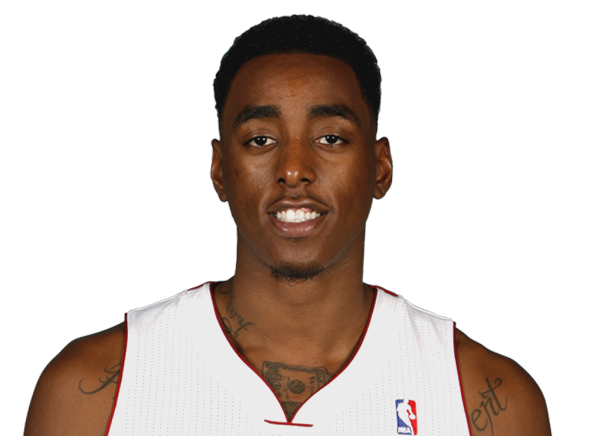
Anthony Mason played 13 seasons in the NBA, compiling career averages of 10.9 points, 8.3 rebounds, and 3.4 assists per game across 882 regular-season contests. A versatile forward known for his defensive tenacity and rare playmaking ability for his size, Mason earned an NBA All-Star selection in 2001 and won the NBA Sixth Man of the Year Award in 1995.
Career Statistical Averages and Milestones
To understand the Anthony Mason stats overview, one must look beyond the raw scoring numbers. Mason was the quintessential "glue guy" who eventually evolved into a primary offensive engine. Over 13 seasons, he accumulated 9,656 points, 7,279 rebounds, and 2,963 assists. His efficiency was a hallmark of his game, finishing his career with a .509 field goal percentage, a testament to his disciplined shot selection and strength in the paint.
Mason’s career trajectory is unique in NBA history. He was not a high-lottery pick; he was a third-round selection (53rd overall) by the Portland Trail Blazers in 1988. He spent time in the USBL, Turkey, and Venezuela before finding a permanent home in the NBA. This "hard-way" path defined his statistical profile: high-effort rebounding, physical defense, and a selfless passing game that coaches like Pat Riley and Don Nelson cherished.
Regular Season Career Summary
| Statistic | Total / Average |
|---|---|
| Games Played | 882 |
| Minutes Per Game | 34.7 |
| Points Per Game | 10.9 |
| Rebounds Per Game | 8.3 |
| Assists Per Game | 3.4 |
| Field Goal Percentage | 50.9% |
| Free Throw Percentage | 70.9% |
| Double-Doubles | 194 |
| Triple-Doubles | 5 |
The New York Knicks Era: Defensive Grit and Playmaking (1991–1996)
The most iconic period of Anthony Mason’s career occurred in New York. Joining the Knicks in 1991, Mason became the emotional and physical heartbeat of a team defined by its "bully ball" style. His statistics during this era reflect a player who sacrificed individual scoring for team utility.
From 1991 to 1996, Mason averaged 9.9 points and 7.7 rebounds per game for the Knicks. However, his impact was most visible in his durability and defensive versatility. During the 1995-96 season, Mason led the entire NBA in total minutes played (3,457) and minutes per game (42.2). This was an extraordinary feat for a 6'7", 250-pound forward, showcasing his elite conditioning and the trust head coaches placed in him.
The 1994-1995 Sixth Man of the Year Campaign
In the 1994-95 season, Mason cemented his legacy as the league's premier bench player. He averaged 9.9 points, 8.4 rebounds, and 3.1 assists while shooting 56.6% from the floor. These numbers were remarkable for a reserve, but it was his ability to handle the ball and initiate the offense (the "Point Forward" role) that set him apart. His performance that year helped the Knicks maintain their status as a championship contender even when their starters rested.
The Charlotte Hornets Peak: Statistical Dominance (1996–2000)
Following a trade that sent Larry Johnson to New York, Mason moved to the Charlotte Hornets, where his statistical output exploded. Freed from the offensive shadow of Patrick Ewing, Mason demonstrated that he could be an elite facilitator and rebounder.
His 1996-97 season remains one of the most unique statistical lines for a forward in NBA history. Mason averaged 16.2 points, 11.4 rebounds, and 5.7 assists. He was one of the few players in the league capable of leading his team in rebounding while simultaneously ranking among the leaders in assists. This versatility earned him a spot on the All-NBA Third Team and the All-Defensive Second Team in 1997.
During his three active seasons in Charlotte (he missed the 1998-99 season due to injury), Mason averaged a double-double: 13.4 points and 10.0 rebounds. His playmaking remained elite, as he averaged 4.8 assists per game during his Hornets tenure, a figure that many starting point guards of that era struggled to reach.
The Miami Heat and the 2001 All-Star Season
In 2000, Mason reunited with Pat Riley in Miami. At age 34, many expected Mason to be a veteran role player. Instead, due to Alonzo Mourning’s kidney ailment, Mason was forced into a primary scoring and rebounding role.
Mason responded by playing 80 games and averaging 16.1 points and 9.6 rebounds on 48.2% shooting. His performance earned him his first and only NBA All-Star selection in 2001. This season was a testament to his longevity and high basketball IQ. Even as his athleticism slowed, his strength, positioning, and ability to draw fouls (averaging 7.1 free throw attempts per game) kept him among the league's most effective frontcourt players.
Detailed Franchise Breakdown
The following table provides a breakdown of Mason's performance across the four major franchises he represented during his career.
| Franchise | Years | Games | PPG | RPG | APG | FG% |
|---|---|---|---|---|---|---|
| New York Knicks | 1991–1996 | 395 | 9.9 | 7.7 | 2.6 | .527 |
| Charlotte Hornets | 1996–2000 | 236 | 13.4 | 10.0 | 4.8 | .501 |
| Miami Heat | 2000–2001 | 80 | 16.1 | 9.6 | 3.1 | .482 |
| Milwaukee Bucks | 2001–2003 | 147 | 8.5 | 6.5 | 2.7 | .464 |
| Nets/Nuggets | 1989–1991 | 24 | 1.8 | 1.7 | 0.3 | .400 |
Defensive Impact and Advanced Metrics
Standard statistics often fail to capture the full defensive value Anthony Mason provided. In the 1990s, defensive success was measured by physical intimidation and the ability to switch onto multiple positions. Mason was one of the few players in the league who could feasibly guard Michael Jordan on one possession and Hakeem Olajuwon on the next.
Defensive Shares and VORP
Advanced metrics from the mid-90s highlight Mason's efficiency. During his 1996-97 season with Charlotte, he posted a Value Over Replacement Player (VORP) of 4.4, which ranked him among the top 15 players in the NBA. His Defensive Win Shares consistently hovered between 3.0 and 4.5 during his prime years in New York and Charlotte, indicating that he was responsible for roughly 3 to 4 extra wins per season solely through his defensive contributions.
Win Shares Per 48 Minutes
Mason’s career Win Shares per 48 Minutes (.134) is significantly higher than the league average of .100. At his peak in 1994-95, this metric reached .174. This suggests that for every minute Mason was on the floor, he was producing winning basketball at a rate comparable to many Hall of Fame contemporaries.
Anthony Mason’s Playoff Statistics
Mason was a "money" player whose game translated well to the increased physicality of the NBA Playoffs. He appeared in 88 playoff games, notably playing a massive role in the New York Knicks’ run to the 1994 NBA Finals.
In the 1994 postseason, Mason appeared in all 25 games, averaging 7.6 points and 5.8 rebounds in 32.7 minutes per game. While his scoring was lower than in the regular season, his primary objective was defending the opponent's best scoring threat, whether it was Scottie Pippen in the second round or Reggie Miller in the Conference Finals. His playoff career averages stand at 9.5 points, 6.6 rebounds, and 2.2 assists, figures that reflect his consistent role as a defensive stopper and secondary playmaker.
Legacy and Influence on the Modern "Point Forward"
As we look back from 2026, Anthony Mason’s statistical profile appears as a blueprint for the modern "positionless" NBA. Before Draymond Green or Nikola Jokic popularized the idea of a frontcourt player serving as the primary facilitator, Mason was bringing the ball up the court for Pat Riley.
His ability to grab a rebound and immediately start the fast break—without looking for a guard—was revolutionary for a man of his size. This "Point Forward" evolution is perhaps his most lasting legacy. When modern fans view the stats of versatile forwards who contribute across all categories, they are seeing the stylistic descendant of Anthony Mason.
Frequently Asked Questions
What was Anthony Mason's career high in points?
Anthony Mason scored a career-high 36 points on March 31, 2001, while playing for the Miami Heat against the Philadelphia 76ers. He was highly efficient in that game, shooting 12-of-19 from the field and 12-of-13 from the free-throw line. This performance was a highlight of his All-Star season and showcased his ability to carry an offensive load when necessary.
How many triple-doubles did Anthony Mason have?
Mason recorded 5 triple-doubles during his career. All of them occurred during his tenure with the Charlotte Hornets between 1996 and 2000. This statistic highlights his peak as a playmaker, as triple-doubles were far less common in the 1990s than they are in the modern high-pace era. His most famous triple-double included 14 points, 15 rebounds, and 11 assists against the Toronto Raptors in 1997.
Did Anthony Mason ever win a championship?
No, Anthony Mason did not win an NBA championship, though he came very close. He was a vital member of the 1993-94 New York Knicks, who reached the NBA Finals but lost in seven games to the Houston Rockets. Mason played significant minutes in all seven games of that series, often tasked with guarding both perimeter and post players.
Why was Anthony Mason called a "Point Forward"?
The term "Point Forward" refers to a forward who has the ball-handling and passing skills of a point guard. Mason was one of the primary examples of this because he frequently initiated the Knicks' and Hornets' offenses. His ability to navigate pressure and find open teammates from the high post or the top of the key allowed his teams to run unique offensive sets that traditional lineups could not defend.
What are Anthony Mason’s career shooting percentages?
Mason was a highly efficient interior scorer, finishing with a career field goal percentage of 50.9%. He was particularly effective around the rim and in the short mid-range area. His free-throw shooting was also solid for a player of his size, finishing at 70.9%. Unlike modern forwards, he rarely attempted three-pointers, finishing his career with only 5 made triples on 51 attempts.
Summary of Professional Impact
Anthony Mason's statistical record paints a picture of a player who was both a specialist and a generalist. He was a specialist in the sense that he provided elite, physical defense and rebounding that few could match. He was a generalist in his ability to fill every column of the stat sheet, from assists and steals to high-efficiency scoring.
For researchers and fans looking at the anthony mason stats overview, the most important takeaway is his role as a bridge between two eras. He possessed the toughness of the 1980s and the skill-based versatility of the 21st century. His 1996-97 season remains one of the greatest "all-around" years by a forward in league history, and his 2001 All-Star appearance serves as a fitting capstone to a career built on perseverance.
Next Action: For those interested in Mason’s impact on specific team histories, reviewing the 1994 Knicks playoff logs provides the best insight into how his defensive stats directly influenced championship-level winning.