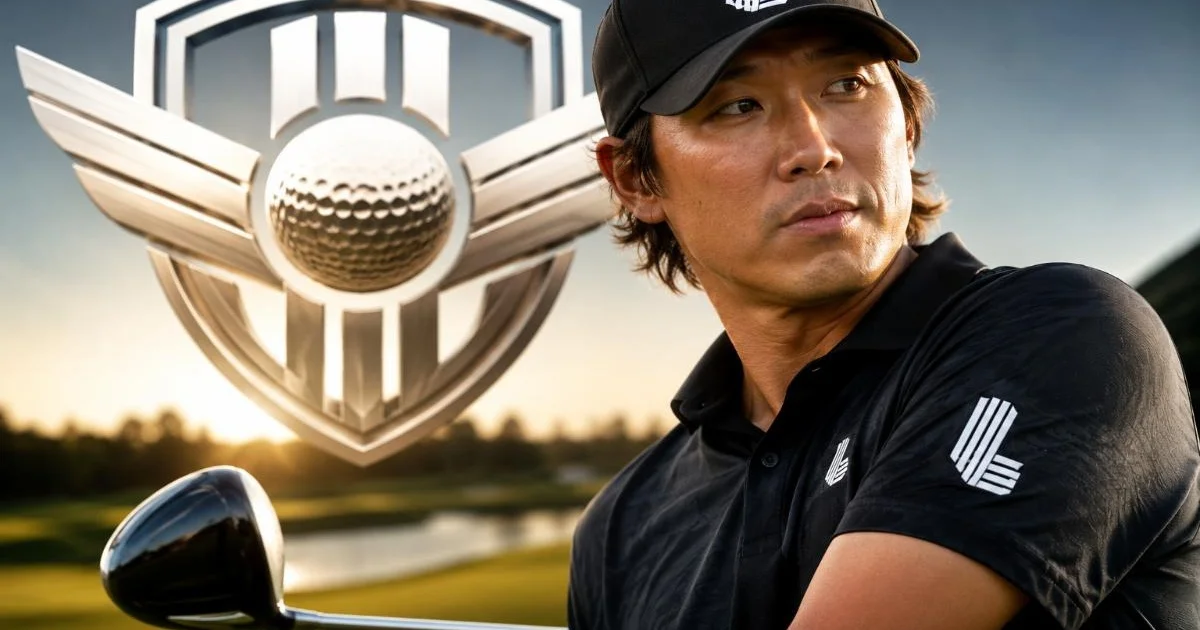
Anthony Kim’s insurance payout, long rumored to be valued between $10 million and $20 million, served as a financial safety net after his 2012 departure from the PGA Tour. Upon his return to professional golf in 2024 via the LIV Golf circuit, the status of this disability policy became a primary focus, requiring a complex resolution of his claims to resume competitive play.
For over a decade, the "Anthony Kim mystery" was one of the most persistent narratives in professional sports. A three-time PGA Tour winner and Ryder Cup star, Kim vanished from the public eye following Achilles tendon surgery in 2012. The central factor cited for his prolonged absence was a high-value disability insurance policy that reportedly would be voided if he returned to professional competition. As of 2026, the resolution of this financial arrangement remains a landmark case study in the world of high-stakes sports underwriting and the financial mechanics behind athlete career management.
The Origins of the $20 Million Disability Policy
To understand the magnitude of Anthony Kim’s situation, one must first look at how elite athletes protect their future earnings. Professional golfers are independent contractors; they do not have guaranteed contracts like athletes in the NBA or NFL. If a golfer cannot play, they do not get paid. To mitigate this risk, top-tier players often take out Permanent Total Disability (PTD) insurance policies.
These policies are typically underwritten by specialized markets, most notably Lloyd’s of London. They are designed to provide a lump-sum, tax-free payout if an athlete suffers an injury that prevents them from ever performing their "own occupation" again. In Kim's case, following his surgery in 2012, he was eligible to trigger this policy.
Defining "Own Occupation" in Sports Insurance
In the insurance world, the "own occupation" clause is critical. It specifies that the policyholder is considered disabled if they cannot perform the specific duties of their professional role, even if they are capable of working in another field. For Anthony Kim, this meant that as long as his physical condition prevented him from competing at the level required for the PGA Tour, he was entitled to the benefits of his policy.
The rumored $10 million to $20 million figure was not a random estimate. It was likely based on a calculation of Kim’s projected career earnings, endorsement potential, and the age at which he suffered the injury. At the time of his departure, Kim was only 26 years old and considered one of the top talents in the world, making a $20 million valuation professionally sound for an insurance carrier.
The "Golden Handcuffs": Why Kim Stayed Away
The term "golden handcuffs" is often used in corporate finance, but it applied perfectly to Kim’s sabbatical. The nature of a PTD payout is that it is contingent on the disability being "permanent." If Kim were to have returned to professional golf in 2015 or 2018, he likely would have been forced to repay the lump sum or forfeit the remainder of the structured payments.
This created a massive financial hurdle for any potential comeback. For Kim to return, he didn't just need to be healthy; he needed to be confident that his future earnings would exceed the $20 million he was already guaranteed by the insurance company.
The Financial Risk of a Comeback
- Repayment Clauses: Most high-value disability policies include "clawback" provisions. If an athlete returns to the sport after being declared permanently disabled, the insurer can sue to recover the payout.
- Tax Implications: While disability payouts are often tax-free if the premiums were paid with after-tax dollars, a return to play would trigger standard income tax on all new earnings, making the "break-even" point for a comeback even higher.
- Loss of Future Coverage: Once a claim of this magnitude is made, it becomes nearly impossible for the athlete to secure similar disability coverage in the future, leaving them financially exposed if they suffer a secondary injury.
LIV Golf and the Resolution of the Insurance Conflict
The landscape changed in 2024 when Anthony Kim officially signed with LIV Golf. The emergence of a well-funded alternative tour provided the financial leverage necessary to resolve the insurance dilemma. While the specific details of Kim’s LIV contract remain confidential, it is widely understood that the signing bonus and guaranteed earnings offered by the league were sufficient to offset the loss or repayment of his insurance policy.
For Kim, LIV Golf represented the only viable path back to the game. The PGA Tour’s performance-based pay structure offered no guarantees, whereas LIV’s model allowed Kim to "buy out" his own disability claim using the guaranteed capital provided by the league.
Negotiating with the Insurer
Before stepping back onto the tee in 2024, Kim and his legal team had to navigate a settlement with his insurers. This likely involved one of three scenarios:
- Lump-Sum Repayment: Kim may have repaid a portion of the original payout to release the insurer from future liability and clear his name for competitive play.
- Settlement Agreement: A negotiated settlement where the insurer agreed not to pursue the full amount in exchange for a smaller payment or a formal end to the claim.
- Policy Expiration: It is possible that the policy had reached a term limit or a specific "tail" period that allowed for a return under specific conditions, though this is less likely given the "permanent" nature of the reported claim.
Comparative Analysis: Professional Athlete Disability Insurance
The table below outlines the differences between the types of coverage Kim likely held and standard disability insurance.
| Feature | Permanent Total Disability (PTD) | Temporary Total Disability (TTD) | Standard Long-Term Disability |
|---|---|---|---|
| Trigger Event | Injury ending the career permanently. | Injury preventing play for a set period (e.g., 1 year). | Inability to work any job/specific job. |
| Payout Structure | Large lump-sum (tax-free). | Monthly or quarterly stipends. | Monthly percentage of salary. |
| Cost (Premium) | High (1% to 5% of the total benefit). | Moderate. | Low (usually employer-sponsored). |
| Return to Play | Usually requires repayment of benefit. | Benefit stops; no repayment of past funds. | Benefit stops; no repayment. |
| Typical Benefit | $5 million – $40 million for stars. | $500k – $2 million. | 60% of gross income. |
The Legal and Ethical Dimensions of Sports Insurance Claims
The case of Anthony Kim’s insurance payout also raises significant questions regarding the ethics of disability claims in sports. When an athlete collects a $20 million payout for a "permanent" injury but returns to play a decade later, it scrutinizes the medical evaluations used to justify the initial claim.
Medical Certification
For a claim to be paid, multiple independent medical examiners (IMEs) must certify that the athlete is physically unable to perform their duties. In Kim’s case, his Achilles injury and subsequent complications were documented. However, medical technology and rehabilitation techniques evolve. What was considered a "career-ending" injury in 2012 might be manageable with 2026-era sports medicine. This "medical evolution" often leads to disputes between insurers and athletes over the definition of "permanency."
Insurer Vigilance
In the years following Kim's disappearance, insurance companies became significantly more cautious with "own occupation" policies for golfers. We have seen a shift toward more rigorous annual reviews and policies that include specific "rehabilitation clauses," requiring athletes to prove they are actively seeking treatment to return to the sport before a payout is fully cleared.
Impact on Anthony Kim’s Legacy and Net Worth
By 2026, the discussion around Anthony Kim has shifted from his insurance policy to his performance on the course. However, the $20 million figure remains a benchmark for his financial standing. If we assume Kim kept a significant portion of the payout and added a LIV Golf signing bonus (estimated by some analysts to be in the $5 million to $10 million range initially), his net worth remains robust despite a 12-year hiatus.
The insurance policy essentially acted as a high-interest savings account or a "deferred compensation" plan. While he missed out on the peak earning years of the "Tiger Woods era" on the PGA Tour, the insurance payout protected his lifestyle and allowed him the luxury of time to heal both physically and mentally.
Technical Considerations for High-Net-Worth Disability Claims
For financial advisors and athletes, the Kim case serves as a vital lesson in policy language.
- Residual Disability Clauses: Some modern policies allow for a "partial" return to work where the athlete can earn a limited income without triggering a full repayment of the disability benefit.
- The Role of Reinsurance: Because a $20 million payout is a massive hit for a single company, these policies are often "layered" across multiple reinsurance companies. This means a return to play involves negotiating with multiple legal entities, not just one.
- Tax Strategy: If the athlete pays the premiums with pre-tax dollars (through a corporation or LLC), the eventual payout is taxable. Kim’s policy was reportedly structured to be tax-free, implying he paid the premiums personally with after-tax income, a move that likely saved him $7 million to $8 million in federal and state taxes on a $20 million claim.
FAQs
Did Anthony Kim have to pay back his insurance money when he joined LIV?
While the exact terms of his settlement are private, it is highly probable that a financial arrangement was reached. Insurers typically have "right of recovery" clauses. Most industry experts suggest that the LIV Golf contract provided the capital necessary for Kim to either settle the claim or absorb the legal costs of a dispute with the insurer.
How much was Anthony Kim's insurance policy actually worth?
The most widely reported figure by reputable sports journalists and financial analysts is between $10 million and $20 million. This was a "tax-free" disability policy, which in terms of "real-world" earnings, is equivalent to winning a $35 million tournament prize when considering the tax implications of standard income.
Why did Anthony Kim wait 12 years to return?
The delay was likely a combination of physical health, mental fatigue, and financial strategy. Returning too early could have jeopardized the insurance payout before he was physically ready to compete at a level that would earn him a living. By 2024, the combination of medical clearance and the guaranteed money from LIV Golf created the "perfect storm" for a return.
Can any professional golfer get a $20 million disability policy?
No. These policies are underwritten based on "proven earning capacity." Only players with multiple wins, high world rankings, and significant endorsement value can justify the premiums for a $20 million payout. The premiums for such a policy can cost hundreds of thousands of dollars per year.
Is Anthony Kim’s insurance case unique in sports?
It is one of the most famous due to his high profile and the length of his absence. However, other athletes, such as professional baseball pitchers and NFL quarterbacks, frequently utilize similar policies. What makes Kim's case unique is the "all-or-nothing" nature of golf and the clear timeline between his departure and his return via a rival league.
Final Practical Considerations
For professional athletes or high-income earners in any specialized field, the Anthony Kim scenario highlights the importance of disability insurance integration with long-term career planning. If you are considering high-value "own occupation" coverage, ensure the policy includes clear language regarding "Return to Work" benefits.
The most critical next action for any professional athlete is to conduct a Policy Audit every two years. As your career earnings increase, your coverage should scale accordingly. However, as Anthony Kim’s story demonstrates, you must also understand the "exit strategy" of your policy—knowing exactly what happens to your financial security if your health allows you to return to the career you once thought was over.