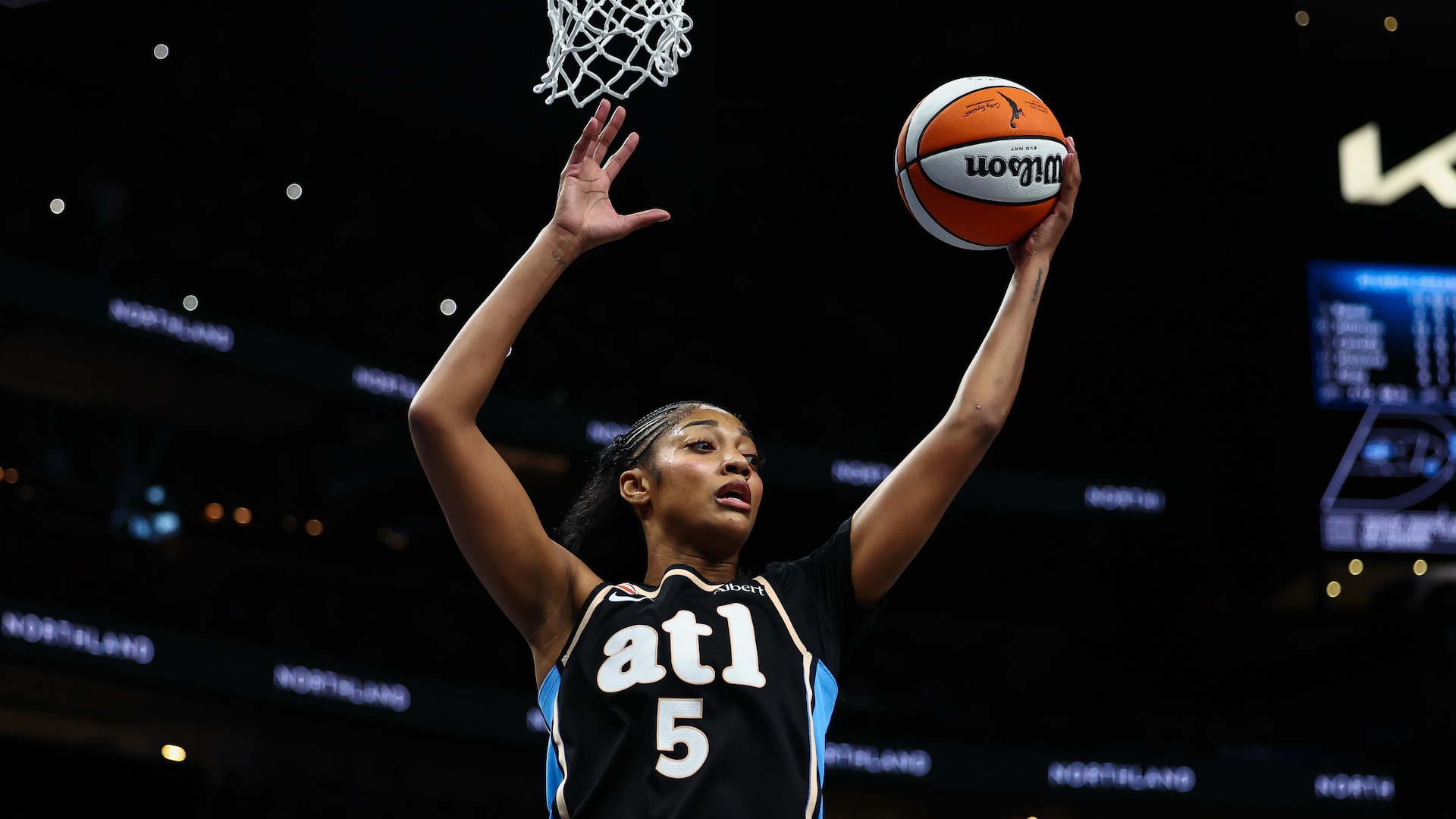
Speculation surrounding Angel Reese potentially moving to Dallas highlights the growing crossover between WNBA roster strategy and the broader professional basketball market. While Reese remains a core cornerstone for the Chicago Sky, evaluating her potential fit with the Dallas Wings illustrates how high-profile player movement reshapes team optics, broadcast economics, and frontcourt dynamics across modern basketball.
Disambiguating the Speculation: League Structure and Contract Status
To analyze any scenario involving Angel Reese and Dallas, it is essential to establish the structural boundaries of American professional basketball. Angel Reese is an All-Star forward in the Women's National Basketball Association (WNBA). The city of Dallas hosts the Dallas Wings in the WNBA, while the Dallas Mavericks represent the city in the Men's National Basketball Association (NBA). Although the NBA and WNBA operate as distinct leagues with separate athletic rosters, they share deep organizational ties; NBA Enterprises maintains a substantial 42% equity stake in WNBA Enterprises, and both leagues benefit from shared media rights negotiations, joint marketing initiatives, and overlapping regional fan bases.
Reese was selected 7th overall by the Chicago Sky in the 2024 WNBA Draft following an exceptional collegiate career at LSU and Maryland. Under the terms of the WNBA Collective Bargaining Agreement (CBA), initial first-round draft picks sign a standardized four-year rookie scale contract. This contract structure includes three fully rookie-scale years followed by a fourth-year team option.
Standard WNBA 1st-Round Draft Pick Scale: - Year 1: Base Rookie Salary (Guaranteed) - Year 2: Base Rookie Salary (Guaranteed) - Year 3: Base Rookie Salary (Guaranteed) - Year 4: Team Option Year (Designated Salary Increase)
Because Chicago controls Reese's contractual rights through her rookie agreement, any transition to Dallas before her free agency period would require a formal trade executed between the Chicago Sky and the Dallas Wings. Social media discussions linking Reese to Dallas often blur the line between speculative fan proposals and official franchise transactions. Factually, no official trade sending Reese to Dallas has occurred; however, analyzing the theoretical framework of such a move provides valuable insight into WNBA cap mechanics, tactical roster assembly, and the commercial impact of marquee players in major media markets.
Why Dallas? Roster Construction and the North Texas Market
The recurring discussion surrounding a potential Reese acquisition by Dallas stems from clear roster complementarities and strategic market positioning. The Dallas Wings have consistently sought to build a dominant, high-rebounding physical frontcourt to complement high-scoring perimeter players.
Frontcourt Identity and Rebounding Fit
Angel Reese established herself as an elite rebounder, breaking single-season rebound records during her rookie campaign and demonstrating unmatched instincts on the offensive glass. The Dallas Wings' strategic system prioritizes second-chance points, physical interior defense, and quick transition opportunities off defensive rebounds. Integrating a forward with Reese’s elite second-chance scoring profile would immediately upgrade any team's interior efficiency and differential rebound percentage.
Market Growth and Commercial Infrastructure
Dallas represents one of the fastest-growing sports markets in North America. The Dallas Wings have executed major organizational expansions, including plans for a state-of-the-art playing venue and headquarters in downtown Dallas at the Kay Bailey Hutchison Convention Center area.
Dallas Market Advantages: 1. Emerging downtown arena development and dedicated practice infrastructure. 2. Expanding regional television broadcast footprint across Texas and the Southwest. 3. High corporate sponsorship density in the Dallas-Fort Worth metroplex. 4. Deep crossover promotional synergy with local media markets.
Acquiring a high-visibility athlete like Reese—who commands significant national endorsement backing from major global brands—aligns with Dallas's vision of maximizing revenue across ticketing, merchandise sales, and regional broadcast viewership.
WNBA Trade Mechanics and Salary Cap Constraints
Executing a blockbuster trade in the WNBA involves distinct financial rules compared to the NBA. The WNBA operates under a strict hard salary cap without luxury tax exceptions, meaning teams cannot exceed the cap ceiling under any circumstances.
Key WNBA Salary Cap Rules: - Hard Cap Constraint: No soft caps or luxury tax overages allowed. - Salary Matching: Traded contracts must fit within available cap room or match existing outgoing salaries. - Core Player Designation: Limits unrestricted free agency movement for franchise cornerstones. - Draft Capital Limits: Draft picks can only be traded up to two years in advance.
Salary Matching under the WNBA CBA
Because Reese operates on an initial rookie scale contract, her cap hit is extremely cost-effective relative to her on-court production and media value. For Chicago to trade a top-tier asset on a rookie contract, the financial alignment requires careful balancing:
- Direct Player Swap: Dallas would need to send back contract assets that fit within Chicago’s available cap room while matching the player valuation.
- Draft Capital Compensation: Due to Reese's value, Dallas would likely have to package multiple first-round draft picks. Under WNBA rules, teams can only trade draft picks up to two drafts in advance.
- Cap Absorption: If Dallas absorbs a contract using existing cap space, they must maintain sufficient room under the hard cap to complete roster minimums (typically 11 or 12 players).
For detailed context on salary cap parameters and player transaction guidelines, consult official documentation provided by the WNBA Official Site.
On-Court Fit and Tactical Analysis
Evaluating Reese's potential fit within Dallas requires examining tactical compatibility, offensive spacing, and defensive assignments.
Offensive Spacing and Paint Mechanics
Reese’s offensive profile relies heavily on rim runs, low-post positioning, and offensive rebounding put-backs. Pairing her with floor-spacing guards and stretch-four forwards is critical to prevent defensive packing in the paint. In Dallas’s offensive scheme, clear lane lines allow quick rim-running bigs to thrive in pick-and-roll or pick-and-seal sets.
Tactical Considerations for Reese in Dallas: + Exceptional offensive rebounding creates extra possession value. + High-intensity transition running pressures opposing backcourt recovery. - Paint-heavy scoring requires reliable perimeter shooters to maintain spacing. - Free-throw efficiency remains a vital focus for late-game closing lineups.
Defensive Versatility and Transition Defense
Defensively, Reese possesses the mobility to switch onto perimeter wings while maintaining high defensive rebound rates. Dallas has historically aimed to build a high-defensive-rating roster capable of turning defensive stops into fast-break points. Reese’s ability to secure the defensive board and immediately initiate or run the floor directly accelerates pace-of-play metrics.
Structural Comparison: Chicago Sky vs. Dallas Wings
To understand why a trade would require immense leverage, it is helpful to contrast the structural, operational, and tactical landscapes of both franchises.
| Operational & Tactical Metric | Chicago Sky | Dallas Wings |
|---|---|---|
| Primary Team Roster Role | Foundational Cornerstone / Primary Rebounder | Theoretical Frontcourt Anchor / Secondary Scorer |
| Venue & Facilities | Wintrust Arena (Chicago, IL) | College Park Center / Downtown Dallas Project |
| Cap Space Dynamics | Built around rookie-contract core | Strategic cap management for veteran extensions |
| Rebounding Profile | Top-tier offensive rebounding conversion | High overall rebound rate, strong interior focus |
| Market Synergy | Major Midwestern media hub | Rapidly expanding Sunbelt commercial market |
| CBA Contract Status | Controls rookie contract + 4th-year team option | Would require major asset package to acquire via trade |
The Economic Impact on Professional Basketball in Dallas
Player movement in modern women's basketball has broader economic implications that extend to the overall basketball ecosystem, including the NBA. When star players shift markets, corporate engagement, digital impressions, and game attendance rise significantly.
Media Rights and Regional Viewing Metrics
The WNBA's media rights landscape is deeply integrated with broader sports broadcast networks. High-profile players elevate local television ratings on regional sports networks (RSNs) and boost streaming subscription numbers on platforms such as WNBA League Pass. Increased viewership in a major media market like Dallas provides leverage during national broadcast negotiation cycles, benefiting all team owners across both the WNBA and NBA umbrella.
Broadcast & Economic Ripple Effects: - Surge in regional sports network (RSN) household ratings. - Elevated national linear television selection (ESPN, CBS, Prime Video). - Direct increase in venue concessions, gate receipts, and merchandise sales. - Expanded cross-promotional opportunities with local NBA franchises (Dallas Mavericks).
Endorsement Ecosystems and Brand Alignment
In addition to on-court play, modern stars drive commercial value through independent ventures, off-season leagues like Unrivaled, and major shoe and apparel deals. A market like Dallas offers an extensive network of corporate headquarters—spanning telecom, aviation, technology, and consumer goods—providing a fertile ground for player-brand partnerships.
Realistic Scenarios: Could a Move to Dallas Materialize?
While trade rumors generate significant online discussion, several concrete factors dictate whether a move of this magnitude could ever happen:
Scenario A: Trade Prior to Contract Expiration
For Chicago to part with Reese before her contract expires, Dallas would need to present an unprecedented trade package featuring high draft assets and elite young talent. Given Chicago’s commitment to building around their core draft picks, the threshold for trading a premier talent remains extremely high.
Scenario B: Strategic Free Agency Target (Future Cycles)
If Reese completes her initial contract term and team option year with Chicago, she could eventually enter the free-agent market. However, the WNBA’s "Core Player" designation allows teams to offer a one-year supermax contract to retain exclusive rights to an unrestricted free agent, restricting immediate market mobility unless the player actively opts not to sign or forces a sign-and-trade.
Scenario C: Franchise Retention by Chicago
The most statistically probable outcome is that Chicago retains Reese as their primary franchise cornerstone, utilizing maximum contract extensions and cap management to build a contending roster around her long-term.
FAQs About Angel Reese and Dallas Basketball
Does Angel Reese play in the NBA or the WNBA?
Angel Reese plays in the WNBA (Women's National Basketball Association) for the Chicago Sky. She does not play in the NBA, which is the men's professional basketball league. However, both leagues operate under an intertwined commercial structure, with the NBA holding an equity stake in WNBA Enterprises.
Has Angel Reese been traded to the Dallas Wings?
No, Angel Reese has not been traded to the Dallas Wings. She remains under her initial rookie contract with the Chicago Sky. Speculation connecting her to Dallas is based on fan trade scenarios, roster fit discussions, and media commentary regarding market dynamics.
How do WNBA trade rules differ from NBA trade rules?
The WNBA operates under a strict hard salary cap without soft cap exceptions or luxury tax thresholds. Contracts traded between teams must fit cleanly within each team's cap space or match outgoing salaries precisely. Additionally, WNBA draft picks can only be traded up to two years in advance.
How are the Dallas Wings associated with the Dallas Mavericks?
The Dallas Wings (WNBA) and Dallas Mavericks (NBA) are separate professional sports franchises with independent ownership groups. However, they share the same regional market, collaborate on community basketball initiatives, and operate within the broader NBA/WNBA economic ecosystem.
What is a WNBA "Core Player" designation?
The "Core Player" designation is a CBA provision that allows a WNBA franchise to retain exclusive negotiating rights with an unrestricted free agent. By applying the core tag, the team offers a guaranteed one-year supermax contract, preventing the player from signing with another team without a trade agreement.
How does Angel Reese's contract structure work?
As a first-round draft pick in 2024, Reese signed a standard four-year rookie scale contract. This structure consists of three guaranteed rookie salary years followed by a fourth-year team option controlled by the Chicago Sky.
Key Takeaways and Strategic Recommendations
Analyzing speculative player movements like "Angel Reese to Dallas" offers crucial insights into how sports management, roster mechanics, and market economics operate in modern professional basketball:
- Verify Contractual Status: Always check official league transaction logs and verified CBA parameters before interpreting social media trade speculation as factual news.
- Monitor Salary Cap Mechanics: Understand that WNBA trades are governed by a strict hard cap, limiting complex multi-player transactions without exact financial alignment.
- Assess Market Expansion: Recognize that discussions linking star athletes to major markets like Dallas reflect the growing economic value, media coverage, and commercial expansion of women's professional sports.
To follow real-time roster moves, official trade announcements, and verified player contract statuses, consult official resources on the WNBA Official Web Portal or review complete player career statistics and historical game data on Basketball Reference WNBA.