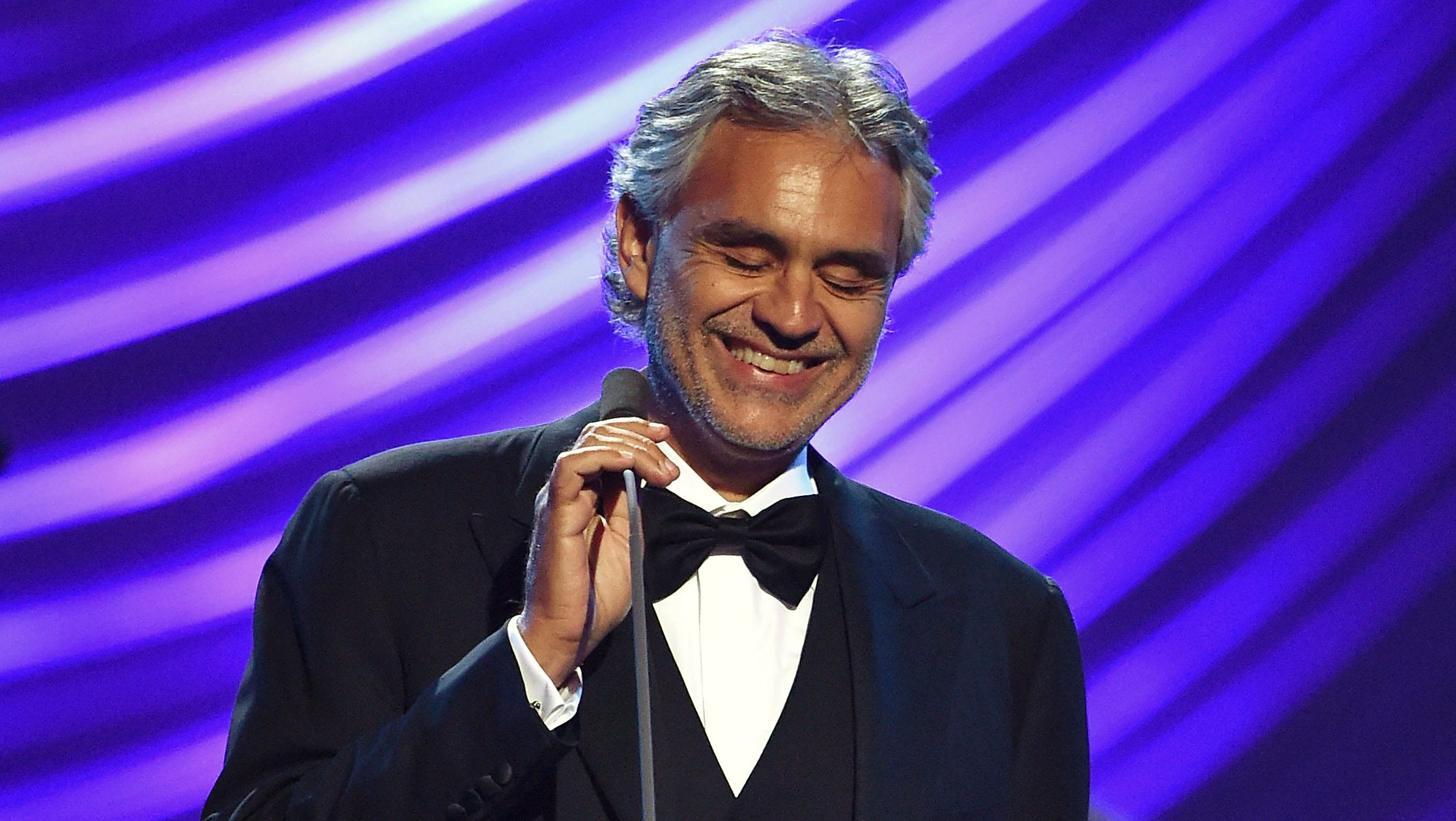
Andrea Bocelli is completely blind, a condition resulting from congenital glaucoma diagnosed when he was just five months old, followed by a severe head injury from a football accident during his childhood that caused a complete and permanent loss of sight by age twelve.
The global fascination with world-renowned Italian tenor Andrea Bocelli extends far beyond his multi-platinum albums, soaring operatic performances, and legendary crossover hits like "Con te partirò." For decades, listeners and media outlets have discussed his visual impairment, frequently prompting questions about the exact nature, origin, and progression of his condition. Understanding the medical reality of his vision loss requires looking past public misconceptions and examining the documented facts regarding congenital glaucoma, childhood trauma, and how a boy from the Tuscan countryside became one of the most celebrated classical crossover artists in history.
Early Life and the Diagnosis of Congenital Glaucoma
Andrea Bocelli was born on September 22, 1958, in Lajatico, a small agricultural village in the Tuscany region of Italy. Even during infancy, his parents noticed irregularities with his eyes. Doctors quickly diagnosed him with congenital glaucoma, a rare eye condition present at birth that involves increased pressure within the eye due to improper fluid drainage.
Congenital glaucoma damages the delicate optic nerve, which is responsible for transmitting visual information from the retina to the brain. If left untreated or unmanaged, this pressure causes progressive and irreversible vision impairment. During his early childhood, Bocelli underwent a series of numerous surgical procedures intended to reduce the intraocular pressure and preserve whatever sight remained.
Despite these medical interventions, his vision was severely limited from the start. He could perceive bright lights, sharp contrasts, and heavy shadows, but fine visual details, reading standard text, and navigating independently were exceptionally challenging. Rather than allowing his condition to dictate the boundaries of his world, a young Bocelli turned heavily toward music, discovering a profound auditory connection to his surroundings that would shape the rest of his life.
The Tragic Accident and Complete Vision Loss
While his congenital condition left him with severely impaired low-vision through his early years, a sudden accident at age twelve permanently altered his life's trajectory. In 1970, while playing as a goalkeeper during a soccer match with schoolmates, Bocelli was struck in the face by a football.
The blunt-force trauma to his right eye triggered a massive hemorrhage and severely exacerbated his existing glaucoma-related complications. Doctors made desperate attempts to save his sight, performing multiple emergency surgeries and applying various experimental treatments of the era, but the efforts failed. The trauma caused total detachment and irreparable damage to the optic pathways and retinal structures.
By the age of twelve, Andrea Bocelli was completely blind, plunging his perceived world into total darkness. Adjusting to sudden, total vision loss during adolescence presented immense psychological and physical hurdles. However, supported by his family, Bocelli refused to abandon his education or his burgeoning passion for music. He continued attending school, learned to play the piano, flute, and saxophone, and eventually enrolled at the University of Pisa to study law, funding his education by playing piano in local piano bars before dedicating his life entirely to vocal performance.
Medical Timeline of Andrea Bocelli's Vision
| Age / Period | Event / Medical Status | Nature of Vision |
|---|---|---|
| Birth (1958) | Birth in Lajatico, Tuscany | Presence of congenital glaucoma |
| Infancy (1959) | Initial medical diagnosis | Severely limited low-vision, light perception |
| Early Childhood | Multiple early eye surgeries | Persistent visual impairment requiring specialized care |
| Age 12 (1970) | Football accident and trauma | Severe hemorrhage, failed surgical interventions |
| Adolescence to Present | Complete and permanent blindness | Total loss of sight; reliance on auditory perception and tactile navigation |
Dispelling Common Misconceptions About His Blindness
Public interest in high-profile figures frequently gives rise to persistent myths, and Bocelli's visual impairment is no exception. Over the years, tabloids and casual listeners have occasionally speculated that his blindness is either a fabrication, a publicity stunt, or something that might be corrected through modern surgical advances.
Medical consensus and biographical records firmly refute these claims. Congenital glaucoma combined with traumatic optic nerve destruction results in a permanent structural loss that cannot be reversed by current ophthalmological treatments, gene therapies, or corneal transplants. The optic nerve, once completely destroyed or severed from trauma, lacks the capacity to regenerate.
Furthermore, casual observers sometimes question how Bocelli navigates large stages, interacts with orchestras, or performs intricate piano arrangements without seeing. These abilities stem from rigorous spatial orientation training, exceptional auditory localization skills, and extensive rehearsal. Bocelli relies on audio cues from conductors, memorization of stage layouts, and trusted guides or family members to navigate unfamiliar environments safely. His independence on stage is the product of discipline and accommodation, not residual sight.
The Intersection of Blindness and Musical Genius
Neurologists and musicologists frequently study how sensory deprivation, particularly total blindness from an early age, influences brain development and artistic expression. In individuals who lose their sight early in life, the visual cortex of the brain often undergoes cross-modal neuroplasticity, reallocating its processing power to enhance remaining senses such as hearing, touch, and spatial memory.
For Bocelli, this heightened auditory acuity allowed him to internalize musical phrasing, timbre, and pitch with extraordinary precision. When learning a new aria, symphony, or crossover arrangement, he does not read traditional printed sheet music. Instead, assistants or collaborative musicians often record parts for him, or he works with Braille musical scores, allowing him to absorb complex arrangements purely through listening and memorization.
This deep, unhindered listening capability translates directly into his vocal delivery. Unburdened by visual distractions during performances, Bocelli exhibits an intense emotional concentration that defines his signature style. His ability to connect with an audience relies exclusively on the expressive power of his tenor voice, transforming a physical limitation into a unique artistic strength.
Frequently Asked Questions
Was Andrea Bocelli born completely blind?
No, Andrea Bocelli was not born completely blind. He was born with congenital glaucoma, which left him with severely impaired low-vision and the ability to perceive light and shadows. He did not lose his sight completely until he was twelve years old following a football accident.
Can modern medicine restore Andrea Bocelli's sight?
No, modern medicine cannot restore his sight. Because his blindness is caused by a combination of congenital glaucoma and severe physical trauma that destroyed the optic nerve and retinal structures, the damage is irreversible. The optic nerve cannot regenerate once destroyed.
How does Andrea Bocelli navigate the stage during live concerts?
Bocelli navigates stages through rigorous rehearsal, spatial memory, and audio cues. He often rehearses the exact dimensions of a venue beforehand and relies on trusted guides, family members, or orchestral cues to walk out safely and position himself correctly in front of the microphone.
Does Andrea Bocelli use Braille music scores?
Yes, Bocelli is literate in Braille and has utilized Braille musical scores throughout his career. Additionally, he relies heavily on listening to audio recordings of arrangements to memorize complex orchestral pieces and vocal parts.
How did blindness influence his path to becoming a singer?
While Bocelli initially pursued a degree in law and worked briefly as a court-appointed lawyer, his visual impairment made traditional legal work difficult. This pushed him toward piano bars, where he honed his singing voice and developed the professional network that eventually led to his discovery by Italian rock star Zucchero and tenor Luciano Pavarotti.
Conclusion and Next Actions
Andrea Bocelli's journey stands as a powerful testament to human resilience, demonstrating that physical limitations do not define creative capability. For readers seeking to explore his legacy further, the most meaningful step is to engage directly with his extensive catalog of recorded performances, ranging from traditional Verdi and Puccini operas to contemporary crossover albums. Additionally, supporting organizations dedicated to vision research, accessible music education, and support services for the visually impaired offers a practical way to honor the broader community of individuals living with significant sight loss.