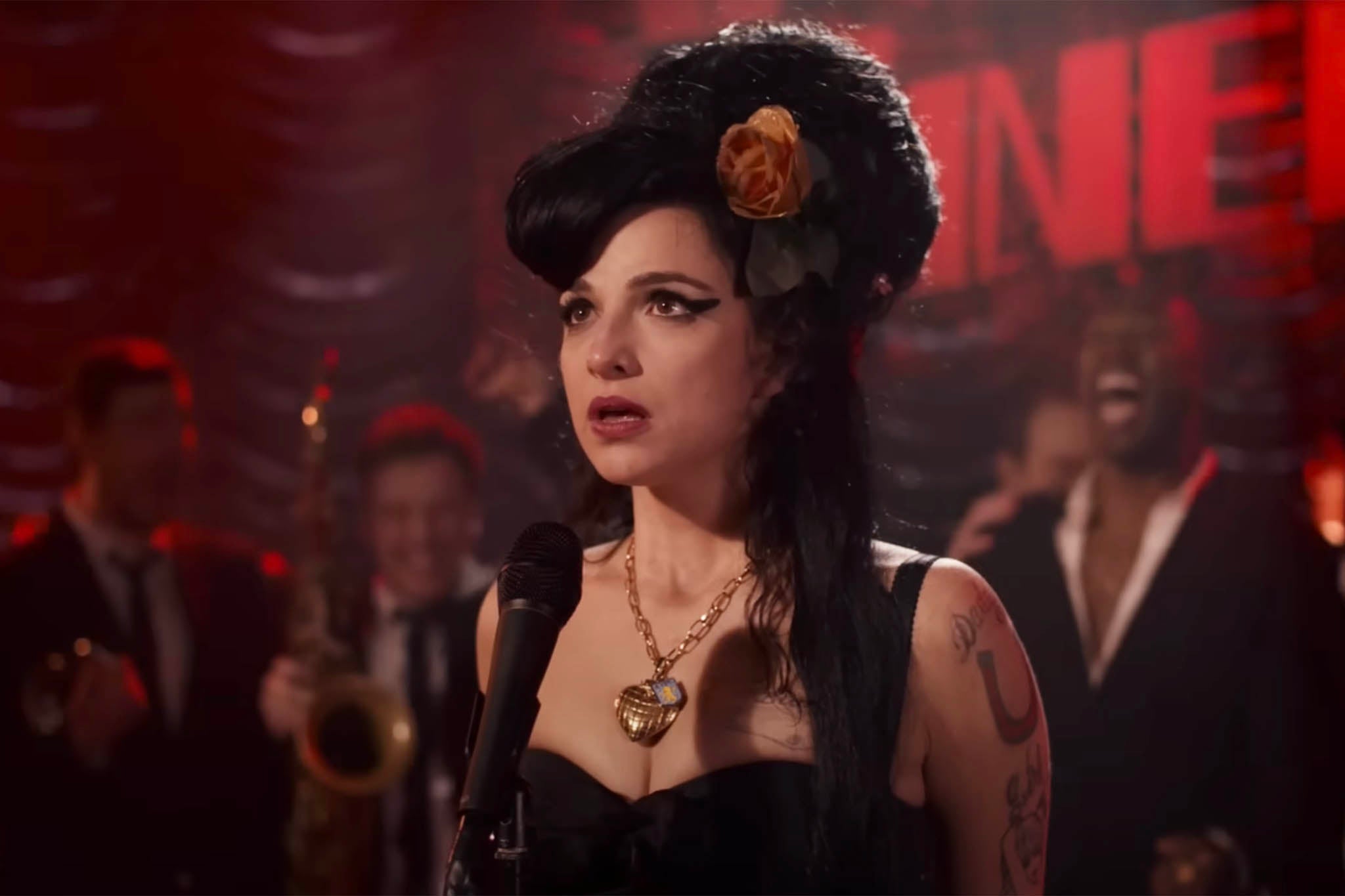
Amy Winehouse was a foundational English singer and songwriter known for her deep, expressive contralto vocals and her eclectic mix of musical genres, including soul, rhythm and blues, and jazz. Her 2006 album Back to Black became a global phenomenon, earning five Grammy Awards and cementing her status as a cultural icon before her untimely death in 2011.
Early Life and Musical Foundations in London
Born on September 14, 1983, in Southgate, London, Amy Jade Winehouse grew up in a family that deeply valued the arts, particularly jazz. Her father, Mitchell Winehouse, was a window installer and later a taxi driver with a passion for Sinatra-era standards, while her mother, Janis, was a pharmacist. The influence of her paternal grandmother, Cynthia, a former singer, was arguably the most significant; it was Cynthia who encouraged Amy’s interest in jazz and suggested she attend the Sylvia Young Theatre School.
By the age of 12, Winehouse was enrolled at Sylvia Young, though her rebellious nature often put her at odds with the school’s rigid structure. She was eventually asked to leave, but the foundation had been laid. She began writing her own music and performing with local groups, such as the Bolsha Band. By the time she was 16, her close friend and fellow soul singer Tyler James sent her demo tape to an A&R representative, leading to her signing with Island Records.
During these formative years, Winehouse was not just a student of music but a curator of a specific aesthetic. She was heavily influenced by 1960s girl groups like The Ronettes and jazz legends like Dinah Washington and Sarah Vaughan. This combination of "bratty" London attitude and old-school vocal sophistication created a persona that was entirely unique in the early 2000s pop landscape.
The Debut Era: Frank (2003)
In October 2003, Winehouse released her debut album, Frank. Produced largely by Salaam Remi, the album was a sophisticated blend of jazz, hip-hop, and soul. The title was a nod to Frank Sinatra, but it also described the lyrical content—blunt, honest, and often cutting.
Frank was a critical success in the United Kingdom, earning Winehouse an Ivor Novello Award for her songwriting on the lead single, "Stronger Than Me." Unlike the heavily produced pop of the era, Frank felt organic. Amy’s voice was the focal point—low, smoky, and technically proficient beyond her 19 years.
However, Winehouse was notoriously critical of her own debut. In later interviews, she expressed frustration with the inclusion of certain tracks she felt were "over-produced" or influenced too heavily by the record label. This dissatisfaction fueled her desire to take more creative control over her next project, leading to a radical shift in her sound and image.
Back to Black and Global Superstardom
Between 2003 and 2006, Winehouse underwent a significant personal and professional transformation. She began dating Blake Fielder-Civil, a relationship that would become the primary muse for her most famous work. This period was marked by intense emotional highs and lows, as well as an increasing reliance on alcohol and substances to cope with her burgeoning fame.
When she returned to the studio, she collaborated with producers Mark Ronson and Salaam Remi. Ronson, in particular, helped her capture the "Wall of Sound" aesthetic of 1960s girl groups, blending it with modern, gritty lyrics about infidelity, heartbreak, and addiction.
The result was Back to Black, released in October 2006. The album was an immediate sensation. Singles like "Rehab," "You Know I’m No Good," and the title track "Back to Black" showcased a woman who was simultaneously vulnerable and fiercely resilient.
The 50th Grammy Awards
The peak of her professional career occurred in February 2008 at the 50th Annual Grammy Awards. Although she was unable to attend the ceremony in person due to visa issues, she performed via satellite from London. Winehouse won five awards that night:
- Record of the Year ("Rehab")
- Song of the Year ("Rehab")
- Best New Artist
- Best Female Pop Vocal Performance
- Best Pop Vocal Album
This sweep made her the first British woman to win five Grammys in a single night, a record she held until it was broken by Adele in 2012.
Technical Artistry and Vocal Style
To understand the "Amy Winehouse bio," one must look beyond the tabloid headlines and analyze her technical contributions to music. She was a contralto, a voice type characterized by a lower range and a rich, dark timbre. Winehouse used this range to mimic the phrasing of jazz saxophonists, often "lagging" behind the beat (back-phrasing) to create a sense of effortless cool.
Her songwriting was equally technical. She avoided the clichés of 2000s R&B, opting instead for complex rhyme schemes and internal monologues. In "Love Is a Losing Game," for example, she uses gambling metaphors with a precision that echoes the great American Songbook writers.
| Feature | Description |
|---|---|
| Vocal Type | Contralto (rich, dark, low-register) |
| Primary Genres | Jazz, Soul, Blue-eyed Soul, R&B, Ska |
| Signature Instrument | Voice, Fender Stratocaster (Electric Guitar) |
| Lyric Themes | Heartbreak, addiction, self-reflection, London life |
| Major Influences | The Ronettes, Sarah Vaughan, Ray Charles, Donny Hathaway |
Personal Turmoil and Media Scrutiny
The success of Back to Black brought a level of scrutiny that Winehouse was ill-equipped to handle. The British paparazzi were relentless, documenting her physical decline and her tumultuous marriage to Fielder-Civil. Her battles with bulimia, depression, and substance abuse became public spectacles.
As of 2026, looking back at the media coverage of the late 2000s, there is a widespread critical consensus that the press treatment of Winehouse was exploitative. The "Amy Winehouse" brand became synonymous with tragedy, often overshadowing her musical output. During this time, she struggled to record a follow-up to Back to Black. While she recorded several demos and covers—some of which appeared on the posthumous Lioness: Hidden Treasures—a full third studio album never materialized during her lifetime.
Her live performances also became inconsistent. While she was capable of breathtaking shows, such as her 2007 Glastonbury set, later performances were marred by disorientation and vocal strain. Her final European tour in 2011 was canceled after a distressing performance in Belgrade, Serbia.
The Passing of an Icon
On July 23, 2011, Amy Winehouse was found dead in her home in Camden Square, London. She was 27 years old. The coroner's report later confirmed the cause of death as alcohol poisoning, with her blood alcohol level at more than five times the legal driving limit.
Her death sparked a global outpouring of grief and led to her induction into the "27 Club," a cultural phenomenon involving popular musicians who died at that age. However, her passing also initiated a serious conversation about mental health, the pressures of fame, and the ethics of celebrity journalism.
Posthumous Legacy and the 2020s
Fifteen years after her passing, Winehouse’s influence remains pervasive. She is credited with revitalizing British soul and paving the way for artists like Adele, Duffy, and Lana Del Rey. Her signature look—the towering beehive hair and heavy winged eyeliner—continues to inspire fashion designers and makeup artists.
The Amy Winehouse Foundation
Shortly after her death, her father Mitchell Winehouse established the Amy Winehouse Foundation. The organization works to prevent the effects of drug and alcohol misuse on young people and aims to support, inform, and inspire vulnerable youth.
Documentaries and Biopics
In 2015, the documentary Amy, directed by Asif Kapadia, provided a raw, intimate look at her life using archival footage and unheard tracks. The film won the Academy Award for Best Documentary Feature. More recently, the 2024 biopic Back to Black, starring Marisa Abela, reignited interest in her life story, though it faced some criticism regarding the portrayal of her family and the balance between her artistry and her struggles.
In 2026, Winehouse is remembered not as a tabloid fixture, but as one of the most significant musical talents of the 21st century. Her albums continue to sell millions of copies, and "Back to Black" is frequently cited on "Greatest Albums of All Time" lists by publications like Rolling Stone and NME.
Frequently Asked Questions
What was the cause of Amy Winehouse's death?
Amy Winehouse died of accidental alcohol poisoning on July 23, 2011. The coroner's inquest revealed that her blood alcohol content was 416mg per 100ml, which was enough to cause her to stop breathing and fall into a coma. There were no illegal substances found in her system at the time of her death.
How many Grammy Awards did Amy Winehouse win?
Winehouse won a total of six Grammy Awards. She won five in a single night in 2008 for her work on the album Back to Black and the single "Rehab." She posthumously won her sixth Grammy in 2012 for Best Pop Duo/Group Performance for "Body and Soul," a collaboration with Tony Bennett.
What is the "27 Club" and why is Amy Winehouse in it?
The "27 Club" is a list of popular musicians, artists, or actors who died at the age of 27. Other famous members include Jimi Hendrix, Janis Joplin, Jim Morrison, and Kurt Cobain. Winehouse’s death at 27 cemented her place in this tragic cultural narrative.
Who inherited Amy Winehouse's estate?
Because Amy Winehouse did not have a will at the time of her death, her estate—estimated at the time to be worth roughly £3 million after taxes—was inherited by her parents, Mitchell and Janis Winehouse. Her ex-husband, Blake Fielder-Civil, received nothing from the estate.
What was Amy Winehouse's vocal range?
Amy Winehouse was a contralto with a vocal range spanning approximately three octaves. She was particularly known for her "chest voice" and her ability to navigate the lower register with a resonance typically associated with male jazz singers or older soul divas.
Final Recommendation for Fans and Researchers
For those seeking the most authentic understanding of Amy Winehouse, it is recommended to start with her music rather than the biographies written about her. Listening to Frank and Back to Black in their entirety provides the clearest window into her wit, her intellect, and her immense technical skill. For a deeper dive into her personal life, the 2015 documentary Amy remains the gold standard for its use of primary source material and its focus on her as a musician first and a celebrity second.