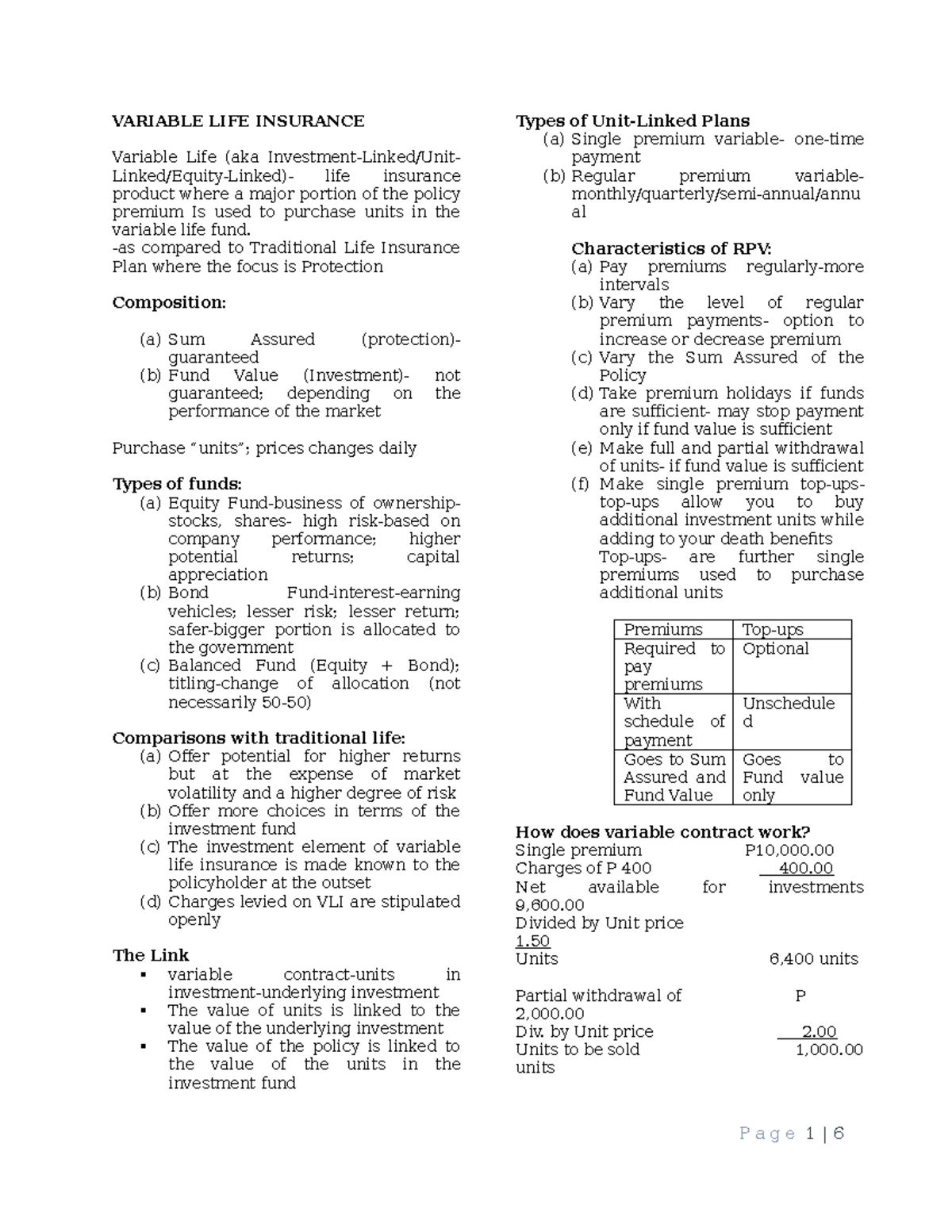
Investing in Ameriprise variable life insurance involves allocating policy premiums toward subaccounts—similar to mutual funds—that offer market-linked growth potential alongside a permanent death benefit. Managed primarily through its subsidiary, RiverSource Life Insurance Company, these policies allow for tax-deferred accumulation and flexible premium payments, provided the policyholder assumes the underlying market risk.
Variable life insurance (VLI) and its more flexible sibling, Variable Universal Life (VUL), represent a sophisticated intersection of risk management and wealth accumulation. For clients of Ameriprise Financial, these products are not merely "death benefit" tools; they are structured financial instruments designed to capture market upside while providing a tax-efficient transfer of wealth. As of 2026, the landscape of variable insurance continues to be a cornerstone for high-net-worth individuals seeking to maximize their "tax alpha" within a diversified portfolio.
The Relationship Between Ameriprise and RiverSource
To understand Ameriprise variable life insurance, one must first identify the issuing entity. While Ameriprise Financial Inc. is the parent company and the primary distributor through its network of financial advisors, the insurance products themselves are typically issued by RiverSource Life Insurance Company (or RiverSource Life Insurance Co. of New York for New York residents).
This distinction is crucial for investors. RiverSource is the entity responsible for the claims-paying ability and the administration of the policy. When an investor monitors their variable policy's performance via the Ameriprise portal, they are viewing the performance of subaccounts managed or curated by RiverSource. These subaccounts often include a range of domestic and international equities, fixed-income instruments, and specialized sector funds managed by leading institutional firms, including Columbia Threadneedle Investments (the asset management arm of Ameriprise).
How Investment in Variable Policies Functions
A variable policy differs fundamentally from traditional "Whole Life" or "Term Life" insurance. In a standard policy, the insurance company guarantees a certain return or sets a fixed premium. In a variable policy, the investment risk is shifted from the insurer to the policyowner.
The Mechanism of Subaccounts
The "variable" in the name refers to the cash value component. When you pay a premium, a portion goes toward the cost of insurance (COI) and administrative fees, while the remainder is directed into subaccounts. These subaccounts are legally separate from the insurance company's general account. This separation protects the investor's assets from the insurer's creditors, but it also means the insurer does not guarantee the performance of these funds.
In 2026, Ameriprise advisors typically offer a broad spectrum of subaccount options, ranging from aggressive growth stocks to conservative government bond funds. This allows the policyholder to align their life insurance cash value with their overall risk tolerance and investment horizon.
Flexible Premium Payments
Most Ameriprise variable offerings fall under the "Universal" umbrella (VUL). This provides the policyholder with the ability to adjust their premium payments. If the subaccounts perform exceptionally well, the policyholder may choose to skip payments or pay the minimum required to keep the policy in force. Conversely, during market downturns, the policyholder may need to "top up" the cash value to prevent the policy from lapsing due to rising insurance costs.
Technical Analysis of Costs and Fees
Investing in a variable policy is generally more expensive than buying term insurance and investing the difference in a brokerage account. However, the costs are structured to support the permanent nature of the death benefit and the tax advantages.
Mortality and Expense (M&E) Risk Charges
This fee compensates the insurance company for the risk it assumes in guaranteeing that the death benefit will be paid, regardless of how long the insured lives. It also covers the risk that the company's expenses might exceed what was originally projected.
Cost of Insurance (COI)
The COI is the actual price of the "death benefit" protection. In a variable universal life policy, the COI is deducted monthly from the cash value. It is important to note that COI typically increases as the insured ages. If the investment subaccounts do not grow sufficiently to cover these escalating costs, the policy could eventually require significantly higher premiums to stay active.
Surrender Charges
Ameriprise variable policies, like most in the industry, carry a surrender charge period, often lasting 10 to 15 years. If you cancel the policy or withdraw significant cash value during this window, the company deducts a substantial fee. This makes variable life insurance a strictly long-term investment vehicle.
Underlying Fund Expenses
Each subaccount has its own management fee, similar to the expense ratio of a mutual fund. Investors must monitor these fees, as high management costs can erode the compounding benefits of the tax-deferred growth over several decades.
Comparison of Insurance Investment Vehicles
The following table compares the primary characteristics of Ameriprise’s variable options against other common permanent life insurance structures as of 2026.
| Feature | Variable Universal Life (VUL) | Whole Life Insurance | Indexed Universal Life (IUL) |
|---|---|---|---|
| Investment Control | High (Policyowner selects subaccounts) | Low (Insurer manages general account) | Medium (Linked to market index) |
| Growth Potential | Uncapped (Based on market) | Fixed (Guaranteed + Dividends) | Capped (Limited by participation rates) |
| Downside Risk | High (Possible loss of principal) | None (Guaranteed minimum) | Low (Floor of 0% typically) |
| Premium Flexibility | High | Low (Fixed premiums) | High |
| Primary Use Case | Long-term wealth/Estate planning | Conservative legacy/Stability | Balanced risk/Tax-free income |
The Tax Advantages of Variable Policies
The primary reason investors choose Ameriprise variable policies despite the higher fees is the favorable tax treatment under the Internal Revenue Code (IRC), specifically Section 7702.
- Tax-Deferred Growth: All gains within the subaccounts accumulate without being subject to annual capital gains or income taxes. This allows for more efficient compounding compared to a taxable brokerage account.
- Tax-Free Death Benefit: The proceeds paid to beneficiaries are generally income-tax-free. For high-net-worth estates, this provides immediate liquidity to pay estate taxes or replace income.
- Tax-Free Access via Loans: Policyholders can access their cash value through policy loans. Because these are technically loans against the death benefit rather than "withdrawals," they are not treated as taxable income, provided the policy remains in force.
- Avoidance of "Modified Endowment Contract" (MEC) Status: To maintain these tax benefits, the policy must pass the "7-pay test." If an investor puts too much cash into the policy too quickly, it becomes a MEC, and withdrawals then become taxable as ordinary income. Ameriprise advisors use specialized software to ensure premiums stay within these legal limits.
Strategic Risks and Considerations
While the potential for growth is high, the risks of Ameriprise variable policies are significant and require active management.
Market Volatility and Policy Lapse
The most prominent risk is that a prolonged market downturn reduces the cash value to a point where it can no longer cover the monthly Cost of Insurance. If the cash value hits zero and the policyholder does not inject more capital, the policy lapses. A lapse is particularly devastating because any outstanding policy loans may suddenly become taxable as ordinary income, and the death benefit vanishes.
The Impact of Interest Rates in 2026
In the 2026 economic environment, interest rates influence the "fixed account" options within variable policies. While the variable subaccounts are market-linked, many Ameriprise policies allow a portion of the cash to be held in a fixed-interest account. Understanding the spread between the interest earned in these accounts and the interest charged on policy loans is vital for those using the policy for "infinite banking" or retirement income strategies.
Suitability and Time Horizon
Variable life insurance is rarely suitable for individuals with a time horizon of less than 15–20 years. The front-loaded costs and the duration of surrender charges require a long-term commitment. It is most effective for individuals who have already maximized their contributions to 401(k)s and IRAs and are looking for additional tax-advantaged "buckets" for wealth.
How to Manage an Ameriprise Variable Policy
Effective management of these policies involves more than just "setting and forgetting."
- Annual Reviews: Investors should meet with their Ameriprise advisor annually to review the "In-Force Illustration." This document projects the policy's future based on current performance and costs.
- Rebalancing Subaccounts: Just as with a 401(k), the subaccounts within a variable policy should be rebalanced to maintain the desired asset allocation.
- Monitoring the Death Benefit: Some policies offer a "Level" death benefit (Option A), while others offer an "Increasing" death benefit (Option B). Option B includes the cash value on top of the face amount, which provides more growth but results in higher COI charges. Switching between these options can be a strategic move as one nears retirement.
Frequently Asked Questions
Can I lose money in an Ameriprise variable life insurance policy?
Yes. Because the cash value is invested in market-based subaccounts, the value of your investment can fluctuate. If the subaccounts perform poorly, your cash value may decrease. Furthermore, if the cash value drops significantly, you may be required to pay higher premiums to keep the insurance coverage active and prevent the policy from lapsing.
How do I access the cash value in my variable policy?
You can access the cash value through two primary methods: partial withdrawals or policy loans. Withdrawals are tax-free up to the amount of "basis" (the total premiums you have paid), but they reduce the death benefit. Policy loans allow you to borrow against the cash value; these are generally tax-free and do not necessarily need to be paid back, though any unpaid balance will be deducted from the death benefit upon your passing.
What is the difference between Ameriprise and RiverSource?
Ameriprise Financial is the parent company and financial planning firm. RiverSource Life Insurance Company is the specific insurance arm of Ameriprise that issues and guarantees the variable life insurance policies. When you buy a policy through an Ameriprise advisor, you are typically purchasing a RiverSource product.
Is variable life insurance better than a 401(k)?
Generally, no. A 401(k) or IRA should usually be funded first because of the lower administrative costs and potential employer matching. Variable life insurance is often considered a "supplemental" investment for those who have exhausted other tax-advantaged options and have a specific need for permanent life insurance protection.
Are there limits on how much I can invest in a variable policy?
Yes. To maintain the tax-free status of the death benefit and loans, the policy must comply with federal guidelines regarding the "Amount at Risk." If you "overfund" the policy too quickly, it could be classified as a Modified Endowment Contract (MEC), which changes the tax treatment of any money you take out of the policy to a "last-in, first-out" taxable basis.
Practical Recommendation
If you are considering an Ameriprise variable life insurance policy in 2026, request a "Supplemental Illustration" that shows the policy’s performance at a 0% gross return. This "stress test" will reveal how long the policy will remain in force during a worst-case market scenario and how much additional premium might be required to save it. Only proceed if you have a stable income to support potential premium increases and a minimum 15-year investment horizon.