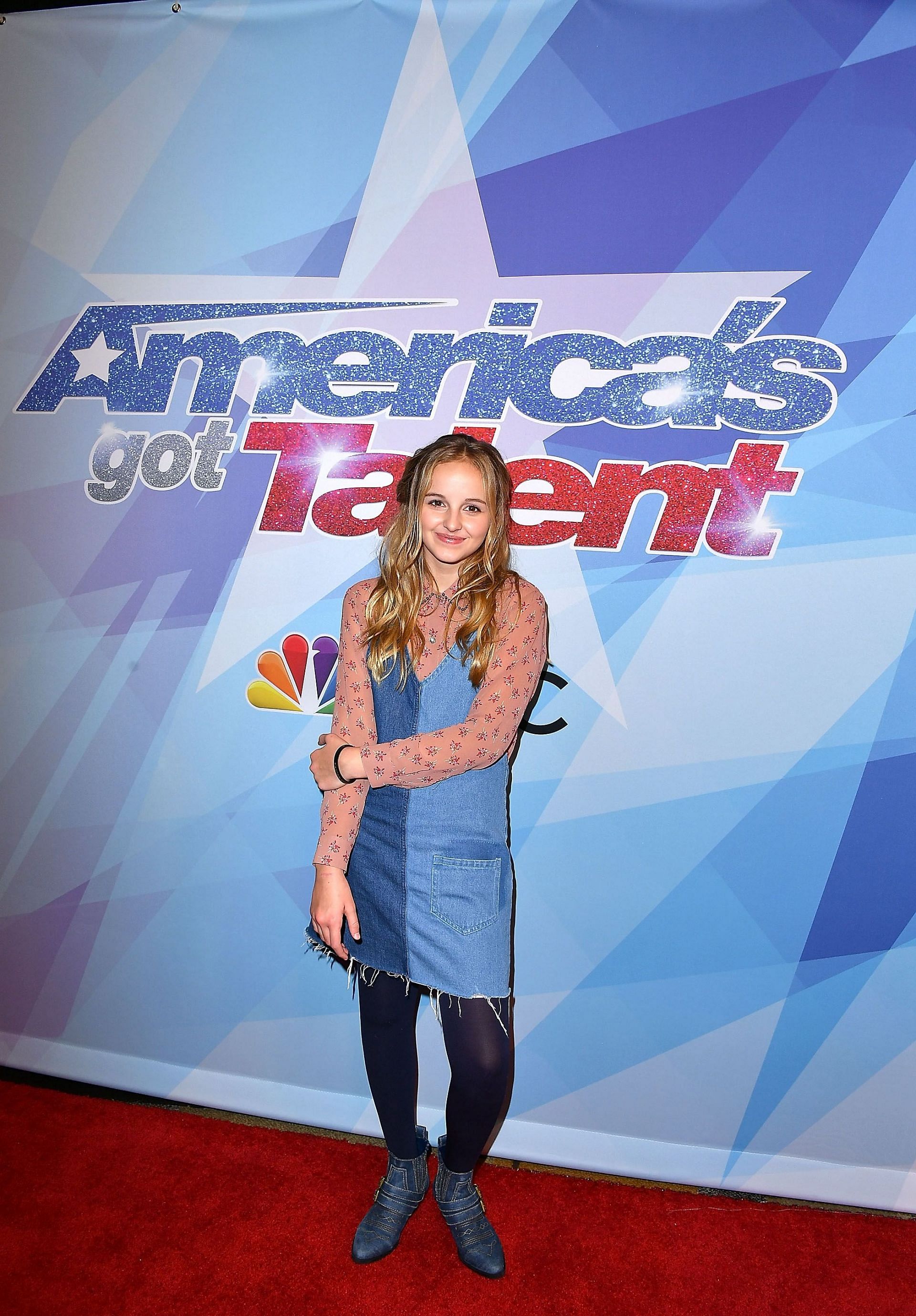
Amanda Mammana’s participation in America’s Got Talent (AGT) stands out as a powerful testament to the intersection of personal struggle, artistic resilience, and the platform’s capacity to amplify intimate, human stories. Her journey is defined not merely by the competition process but by her courageous decision to share a lived experience with a speech impediment—a condition often hidden in professional performance—with a global television audience. By choosing to perform original music while navigating the complexities of a stutter, Mammana redefined the expectations of the audition stage, moving from a position of vulnerability to one of profound connection with both the judges and the public.
To understand her trajectory, one must look at the standard mechanics of the America’s Got Talent audition process and how individual performers navigate the pressure of the stage. For many contestants, the journey is a sequence of technical hurdles: moving from initial production auditions to the televised auditions before the celebrity judging panel. For Mammana, this process required an additional layer of psychological preparation, as she had to reconcile her passion for songwriting with a condition that fundamentally alters the rhythm and pace of verbal communication. This article explores her performance, the reception of her work, and the broader context of her journey within the ecosystem of the long-running NBC talent franchise.
The Mechanics of the AGT Audition Process
The America’s Got Talent audition circuit is a rigorous, multi-stage filtration system designed to identify performers who possess both exceptional skill and a compelling narrative. For an artist like Amanda Mammana, the journey begins long before the televised audition that viewers see at home.
- The Producers' Round: Before appearing in front of the celebrity judges—such as Simon Cowell, Sofia Vergara, Heidi Klum, or Howie Mandel—contestants must pass through a series of producer-led auditions. These rounds are less about the "show" and more about verifying the viability of the act. Producers evaluate vocal quality, stage presence, and the potential for a contestant to sustain interest over multiple rounds of competition.
- The Televised Audition: Once a contestant is selected for the stage, the environment shifts drastically. The transition from a quiet room to a massive stage with a live studio audience and bright lights is designed to heighten the stakes. For musicians with speech impediments, this stage presents a unique challenge: the "conversational" portion of the audition—where the judges ask the performer about their background—often triggers the very anxieties that can exacerbate a stutter.
- The Performance: The musical performance itself serves as a refuge. Many vocalists who struggle with speech impediments report that singing often bypasses the neurological pathways associated with stuttering, allowing for a fluid and expressive performance even when speaking proves difficult. This juxtaposition between the stutter during conversation and the fluency during song is a recurring theme in the history of the show, and it served as the cornerstone of Mammana’s breakout moment.
Overcoming Barriers: The Significance of Authenticity
In contemporary media, audiences respond strongly to authenticity. When Mammana stepped onto the stage, she did not attempt to mask her stutter or treat it as a liability to be hidden. By openly discussing her life with a speech impediment, she immediately set the tone for her performance. This creates a psychological contract with the viewer; the performance is no longer just about the song, but about the triumph of expression over inhibition.
The significance of this choice cannot be overstated. In the world of performing arts, there is immense pressure to present a polished, "perfect" image. By eschewing this facade, Mammana shifted the focus of her audition. The judges, who are accustomed to seeing thousands of acts, prioritize performances that offer emotional depth. Her original song allowed her to communicate in a medium where she felt entirely empowered, providing a stark contrast to the vulnerability displayed during her introduction.
Key Elements of the Performance
When analyzing her performance, it is helpful to break down the elements that resonated with the audience and the judging panel:
- Original Songwriting: Mammana performed an original piece rather than a cover. This demonstrates artistic agency and allows the performer to control the narrative of their own life through lyrics.
- Vocal Control: Her ability to transition from a halting conversational style to a controlled, melodic vocal performance highlighted a high level of technical training and emotional focus.
- Transparency: By addressing her speech impediment directly, she neutralized the "elephant in the room," allowing the focus to remain squarely on her musical talent rather than on speculation or misunderstanding.
Historical Context and Audience Reception
America’s Got Talent has a history of featuring performers who overcome physical or neurological challenges. From vocalists with visual impairments to dancers navigating physical disabilities, the show often serves as a venue for stories of perseverance. However, the reception of an act like Mammana’s is nuanced. It requires a delicate balance between acknowledging the performer’s personal journey and evaluating them strictly on the merit of their art.
In the case of Mammana, the audience and the judges reacted with genuine admiration, not pity. This is a crucial distinction in the world of competitive performance. When an audience feels that a performer is using their condition as a "crutch" for votes, the reception is often polarized. Conversely, when the performance itself justifies the position, the narrative becomes one of empowerment. Mammana’s performance was validated by the judges’ immediate praise, which recognized both her bravery and the quality of her songwriting craft.
Comparison of Performance Approaches on AGT
| Approach | Focus | Audience Perception | Goal |
|---|---|---|---|
| Traditional Cover | Technical vocal skill | Familiarity, nostalgia | Demonstrate range |
| Original Narrative | Storytelling and emotion | Personal connection | Build a brand/identity |
| Overcoming Adversity | Resilience and courage | Inspiration, admiration | Break stigma |
The Impact of Public Exposure on Emerging Artists
For a musician, an appearance on a platform as massive as America’s Got Talent is a "force multiplier." Even for those who do not go on to win the grand prize, the exposure translates into social media following, streaming numbers, and a potential career foundation. The "journey" often continues after the episode airs. For Mammana, the challenge shifts from the stage of the show to the stage of the music industry at large.
The transition from a reality television moment to a sustainable career involves several technical steps:
- Digital Footprint: Managing social media channels to engage with the audience built during the show.
- Music Cataloging: Moving from the single song presented on the show to a full library of original work.
- Performance Consistency: Maintaining the quality of the live performance in smaller, more intimate venues without the production budget of a major television network.
Addressing Common Questions Regarding Talent Competition Paths
Many aspiring performers look at the experiences of contestants like Amanda Mammana as a blueprint for their own success. However, it is essential to understand the reality behind the television production.
Q: Does having a unique personal story guarantee success on the show? A: No. While a compelling story helps an act stand out during the casting process, the talent itself must be sufficient to carry the performance. The producers and judges are ultimately looking for acts that will appeal to a wide demographic and perform well in a live, ticketed environment.
Q: Is it better to perform original music or cover songs? A: This depends on the artist's goals. Covers are accessible and allow the audience to gauge the performer's ability against a known standard. Original music, however, is necessary for building a long-term career as a recording artist, as it establishes an original sound and identity.
Q: How do performers manage the stress of the live audience and judges? A: Most professional performers, including those on AGT, use deep breathing, visualization, and extensive rehearsal to manage the "fight or flight" response. For those with speech or anxiety-related conditions, these routines are even more critical.
Q: Does the "sob story" narrative hurt or help an artist's credibility? A: When an artist centers their story on their own agency and talent rather than their hardship, they generally maintain their credibility. The most successful contestants use their experience as context for their art, not as the primary product itself.
Q: What happens if a performer struggles during their audition? A: America’s Got Talent is a production; producers are looking for authentic reactions. If a performer struggles but pushes through with talent, it often makes for high-quality, memorable television. However, if the performance is not strong enough to warrant a "yes" from the judges, the story of the struggle becomes a footnote rather than a catalyst for success.
Practical Considerations for Aspiring Performers
For those inspired by the journey of participants like Amanda Mammana, the path forward involves rigorous preparation and an honest assessment of one's goals. If you are an artist with a unique background or a specific challenge, consider the following steps:
- Refine Your Craft: Before seeking a national stage, ensure that your core skill—be it singing, playing an instrument, or a unique performance art—is as refined as possible. Your skill is the product you are selling.
- Develop Your Narrative: Understand your own story. What makes your perspective unique? How does your experience influence the way you write or perform? Being able to articulate this clearly is vital for interviews and press.
- Understand the Medium: Research the specific requirements of the show you are auditioning for. Every competition has a different tone, target demographic, and set of expectations.
- Build a Foundation: Use the momentum of a public appearance to build your own digital ecosystem. Ensure your social media, website, and streaming platforms are ready to capture the interest of new fans.
- Seek Professional Feedback: Do not rely solely on the validation of friends or family. Seek out professional coaching, vocal training, or industry feedback to understand your weaknesses before they are exposed on a public stage.
The journey of an artist like Amanda Mammana on America’s Got Talent serves as a case study in the power of vulnerability. By transforming a personal challenge into a vehicle for artistic expression, she successfully navigated the competitive landscape of the show. Her success was not due to the challenge she faced, but rather to the grace, preparation, and talent she demonstrated in spite of it. For any performer, the key remains consistent: prioritize the work, own your narrative, and never underestimate the power of an authentic connection with the audience. As we look at the landscape of performance in 2026, the demand for this kind of genuine, human-centered artistry remains a constant, driving force in the entertainment industry.