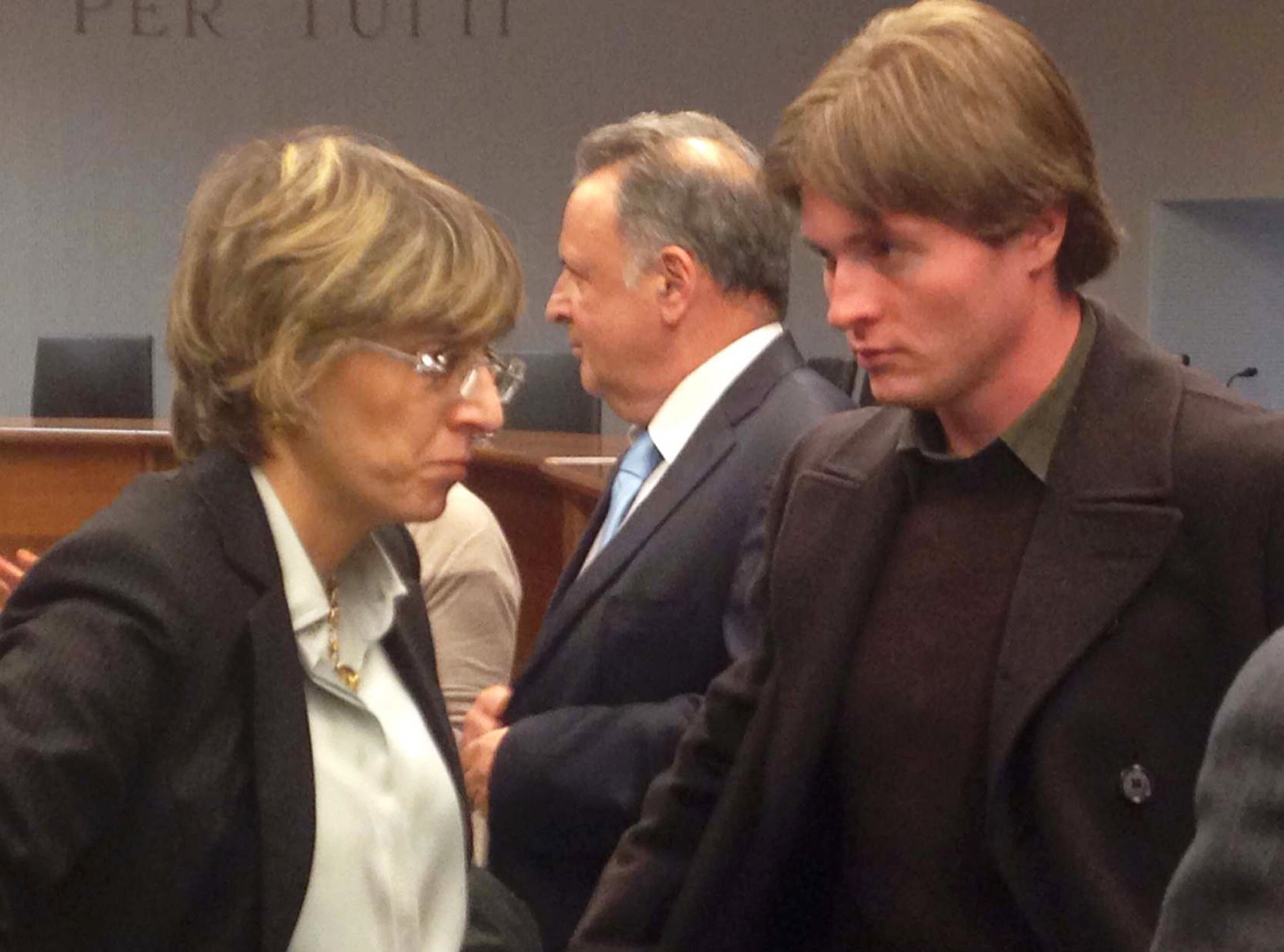
In November 2007, photographs of American student Amanda Knox kissing and embracing her Italian boyfriend, Raffaele Sollecito, outside a crime scene in Perugia, Italy, became some of the most famous images in modern legal history. Captured shorty after the murder of Meredith Kercher, these photographs were heavily featured by global media outlets and leveraged by prosecutors to construct a narrative of unfeeling coldness.
The media frenzy surrounding the imagery played a pivotal role in shaping public opinion long before judicial verdicts were reached. What initial news coverage presented as bizarre detachment was later contextualized by the defense—and Knox herself—as a traumatic coping mechanism by two disoriented young adults thrust into an intense police investigation. The case remains a textbook study in how photojournalism, pre-trial publicity, and cultural misinterpretations can impact criminal justice proceedings.
The Origin and Context of the Photographs
The famous photographs were taken between November 2 and November 5, 2007, in the immediate aftermath of the discovery of Meredith Kercher’s body in the cottage on Via della Pergola in Perugia. Kercher, an English exchange student sharing the apartment with Knox and two Italian women, had been brutally killed.
As Italian police cordoned off the building to gather forensic evidence, journalists and camera crews from around the world descended upon the site. Knox, then a 20-year-old student from Seattle, and Sollecito, a 23-year-old computer engineering student, remained near the perimeter while waiting to be questioned by investigators.
During these long hours of waiting, photojournalists captured several candid interactions between Knox and Sollecito:
- Physical Intimacy: Images showed Knox wrapping her arms around Sollecito, resting her head on his shoulder, and exchanging brief kisses.
- Facial Expressions: Other snapshots caught Knox making exaggerated facial expressions, pulling grimaces, or stretching while standing outside the police cordons.
- Gestures: The couple stood close together, frequently holding hands or whispering while forensic teams walked in and out of the residence.
At the time the photos were snapped, neither Knox nor Sollecito had been formally charged with a crime. However, the presence of photographers meant that every movement was documented, cataloged, and instantly distributed to international press agencies.
Prosecution Framing and the "Foxy Knoxy" Media Narrative
When the police arrested Knox, Sollecito, and bar owner Patrick Lumumba on November 6, 2007 (Lumumba was quickly cleared and released), the photographs taken outside the crime scene were immediately repurposed. Instead of being viewed as mundane moments of young lovers offering mutual comfort, the images were presented as evidence of moral depravity and emotional insensitivity.
Lead prosecutor Giuliano Mignini and regional investigators argued that Knox and Sollecito displayed an inappropriate lack of grief. In the prosecution’s theory, an innocent roommate would be weeping, solemn, or immobilized by trauma. A couple kissing, smiling, or cuddling within sight of a murder scene was framed as behaving with callous indifference—or worse, relishing the aftermath of a crime.
| Prosecution & Media Interpretation | Defense & Subject Context |
|---|---|
| • Callous indifference to murder | • Shock and disorientation |
| • Sociopathic behavior | • Seeking emotional comfort |
| • Inappropriate romantic passion | • Coping with exhaustion |
| • Premature celebration | • Lack of foreign context |
The tabloid press, particularly in Great Britain and Italy, seized upon the photographs. British tabloids revived an old nickname from Knox's soccer-playing days, "Foxy Knoxy," transforming it from an athletic moniker into a hyper-sexualized persona. Front pages across the world paired the crime scene kissing photos with headlines suggesting Knox was a remorseless temptress who had orchestrated a sex game gone wrong.
This visual narrative proved extraordinarily persuasive to the public. By focusing on selective frames taken out of hours of footage, media coverage created a psychological archetype of guilt before any physical evidence had been thoroughly examined in a courtroom.
Psychological Realities: The Defense's Explanation
In the years following their initial 2009 conviction, their 2011 acquittal, the 2014 reinstatement of guilty verdicts, and their final 2015 definitive exoneration by Italy’s highest court, both Knox and Sollecito addressed the kiss photos extensively.
In her 2013 memoir, Waiting to Be Heard, Knox explained that the moments captured by cameras were driven by fear, confusion, and exhaustion rather than romantic passion or coldness.
Emotional Grounding and Language Barriers
Knox was living in a foreign country, operating in a language she did not fully command, and facing aggressive police questioning without legal counsel or an official court interpreter. Sollecito was her sole emotional anchor in Perugia. Hugging and kissing him was a instinctual effort to seek comfort and soothe rising panic while surrounded by flashing cameras and police officers.
Traumatic Reactions and Dissociation
Forensic psychologists frequently note that individuals experiencing severe shock do not adhere to a single script of grieving. Some people cry uncontrollably, while others laugh nervously, appear numb, behave inappropriately, or cling physically to loved ones. Knox’s physical gestures were consistent with emotional distress and self-soothing under acute stress, rather than proof of criminal guilt.
Selective Editing and Snapshot Bias
Press photographers took thousands of images over several days. Out of those thousands, news agencies selectively published the handful of frames where the couple touched or smiled, omitting hours of footage where Knox appeared visibly distressed, exhausted, or silent. This selective publication created a skewed perception of her overall demeanor.
Legal Retrospective: Timeline of the Case
The photographs played an outsized role in the court of public opinion, which indirectly affected the legal proceedings surrounding Meredith Kercher's murder. The actual culprit, Rudy Guede, was convicted in a separate fast-track trial after his DNA, fingerprints, and footprints were discovered at the crime scene. Knox and Sollecito endured an eight-year legal battle before complete exoneration.
| Year | Event / Milestone | Role of Public Perception & Evidence |
|---|---|---|
| Nov 2007 | Meredith Kercher found dead; photos of Knox and Sollecito kissing outside the crime scene are published worldwide. | Initial media portrayal establishes Knox as cold and suspicious based on non-verbal behavior. |
| Nov 2007 | Knox, Sollecito, and Lumumba arrested. Lumumba later released with complete exoneration. | Prosecution relies heavily on behavioral theories and initial coerced statements. |
| Oct 2008 | Rudy Guede convicted of Kercher’s murder via fast-track trial (DNA evidence found in crime scene). | Guede's conviction proceeds while Knox and Sollecito are held for a full trial. |
| Dec 2009 | Knox and Sollecito convicted in first-instance trial; Knox sentenced to 26 years. | Trial heavily influenced by disputed DNA evidence and pre-trial characterization. |
| Oct 2011 | First appeal court acquits Knox and Sollecito due to flawed forensic evidence; both released. | Independent court experts destroy the prosecution's DNA claims regarding the kitchen knife and bra clasp. |
| Mar 2013 | Italian Court of Cassation annuls the 2011 acquittals, ordering a retrial. | Legal technicalities keep the case active in Italian jurisprudence. |
| Jan 2014 | Appeals court in Florence reinstates guilty verdicts. | Defense appeals again to the highest court. |
| Mar 2015 | Italian Court of Cassation definitively acquits Knox and Sollecito, ending all charges. | Highest court cites "flaring publicity," lack of biological evidence, and severe procedural errors. |
| Jan 2019 | European Court of Human Rights (ECHR) rules Italy violated Knox's rights during interrogation. | ECHR orders Italy to pay compensation for failing to provide legal counsel and an interpreter. |
"Trial by Media" and Visual Confirmation Bias
The controversy surrounding the Amanda Knox kiss photos remains one of the clearest examples of "trial by media" in 21st-century jurisprudence. Visual confirmation bias occurs when observers interpret photographic evidence in a way that confirms their preexisting assumptions or the narrative presented by authority figures.
The Power of Non-Verbal Cues
Human beings naturally attempt to read non-verbal cues to assess honesty and moral character. When prosecutors suggested that Knox was involved in a violent crime, members of the public examined the photographs through that lens. A hug was no longer a comforting gesture; it was interpreted as celebratory. A kiss was no longer a moment of affection; it was seen as flaunting disrespect toward a murder victim.
The Role of International Media Polarization
The international press split along national lines, further highlighting the subjectivity of the photos:
- British Tabloids: Focused heavily on sensation, adopting prosecutorial leaks and highlighting the kiss photos as evidence of a sinister side.
- American Outlets: Increasingly viewed Knox as an innocent young woman trapped in a Kafkaesque foreign legal system, criticizing the Italian authorities for relying on bad science and tabloid character assassination.
- Italian Media: Published heavy leaks from the prosecution, focusing on Knox's personal life, diary entries, and behavioral quirks.
When the Italian Court of Cassation issued its final 2015 decision exonerating Knox and Sollecito, the judges explicitly criticized the sensationalist environment in which the initial investigation took place. The court noted that the rush to judgment was driven by intense media scrutiny that distorted the reality of the physical evidence—or lack thereof.
Lessons in Media Literacy and Modern Legal Coverage
The enduring fascination with the court and crime scene photos of Amanda Knox offers critical lessons for legal analysts, journalists, and the public.
1. Demeanor Is Not Forensic Evidence
Behavioral evidence—especially non-verbal body language captured in brief moments—is highly subjective. Forensic science and legal procedure require physical proof, chain-of-custody integrity, and corroborated witness testimony. Judging guilt or innocence based on how a suspect reacts outside a crime scene is inherently unreliable.
2. The Danger of Out-of-Context Imagery
A single photograph captures a fraction of a second. Without understanding what occurred immediately before or after the camera shutter clicked, viewers are vulnerable to narrative manipulation. Photojournalism requires ethical framing and responsible context, particularly when human lives and legal freedoms are at stake.
3. Procedural Safeguards Matter
The European Court of Human Rights confirmed in 2019 that Knox’s basic rights were compromised during her initial overnight police interrogation. The absence of an attorney, coupled with pressure from investigators, led to statements that were later used to reinforce the media image of her instability. Modern justice systems rely on strict adherence to procedural safeguards to prevent narrative-driven prosecutions.
Frequently Asked Questions
Were the famous kiss photos taken inside the courtroom or at the crime scene?
The most famous photographs of Amanda Knox and Raffaele Sollecito kissing and embracing were taken outside the crime scene cottage on Via della Pergola in Perugia between November 2 and November 5, 2007. However, photographers also captured the couple interacting near courtrooms and police stations during early legal proceedings, which were similarly analyzed by news outlets.
Why did Amanda Knox kiss Raffaele Sollecito outside the crime scene?
Knox and Sollecito later explained that the gestures were reactions to shock, fear, and exhaustion. As a 20-year-old in a foreign country facing intense police scrutiny without a lawyer or reliable translator, Knox turned to Sollecito for physical comfort and emotional grounding during a deeply traumatic situation.
Did the photographs affect the outcome of the trial?
While photographs are not formal physical evidence, the images heavily influenced pre-trial publicity and public perception. The Italian Court of Cassation later noted that the early investigation was tainted by a rush to judgment fueled by media sensation, which centered around Knox's personality and behavior rather than verifiable forensic facts.
Was Amanda Knox ever proven guilty of the murder?
Although Knox and Sollecito were initially convicted in 2009, those convictions were overturned upon appeal in 2011. After a complex legal back-and-forth, Italy’s highest court—the Court of Cassation—definitively acquitted both of them of the murder in March 2015, ruling that there was a complete absence of biological evidence linking them to the crime scene.
Who actually committed the murder of Meredith Kercher?
Rudy Guede was convicted of the murder of Meredith Kercher in a separate trial. Guede's DNA, bloody footprints, and fingerprints were found extensively throughout the crime scene and on the victim's body. He served his prison sentence and was released under supervised care in late 2021.
Navigating Media Coverage in High-Profile Trials
When reviewing coverage of ongoing legal proceedings or historical true crime cases, readers should evaluate claims using primary legal documents and verified physical evidence rather than media commentary on suspect demeanor. Photos and video clips captured outside courtrooms offer emotional snapshots, but they cannot replace rigorous forensic analysis, cross-examined testimony, and established legal rights. Observing how visual narratives were weaponized in the Knox case provides a clear blueprint for exercising media literacy when consuming news about modern judicial trials.