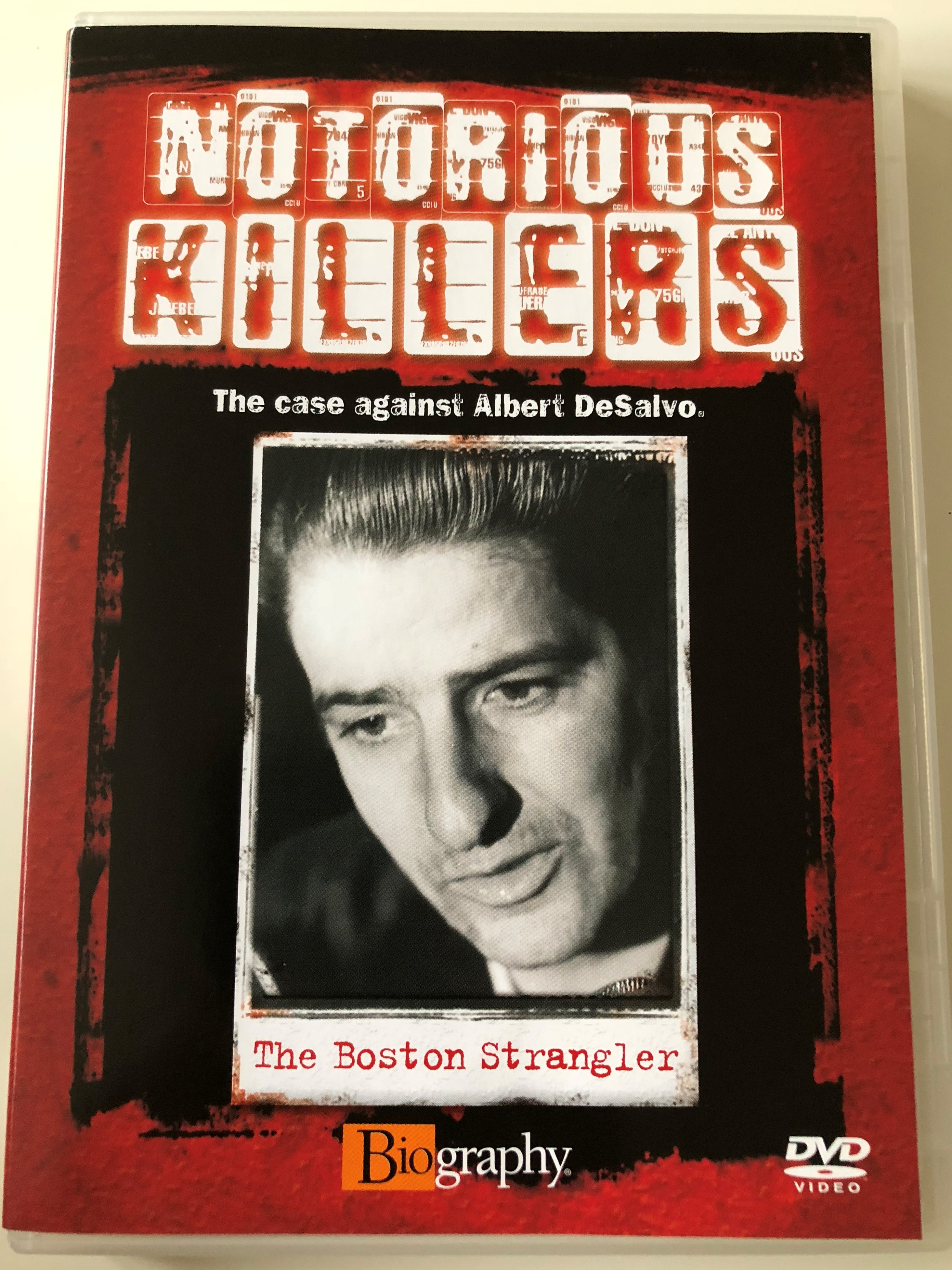
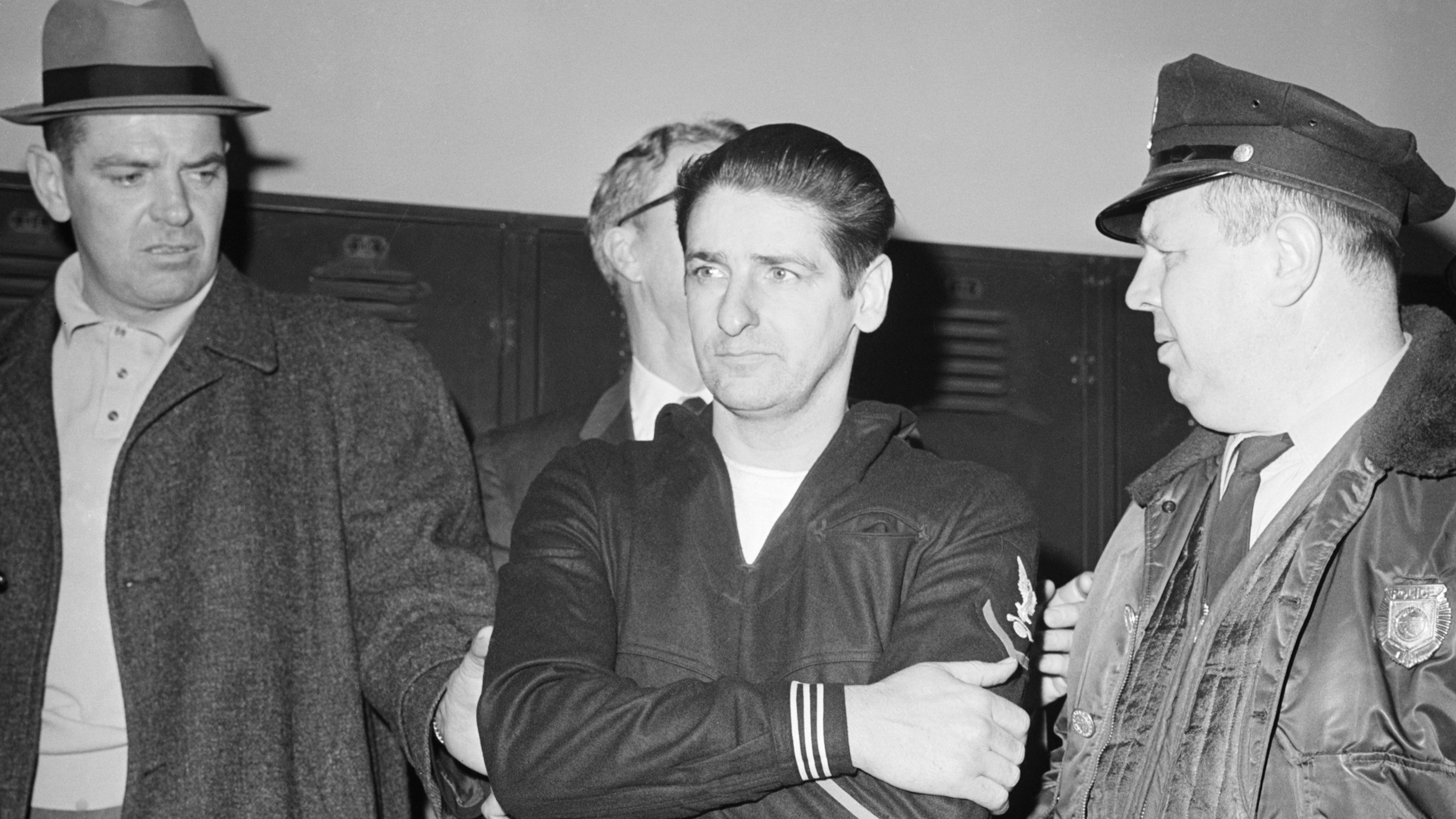
Albert DeSalvo was a convicted criminal who confessed to being the Boston Strangler, a serial killer responsible for the murders of 13 women in the Boston area between 1962 and 1964. While DeSalvo was never tried for these murders during his lifetime, 2013 DNA evidence finally linked him to the final victim.
The Reign of Terror: The Boston Strangler Murders (1962–1964)
Between June 1962 and January 1964, the city of Boston was paralyzed by a series of brutal homicides that targeted women ranging in age from 19 to 85. The "Boston Strangler" became a name synonymous with a specific, chilling modus operandi: victims were typically found strangled in their own homes, often with their own stockings or scarves tied in decorative bows around their necks. There were no signs of forced entry, leading investigators to believe the killer either knew the victims or was able to talk his way into their apartments by posing as a maintenance worker or deliveryman.
The atmosphere in Boston during this period was one of pervasive dread. Single women moved in together for safety, purchased additional locks, and avoided opening their doors to strangers. The police department faced immense pressure from the public and political figures to solve the cases, but the lack of forensic technology at the time made the investigation incredibly difficult. The disparate ages and backgrounds of the victims initially led some investigators to believe that more than one killer was at work—a theory that persists in some circles even today.
Identifying the Victims and the Modus Operandi
The victims of the Boston Strangler are generally accepted to be thirteen women. The first victims were older women, which initially led the police to profile the killer as someone with a specific fixation on the elderly. However, the profile shifted as the killer began targeting younger women in their 20s and 30s.
The common thread across almost all the scenes was the "signature" left by the killer. Beyond the act of strangulation, the killer often posed the bodies in sexually suggestive or degrading manners. This indicated a deep-seated psychological component to the crimes, one driven by power, control, and sexual deviance rather than simple robbery or random violence. This signature would eventually become a key point of comparison when Albert DeSalvo began providing details of the crimes that only the killer could have known.
The Path of Albert DeSalvo: From "The Measuring Man" to "The Green Man"
Albert DeSalvo’s criminal history began long before his name was associated with the Boston Strangler murders. Born in 1931 in Chelsea, Massachusetts, DeSalvo grew up in a violent and unstable household. His father was reportedly abusive, and DeSalvo began engaging in petty theft and animal cruelty at a young age. These early behaviors are often cited by modern criminal profilers as early warning signs of a burgeoning violent offender.
In the late 1950s and early 1960s, DeSalvo gained notoriety for a series of bizarre non-lethal crimes. He was first known as "The Measuring Man." In this persona, he would knock on women's doors, claiming to be from a modeling agency, and convince them to let him take their measurements. While these encounters were not initially violent, they demonstrated DeSalvo's ability to manipulate his way into private residences.
Following his "Measuring Man" phase, DeSalvo escalated his behavior, becoming "The Green Man." Dressed in green work clothes, he would enter homes—often through unlocked doors—and sexually assault women. It was for these "Green Man" crimes that DeSalvo was eventually apprehended in late 1964. At the time of his arrest, the police did not immediately connect him to the Boston Strangler murders, as the Green Man assaults did not involve homicide.
Criminal History and Psychological Profile
DeSalvo’s psychological profile was complex. During his time in Bridgewater State Hospital, he was described as a braggart with an insatiable need for attention and validation. He had an uncanny ability to recall minute details about his surroundings and his victims, which served him well when he eventually decided to confess to the strangulations.
Forensic psychiatrists who examined him noted a high degree of sociopathy. He lacked empathy and appeared to view his victims as objects for his own gratification or as characters in the narrative he was constructing for himself. Despite his violent tendencies, he could appear charming and mundane, a "mask of sanity" that allowed him to move through society without raising immediate suspicion. This duality is a hallmark of many serial offenders, making them particularly difficult to catch without physical evidence or a confession.
The Confession and the Legal Paradox
The turning point in the Boston Strangler case occurred in 1965. While being held at Bridgewater State Hospital for the Green Man assaults, DeSalvo confessed his crimes to a fellow inmate, George Nassar. Nassar, in turn, contacted his attorney, the famed F. Lee Bailey.
DeSalvo’s confession was exhaustive. He provided details about the thirteen murders that the police claimed had never been released to the public. He described the layout of the apartments, the specific knots used in the ligatures, and the dialogue he had with the victims. For many, this was the definitive proof that the Boston Strangler had finally been caught.
However, the legal system faced a significant hurdle. There was no physical evidence—no fingerprints, no blood samples (usable by 1960s standards), and no eyewitnesses who could definitively place DeSalvo at the scenes of the murders. Furthermore, DeSalvo was already facing a life sentence for the Green Man crimes. The prosecution felt that a trial for the murders was unnecessary and potentially risky, as a "not guilty" verdict due to lack of evidence could result in DeSalvo eventually being released.
The Role of F. Lee Bailey
F. Lee Bailey saw the DeSalvo case as an opportunity to change how the legal system handled mentally ill defendants. He hoped to use the confession to secure a "not guilty by reason of insanity" verdict, which would ensure DeSalvo remained in a psychiatric facility rather than a standard prison. Bailey argued that DeSalvo was a "compulsive killer" who could not control his impulses.
Ultimately, the deal Bailey sought never materialized in the way he intended. DeSalvo was tried and convicted for the Green Man assaults and sentenced to life in prison in 1967. The Boston Strangler murders remained officially unsolved in the eyes of the court, even though the public and the media largely accepted DeSalvo as the culprit. This created a lasting historical ambiguity that would not be resolved for nearly five decades.
Life and Death in Prison
Albert DeSalvo's time in prison was marked by the same desire for notoriety that characterized his earlier life. He became a celebrity inmate, selling signed autographs and small handcrafted items. He often talked about his "career" as the Strangler, though he occasionally recanted his confessions, only to reaffirm them later.
His life ended violently in 1973. While incarcerated at Walpole State Prison (now MCI-Cedar Junction), DeSalvo was found stabbed to death in his infirmary cell. The motive for the killing was never officially determined, though rumors circulated that it was related to DeSalvo's involvement in the prison's underground drug trade or that he had offended other inmates with his boastful nature.
His death left a void in the investigation. Without a living suspect to interview or a trial to conclude the matter, the Boston Strangler case became one of the most debated "cold cases" in American history. Skeptics pointed to discrepancies in his confessions and the fact that he was never physically linked to any of the crime scenes. For the families of the victims, his death provided little closure, as the shadow of doubt remained.
The 2013 DNA Revelation: Solving a Cold Case
For decades, the consensus on Albert DeSalvo was split. Some believed his confessions were the work of a pathological liar seeking fame, while others believed he was the sole perpetrator. This debate continued until 2013, when advancements in DNA technology allowed investigators to revisit the case of Mary Sullivan, the 19-year-old who was the Strangler’s final confirmed victim in January 1964.
Investigators exhumed DeSalvo’s body to obtain a direct DNA sample to compare against evidence found at the Sullivan crime scene. Specifically, seminal fluid found on a blanket and on the victim's body was tested using modern Y-STR DNA profiling. The results provided a "near-certain" match, with the chance of a random match being one in several billion.
The Impact of Forensic Science
The 2013 findings were monumental for several reasons:
- Direct Link: For the first time, Albert DeSalvo was scientifically linked to a Boston Strangler murder scene.
- Validation of Law Enforcement: The findings suggested that the original investigators were correct in their suspicion of DeSalvo, despite the limitations of 1960s technology.
- Closure for the Sullivan Family: After 49 years, Mary Sullivan’s family received definitive confirmation of her killer’s identity.
However, the DNA evidence only applied to the Sullivan case. Because the other crime scenes had not yielded similar biological evidence that survived the decades, the DNA match could not legally or scientifically prove that DeSalvo killed the other twelve women. While it strongly reinforced his confession, it did not entirely silence the critics who believed the Strangler might have been multiple people.
Lingering Doubts: Did DeSalvo Act Alone?
Despite the 2013 DNA match, the "multiple stranglers" theory remains a significant part of the case’s historiography. The theory suggests that while DeSalvo certainly killed Mary Sullivan (and likely others), he may have confessed to murders he did not commit to gain favor or notoriety.
The primary arguments for the multiple stranglers theory include:
- Victim Profiles: The radical shift from elderly women to young women was unusual for serial killers of that era.
- Witness Descriptions: Several witnesses provided descriptions of men seen near the crime scenes that did not resemble DeSalvo.
- Inconsistencies in Confessions: While DeSalvo knew many details, he also got several facts wrong, such as the color of a victim's clothing or the specific layout of certain rooms.
As of 2026, the prevailing historical and forensic view is that DeSalvo was responsible for most, if not all, of the murders. The 2013 evidence served as a "smoking gun" that tilted the scales of historical probability firmly in his direction.
Summary of the Boston Strangler Victims
The following table outlines the victims traditionally attributed to the Boston Strangler.
| Victim Name | Age | Date of Death | Cause of Death |
|---|---|---|---|
| Anna Slesers | 55 | June 14, 1962 | Strangled with bathrobe cord |
| Mary Mullen | 85 | June 28, 1962 | Heart attack (during assault) |
| Nina Nichols | 68 | June 30, 1962 | Strangled with stockings |
| Helen Blake | 65 | June 30, 1962 | Strangled with stockings |
| Ida Irga | 75 | August 19, 1962 | Strangled with pillowcase |
| Jane Sullivan | 67 | August 21, 1962 | Strangled with stockings |
| Sophie Clark | 20 | December 5, 1962 | Strangled with stockings |
| Patricia Bissette | 23 | December 31, 1962 | Strangled with stockings |
| Beverly Samans | 23 | May 8, 1963 | Stabbed and strangled |
| Evelyn Corbin | 58 | September 8, 1963 | Strangled with stockings |
| Joann Graff | 23 | November 23, 1963 | Strangled with stockings |
| Mary Sullivan | 19 | January 4, 1964 | Strangled with stockings |
Frequently Asked Questions
Was Albert DeSalvo ever convicted of the Boston Strangler murders?
No, Albert DeSalvo was never convicted of the murders. He was convicted and sentenced to life in prison for a series of sexual assaults known as the "Green Man" crimes. While he confessed to the murders, prosecutors chose not to take the murder cases to trial due to a lack of physical evidence at the time.
How did DNA evidence finally prove DeSalvo was the killer?
In 2013, investigators used advanced Y-STR DNA testing to compare a sample from the crime scene of Mary Sullivan with DNA obtained from DeSalvo’s nephew. This led to the exhumation of DeSalvo's body, which provided a direct match to the evidence found at the scene. This link confirmed his involvement in the final Strangler murder.
Why did DeSalvo confess if he wasn't going to be charged?
DeSalvo’s motives were complex. He was reportedly seeking a "not guilty by reason of insanity" verdict to avoid a standard prison sentence and spend his life in a psychiatric facility. Additionally, he was known to have a pathological need for attention and may have enjoyed the notoriety associated with being the city's most feared killer.
Could there have been more than one Boston Strangler?
While DNA evidence linked DeSalvo to the final victim, many experts and former investigators believe he may not have committed all thirteen murders. The differences in victimology and some witness statements led to theories that DeSalvo may have been "clearing the books" for other criminals or simply taking credit for murders he heard about through the prison grapevine.
What happened to Albert DeSalvo in prison?
Albert DeSalvo was stabbed to death in his cell at Walpole State Prison in November 1973. His killer was never identified, and his death effectively ended any chance of a formal trial for the Boston Strangler murders.
Practical Recommendation for Further Research
For those interested in the forensic and psychological nuances of the Albert DeSalvo case, the next step is to examine the official reports released by the Massachusetts Attorney General's Office following the 2013 DNA results. These documents provide a detailed look at the modern scientific methods used to close a 50-year-old cold case. Additionally, reading the contemporary accounts from the 1960s through the Boston Public Library’s digital archives can provide a profound sense of the societal impact and the "reign of terror" that gripped the city during DeSalvo's active years.