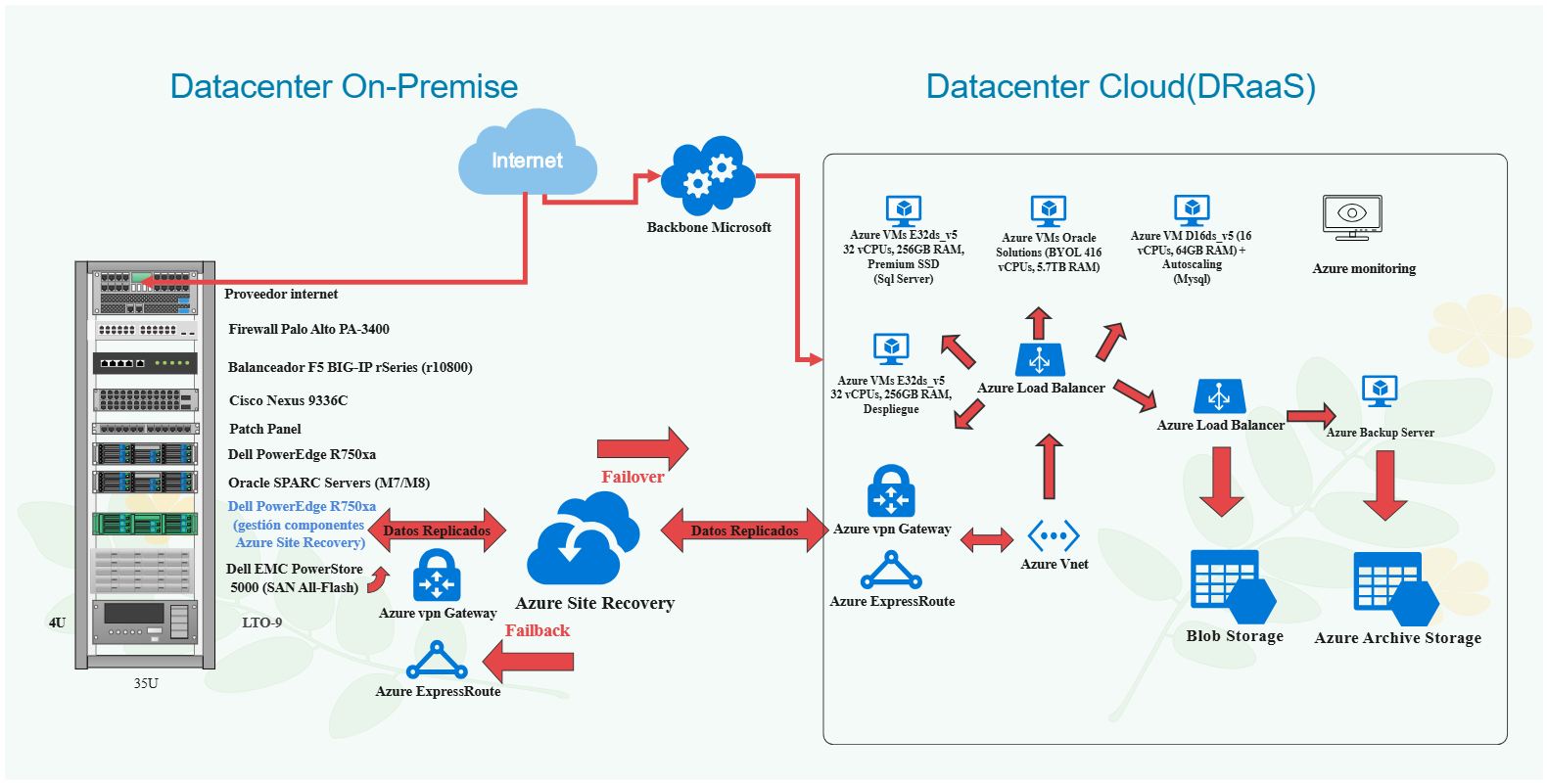
The administration of on-premise and cloud IT network switching and security infrastructure involves the unified management of physical hardware, virtualized networking components, and integrated security protocols to ensure seamless data flow and asset protection. By 2026, this role has evolved into a "Hybrid Network Architect" function, where administrators must synchronize local high-speed switching with software-defined cloud environments through automated orchestration and Zero Trust security frameworks.
The Evolution of Hybrid Infrastructure Administration in 2026
The landscape of network administration has shifted fundamentally from managing isolated hardware silos to overseeing a continuous fabric that spans local data centers, branch offices, and multiple cloud providers. In 2026, the primary challenge for administrators is no longer just "up-time," but rather "consistency of policy." Whether a packet travels across a physical Cisco Nexus switch in a local rack or through an AWS Transit Gateway in a remote region, the security posture and performance expectations must remain identical.
This convergence is driven by the maturation of Secure Access Service Edge (SASE) and Software-Defined Networking (SDN). Administrators now use centralized controllers to push configurations to physical switches (On-Premise) and virtual instances (Cloud) simultaneously. This holistic approach reduces configuration drift—the phenomenon where local and cloud settings deviate over time, creating security vulnerabilities and performance bottlenecks.
Core Components of On-Premise Switching Infrastructure
On-premise switching remains the backbone of the enterprise, providing the low-latency connectivity required for high-performance computing, local storage, and real-time communication.
High-Speed Hardware and Layer 3 Switching
By 2026, 400Gbps and 800Gbps switching fabrics have become common in core data center environments, supporting the massive data throughput required by localized AI model training and high-density virtualization. Administrators manage these via EVPN-VXLAN (Ethernet VPN - Virtual Extensible LAN), which allows for a flexible "spine-leaf" architecture. This topology provides predictable latency and scalable bandwidth, moving away from the older, more rigid three-tier (Core-Distribution-Access) models.
Multi-Gigabit Access and Wi-Fi 7 Backhaul
At the access layer, the administration of switching infrastructure now focuses on supporting Wi-Fi 7 (802.11be). These access points require Multi-Gigabit (2.5GbE, 5GbE, or 10GbE) Power over Ethernet (PoE++) connections. Administrators must carefully manage power budgets and link aggregation to ensure that the physical switching layer does not become a bottleneck for the high-capacity wireless signals.
Hardware Lifecycle and Firmware Governance
Administrative duties include the rigorous management of firmware versions. In a modern environment, this is rarely done switch-by-switch. Instead, tools like Cisco DNA Center or Juniper Mist are used to automate "Golden Image" compliance. This ensures every switch on the floor runs a verified, patched version of the operating system, mitigating the risk of hardware-level exploits.
Administering Cloud Networking Infrastructure
Cloud networking replaces physical cables and ASIC-based switches with software-defined constructs. The administrator’s role here is to design and maintain the virtual topology that connects cloud-native services.
Virtual Private Clouds (VPC) and VNETs
The fundamental unit of cloud administration is the Virtual Private Cloud (VPC) in AWS or the Virtual Network (VNet) in Azure. Administrators must define IP address schemes that do not overlap with on-premise ranges, a critical prerequisite for hybrid connectivity. Administration involves managing subnets, route tables, and internet gateways to control the flow of egress and ingress traffic.
Cloud-Native Routing and Interconnectivity
As organizations scale, they often deploy hundreds of VPCs. Administering this complexity requires the use of Transit Gateways or Azure Virtual WAN. These services act as regional hubs, consolidating traffic and simplifying the routing logic between different cloud accounts and the on-premise environment.
Load Balancing and Traffic Engineering
Cloud administration also encompasses the management of Application Load Balancers (ALB) and Global Server Load Balancing (GSLB). By 2026, these services are heavily integrated with automated scaling groups, requiring administrators to configure health checks and traffic-shifting logic that responds to real-time application demand.
Security Infrastructure: The Unified Defense Strategy
In a hybrid world, security cannot be an afterthought; it must be baked into the switching fabric. This is achieved through a combination of physical appliances and cloud-native security groups.
Zero Trust Architecture (ZTA)
Modern administration assumes that no user or device is trusted by default, regardless of whether they are on the local LAN or the cloud. Administrators implement Micro-segmentation, which divides the network into granular zones. If a single workload is compromised, the switching and security infrastructure prevents the threat from moving laterally to other parts of the network.
Next-Generation Firewalls (NGFW) and WAFs
- Physical Firewalls: Administering high-throughput appliances (e.g., Palo Alto Networks or Fortinet) at the edge of the on-premise network to inspect encrypted traffic at wire speed.
- Cloud Firewalls: Managing native services like AWS Network Firewall or Azure Firewall, which provide scalable, managed protection without the need for hardware maintenance.
- Web Application Firewalls (WAF): Specifically protecting Layer 7 (Application Layer) traffic from common exploits like SQL injection and cross-site scripting (XSS).
Identity-Based Security
The integration of Identity and Access Management (IAM) with network switching is a key administrative task. In 2026, network access is often granted based on the user's identity and device posture rather than just an IP address. Administrators configure 802.1X authentication for on-premise switches and OIDC/SAML integrations for cloud resource access.
Bridging the Gap: Hybrid Connectivity Solutions
The most complex task for the modern administrator is managing the "bridge" between on-premise and cloud.
| Feature | On-Premise Switching | Cloud Networking | Hybrid Link (SD-WAN/VPN) |
|---|---|---|---|
| Control Layer | Physical ASIC / SDN Controller | Software-Defined API | Orchestrator / Gateway |
| Scaling | Manual (Hardware Rack/Stack) | Elastic (On-demand) | Dynamic Bandwidth |
| Latency | Sub-millisecond (Local) | Variable (Regional) | Dependent on Provider |
| Maintenance | Physical/Cabling/Firmware | Configuration/API Updates | Tunnel Monitoring |
| Primary Tool | CLI / SNMP / Controller | Terraform / Cloud Console | SD-WAN Controller |
Dedicated Interconnects (Direct Connect / ExpressRoute)
For high-bandwidth, low-latency requirements, administrators oversee dedicated physical lines provided by carriers that link the local data center directly to the cloud provider's edge. This requires managing BGP (Border Gateway Protocol) peering sessions and ensuring redundancy to prevent a single point of failure from severing the hybrid link.
SD-WAN (Software-Defined Wide Area Network)
SD-WAN has become the standard for connecting branch offices to both the data center and the cloud. Administration involves defining "App-Aware" routing policies—for example, directing Zoom traffic directly to the internet while routing database traffic over a secure VPN to the on-premise core.
Network as Code (NaC) and Automation
By 2026, manual configuration via the Command Line Interface (CLI) is reserved for emergency troubleshooting. Standard administration is performed through Network as Code (NaC).
- Infrastructure as Code (IaC): Using tools like Terraform or Pulumi to define cloud networks, security groups, and load balancers.
- Configuration Management: Using Ansible or Python scripts to push consistent configurations to physical switches.
- CI/CD Pipelines for Networking: Changes to the network are proposed via "Pull Requests," validated in a virtual lab environment, and then automatically deployed to production. This approach ensures a searchable history of all network changes and allows for rapid rollbacks.
Monitoring, Observability, and AIOps
Administering these complex systems requires advanced monitoring that goes beyond simple "up/down" status.
Telemetry and Deep Packet Inspection
Modern switches stream real-time telemetry data instead of relying on the older, slower SNMP polling. Administrators use this data to identify "micro-bursts" of traffic that can cause dropped packets and application lag.
AIOps (Artificial Intelligence for Operations)
In 2026, AI-driven tools assist administrators by analyzing patterns and predicting failures. An AIOps platform might notice that a specific optical transceiver on a core switch is reporting increasing error rates and proactively suggest a replacement before the link fails. Similarly, in the cloud, AI tools can identify "orphaned" resources or over-provisioned networks to save costs.
Troubleshooting Common Hybrid Infrastructure Issues
When problems arise in a hybrid switching and security environment, the administrator must isolate the fault across multiple layers.
- MTU Mismatches: A frequent issue where cloud packets (which often have overhead from encapsulation) are too large for the on-premise physical switches to handle, leading to fragmented or dropped traffic.
- Asymmetric Routing: Traffic enters via one path (e.g., a VPN) but attempts to leave via another (e.g., a Direct Connect), causing stateful firewalls to drop the connection.
- Security Group vs. ACL Conflicts: An administrator might open a port on a physical firewall but forget to update the corresponding Cloud Security Group, resulting in a "silent drop" of traffic.
- Latency Spikes: Investigating whether latency is occurring in the "Middle Mile" (the internet/provider network) or within the local switching fabric due to congestion.
Frequently Asked Questions
What is the difference between a Network ACL and a Security Group?
A Network Access Control List (NACL) is a stateless layer of security at the subnet level that controls inbound and outbound traffic. A Security Group is stateful (it remembers the connection) and acts at the instance/resource level. Administering both provides "defense in depth," but requires careful coordination to avoid blocking legitimate traffic.
How has Wi-Fi 7 impacted on-premise switching administration?
Wi-Fi 7 supports speeds up to 46Gbps, which necessitates a complete overhaul of the access layer switching. Administrators must ensure that switches support Multi-Gigabit (mGig) ports and have sufficient PoE++ (802.3bt) capacity, as Wi-Fi 7 access points consume significantly more power than previous generations.
Why is BGP essential for hybrid cloud administration?
BGP (Border Gateway Protocol) is the "language" of the internet and is used to exchange routing information between your on-premise network and the cloud provider. It allows for dynamic path selection, meaning if one connection fails, the network can automatically reroute traffic through a backup tunnel without manual intervention.
What are the benefits of using a SASE model for security?
SASE (Secure Access Service Edge) combines networking (SD-WAN) and security functions (Firewall-as-a-Service, Zero Trust) into a single cloud-delivered service. For an administrator, this means managing security policies in one place rather than configuring dozens of individual firewalls and switches across different locations.
Is hardware switching knowledge still relevant in a cloud-first world?
Yes. Cloud environments ultimately run on physical hardware. Understanding how ASICs (Application-Specific Integrated Circuits), buffers, and physical frames work is crucial for troubleshooting high-performance hybrid environments, especially when performance issues originate at the physical interconnect or data center core.
Practical Recommendation for Administrators
For organizations operating in 2026, the most effective strategy for administering hybrid switching and security infrastructure is to adopt a "Cloud-First" management mindset for on-premise hardware. This means selecting physical switches that offer robust API support and can be managed by the same orchestration tools used for cloud deployments.
Prioritize the implementation of a unified observability platform that can ingest telemetry from both physical Cisco/Arista switches and cloud-native logs. Finally, invest in Network as Code training for your team; the ability to manage infrastructure through version-controlled scripts is no longer an optional skill—it is the baseline for maintaining a secure, scalable, and resilient modern network.