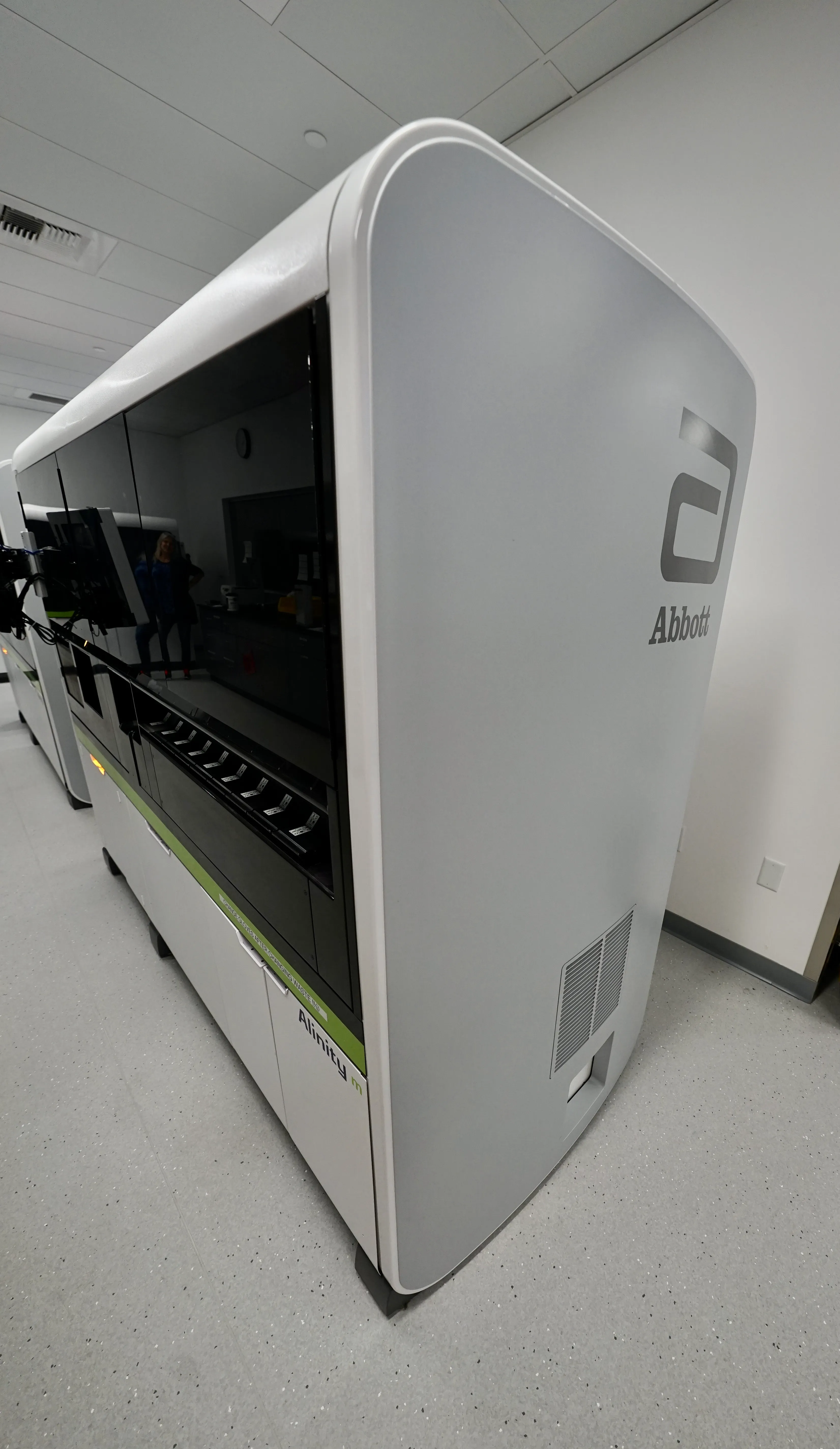
Abbott’s Diagnostic Division is a global leader in medical testing, providing a massive ecosystem of instruments, assays, and informatics across core laboratories, point-of-care settings, and molecular facilities. It enables healthcare providers to make critical clinical decisions with speed and precision through automation, high-throughput systems, and decentralized diagnostic tools.
The Core Mission of Abbott Diagnostics in 2026
By 2026, the Abbott Diagnostic Division has solidified its position at the intersection of high-capacity laboratory science and decentralized, patient-centric testing. The primary mission of this division remains the transformation of healthcare through data-driven insights. It is widely acknowledged in the medical community that approximately 70% of all clinical decisions are influenced by diagnostic test results. Abbott’s role is to ensure these results are not only accurate but also delivered within timeframes that allow for immediate clinical intervention.
The division operates through several specialized segments, each designed to address specific challenges within the healthcare continuum. From massive "core" labs in metropolitan hospitals that process thousands of samples an hour to hand-held devices used in remote clinics, the scope of Abbott Diagnostics is vast. In the current 2026 landscape, the focus has shifted heavily toward "smarter" diagnostics—integrating artificial intelligence (AI) and machine learning to predict instrument maintenance needs and optimize laboratory workflows.
The Technological Pillars: The Alinity Family
The cornerstone of Abbott’s diagnostic strategy is the Alinity family of systems. Launched to harmonize testing across different laboratory disciplines, Alinity was designed based on extensive feedback from laboratory professionals who demanded more efficiency in smaller footprints.
Alinity ci-series (Clinical Chemistry and Immunoassay)
The ci-series is the workhorse of the modern hospital laboratory. These systems integrate clinical chemistry and immunoassay testing into a single, scalable platform. The "c" stands for chemistry (testing for substances like glucose, cholesterol, and electrolytes), while the "i" stands for immunoassay (detecting proteins, hormones, and infectious disease markers using antibody-antigen reactions).
In 2026, the ci-series is prized for its increased throughput per square meter, allowing labs to handle rising test volumes without expanding their physical footprint. The integration of "load-on-the-fly" reagents and samples means the system rarely needs to stop, maximizing uptime in high-stress environments.
Alinity m (Molecular Diagnostics)
Molecular diagnostics represents one of the fastest-growing sectors within the division. The Alinity m system utilizes Polymerase Chain Reaction (PCR) technology to detect the genetic material of pathogens. This platform provides "random access," a technical breakthrough that allows laboratory technicians to run any test at any time, rather than waiting to "batch" similar samples together. This is critical for the rapid detection of infectious diseases, including HIV, hepatitis, and respiratory viruses.
Alinity s and h (Transfusion and Hematology)
The Alinity s (Screening) system is dedicated to transfusion medicine, ensuring the safety of the global blood supply by screening donated blood for infectious agents. Meanwhile, the Alinity h-series focuses on hematology, providing rapid complete blood counts (CBC) and automated morphology, which are essential for diagnosing anemias, infections, and leukemias.
Point-of-Care (POC) and Rapid Diagnostics
While large-scale laboratory systems are essential, there is an increasing demand for testing that happens at the "point of care"—the bedside, the physician’s office, or even the pharmacy. Abbott’s acquisition of Alere in 2017 significantly expanded its footprint in this area.
i-STAT Systems
The i-STAT 1 and i-STAT Alinity are hand-held, portable blood analyzers. Using just a few drops of blood, these devices can provide results for blood gases, electrolytes, and coagulation markers in minutes. In 2026, these are standard equipment in Emergency Departments (ED) and Intensive Care Units (ICU), where waiting for a central lab result could delay life-saving treatment.
Rapid Lateral Flow Tests
Abbott is also the manufacturer behind well-known rapid testing brands like BinaxNOW and Panbio. These lateral flow immunoassays allow for the rapid detection of respiratory syncytial virus (RSV), influenza, and other pathogens. These tools have become indispensable for public health surveillance and decentralized screening, moving the power of the lab into the hands of community health workers and even consumers.
Comparison of Abbott Diagnostic Platforms
The following table compares the primary platforms within the Abbott Diagnostic Division based on their 2026 operational profiles.
| Platform | Diagnostic Segment | Primary Environment | Key Advantage |
|---|---|---|---|
| Alinity ci-series | Core Laboratory | High-volume Hospitals | Integrated chemistry and immunoassay |
| i-STAT Alinity | Point of Care | ER, ICU, Ambulances | Real-time results from 2-3 drops of blood |
| Alinity m | Molecular | Specialty & Reference Labs | High-throughput, random-access PCR |
| BinaxNOW | Rapid Diagnostics | Clinics, Pharmacies | No instrument required; 15-minute results |
| Alinity s | Transfusion | Blood Banks | High-speed screening for blood safety |
| AlinIQ | Informatics | Enterprise-wide | Data-driven workflow optimization |
Informatics and the Digital Ecosystem: AlinIQ
In 2026, a diagnostic division is only as strong as its software. Abbott’s AlinIQ is a professional services and informatics portfolio that acts as the "brain" of the laboratory. It addresses the "hidden" costs of diagnostics, such as inefficient workflows, reagent waste, and staffing shortages.
The AlinIQ suite includes:
- Inventory Management (AMS): Automates the ordering and tracking of supplies to prevent stockouts.
- Operational Services (BIS): Uses business intelligence to identify bottlenecks in sample processing.
- Always On: A predictive analysis tool that monitors instrument health in real-time to prevent unexpected breakdowns before they occur.
This digital layer is vital for "Value-Based Healthcare," a model where providers are rewarded for patient outcomes rather than the volume of tests performed. By reducing the "Turnaround Time" (TAT), Abbott’s informatics help clinicians discharge patients sooner or begin treatment faster, reducing overall hospital costs.
Implementation and Laboratory Integration
For a healthcare institution to adopt Abbott Diagnostic systems, several rigorous phases must be navigated. These are not simple "plug-and-play" devices; they are sophisticated medical instruments that require specific environmental and regulatory conditions.
Prerequisites and Requirements
- Infrastructure: High-throughput Alinity systems require specific power, climate control (to keep reagents stable), and plumbing for liquid waste management.
- LIS Integration: The instruments must be seamlessly interfaced with the hospital's Laboratory Information System (LIS) and Electronic Health Records (EHR). This ensures that when a doctor orders a test, the request goes directly to the machine, and the result returns to the patient's digital file automatically.
- Regulatory Validation: Before clinical use, every lab must perform validation studies to prove that the Abbott system meets the accuracy and precision standards required by bodies like the CLIA (Clinical Laboratory Improvement Amendments) in the U.S. or the ISO 15189 standards internationally.
Training and Support
Abbott provides extensive training through the "Abbott Diagnostics Academy." In 2026, this involves a mix of on-site technical training and augmented reality (AR) modules that allow lab techs to practice troubleshooting complex hardware without taking the machine offline.
Global Impact and Supply Chain Resilience
Operating in over 160 countries, the Abbott Diagnostic Division faces significant logistical challenges. The global medical landscape of 2026 prioritizes supply chain resilience. To combat the disruptions seen in previous years, Abbott has diversified its manufacturing base and implemented "Smart Logistics" tracking.
Their impact is most visible in infectious disease management. In regions with limited infrastructure, Abbott’s rapid diagnostic tests provide the first line of defense against outbreaks. In developed economies, their core lab systems enable the management of chronic diseases like diabetes and heart disease by providing accurate long-term monitoring (e.g., HbA1c and Troponin assays).
Addressing Common Challenges
Despite the advanced technology, users and lab managers often face hurdles:
- Cost of Ownership: While the instruments themselves are capital investments, the ongoing cost of proprietary reagents and maintenance contracts can be significant. Many labs opt for "Reagent Rental" agreements where the cost of the machine is amortized over the price of the tests performed.
- Complexity of Menu: As the menu of available tests (assays) grows, labs must manage a wider variety of reagents, each with specific shelf lives and storage requirements.
- Interoperability: While Abbott systems work perfectly together, integrating them with equipment from other manufacturers (like Roche or Siemens) requires robust middleware solutions.
Frequently Asked Questions
How can patients access their results from an Abbott diagnostic test?
Patients typically do not interact with the Abbott Diagnostic Division directly. Results are sent from the Abbott instrument to the hospital's Laboratory Information System (LIS) and then to the patient's healthcare provider. Patients can usually view these results through their provider’s patient portal (e.g., MyChart) or by requesting a paper copy from the clinic.
What makes the Alinity system different from older Abbott systems like the ARCHITECT?
The Alinity system offers a higher "test density," meaning it can perform more tests in a smaller physical space. It also introduces standardized user interfaces across different disciplines (chemistry, molecular, etc.), which reduces the training time for staff who need to operate multiple types of machines. Furthermore, Alinity was designed for continuous loading, whereas older systems often required pauses to add more samples or reagents.
Are Abbott's rapid tests as accurate as their laboratory tests?
Accuracy depends on the specific test and the clinical situation. Laboratory tests (like PCR on the Alinity m) are the "gold standard" because they can detect very low levels of a pathogen. Rapid tests (like BinaxNOW) are highly accurate when a person has a high viral load and is most infectious. They are designed for speed and accessibility rather than the maximum sensitivity provided by a core lab.
How does Abbott Diagnostics support "Green" laboratory initiatives?
In 2026, Abbott has significantly reduced the waste generated by diagnostic testing. The Alinity systems are designed to minimize liquid waste and use concentrated reagents to reduce packaging bulk. Additionally, the digital informatics suite helps labs reduce sample re-runs, which saves both reagents and energy.
Does Abbott Diagnostics provide testing for rare diseases?
Yes, primarily through their Molecular and Specialty Immunoassay menus. While high-volume tests like glucose are their bread and butter, the Alinity m and specialized ARCHITECT modules support assays for rare infectious diseases, genetic markers, and specialized oncology targets.
Practical Recommendation for Healthcare Administrators
If you are evaluating the Abbott Diagnostic Division for a facility upgrade in 2026, the focus should not merely be on the hardware (the instruments) but on the informatics integration. The Alinity platforms provide the raw power, but the AlinIQ software suite provides the efficiency necessary to survive in a high-cost healthcare environment.
Begin with a "Workflow Value Mapping" exercise—offered by Abbott's consulting arm—to determine exactly where bottlenecks occur in your current setup. For most medium-to-large facilities, a consolidated Alinity ci-series footprint, backed by AlinIQ BIS for data analytics, offers the best return on investment by reducing manual labor and shortening the time it takes for a physician to receive a result and begin treatment.