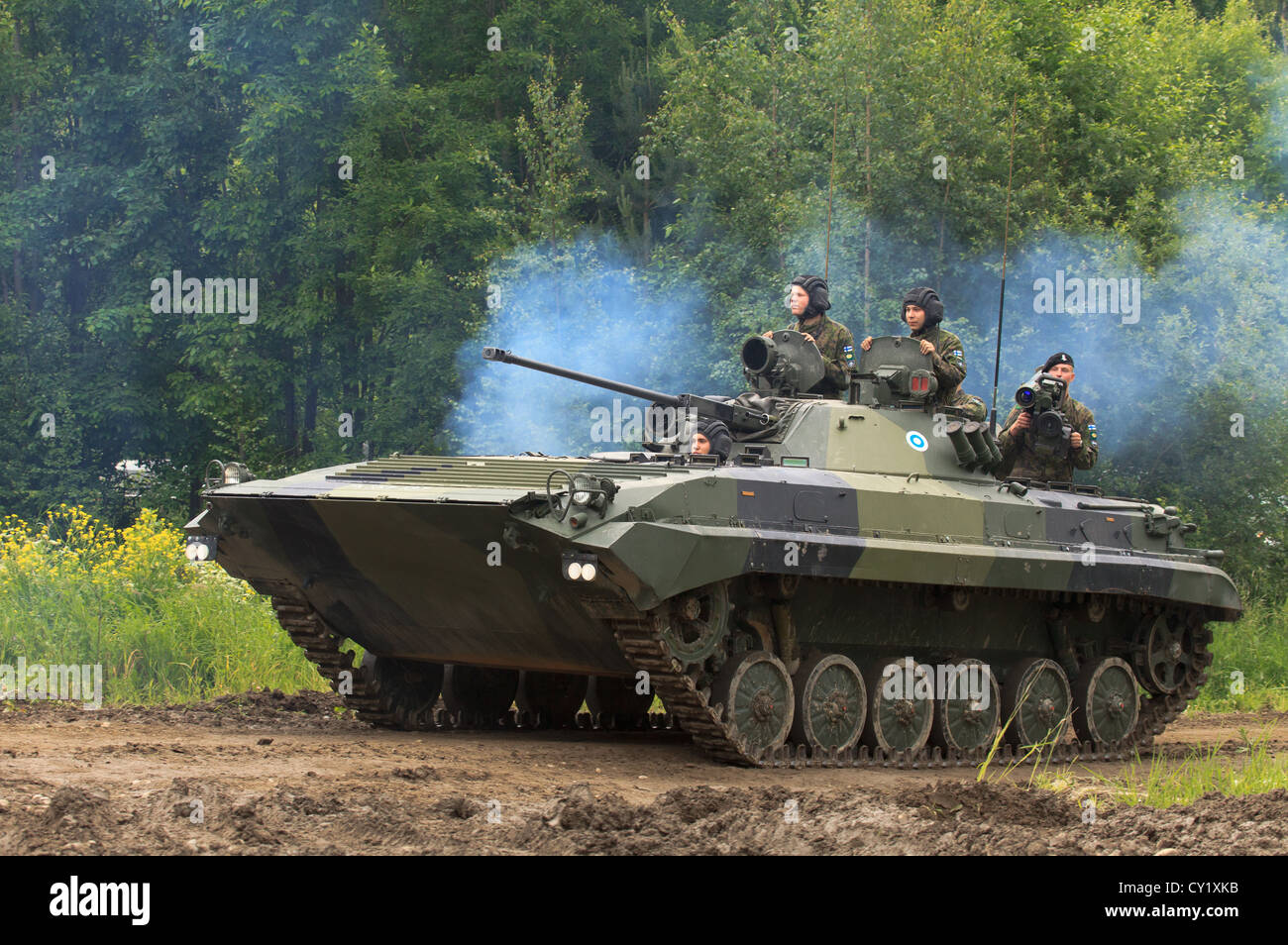
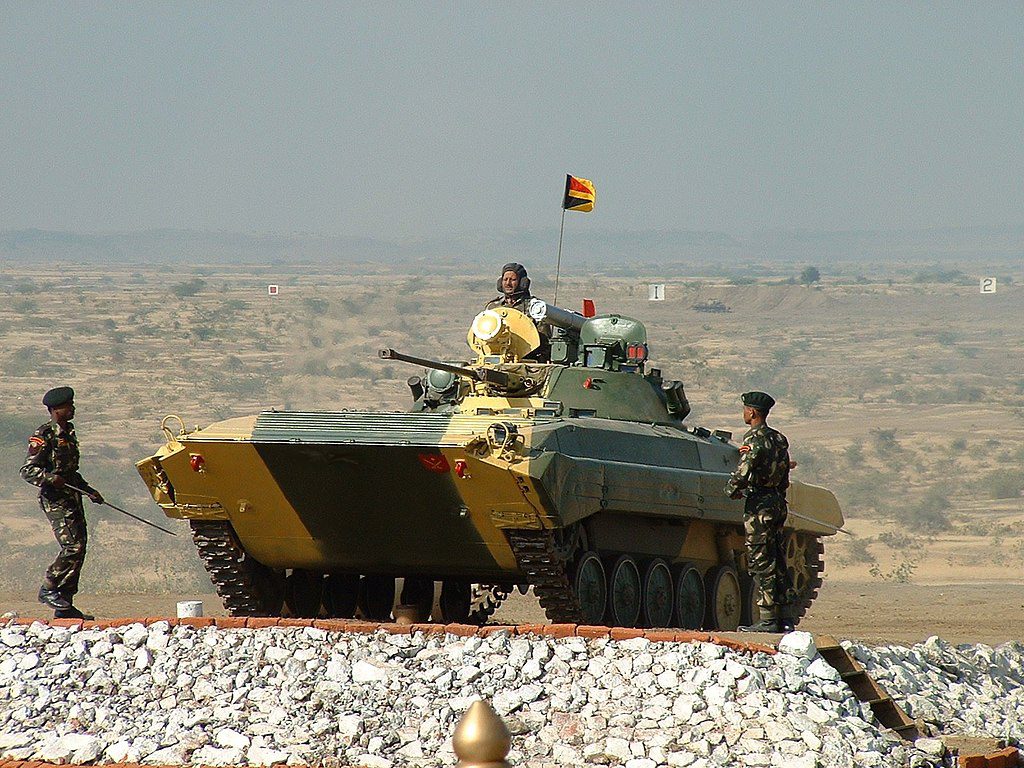
The interior layout of the BMP-2 Infantry Fighting Vehicle (IFV) directly controls how mechanized infantry units move, fight, and survive on the modern battlefield. By constraining troop capacity to seven dismounts, placing fuel tanks inside rear exit doors, isolating key squad members, and restricting internal stowage for modern tactical gear, the BMP-2's internal environment forces commanders to adapt dismount tactics, speed, and endurance during armored operations.
Technical Overview of the BMP-2 Interior Architecture
First introduced by the Soviet Union in the late 1970s and deployed extensively worldwide, the BMP-2 (Boyevaya Mashina Pekhoty 2) represented a major design shift from its predecessor, the BMP-1. The most significant structural modification was replacing the single-man turret with a enlarged, two-man turret housing both the vehicle commander and gunner. While this change dramatically improved the vehicle's firepower via the 30mm 2A42 autocannon and 9M113 Konkurs anti-tank guided missile (ATGM) system, it directly compressed the internal hull space dedicated to dismounted infantry.
- ENGINE / TRANSMISSION (Front Right)
- DRIVER (Front Left) | TROOP SEAT #1 (Behind Driver)
- TWO-MAN TURRET (Gunner Left | Commander Right)
- REAR TROOP COMPARTMENT
- Seat #2, Seat #3, Seat #4 (Facing Left)
- Seat #5, Seat #6 (Facing Right)
- REAR DOOR (Fuel) | REAR DOOR (Fuel)
The BMP-2 hull divides into four main operational compartments:
- Engine-Transmission Compartment: Located in the front right of the hull to provide additional frontal ballistic protection for the crew.
- Control Compartment: Located in the front left, containing the driver’s station and, immediately behind it, a single isolated troop seat.
- Fighting Compartment: The centralized two-man turret housing the vehicle commander (right side) and gunner (left side), along with ammunition belts, fire-control systems, and radio equipment.
- Troop Compartment: Located in the rear third of the vehicle, designed to hold six infantrymen sitting back-to-back along the vehicle's longitudinal axis.
Understanding how these architectural choices impact physical ergonomics, tactical communication, and combat egress reveals why the BMP-2 interior remains a primary operational variable for mechanized forces.
1. Squad Capacity Reduction and Split-Seating Dynamics
The transition from the BMP-1 to the BMP-2 reduced the organic dismount capacity from eight infantrymen to seven. This change was necessitated by the larger floor projection of the two-man turret, which consumed critical central volume inside the hull.
| Operational Parameter | BMP-1 | BMP-2 |
|---|---|---|
| Turret Configuration | 1-man (Gunner only) | 2-man (Gunner & Commander) |
| Organic Troop Capacity | 8 dismounts | 7 dismounts |
| Rear Compartment Seating | 8 (4 per side, back-to-back) | 6 (3 per side, back-to-back) |
| Forward Troop Seating | 0 (Commander behind driver) | 1 (Trooper behind driver) |
| Organic Squad Integrity | Full squad in rear | Fractured (6 rear / 1 fwd) |
Tactical Impact of the 6+1 Seating Arrangement
The seven-man seating layout introduces a major command-and-control obstacle for infantry leaders:
- The Forward Seat Isolation: One dismount sits in the control compartment directly behind the driver, forward of the main turret ring. This soldier is completely separated from the six soldiers in the rear compartment by the mass of the two-man turret basket and bulkhead walls.
- Fireteam Disruption: Standard infantry doctrine relies on two balanced four-man fireteams (or two three-man teams plus a squad leader). The BMP-2 layout forces units to deploy either a reduced six-man dismount force or incorporate the isolated forward soldier, who is often delayed during rear dismount operations.
- Operational Adaptations: In practice, units frequently assign the forward seat to a secondary radio operator, an assistant gunner, or a dedicated vehicle guard. Alternatively, modern units omit the seventh trooper entirely to allow extra space for ammunition and anti-tank weaponry, effectively reducing the dismount element to six soldiers.
2. Egress Restrictions and Rear Door Fuel Hazard
The rear dismount doors are the primary exit route for soldiers under combat conditions. However, the internal geometry of the troop bay and the physical construction of these doors significantly dictate egress speed and casualty risks.
| Architectural Element | Physical Design Feature | Direct Operational Impact |
|---|---|---|
| Rear Doors | Integral 60L fuel tanks with heavy mechanical locks | High fire risk during breach; restricted exit |
| Vertical Overhead | ~1.23m internal height | Severe troop fatigue; slow emergency egress |
| Central Walkway | Narrow passage between back-to-back seat frames | Gear snagging; obstacle for casualty evacuation |
| Firing Ports | Ball mount with optical periscope & gas evacuation | Mounted fire capability; reduced sightlines & fumes |
| Forward Troop Position | Isolated seat behind driver separated by turret wall | Delayed dismount; broken squad vocal contact |
Mechanical Bottlenecks During Dismounts
- Door Width and Opening Radius: The rear doors are narrow and swing outward on heavy manual hinges. Soldiers dismounting in full tactical gear—including modern body armor plates, combat loads, and helmets—must exit in single file, stooping significantly to clear the top frame.
- Fuel Cell Vulnerability: The two rear doors are not merely entry points; they are hollow steel structures containing integral diesel fuel tanks (holding approximately 60 liters of fuel each). While intended to extend operational cruising range, an anti-armor hit or heavy heavy-machine-gun strike penetrating the rear doors can ignite fuel directly adjacent to troops preparing to exit.
- Secondary Hazards: During high-intensity breaches, soldiers must clear the latch mechanisms manually. If fuel lines inside the doors leak from blast vibration or penetrations, the interior compartment floor quickly becomes slick, increasing fallout risks during rapid dismount drills.
3. Severe Ergonomic Constraints and Physical Fatigue
The internal height of the BMP-2 troop compartment is approximately 1.23 meters (about 4 feet). This extremely low profile was selected during design to minimize the vehicle's battlefield silhouette, reducing target presentation to enemy anti-tank weapons. However, it imposes extreme physical strain on embarked personnel.
Physical Degradation Over Distance
- Spinal and Joint Compression: Infantrymen must sit in a permanent forward-hunch posture. Long cross-country road marches over rough terrain compress the spine and strain lower back muscles, leaving troops physically compromised upon reaching the drop-off zone.
- Combat Vest Interference: The seats are narrow bench frames with basic padding. When troops wear modern rigid plate carriers, the depth of the body armor forces their torsos forward, further reducing legroom and causing knees to press against forward bulkheads or facing gear.
- Heat and Dehydration: The internal environment gathers significant engine heat conducted through the front bulkhead, alongside thermal output from six active soldiers. Combined with limited cabin airflow during closed-hatch operations, physical exhaustion and heat stress build up rapidly.
4. Storage Deficits for Modern Gear and Squad Weaponry
The BMP-2 interior was engineered around the Soviet Cold War infantry loadout: a basic fatigue uniform, soft web gear, an AK-74 assault rifle, and a small canvas supply pouch. Modern dismounted infantry carry significantly bulkier equipment, creating acute storage conflicts inside the hull.
- FRONT BULKHEAD / TURRET BASKET
- Rear Troop Compartment Seating:
- [Trooper 1] [Trooper 2] [Trooper 3] (Sitting facing Left)
- Central Seat Back / Storage Space
- [Trooper 4] [Trooper 5] [Trooper 6] (Sitting facing Right)
- REAR FUEL DOORS / EXIT POINT
Critical Equipment Stowage Deficits
- Anti-Tank Guided Missiles (ATGMs) and Disposable Rockets: Modern squad tactics require organic anti-armor weapons (such as RPG-22/26/30 rockets, NLAW, or Javelin containers). The BMP-2 lacks designated internal racks for large modern missile launch tubes. As a result, these munitions are often stored directly on the center aisle floor, creating tripping hazards that block rapid exits.
- Night Vision and Electronic Countermeasures: Sensitive electronics, battery charging stations, and counter-improvised-explosive-device (C-IED) jammers require secure, shock-isolated mounting points. In the BMP-2, forces must fabricate custom field mounts or secure equipment with cargo straps, risking gear damage during off-road transport.
- Ammunition Handling Restrictions: The central floor channel must remain clear to allow access to floor hatches and structural tie-downs. Stowing extra 30mm belt boxes for the vehicle's 2A42 cannon further reduces the remaining floor volume for troop backpacks and mission-essential gear.
5. Tactical Utility and Drawbacks of Firing Ports
The BMP-2 troop compartment includes three firing ports along each side of the hull and one in the left rear door, allowing troops to engage targets without dismounting.
Mounted Engagement Mechanics
- Weapon Compatibility: The side ports feature ball mounts specifically engineered to lock the barrel of an AK-74 or AKM assault rifle into place. The forward-most port on the left side is designed for a PKM general-purpose machine gun.
- Periscope Sightlines: Each firing port is paired with a TNPO-170ET optical periscope mounted directly above the port. These optics offer a fixed, narrow field of view, making target acquisition difficult when moving across rough terrain.
- Propellant Gas Evacuation: Each firing port includes a mechanical hose connector that attaches to the weapon's flash suppressor to vent toxic propellant gases outside the vehicle via internal extraction fans. In active combat, these hoses are frequently damaged, disconnected, or incompatible with modern short-barreled carbines, leading to gas accumulation inside the troop cabin during prolonged firings.
6. Forward Trooper Isolation and Command Disconnection
As noted in the seating analysis, the seventh infantry seat is located directly behind the driver, forward of the turret ring. This specific location creates unique operational complications during combat drop-offs.
- Isolated Compartment:
- [Driver] | [FORWARD TROOPER]
- Solid Mechanical Barrier:
- TURRET BASKET
- Rear Troop Compartment:
- [Rear Troop Compartment: 6 Infantrymen]
Challenges Facing the Forward Trooper
- Acoustic Isolation: The forward trooper is separated from the rear troop bay by the engine bulkhead, turret mechanics, and heavy structural framing. Engine noise and hull vibration make unamplified voice communication with the squad leader impossible.
- Egress Delay and Risk: The forward trooper exits via an individual top hatch located directly above the seat. Emerging from a top hatch during an ambushed movement exposes the soldier to elevated small-arms and artillery fragmentation hazards compared to soldiers exiting through the lower rear doors.
- Role Reassignment: Due to these vulnerabilities, modern doctrine often leaves this forward seat empty during assault operations, using the space instead for extra radio equipment, additional ammunition storage, or emergency rations.
7. Noise, Vibration, and Environmental Hazards
The structural design of the BMP-2 exposes dismounted infantry to high ambient noise and severe mechanical vibration, directly affecting physical performance upon reaching the objective.
Mechanical Noise and Internal Acoustics
The engine and transmission sit directly to the right of the driver and forward trooper, separated only by an uninsulated metal bulkhead. At cruising speeds, sound levels in the hull often exceed 100 decibels.
- Communication Impairment: Infantrymen must rely on internal intercom headsets (if functioning) or hand signals. Without specialized noise-canceling headsets, squad members cannot receive updated tactical orders from the vehicle commander while under way.
- Spatial Disorientation: High noise levels combined with the lack of side windows leave troops inside the rear compartment unaware of terrain details or fire direction outside, increasing disorientation during sudden dismounts.
NBC Protection vs. Air Quality
The BMP-2 includes a collective PAZ nuclear, biological, and chemical (NBC) protection system.
- Overpressure System: The PAZ system seals the hull and pressurizes the interior with filtered air to prevent airborne contaminants from entering.
- Thermal Drawbacks: When active in hot environments, the system provides minimal air cooling. Ambient temperatures inside the cabin can climb quickly, causing thermal stress, heavy sweating, and dehydration before troops ever cross the line of departure.
Tactical Summary for Operations and Modernization
To evaluate how the BMP-2 interior shapes unit performance, defense analysts and military planners compare its operational features against structural realities:
| Feature | Tactical Advantage | Operational Limitation |
|---|---|---|
| Low Interior Height | Low battlefield profile; harder for enemies to hit | Extreme physical fatigue; difficult emergency exit |
| Dual Fuel Rear Doors | Extended vehicle range without external trailers | Serious fire hazard during door breach |
| Hull Firing Ports | Suppression fire during mounted movement | Narrow sightlines; fumes build up if unvented |
| Compact Hull Volume | High amphibious mobility and transit speed | Severely restricted room for modern body armor |
Practical Field Recommendations for Mechanized Units
- Optimize Dismount Loadouts: Streamline personal gear. Forces operating inside BMP-2s should favor low-profile plate carriers and quick-detach chest rigs to prevent snagging during emergency egress through narrow rear doors.
- Clear the Central Aisle: Keep all anti-tank launch tubes, ammunition crates, and backpacks lashed to external hull racks or secured along structural side rails rather than loose on the central aisle floor.
- Reassign the Forward Seat: Use the isolated seat behind the driver for extra supplies, organic C-IED gear, or auxiliary radios rather than a rifleman who would be isolated from the main rear dismount element.
- Enforce Exit Drills: Standardize strict single-file egress sequences, training troops to clear the door frames fluidly while wearing full tactical kit to minimize exposure time during dismounts.
Frequently Asked Questions
Why was the BMP-2 troop capacity reduced from eight to seven compared to the BMP-1?
The BMP-2 replaced the single-man turret of the BMP-1 with a larger two-man turret housing both a commander and gunner. The physical basket structure and rotation mechanism of this larger turret extended deeper into the hull floor, consuming space that previously accommodated the eighth infantryman.
How do modern body armor and tactical gear affect dismounting from a BMP-2?
Modern rigid body armor plates, helmet setups, and loaded chest rigs significantly increase a soldier's physical profile. In a cabin designed around minimal 1970s gear, this extra bulk forces troops into cramped positions, slows movement down the central aisle, and increases the likelihood of gear snagging on door latches during rapid dismounts.
What risks do the rear fuel-door cells present in active combat?
The twin rear dismount doors contain integral 60-liter fuel tanks designed to extend cruising range. In combat, armor-piercing or high-explosive rounds penetrating the rear doors can ignite this fuel, creating an intense fire hazard directly across the squad's primary escape route.
Can soldiers inside a BMP-2 fire their personal weapons while moving?
Yes. The BMP-2 features seven dedicated firing ports (three along each side of the hull and one in the left rear exit door) fitted with ball mounts and overhead periscopes. These allow soldiers to attach their rifles or light machine guns to engage enemy targets from within the armored hull.
Why is the seat behind the driver considered isolated from the rest of the squad?
The seat behind the driver sits forward of the main turret assembly in the control compartment. It is physically separated from the six rear troop seats by the turret structure, engine bulkheads, and mechanical systems. This layout prevents direct line-of-sight and vocal communication with the squad leader in the rear compartment.
How does internal noise inside the BMP-2 affect tactical communications?
Engine operation, track movement, and weapon systems produce high interior noise levels, often exceeding 100 decibels. Without functioning intercom systems or specialized active-noise-reduction headsets, dismounts cannot hear verbal orders, leaving them reliant on hand signals and reducing tactical awareness before dismounting.