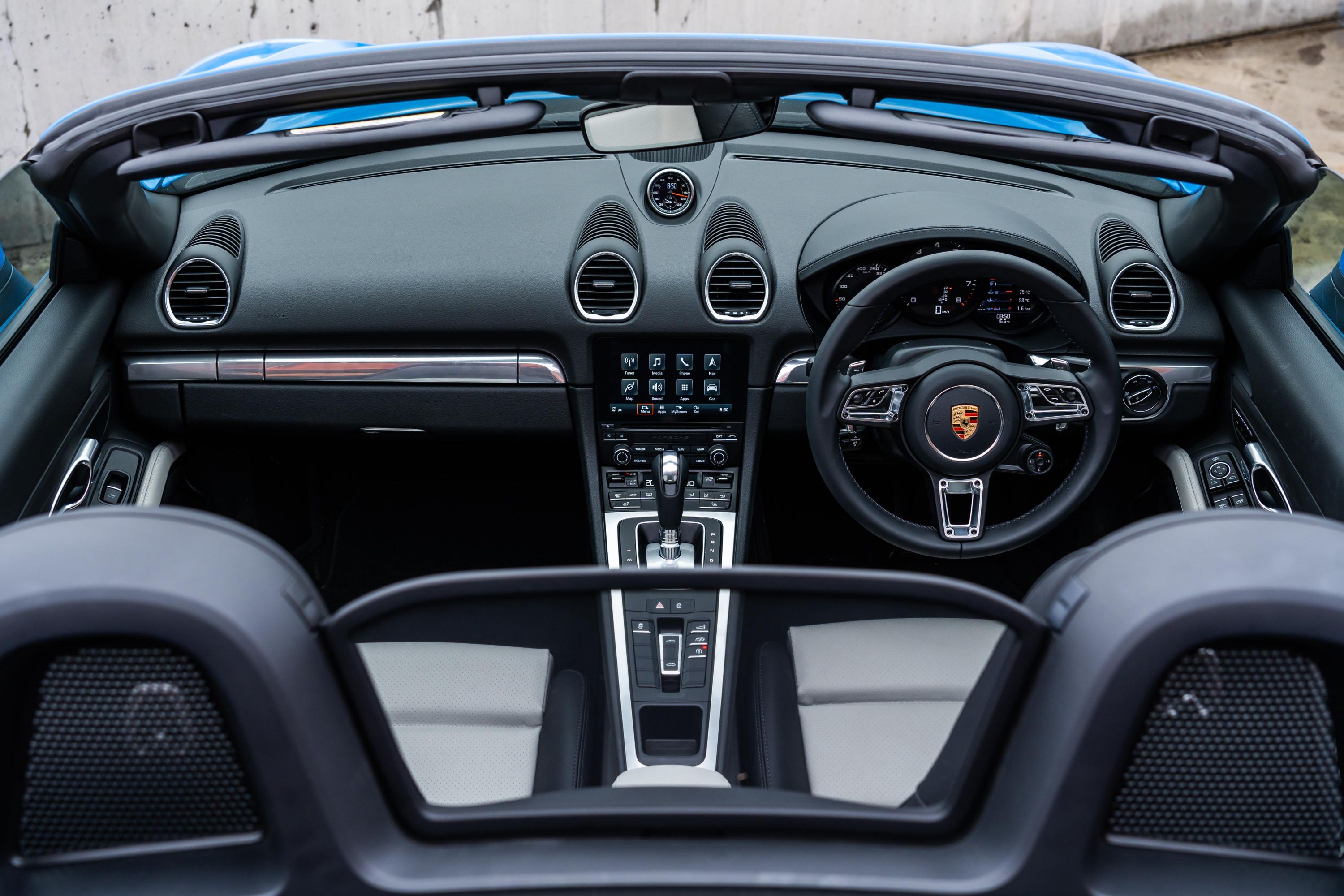
The Porsche 718 Boxster interior brilliantly balances high-performance ergonomics with everyday luxury, featuring a driver-focused cockpit, intuitive infotainment systems, highly supportive sport seats, premium material customization options, and smart open-top packaging that maximizes storage without sacrificing comfort.
Introduction to the Porsche 718 Boxster Interior Philosophy
When enthusiasts discuss the Porsche 718 Boxster (encompassing variants like the Cayman's drop-top sibling, including the Base, S, GTS 4.0, and historical milestones such as the Spyder and GT4 RS derivatives), the conversation almost always begins with the mid-engine driving dynamics and the distinctive howl of its flat-four or flat-six engines. However, spending time with a 718 Boxster reveals that its cabin is equally engineered for purpose. The interior layout is designed around a single core mission: placing the driver in absolute command while providing the comfort expected of a modern luxury sports car.
Unlike grand tourers that prioritize sprawling space or executive sedans focused on rear-seat luxury, the Boxster cabin is an intimate, highly focused space. Every dial, switch, and surface reflects decades of motorsport evolution adapted for road use. Understanding the cabin requires looking past the badge to examine the hardware, layout, and ergonomics that define the contemporary mid-engine Porsche experience.
1. Driver-Centric Ergonomics and the Instrument Cluster
The primary responsibility of any sports car cockpit is to eliminate friction between driver input and mechanical response. In the 718 Boxster, this philosophy is most evident in the arrangement of the driver's environment, starting with the classic three-gauge instrument cluster anchored by a prominent central tachometer.
The Analog-Digital Hybrid Cluster
Porsche retains a traditional analog tachometer at the center of the instrument panel—a nod to its motorsport heritage—flanked by a physical speedometer on the left and a 4.6-inch high-resolution color display on the right. This multi-function screen provides vital telemetry, including navigation maps, tire pressure monitoring, g-force readouts, and audio track selections, all viewable without forcing the driver to look away from the road ahead.
Steering Wheel and Controls
The standard sport steering wheel is scaled down for quick, tactile feedback, and can be upgraded to the GT sport steering wheel for an even more mechanical, purposeful rim thickness. Paddle shifters for the lightning-quick Porsche Doppelkupplung (PDK) dual-clutch transmission are mounted directly to the back of the wheel. Meanwhile, secondary controls for audio, phone, and menu navigation are kept simple and physical, minimizing the distraction of complex menus during high-speed driving.
2. Porsche Communication Management (PCM) and Infotainment Integration
While the 718 Boxster is an analog machine at heart, its digital infrastructure provides modern connectivity without overwhelming the minimalist dashboard design.
| Infotainment Component | Functionality & Specifications |
|---|---|
| Central Touchscreen | 7-inch high-resolution multi-touch display |
| Smartphone Integration | Apple CarPlay compatibility (Android Auto via select) |
| Navigation System | Real-time traffic information and online map updates |
| Audio Options | Sound Package Plus, Bose Surround, or Burmester |
The 7-Inch Touchscreen Interface
Centered neatly in the middle of the dash—flanked by two distinct round air vents—is the 7-inch Porsche Communication Management (PCM) system. The interface utilizes high-contrast glass panels that remain legible even with the fabric top lowered in direct sunlight. Response times are brisk, and the menu structure avoids deep sub-folders for common functions.
Connectivity and Audio
Apple CarPlay is integrated for seamless smartphone mirroring, allowing drivers to access navigation apps, messaging, and music libraries safely. To combat wind noise when cruising with the roof down, Porsche offers tiered acoustic upgrades. Buyers can step up from the standard Sound Package Plus to the optional Bose Surround Sound System or the ultra-premium Burmester High-End Surround Sound System, ensuring pristine audio clarity regardless of road speed.
3. Seating Architecture: Comfort Meets Lateral Support
A sports car seat must perform two conflicting duties: keep the occupant firmly planted against aggressive cornering forces on a track, yet remain comfortable enough for a multi-hour cross-country tour.
Standard Sport Seats vs. Adaptive Sport Seats Plus
- Standard Sport Seats (2-way electric): These seats offer comfortable bolstering and power-adjustable backrests, providing an excellent balance of daily drivability and support.
- Sport Seats Plus (2-way or 18-way electric): Highly recommended by enthusiasts, these seats feature elevated side bolsters on both the cushion and backrest made from firmer foam. The 18-way variants add extensive pneumatic adjustments for side bolsters, lumbar support, and seat length, accommodating a wide range of body types.
- Full Bucket Seats: Derived directly from motorsport, these carbon-fiber-reinforced polymer (CFRP) shells are fixed-back options designed for track duty, shaving significant weight while offering maximum lateral retention.
Climate and Materials
To maximize top-down driving windows across all seasons, the seats can be specified with both three-stage heating and active ventilation. Upholstery choices range from standard leather-and-Alcantara (Race-Tex) combinations to supple full-grain club leather in heritage-inspired colors like Bordeaux Red or Cognac.
4. Extensive Customization and Material Quality
One of the defining traits of any Porsche interior is the sheer breadth of personalization available through the Porsche Exclusive Manufaktur program. No two Boxster cabins need look alike.
Materials and Trim Finishes
The dashboard, door cards, and center console can be swathed in premium hides, contrasting stitching, and exotic trim materials. Owners can specify:
- Carbon Fiber: For a high-tech, motorsport-inspired aesthetic.
- Brushed Aluminum: Providing a cool, metallic, industrial contrast.
- Open-Pore Wood: Adding classic luxury warmth.
- Leather-Wrapped Air Vents and Steering Column Casing: Elevating tactile touchpoints throughout the cabin.
Contrast and Detail
Attention to detail is evident in minor elements such as seatbelt colors matching the brake calipers or exterior paint, illuminated door sill guards in stainless steel or carbon fiber, and custom-embossed Porsche crests on the headrests. This bespoke approach ensures that the cabin feels handcrafted and deeply personal.
5. Clever Open-Top Packaging and Dual-Trunk Utility
Mid-engine architecture creates unique spatial packaging advantages that front-engine sports cars simply cannot replicate. Because the engine sits directly behind the passenger cell rather than in front of it, the 718 Boxster avoids the traditional single rear cargo hold compromise.
The Front Trunk (Frunk) and Rear Trunk
- The Front Trunk: Offering 5.2 cubic feet (150 liters) of volume, the frunk is surprisingly deep and well-shaped, easily accommodating a carry-on suitcase, soft duffel bags, or grocery runs.
- The Rear Trunk: Situated behind the engine bay, the rear trunk provides an additional 4.4 cubic feet (125 liters) of space. Even when the fully automatic fabric roof is folded down into its compartment, it does not infringe upon the rear luggage space.
Cabin Storage Solutions
Inside the cockpit, designers utilized available space efficiently. The doors feature clever pop-out storage pockets that expand when needed, a deep glovebox, a center console armrest compartment with USB connectivity, and integrated cup holders that deploy smoothly from a concealed slot above the dashboard.
Frequently Asked Questions
Is the Porsche 718 Boxster interior comfortable for long trips?
Yes. Despite its sporty mission, the Boxster cabin is exceptionally well-insulated when the roof is raised, and wind buffeting is minimized with the mesh wind deflector in place. Selecting the 18-way Adaptive Sport Seats Plus and the Bose audio system ensures long-distance touring remains fatigue-free.
Does the 718 Boxster have Apple CarPlay?
Yes, Apple CarPlay is supported through the Porsche Communication Management (PCM) system. It requires a wired USB connection located inside the center console storage bin.
How does luggage space work with the soft top down?
Unlike folding hardtops that consume nearly all trunk space when retracted, the 718 Boxster uses a compact fabric soft top that folds into a dedicated slim stack behind the seats. This design ensures that luggage capacity in both the front and rear trunks remains entirely unaffected whether the top is up or down.
What is the difference between standard seats and Sport Seats Plus?
Standard seats prioritize ease of entry and exit with moderate side bolstering. Sport Seats Plus feature deeper, firmer side bolsters on the seat cushion and backrest to keep the driver and passenger securely anchored during high-lateral-G cornering maneuvers.
Can the interior trim be customized from the factory?
Porsche offers extensive personalization through its Exclusive Manufaktur program. Buyers can customize everything from leather seat colors and contrast stitching to carbon fiber dash inserts, colored instrument dials, and leather-wrapped fuse box covers.
Conclusion and Next Actions
The Porsche 718 Boxster interior is a masterclass in functional design, proving that performance ergonomics and everyday livability do not have to be mutually exclusive. From its analog tachometer and driver-focused PCM screen to its supportive seating and dual-trunk practicality, every square inch of the cabin serves a deliberate purpose. If you are considering purchasing or configuring a 718 Boxster, your best next step is to visit a local Porsche center to test-drive models equipped with different seat configurations—particularly comparing the standard seats against the Sport Seats Plus—to find the exact balance of lateral support and long-distance comfort that suits your driving style.