Catching a meteor shower tonight depends entirely on timing, local astronomical twilight, moon phases, and your geographic horizon, with peak visibility typically occurring between midnight and dawn when Earth faces directly into the path of orbiting meteoroid streams.
Understanding the Dynamics of Meteor Showers
Stargazing during a meteor shower is one of the most accessible and awe-inspiring astronomical events available to the public. Unlike eclipses or planetary alignments, observing shooting stars requires no expensive telescopes, specialized filters, or advanced technical training. However, successfully witnessing a high volume of meteors requires a clear understanding of orbital mechanics, atmospheric conditions, and human visual physiology.
A meteor shower occurs when Earth passes through the orbital debris trail left behind by a comet or, occasionally, an asteroid. These trails are composed of tiny dust grains, pebbles, and rocky fragments known as meteoroids. As Earth plows through these cosmic debris fields at speeds often exceeding 40 miles per second, the particles collide with our upper atmosphere, typically between 50 and 80 miles above the surface.
The intense kinetic energy of this collision compresses and rapidly heats the air molecules in front of the particle. This thermal ionization causes the air to glow brightly, creating the luminous streak across the night sky known as a meteor. What most observers call a "shooting star" is actually a glowing pocket of atmospheric gas energized by a grain of space debris no larger than a pebble or a grain of sand.
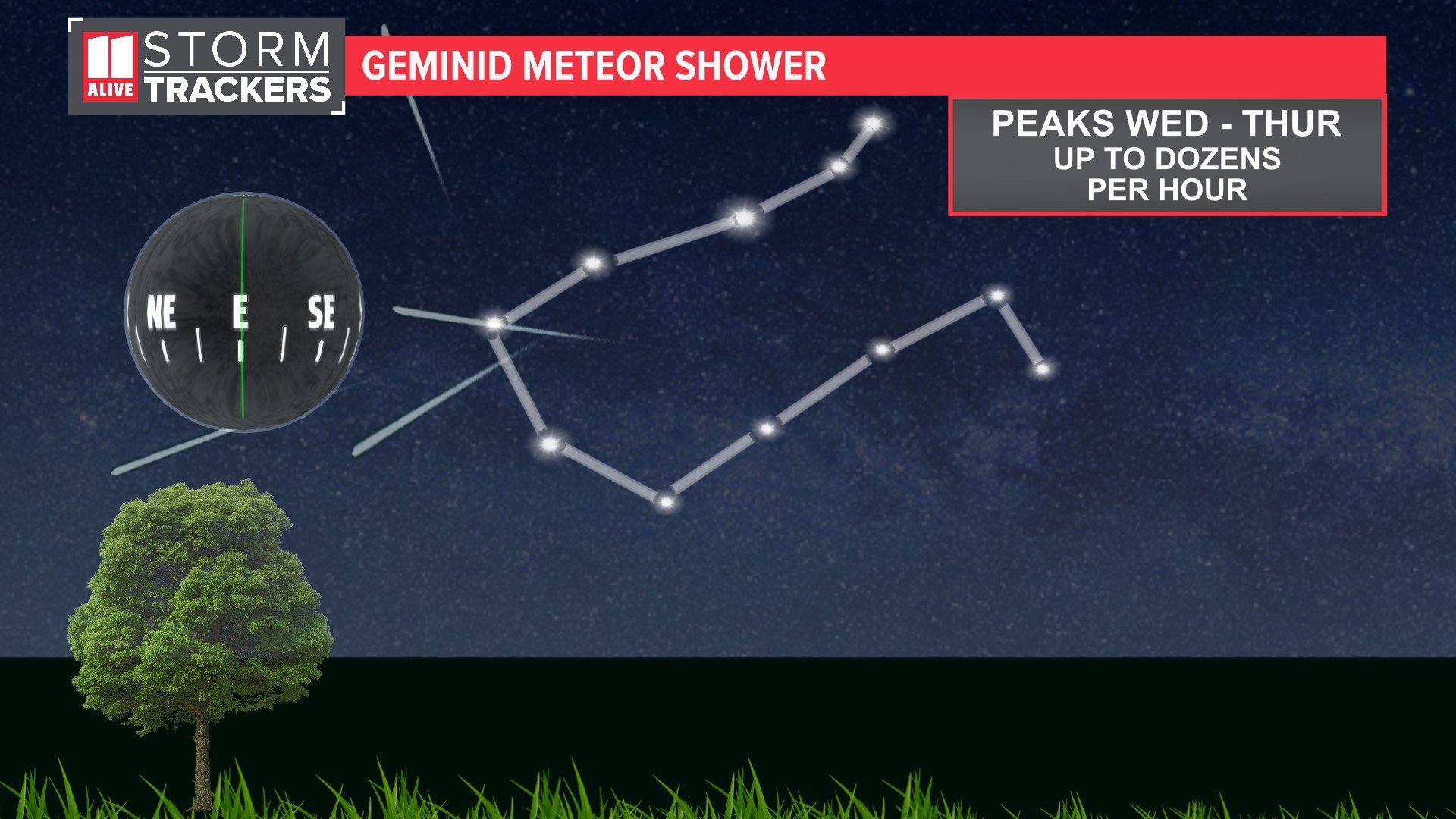
Optimizing your viewing experience requires navigating several environmental variables. The density of the debris stream, the radiant point of the constellation from which the meteors appear to originate, local light pollution, and the presence or absence of moonlight all dictate how many meteors you will actually see per hour. By breaking down the night into distinct chronological windows, you can strategically select the 5 best times to watch tonight’s meteor shower to maximize your visual yield.
Time Window 1: Astronomical Twilight (The Early Dusk Window)
The first viable window for spotting meteors begins during astronomical twilight, shortly after the sun has set completely below the horizon and the sky has reached its maximum darkness before pitch-blackness. While this is not the most productive time for total meteor counts, it offers unique advantages for dedicated observers.
What to Expect During Twilight
During astronomical twilight, the upper atmosphere is still illuminated by direct or scattered sunlight from below the horizon. As a result, only the brightest meteors—often referred to as fireballs—will be visible against the deep indigo background. Fainter meteors will be washed out by residual atmospheric scattering.
However, this window is exceptional for capturing earthgrazers. Earthgrazers are meteors that enter the Earth's atmosphere at a very shallow angle relative to the horizon. Because they travel a longer path through the upper atmosphere, earthgrazers tend to be exceptionally long-lasting, slow-moving, and brightly colored, frequently leaving persistent trails of ionized gas that can linger for several seconds.
Strategic Advantages
- Lower Light Pollution Contradictions: Early evening hours often coincide with lower industrial and municipal activity in rural or semi-rural areas before late-night commercial lighting shifts.
- Favorable Radiant Angles: For certain showers, the radiant point may be relatively low on the eastern horizon during twilight, making horizontal entry paths more common.
- Acclimation: Arriving at your viewing site during twilight allows your eyes to adjust gradually to the fading light, minimizing the sudden transition from indoor lighting to total darkness.
Time Window 2: Evening Prime Time (Post-Midnight Buildup)
As the Earth rotates throughout the evening, your specific geographic location turns away from the sun and rotates directly into the orbital path of the oncoming meteoroid swarm. This mechanical rotation is the fundamental driver behind why meteor rates increase significantly as the night progresses.
The Mechanics of Earth's Rotation
Imagine driving a car through a heavy swarm of insects. The front windshield of your vehicle collects the vast majority of bugs, while the rear window remains relatively clear. In astronomical terms, the evening side of Earth (dusk) is akin to the rear window, while the morning side of Earth (dawn) is the front windshield.
During the early evening hours (roughly 9:00 PM to midnight), you are on the "trailing" side of Earth. Any meteors you see during this window must catch up to the Earth from behind, resulting in slower entry velocities and lower overall hourly rates. Despite this limitation, this window is vital for family-friendly viewing, casual stargazers, and establishing baseline visibility conditions.
Optimizing the Evening Window
During this phase, focus your attention on wide expanses of the sky rather than staring directly at the radiant constellation. Meteors will flash across all quadrants of the sky, and tracing them backward reveals their origin point.
| Time Window | Relative Meteor Rate | Speed of Meteors | Best Target Audience |
|---|---|---|---|
| Astronomical Twilight | Low (Fireballs only) | Very Slow | Photographers, casual observers |
| Evening Prime Time (9 PM - 12 AM) | Moderate-Low | Slow (Catch-up orbit) | Families, beginners |
| Pre-Dawn Peak (2 AM - 4 AM) | High | Fast (Head-on collision) | Dedicated astronomers |
| True Apex (4 AM to Dawn) | Maximum (Zenith Rate) | Maximum Velocity | Experienced meteor counters |
| Post-Dawn Twilight | Decreasing | Fast | Scientific data recorders |
Time Window 3: The Pre-Dawn Peak (The Golden Hours)
The absolute zenith of meteor observation occurs during the pre-dawn hours, typically spanning from 2:00 AM to 4:00 AM local time. This is universally recognized by astronomers as the prime window for any major annual meteor shower, including the Perseids, Geminids, and Leonids.
Why Rates Surge Before Dawn
By 3:00 AM, the rotation of the Earth has carried your location to the absolute leading edge of the planet's orbital trajectory. You are no longer chasing the meteoroids; the meteoroids are crashing head-on into the atmosphere above you at combined velocities that can exceed 45 miles per second.
This high-speed collision dramatically increases the brightness and frequency of the meteors. Hourly rates during the pre-dawn window can be three to ten times higher than rates recorded during the early evening hours. If you can only commit to a single window of time for your observation session, this is the definitive period to prioritize.
Physiological and Environmental Factors
- Dark Adaptation: By 3:00 AM, your eyes have achieved complete scotopic vision (dark adaptation), maximizing the sensitivity of your rod cells to faint light.
- Diminishing Moon Interference: Depending on the lunar cycle, the moon may have set below the western horizon by this hour, drastically reducing sky glow and revealing hundreds of fainter background stars.
- Atmospheric Stability: In many geographic regions, the lower atmosphere cools and stabilizes during the pre-dawn hours, reducing thermal turbulence and improving image sharpness for optical instruments or naked-eye viewing.
Time Window 4: The True Apex (Astronomical Dawn)
As the clock ticks past 4:00 AM and marches toward the first glimmers of morning twilight, you enter the true apex of the meteor shower event. While the sheer number of visible meteors remains exceptionally high, a new environmental factor enters the equation: the approach of the sun.
Balancing High Rates with Sky Brightness
During the true apex window, the geometric advantage of facing directly into the meteor stream is at its absolute maximum. However, the upper atmosphere is beginning to catch the first scattered rays of sunlight, causing the background sky to transition from black to deep blue.
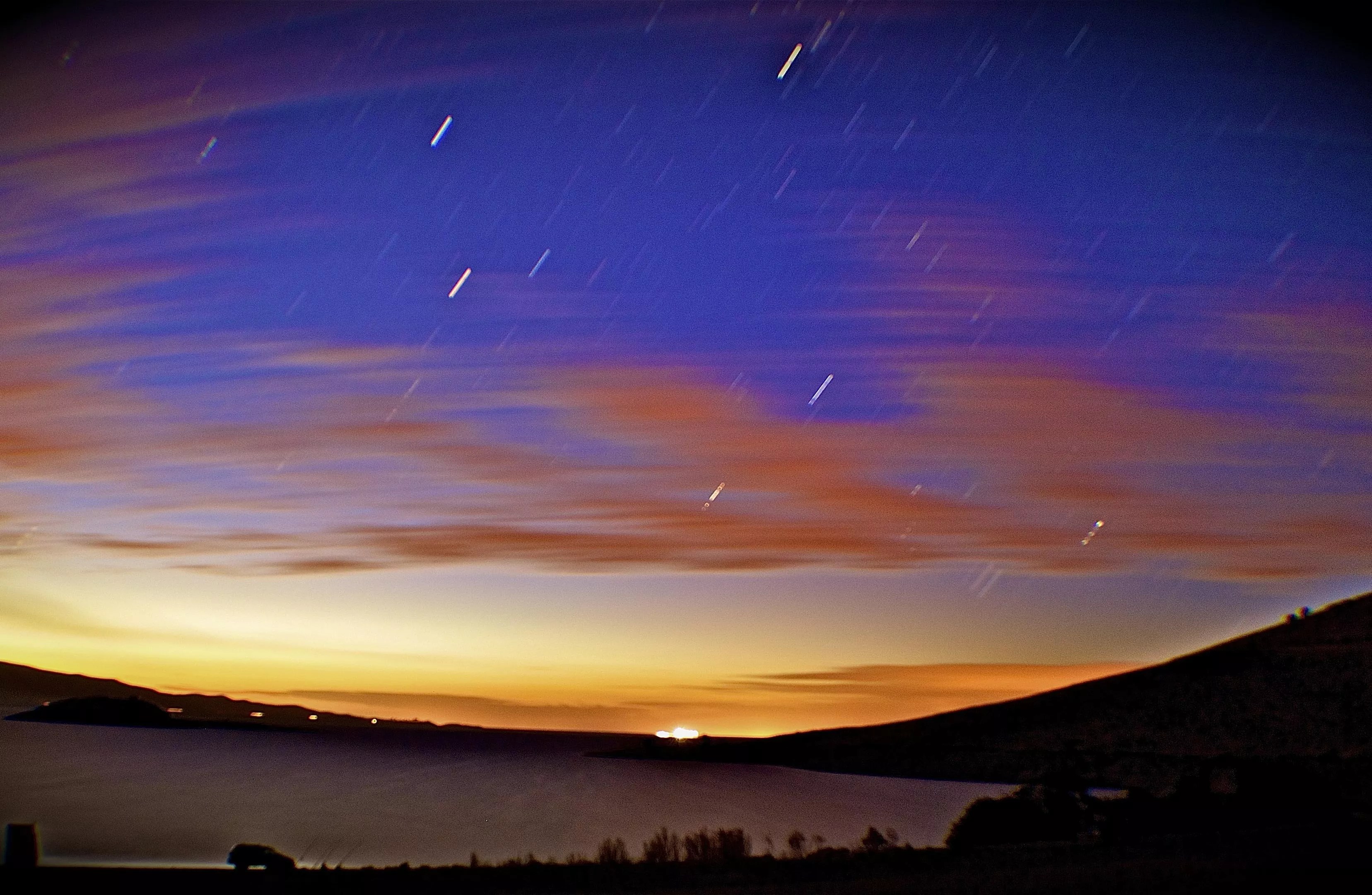
This creates a fleeting, high-stakes observational window where the brightest meteors continue to pop vividly against a brightening canvas, while fainter meteors begin to disappear from view. Experienced meteor observers prize this window for capturing dramatic wide-field photography, as the colorful dawn horizon provides a stunning terrestrial backdrop for long-exposure camera shots featuring bright shooting stars.
Time Window 5: Morning Twilight (The Final Flash)
The final viable window occurs during morning twilight, just before the sun breaches the eastern horizon and completely washes out the night sky.
Observing in the Light
While standard meteors are no longer visible once the sun is up, sporadic fireballs or exceptionally bright shower members can occasionally still be caught by sharp-eyed observers during the earliest moments of morning twilight.
This period is also essential for wrapping up equipment, assessing photographic results, and ensuring all gear is safely packed away. For citizen scientists submitting meteor counts to organizations like the International Meteor Organization (IMO), this final window marks the official cutoff for recording data for the night's observation log.
Essential Preparation and Viewing Equipment
To make the most of these five windows, proper preparation is critical. Even during summer months, dropping temperatures and still air during the pre-dawn hours can lead to rapid chilling.
What to Bring for Optimal Stargazing
- Zero-Gravity Chair or Reclining Loungers: Straining your neck to look straight up for hours leads to physical fatigue. Reclining chairs allow you to view the entire vault of the sky comfortably.
- Red-Light Flashlights: White light destroys your night vision, requiring up to 30 minutes to recover. Use red filtered flashlights or a red-light app on your phone to check star charts or gear.
- Warm Layers and Blankets: Ground moisture and radiative cooling cause significant drops in body temperature during the pre-dawn peak. Dress in heavy layers, wool socks, and windproof jackets.
- No Optical Aids Required: Binoculars and telescopes actually hinder meteor watching by drastically narrowing your field of view. The naked eye is your best instrument because it covers the largest expanse of sky possible.
Frequently Asked Questions
Do I need to look directly at the radiant point to see meteors?
No. In fact, staring directly at the radiant point will result in you seeing very few meteors, as the ones originating there travel straight toward you and appear only as short, stationary flashes. Meteors seen near the radiant have very short trails, while those seen 45 to 90 degrees away from the radiant exhibit long, sweeping, dramatic streaks across the sky.
Why can't I see many meteors during the early evening hours?
During the early evening, the hemisphere of Earth you are standing on is facing away from the direction of Earth's orbital travel. Consequently, meteors must catch up to the planet from behind, resulting in slower speeds and lower hourly frequencies. Rates always increase exponentially after midnight as your location rotates to face head-on into the debris stream.
How does moonlight affect my ability to watch a meteor shower?
A bright moon, especially a waxing gibbous or full moon, acts as a natural light pollution source that washes out fainter meteors. To mitigate this, try positioning yourself so that a natural barrier, such as a large tree, a building, or a topographic ridge, blocks the direct glare of the moon while still allowing you to view the darker portions of the sky.
What is the best geographic location for watching tonight's meteor shower?
The ideal location is far away from urban light pollution, preferably in an International Dark Sky Park, a rural agricultural area, or a high-elevation mountain overlook. Check local cloud cover forecasts using reputable meteorological services to ensure unobstructed atmospheric transparency before traveling to a remote site.
Can meteor showers damage satellites or pose a danger on the ground?
No. The vast majority of meteoroid particles are no larger than a grain of sand or a small pebble and are completely vaporized by intense friction miles above the Earth's surface long before they can reach the ground. While commercial satellites occasionally face minor particle impacts during major outbursts, the risk to human life and property on the surface is virtually non-existent.
Final Recommendation
To secure the best possible experience for tonight’s meteor shower, skip the early evening hours or use them merely as a relaxed warmup. Plan your primary observation block for the pre-dawn window between 2:00 AM and 4:00 AM local time, set up a comfortable reclining chair away from municipal light pollution, allow your eyes 20 full minutes to adapt to the dark without checking glowing device screens, and let your gaze roam freely across the darkest expanse of the night sky.