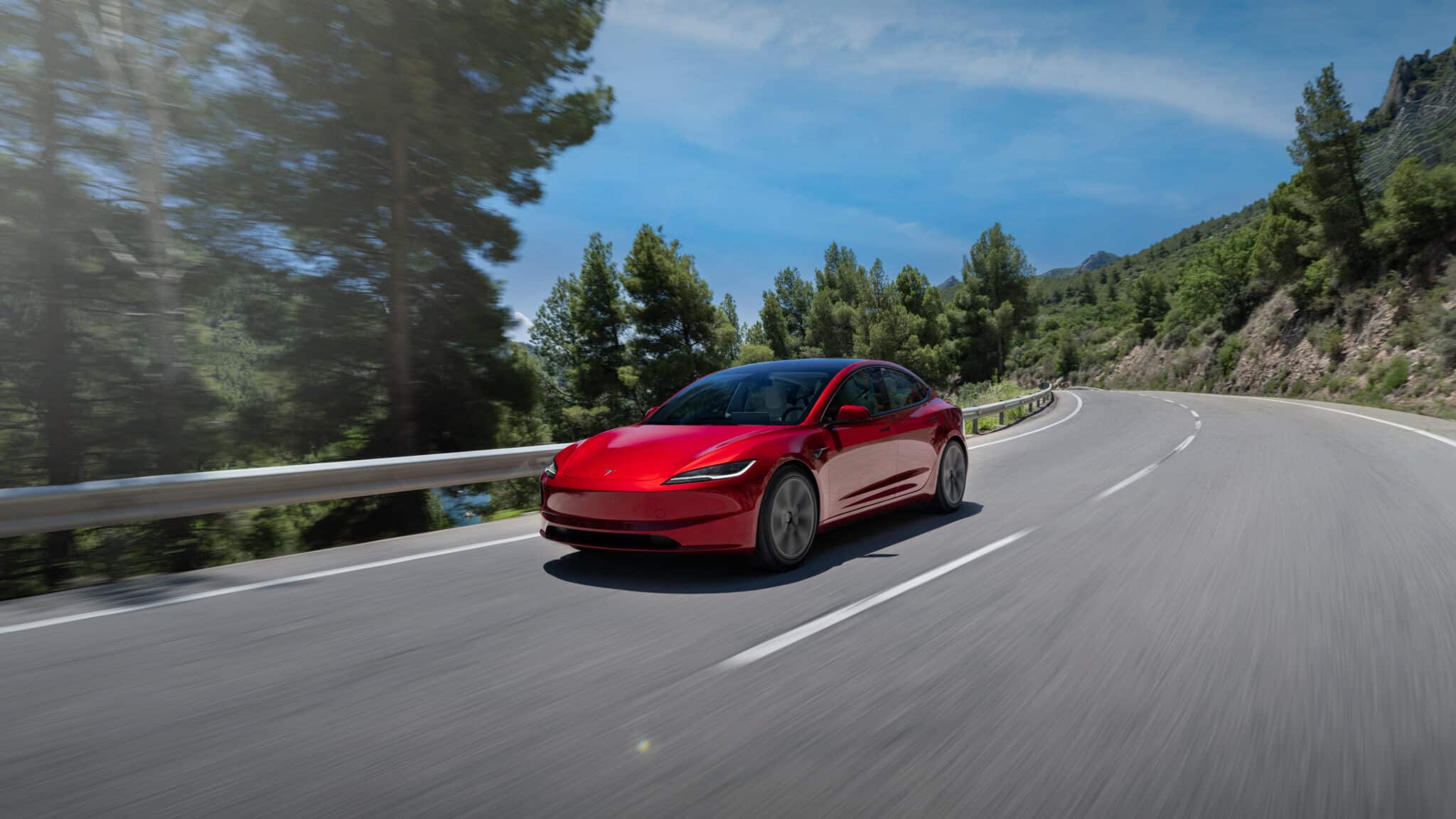
The average annual cost to insure a Tesla Model 3 has reached approximately $3,871 in 2026. This figure reflects a national average for full coverage, driven by high repair costs for specialized components, the frequency of total-loss claims for battery-related damage, and general insurance premium inflation across the automotive sector.
Understanding why the Tesla Model 3 commands a premium of $3,871—significantly higher than the average internal combustion engine (ICE) sedan—requires a deep dive into the intersection of EV technology, proprietary repair networks, and the evolving landscape of telematics-based insurance. As we move through 2026, the Model 3 remains a "high-risk, high-reward" vehicle for insurers, who balance the car's industry-leading safety ratings against its notoriously high "cost to restore" following an accident.
Breaking Down the $3,871 Average: What’s Included?
When discussing a $3,871 average, it is essential to define what this "full coverage" policy typically entails. In the 2026 market, a standard policy at this price point generally includes:
- Liability Coverage: Bodily injury and property damage limits that typically exceed state minimums (often 100/300/100).
- Collision Coverage: This covers damage to the Model 3 resulting from a collision with another vehicle or object, regardless of fault. Given the Model 3’s high-tech aluminum and steel hybrid construction, this is the most expensive portion of the premium.
- Comprehensive Coverage: This protects against non-collision events such as theft, vandalism, fire, or natural disasters. The Tesla’s expansive glass roof is a major factor here, as replacement costs for the "all-glass" canopy remain high.
- Uninsured/Underinsured Motorist Coverage: Protection against drivers who lack adequate insurance, a growing concern as overall premiums rise and more drivers opt for minimum legal coverage.
The $3,871 figure is an aggregate. Drivers in states like California or Florida may see quotes exceeding $4,500, while those in the Midwest might find rates closer to $2,900. However, the $3,871 benchmark serves as a realistic expectation for the modern Model 3 owner in a metropolitan area with a clean driving record.
Technical Factors Driving the High Cost of Tesla Insurance
The Tesla Model 3 is not just a car; it is a mobile computer with a high-voltage powertrain. Several technical characteristics of the vehicle contribute directly to the $3,871 average.
The "Gigapress" and Structural Repairability
Tesla’s move toward "megacastings"—large, single-piece structural components produced by their "Gigapress"—has revolutionized manufacturing efficiency but complicated repairs. In 2026, if a Model 3 suffers significant rear-end damage that cracks or deforms the rear casting, the vehicle is often deemed a total loss. Unlike traditional vehicles where individual frame rails or body panels can be cut and welded, a single-piece casting cannot be easily "straightened" without compromising structural integrity. Insurers price their premiums to account for this higher "total loss" frequency.
Sensor Calibration and Hardware 4/5
By 2026, most Model 3s on the road are equipped with Hardware 4 (HW4) or the newer Hardware 5 suite. These systems rely on a series of high-resolution cameras and powerful onboard processing units. Even a minor "fender bender" can misalign these cameras or damage the sensors housed behind the bumpers and windshield. The labor cost for recalibrating these systems is high, and the parts are proprietary, meaning third-party repair shops often cannot source them cheaply, forcing owners into the Tesla-certified repair network.
The Battery Pack Vulnerability
While the Model 3 battery is protected by a ballistic grade under-shield, any impact that compromises the battery housing usually results in a complete battery replacement. In 2026, a replacement Long Range battery pack can cost between $12,000 and $18,000 including labor. Because the battery accounts for a massive percentage of the vehicle’s total value, insurers are quick to write off the car if the pack is even slightly dented, contributing to the elevated $3,871 average.
Tesla Real-Time Insurance vs. Traditional Carriers
The $3,871 average is heavily influenced by whether the owner uses Tesla Insurance (the company’s in-house product) or a traditional provider like State Farm, Geico, or Progressive.
The Safety Score 2.0 Impact
Tesla Insurance utilizes "real-time driving behavior" to determine monthly premiums in most states. This system tracks metrics such as:
- Forward Collision Warnings: How often the car detects a potential impact.
- Hard Braking: Defined as a decrease in speed greater than 6.7 mph in one second.
- Aggressive Turning: High G-force maneuvers.
- Unsafe Following: Maintaining a following distance of less than 1.0 second.
- Late Night Driving: Driving between 10 PM and 4 AM, which is statistically more dangerous.
Drivers with a "Safety Score" of 98 or higher may find their premiums significantly lower than the $3,871 average. Conversely, "spirited" drivers who frequently engage the Model 3’s instant torque may find their premiums skyrocketing well above $5,000, as the real-time data identifies them as high-risk.
Traditional Carrier Skepticism
Many traditional insurers remain wary of the Model 3. They cite the lack of a robust secondary market for parts and the long wait times at Tesla Service Centers, which increase the cost of providing rental car reimbursement (Loss of Use coverage). In 2026, some traditional carriers have applied an "EV Surcharge" to their policies to offset these logistical hurdles, which keeps the national average anchored at that $3,871 mark.
Regional Cost Variations and Influences
Geography is one of the most powerful determinants of insurance costs. A Model 3 owner in a densely populated urban environment faces different risks than one in a rural setting.
| State | Estimated Annual Premium (2026) | Primary Driver of Cost |
|---|---|---|
| Florida | $4,820 | High litigation rates and hurricane/flood risk. |
| California | $4,150 | High labor rates for repairs; telematics pricing restrictions. |
| New York | $4,300 | High density of accidents and theft in NYC area. |
| Texas | $3,750 | High speed limits and frequent hail damage. |
| Ohio | $2,890 | Lower labor costs and more competitive insurance market. |
| New Hampshire | $2,650 | Lower population density and lower accident frequency. |
In California, state law prevents insurers from using telematics (real-time driving data) to set rates. This means Model 3 owners in California cannot benefit from the "Tesla Safety Score" discounts available in other states, often leading to a baseline premium that is higher than the national average.
How the "Highland" Refresh Changed the Insurance Landscape
The Model 3 underwent a significant refresh (often referred to as "Project Highland") starting in 2024. By 2026, these models dominate the market. The refresh introduced features that both helped and hindered insurance rates.
- Improved Aerodynamics and Range: While this makes the car more efficient, the redesigned front fascia and sleeker headlights are more expensive to replace.
- Acoustic Glass: The new Model 3 uses 360-degree acoustic glass for a quieter cabin. While a luxury for the driver, this glass is more brittle and more expensive than standard tempered glass, leading to higher comprehensive claims.
- Elimination of Ultrasonic Sensors: Tesla’s move to "Tesla Vision" (camera-only) removed physical sensors from the bumpers. This theoretically reduces part count, but it places a massive burden on the camera systems. If a camera is obscured or damaged, the car’s safety features—and its insurance-critical safety score—are immediately impacted.
Strategies to Reduce Your Model 3 Insurance Premium
If the $3,871 average feels prohibitive, there are several verified methods to bring that cost down in 2026.
Adjusting Deductibles
The most immediate way to lower a premium is to increase the deductible. Moving from a $500 deductible to a $1,500 deductible can often reduce the annual premium by 15% to 20%. For a Model 3, this could mean a saving of nearly $750 per year. However, owners must ensure they have the liquidity to cover that $1,500 out of pocket in the event of an accident.
Low-Mileage Discounts
Since the Model 3 is often used as a secondary "commuter" car, many owners qualify for low-mileage discounts. If you drive fewer than 7,500 miles per year, ensure your insurer is aware. In the age of remote work in 2026, many drivers are still paying for "commuter" levels of risk when their car sits in the garage four days a week.
Safety and Security Features
Tesla’s "Sentry Mode" is a dual-edged sword. While it acts as a powerful deterrent and provides video evidence for claims, it can also drain the battery and lead to more frequent "small" claims for minor dings that the owner might have otherwise ignored. However, most insurers provide a discount for the vehicle's built-in anti-theft and GPS tracking capabilities.
Frequently Asked Questions
Why is Tesla insurance more expensive than a BMW 3 Series?
While the purchase price of a Model 3 and a BMW 3 Series may be similar, the Model 3 is often more expensive to insure because of its battery. A BMW engine can often be repaired after a front-end collision; a Tesla battery pack, if even slightly compromised, usually requires a total replacement. Furthermore, BMW has a much wider network of independent mechanics, which keeps repair labor costs competitive.
Does "Autopilot" or "Full Self-Driving" lower my insurance?
As of 2026, most insurers do not offer a direct discount for having FSD (Full Self-Driving) capability. In fact, some carriers view it as a risk, fearing that drivers will become inattentive. However, the active safety features that come standard on all Model 3s (Automatic Emergency Braking, Lane Departure Warning) do contribute to a lower base premium compared to cars without these features.
Will my insurance go up if I use Superchargers frequently?
Standard insurance policies do not track your charging habits. However, Tesla's own insurance product may indirectly track "Late Night Driving," which often coincides with late-night Supercharging sessions. The charging process itself does not affect your risk profile, but the time of day you are on the road to reach those chargers might.
Is the Performance trim much more expensive to insure than the RWD?
Yes. The Model 3 Performance carries a higher premium—often 20% to 30% higher than the RWD trim. This is due to the increased cost of the performance motors, the expensive 20-inch wheels and tires which are more prone to pothole damage, and the statistical reality that "Performance" trim owners are more likely to engage in high-speed driving.
How does the age of the driver impact the $3,871 average?
The $3,871 figure is centered on an adult driver (age 30–50). For a driver under the age of 25, the cost to insure a Model 3 can easily exceed $7,000 per year. EVs are particularly expensive for young drivers because the instant torque allows for rapid acceleration that inexperienced drivers may struggle to control, leading to high-frequency, high-severity accidents.
Recommendation for 2026 Model 3 Owners
To navigate the $3,871 average effectively, the best course of action is a dual-quote strategy. First, obtain a quote from Tesla Insurance to establish a baseline based on your actual driving behavior. Second, take that quote to an independent insurance broker who can shop specialized "EV-friendly" carriers. In 2026, many smaller, tech-focused insurance startups have entered the market specifically to compete for the business of safe EV drivers.
Always prioritize "OEM Parts Coverage" in your policy. Given the complexity of the Model 3's structure and sensors, using "aftermarket" or "refurbished" parts can lead to system errors and may even void certain aspects of your vehicle's warranty. Paying an extra $200 a year for guaranteed OEM parts is a wise investment for a vehicle with a $3,871 insurance baseline.