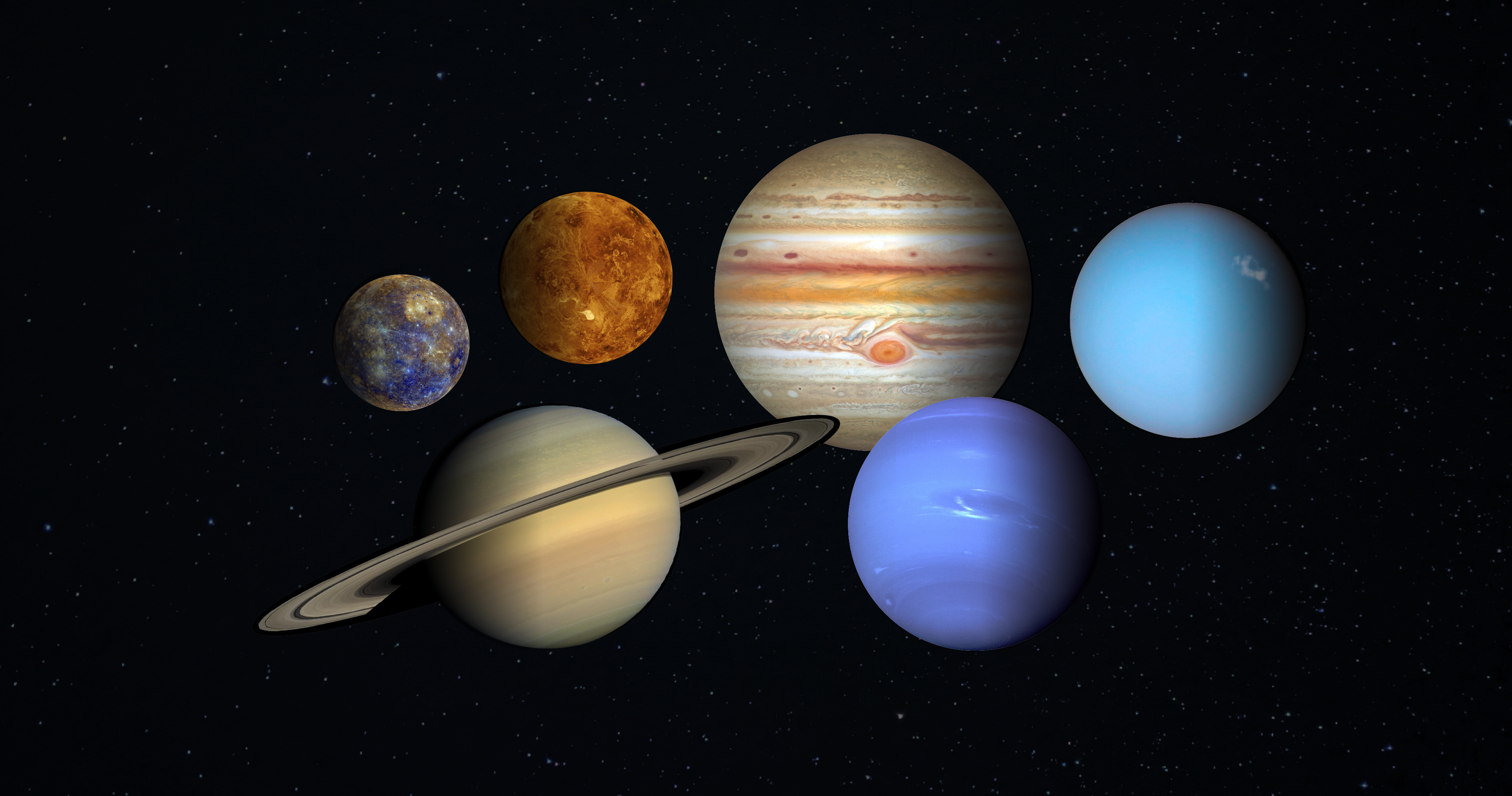
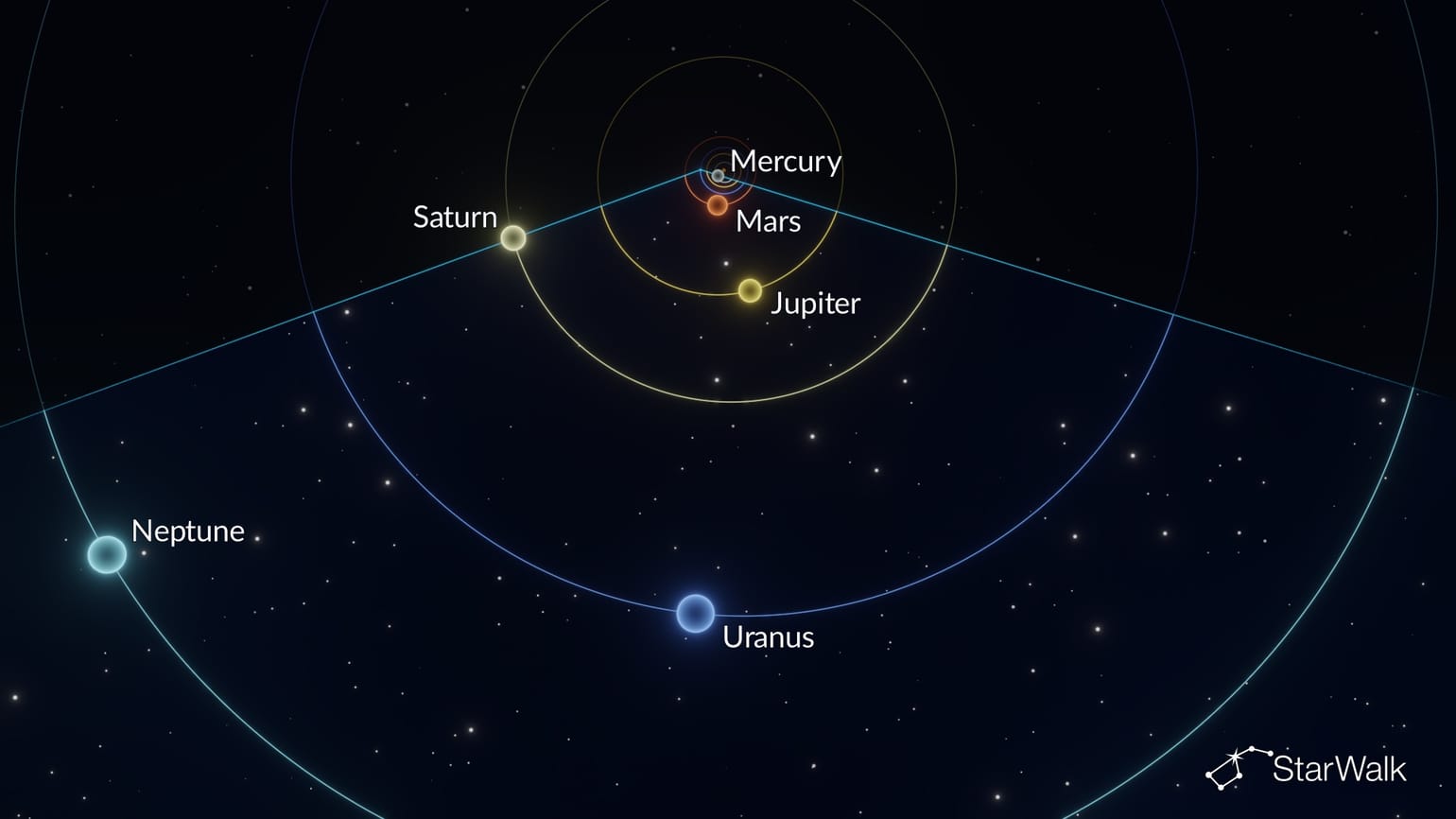
The grand planetary alignment of August 2025 brings up to seven planets—Mercury, Venus, Mars, Jupiter, Saturn, Uranus, and Neptune—into simultaneous visual alignment across the pre-dawn sky. Visible primarily during the early morning hours in late August, this rare celestial grouping offers skywatchers and astronomers an exceptional opportunity to observe the ecliptic plane in motion.
Understanding the August 2025 Grand Planetary Alignment
A planetary alignment, colloquially referred to as a "planetary parade," occurs when several planets in our solar system cluster along the same region of the sky from the perspective of an observer on Earth. In late August 2025, a rare alignment involving up to seven planets takes place. Five of these celestial bodies—Mercury, Venus, Mars, Jupiter, and Saturn—are visible to the naked eye under favorable atmospheric conditions, while the outer ice giants, Uranus and Neptune, require optical assistance such as binoculars or a field telescope.
It is vital to clarify the distinction between line-of-sight alignment and physical orbital alignment. Planets do not stack in a perfectly straight, three-dimensional line in deep space. Because all major planets orbit the Sun within a relatively flat mathematical disk known as the ecliptic plane, their apparent paths across Earth's sky follow a narrow arc. When their orbital speeds and positions align from Earth's vantage point, they appear lined up along this celestial band.
- Sky arrangement from South-East Horizon to Eastern Horizon:
- Saturn
- Neptune*
- Uranus*
- Jupiter
- Mars
- Venus
- Mercury
- *Requires Optics
During late August 2025, the geometric arrangement spreads these planets across a wide arc spanning from the eastern horizon toward the south-southeast horizon prior to sunrise. This expansive layout allows stargazers to trace the visible plane of the solar system directly with the naked eye.
Optimal Viewing Windows and Timing for August 2025
The primary viewing window for the August 2025 grand alignment occurs during the final ten days of the month, peaking between August 19 and August 29, 2025. The exact timing within this window depends on local sunrise times and horizon clarity, but the optimal observation window across most temperate regions opens approximately 60 to 90 minutes before local sunrise.
Daily Observation Schedule
To capture the full alignment before twilight washes out the fainter planets, skywatchers must time their observations carefully:
- 90 Minutes Before Sunrise: Saturn and Jupiter dominate the higher, southern-to-southeastern sky. Neptune (near Saturn) and Uranus (between Jupiter and the Pleiades cluster) are positioned well above the turbulent lower atmosphere, making this the best time to locate them with optical instruments.
- 60 Minutes Before Sunrise: Mars and Venus become clearly visible lower in the east-northeast sky. Venus shines as the brightest point of light in the morning display.
- 30 to 45 Minutes Before Sunrise: Mercury clears the eastern horizon. Because of its proximity to the Sun, Mercury must be spotted before solar glare brightens the background sky significantly.
Hemispheric Differences
- Northern Hemisphere Observers: The ecliptic plane rises at a moderate angle relative to the horizon in late summer mornings. Planets closer to the Sun (Mercury and Venus) remain relatively low in the east, requiring an unobstructed view of the horizon free of trees, buildings, or regional topography.
- Southern Hemisphere Observers: Late August corresponds to late winter in the Southern Hemisphere, where the ecliptic intersects the morning horizon at a steeper angle. This higher elevation provides superior clarity for lower planets like Mercury and Venus, extending the viewing window slightly further into morning twilight.
Detailed Planet-by-Planet Skywatching Guide
Understanding where and how each planet appears along the ecliptic arc helps observers locate every member of the alignment systematically.
1. Saturn
- Apparent Magnitude: Approximately +0.6 to +0.8
- Visibility: Naked eye
- Constellation: Aquarius / Pisces boundary
- Observation Notes: Saturn is positioned high in the southern-to-southeastern sky during pre-dawn hours. It shines with a steady, pale golden light that does not twinkle as intensely as background stars. A modest backyard telescope with 30x magnification reveals its iconic ring system and its largest moon, Titan.
2. Neptune
- Apparent Magnitude: Approximately +7.7
- Visibility: Requires binoculars or small telescope
- Constellation: Pisces
- Observation Notes: Located within several degrees of Saturn, Neptune is the faintest target in the alignment. It appears as a tiny, bluish dot through 10x50 binoculars or a small refracting telescope. Finding Neptune requires using star charts or astronomy apps to star-hop from brighter anchor points.
3. Uranus
- Apparent Magnitude: Approximately +5.7
- Visibility: Binoculars recommended (naked eye only under pristine Bortle 1–2 skies)
- Constellation: Taurus
- Observation Notes: Positioned between Jupiter and the Pleiades star cluster (M45), Uranus displays a subtle pale greenish hue when viewed through binoculars. Under dark-sky conditions, individuals with acute eyesight might spot it without optics, though binoculars make identification vastly easier.
4. Jupiter
- Apparent Magnitude: Approximately -2.1 to -2.3
- Visibility: Naked eye (extremely bright)
- Constellation: Taurus / Gemini border
- Observation Notes: Serving as one of the anchor points of the pre-dawn sky, Jupiter is second in brilliance only to Venus. Even standard 7x50 binoculars reveal its four largest satellites—Io, Europa, Ganymede, and Callisto—strung out in a line along Jupiter's equatorial plane.
5. Mars
- Apparent Magnitude: Approximately +1.4
- Visibility: Naked eye
- Constellation: Gemini
- Observation Notes: Mars displays a distinct reddish-orange tint. While noticeably fainter than neighboring Jupiter or Venus, its warm coloration makes it easy to distinguish from nearby stars such as Castor and Pollux in Gemini.
6. Venus
- Apparent Magnitude: Approximately -3.9 to -4.1
- Visibility: Naked eye (exceptionally bright)
- Constellation: Cancer / Leo border
- Observation Notes: As the "Morning Star," Venus acts as a brilliant beacon low in the eastern sky. Its unmatched brilliance allows it to punch through moderate light pollution and civil twilight longer than any other planet in the array.
7. Mercury
- Apparent Magnitude: Approximately -0.2 to +0.5 (varies rapidly over late August)
- Visibility: Naked eye under clear horizon conditions
- Constellation: Leo
- Observation Notes: Mercury sits closest to the solar glare and lowest on the eastern horizon. Locating Mercury requires pinpoint timing—just after it ascends above the physical horizon but before the sky grows too bright. Binoculars can aid in picking Mercury out of the dawn colors.
Essential Equipment and Viewing Requirements
While the five primary planets can be enjoyed with zero specialized gear, thorough planning improves the overall viewing experience, particularly for spotting Uranus and Neptune.
- Naked Eye: Mercury, Venus, Mars, Jupiter, Saturn
- 7x50 / 10x50 Binoculars: Uranus, Galilean Moons, Fine Detail
- Backyard Telescope: Neptune (Blue Disk), Saturn's Rings
Optical Gear Selection
- Naked Eye: Ideal for taking in the full sweeping panorama of the alignment across the horizon.
- Binoculars (7x50 or 10x50): Highly recommended. Binoculars provide enough light-gathering power to reveal Uranus, isolate Mercury against twilight, and resolve Jupiter's four Galilean moons.
- Small Telescopes (70mm to 102mm aperture): Useful for resolving Saturn's rings, the disc of Jupiter with its cloud belts, and the subtle blue coloration of Neptune.
Environmental Conditions & Dark Sky Selection
Sky quality directly affects how many components of the alignment are visible. Light pollution from urban centers will obscure Neptune and Uranus and make Mercury difficult to pull out of atmospheric haze.
- Bortle Scale Ratings: A site with a Bortle Class 1 to 4 sky (rural to light-suburban) provides optimal conditions.
- Horizon Access: An easterly viewing location with an unobstructed flat horizon (such as a hilltop, open field, or coastal beach facing east) is critical for seeing Mercury and Venus low in the sky.
Digital Navigation Tools
Using real-time mobile planetarium apps helps stargazers orient themselves quickly in the dark. Programs such as Stellarium, SkySafari, or Star Walk 2 allow users to input their exact geographic coordinates to get real-time azimuth and altitude figures for every planet.
Planetary Alignment Technical Comparison Table
The following table summarizes the observational metrics for all seven planets during the peak window of late August 2025.
| Planet | Apparent Magnitude | Visibility Class | Primary Optics Needed | Sky Position / Constellation | Key Distinguishing Feature |
|---|---|---|---|---|---|
| Saturn | +0.7 | Naked Eye | None | High South-East (Aquarius/Pisces) | Steady pale-yellow glow; rings visible in small scope |
| Neptune | +7.7 | Telescope / Binocular | 10x50 Binoculars or 70mm+ Scope | High South-East (Pisces) | Faint, icy-blue point near Saturn |
| Uranus | +5.7 | Binocular Target | 7x50 Binoculars | Mid-East (Taurus) | Subtle pale-green disk near Pleiades |
| Jupiter | -2.2 | Naked Eye | None | Mid-to-Low East (Taurus/Gemini) | Brilliant silver-white light; moons visible in binoculars |
| Mars | +1.4 | Naked Eye | None | Low East (Gemini) | Distinct rusty-red color |
| Venus | -4.0 | Naked Eye | None | Very Low East (Cancer/Leo) | Dazzling morning star; brightest celestial object after Moon |
| Mercury | +0.2 | Naked Eye (Challenging) | Binoculars helpful | Very Low Eastern Horizon (Leo) | Sits near dawn horizon; visible in brief pre-sunrise window |
Astrophotography Techniques for the 2025 Alignment
Capturing a 7-planet alignment in a single photograph requires specific compositions and camera techniques due to the broad span of the ecliptic arc across the sky.
- Wide Angle (14mm-24mm) Focus:
- Framing across Flat Eastern Horizon:
- Saturn
- Jupiter
- Mars
- Venus
- Mercury (Dawn Glow)
- Framing across Flat Eastern Horizon:
1. Lens Selection and Framing
Because the alignment spans over 100 degrees across the sky, standard focal lengths will not capture all planets in one single frame.
- Ultra-Wide Lenses (14mm to 24mm on full-frame sensors): Necessary to capture the broad panorama from Saturn high in the sky down to Venus and Mercury near the horizon.
- Panoramic Stitching: Alternatively, mount a 35mm or 50mm lens vertically on a stable tripod and take a series of overlapping photos from south to east, stitching them together in post-processing software.
2. Camera Settings Guidelines
- Mode: Manual (M)
- Focus: Manual focus set precisely to infinity using live view on a bright planet like Jupiter or Venus.
- Aperture: f/2.8 to f/4 to maximize light throughput.
- ISO: 800 to 3200 depending on sensor performance and sky darkness.
- Shutter Speed: 5 to 15 seconds. Exceeding 15 to 20 seconds on wide-angle lenses can cause point-source stars and planets to trail due to Earth's rotation.
3. Smartphone Photography Tips
Modern smartphones equipped with Night Mode can capture bright planetary alignments:
- Mount the phone on a compact tripod or stable surface to eliminate hand tremor.
- Manually lower the exposure slider slightly so twilight glow does not wash out Mars or Mercury.
- Use optical zoom or modest digital cropping to highlight close pairings (such as Venus and Mercury or Jupiter and Mars).
Scientific Context and Common Misconceptions
Planetary alignments regularly spark public interest, but they are also frequently surrounded by widespread myths. Grounding observations in celestial mechanics ensures an accurate understanding of the event.
Myth 1: The Planets Form a Straight Line in Space
Fact: The planets are separated by vast radial distances across millions of kilometers of deep space. They appear aligned purely due to perspective projection: Earth's orbital location places us in line with their respective positions along the flat plane of the ecliptic.
Myth 2: Alignment Causes Gravitational Disturbances on Earth
Fact: A common pseudoscientific claim suggests that combined planetary gravity triggers earthquakes, tides, or solar flares on Earth. In reality, the gravitational force exerted on Earth by other planets is microscopic compared to the gravitational pull of the Moon and the Sun. Even during a full alignment, total planetary tidal force changes on Earth are negligible.
Myth 3: This Event Will Never Happen Again
Fact: Large multi-planet alignments occur periodically. Alignments featuring 5 visible planets happen roughly every few years, while 6- or 7-planet visual groupings occur every few decades as planetary orbital periods align.
Frequently Asked Questions
What makes an alignment a "grand" planetary alignment?
A grand alignment typically refers to an event where six or more planets are visible simultaneously in the same region of the night or pre-dawn sky. Alignments of three or four planets occur relatively frequently, but configurations involving seven solar system bodies across one line of sight are far less common.
Can you see all seven planets without a telescope?
No, you cannot see all seven without optical aid. Five planets (Mercury, Venus, Mars, Jupiter, and Saturn) are clearly visible to the naked eye under clear skies. However, Uranus (+5.7 magnitude) requires binoculars or pristine dark skies, while Neptune (+7.7 magnitude) strictly requires optical magnification like binoculars or a telescope.
What time of day is best to view the August 2025 alignment?
The absolute best time to observe the alignment is during pre-dawn hours, roughly 60 to 90 minutes before your local sunrise. This timing allows the higher planets (Saturn, Jupiter) to reach sufficient elevation while giving lower planets (Venus, Mercury) time to clear the horizon before dawn light washes them out.
How often do 7-planet alignments occur?
Visible gatherings involving 6 to 7 planets happen once or twice per decade on average. However, the exact arrangement, order, and visibility conditions vary significantly based on orbital mechanics and Earth's relative positioning along its own orbit around the Sun.
Does light pollution ruin the viewing experience?
Light pollution will obscure fainter planets like Neptune and Uranus and make Mercury difficult to locate near the horizon. Bright targets like Venus, Jupiter, and Saturn remain clearly visible even from bright city centers, but traveling to a rural location with dark skies greatly improves the overall visual experience.
Recommended Next Steps for Stargazers
To ensure an optimal viewing experience for the August 2025 grand alignment, prepare your skywatching routine systematically:
- Check Local Sunrise Times: Determine your exact sunrise time for late August to calculate your local 60-to-90-minute pre-dawn window.
- Scout a Viewing Location: Find a location with a clear, low eastern and south-eastern horizon free from high-rise buildings, mountain ridges, or dense tree lines.
- Gather Essential Equipment: Prepare 7x50 or 10x50 binoculars, a tripod, and red-light flashlights to preserve your night vision while navigating in the dark.
- Download Astronomy Maps: Install a sky mapping application to pre-render the target position of Uranus and Neptune relative to brighter anchor points like Jupiter and Saturn.