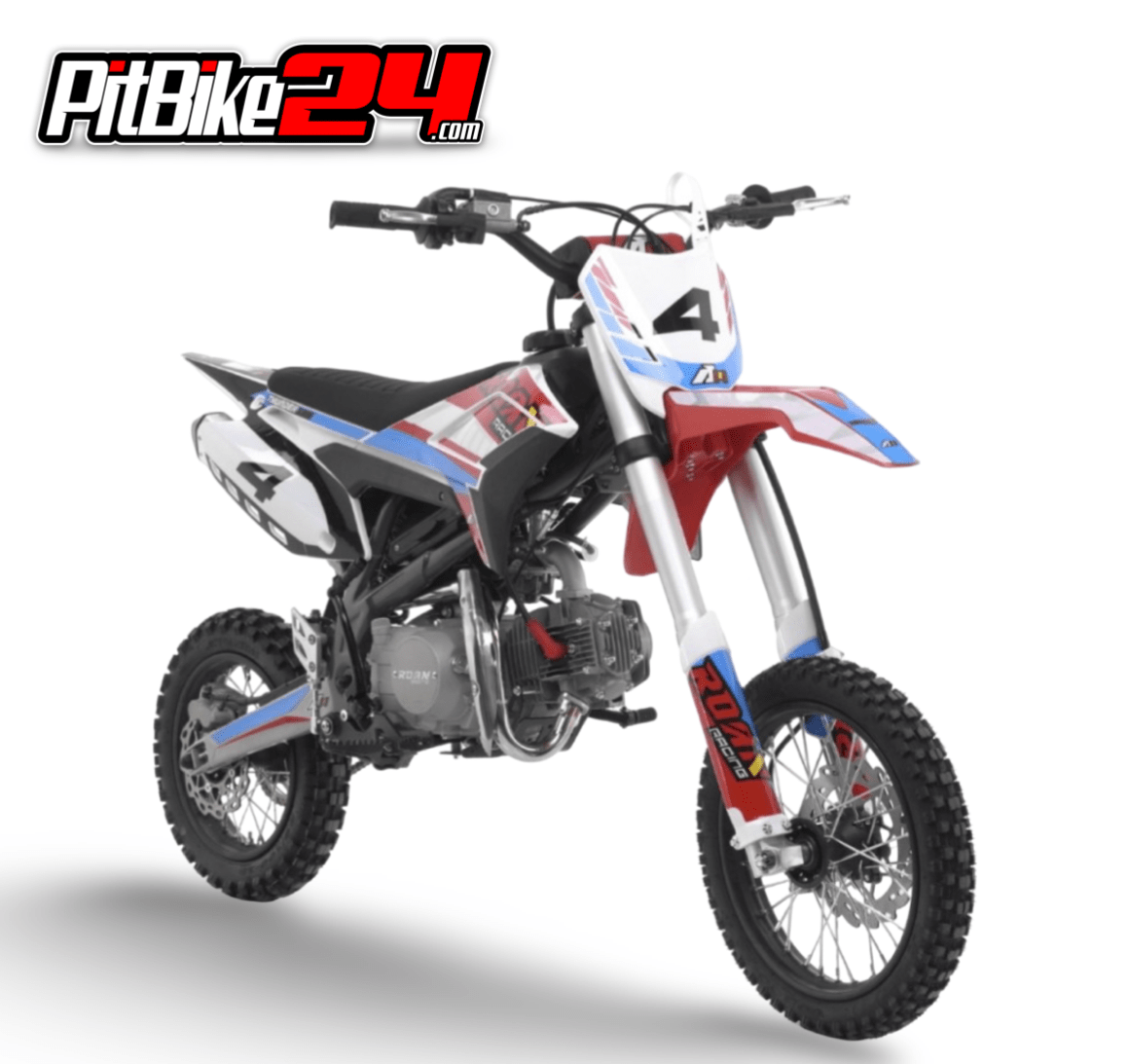
The 125cc Apollo pit bike is a popular mid-size off-road motorcycle powered by a four-stroke, air-cooled single-cylinder engine paired with a manual or semi-manual transmission, featuring a tubular steel frame, hydraulic suspension, and hydraulic disc brakes designed for teenage and adult riders.
Introduction to the 125cc Apollo Pit Bike
When exploring the entry-to-mid-level off-road motorcycle market, the 125cc Apollo pit bike frequently emerges as a top consideration for budget-conscious riders, backyard enthusiasts, and families entering off-road motorsports. Built by Apollo Motors—a brand well-known for manufacturing accessible dirt bikes, quad bikes, and pit bikes—the 125cc displacement category strikes a practical balance. It offers significantly more power and physical sizing than standard 50cc or 70cc youth models, yet remains far more manageable and affordable than full-sized 250cc motocross machines.
Disambiguation is necessary when discussing Apollo pit bikes because the manufacturer produces multiple frames and trim configurations under the "125cc" designation. Models commonly include the Apollo DB-X18, DB-X14, and various Orion or RFZ series variants. While engine displacement remains consistent across these builds, frame geometry, wheel sizing (such as 14-inch rear/17-inch front versus 12-inch rear/14-inch front combinations), seat heights, and suspension travel vary widely. Understanding these comprehensive specifications helps buyers select the exact trim that matches their physical dimensions, riding environment, and mechanical skill level.
Engine and Powertrain Specifications
At the heart of the 125cc Apollo pit bike lies a horizontal, single-cylinder, four-stroke powerplant. Unlike older two-stroke engines that require precise pre-mixing of fuel and oil, this four-stroke engine utilizes a wet sump lubrication system, making maintenance simpler and cleaner for casual riders.
Engine Architecture and Displacement
- Displacement: 120cc to 124cc (commonly referenced as 125cc class)
- Engine Type: Single-cylinder, 4-stroke, air-cooled
- Bore and Stroke: Typically 52.4mm x 55.5mm (standard horizontal engine architecture)
- Compression Ratio: Approximately 9.0:1 to 9.3:1
- Fuel System: Standard carburetor (usually a PZ22 or PZ26 millimeter slide carburetor)
- Starting System: Kick start (some select modern variants may offer electric start, though kick start remains standard)
- Ignition: CDI (Capacitor Discharge Ignition) with magneto generator
Transmission and Final Drive
The powertrain setup determines how power is delivered to the rear wheel. Apollo 125cc pit bikes are configured with either a 4-speed manual transmission (requiring a manual clutch lever and left-foot gear shifter in a 1-down, 3-up pattern) or a 4-speed semi-manual transmission (where the rider shifts gears with the foot lever without needing to operate a hand clutch).
- Clutch: Wet multi-plate (manual) or centrifugal automatic clutch (semi-manual)
- Transmission Gearbox: 4-speed constant mesh
- Final Drive: Chain drive (typically heavy-duty 428 pitch chain)
- Sprocket Ratios: Varies by model, commonly utilizing a 14-tooth front countershaft sprocket and a 37-tooth to 41-tooth rear wheel sprocket
Chassis, Frame, and Suspension
Off-road durability depends heavily on frame construction and suspension component quality. Apollo constructs its pit bike frames using heavy-duty structural steel designed to absorb the impacts of jumps, bumps, and rough trail riding.
Frame and Bodywork
- Frame Type: High-strength steel tube cradle frame / twin-spar backbone design
- Swingarm: Steel or reinforced box-section alloy swingarm, depending on the specific model tier
- Handlebars: Standard steel or tapered aluminum handlebars with crossbars for impact resistance
- Fairings/Plastics: High-impact polypropylene body plastics styled after modern full-size motocross bikes
- Fuel Tank Capacity: Roughly 3.5 to 4.5 liters (approx. 0.9 to 1.2 US gallons), utilizing unleaded gasoline
Suspension Systems
Suspension travel and damping characteristics dictate how well the bike handles rough terrain and landing impacts.
- Front Suspension: Inverted telescopic forks (USD - Up Side Down forks). These non-adjustable or pre-load adjustable hydraulic forks provide stiffness and stability under heavy front-end loads.
- Rear Suspension: Single heavy-duty rear shock absorber, often featuring adjustable pre-load. Some higher-tier models include a steel linkage system, while budget models bolt directly to the swingarm.
- Wheel Travel: Front and rear travel typically ranges between 150mm to 200mm, adequate for minor jumps and trail obstacles.
Dimensions, Weight, and Ergonomics
Sizing is one of the most crucial factors when selecting a pit bike. A mismatch between rider height and bike dimensions can lead to poor control and rider fatigue.
| Specification Category | Mid-Size Configuration (e.g., DB-X18) | Compact Configuration (e.g., DB-X14) |
|---|---|---|
| Front Wheel Size | 17 inches (Knobby tire) | 14 inches (Knobby tire) |
| Rear Wheel Size | 14 inches (Knobby tire) | 12 inches (Knobby tire) |
| Seat Height | Approx. 34 inches (860mm) | Approx. 31 inches (780mm) |
| Ground Clearance | Approx. 11.5 inches (290mm) | Approx. 9.5 inches (240mm) |
| Wheelbase | Approx. 48 inches (1220mm) | Approx. 45 inches (1140mm) |
| Dry Weight | Approx. 155 lbs (70 kg) | Approx. 145 lbs (66 kg) |
| Maximum Weight Capacity | 150 to 200 lbs (68 to 90 kg) | 130 to 170 lbs (59 to 77 kg) |
Braking and Wheel Assemblies
Stopping power is managed by hydraulic disc brake systems on both ends, representing a substantial safety upgrade over older drum-brake pit bikes.
- Front Brakes: Single hydraulic caliper acting on a wave-pattern stainless steel brake rotor (approx. 190mm to 210mm)
- Rear Brakes: Single hydraulic caliper with a foot-operated master cylinder acting on a rear wave rotor (approx. 180mm to 190mm)
- Rims: Steel or reinforced aluminum spoke wheels designed to handle off-road shock loads
- Tires: Off-road knobby tires (front: 70/100-17 or 60/100-14; rear: 90/100-14 or 80/100-12) requiring standard inner tubes operating at 15 to 20 PSI depending on terrain conditions.
Comparative Overview: Apollo 125cc vs. Similar Pit Bikes
To understand where the Apollo 125cc sits in the market, it helps to compare its technical parameters against typical Chinese-manufactured horizontal-engine competitors like SSR and Coolster.
| Feature / Metric | Apollo 125cc (e.g., DB-X18) | SSR 125 (e.g., SR125) | Coolster 125cc (e.g., 2125F) |
|---|---|---|---|
| Engine Configuration | 4-stroke, air-cooled 124cc | 4-stroke, air-cooled 124cc | 4-stroke, air-cooled 123cc |
| Transmission Options | Manual 4-speed / Semi-auto | Manual 4-speed | Semi-auto or Manual 4-speed |
| Seat Height | ~34 inches (Large wheel variant) | ~32 to 34 inches | ~30 to 32 inches |
| Braking System | Hydraulic discs front and rear | Hydraulic discs front and rear | Hydraulic discs front and rear |
| Target Rider Profile | Teens and small adults | Teens and trail riders | Younger teens and entry-level riders |
Operational Guidelines, Maintenance, and Safety
Owning and operating an Apollo 125cc pit bike requires routine mechanical upkeep to ensure reliability and safety. Because these machines arrive partially assembled when ordered online or boxed from a dealer, proper pre-ride preparation is mandatory.
Initial Assembly and PDI (Pre-Delivery Inspection)
When unboxing a new or crated Apollo pit bike, users must perform a thorough pre-delivery inspection:
- Fastener Torque Check: Inspect and torque every bolt, axle nut, triple-clamp pinch bolt, and engine mount to factory specifications using threadlocker (Loctite) where appropriate. Factory shipping bolts are often hand-tightened.
- Fluid Replacement: Drain the factory shipping oil (which is typically a preservative grade) and fill the crankcase with high-quality 10W-40 four-stroke motorcycle oil (JASO MA/MA2 certified).
- Chain Alignment and Tension: Adjust the drive chain to maintain roughly 20mm to 30mm of slack and ensure proper rear wheel alignment.
- Control Adjustments: Position brake levers, throttle housing, and the clutch lever to comfortable ergonomic angles for the rider.
Routine Maintenance Schedule
- Oil Changes: Replace engine oil every 10 to 15 hours of riding time, or more frequently during the initial break-in period.
- Air Filter Maintenance: Clean and re-oil the foam air filter element after every dusty ride to prevent abrasive particulates from entering the carburetor and cylinder.
- Valve Clearance Inspection: Check and adjust intake and exhaust valve clearances every 30 to 50 operating hours to maintain optimal compression and easy starting.
Frequently Asked Questions
What kind of gas does a 125cc Apollo pit bike take?
Apollo 125cc pit bikes require standard unleaded gasoline with an octane rating of 87 or higher. Avoid using race fuels or high-octane aviation fuels unless the engine has been modified with high-compression pistons. Standard pump gas keeps the carburetor jets clean and matches the factory 9.0:1 compression ratio.
How fast does a 125cc Apollo pit bike go?
Top speed typically ranges between 45 mph and 55 mph (72 km/h to 88 km/h). Actual top speed depends heavily on final drive sprocket ratios, rider weight, terrain conditions, and whether the engine is fully broken in. These bikes are designed for quick acceleration and maneuverability on trails rather than high-speed highway cruising.
Are Apollo 125cc pit bikes suitable for adults?
Yes, certain models—specifically those with 14-inch rear and 17-inch front wheels (such as the Apollo DB-X18)—are designed with higher seat heights around 34 inches and stronger frames that comfortably accommodate smaller adults up to 170 lbs. However, full-size adults over 6 feet tall or weighing over 180 lbs may find the ergonomics cramped and should look toward full-size 250cc trail bikes.
Is the transmission manual or automatic?
The Apollo 125cc line is manufactured in both manual and semi-manual configurations. Manual models feature a traditional hand clutch and foot shift lever, while semi-manual models feature an automatic centrifugal clutch where the rider shifts gears with the foot pedal without pulling a clutch lever. Buyers must verify the specific trim designation before purchasing.
How do I troubleshoot a 125cc Apollo pit bike that won't start?
Start by verifying fuel flow from the petcock to the carburetor float bowl. Next, check for spark by removing the spark plug, grounding its threads against the engine cylinder head, and cranking the kick starter. Finally, ensure the kill switch is in the "Run" position and that the carburetor pilot jet is clean, as clogged jets from stale fuel are the most common cause of starting failure.
Conclusion and Next Actions
Reviewing the full specifications of the 125cc Apollo pit bike reveals a capable, accessible off-road machine well-suited for riders transitioning from youth models or seeking affordable backyard recreation. Prospective buyers should verify their exact physical measurements against the model's seat height and wheel configuration before purchase. Upon acquiring the machine, invest time in proper pre-delivery assembly inspections, apply threadlocker to critical chassis bolts, and establish a consistent maintenance routine involving regular oil changes and air filter servicing to ensure years of reliable off-road performance.