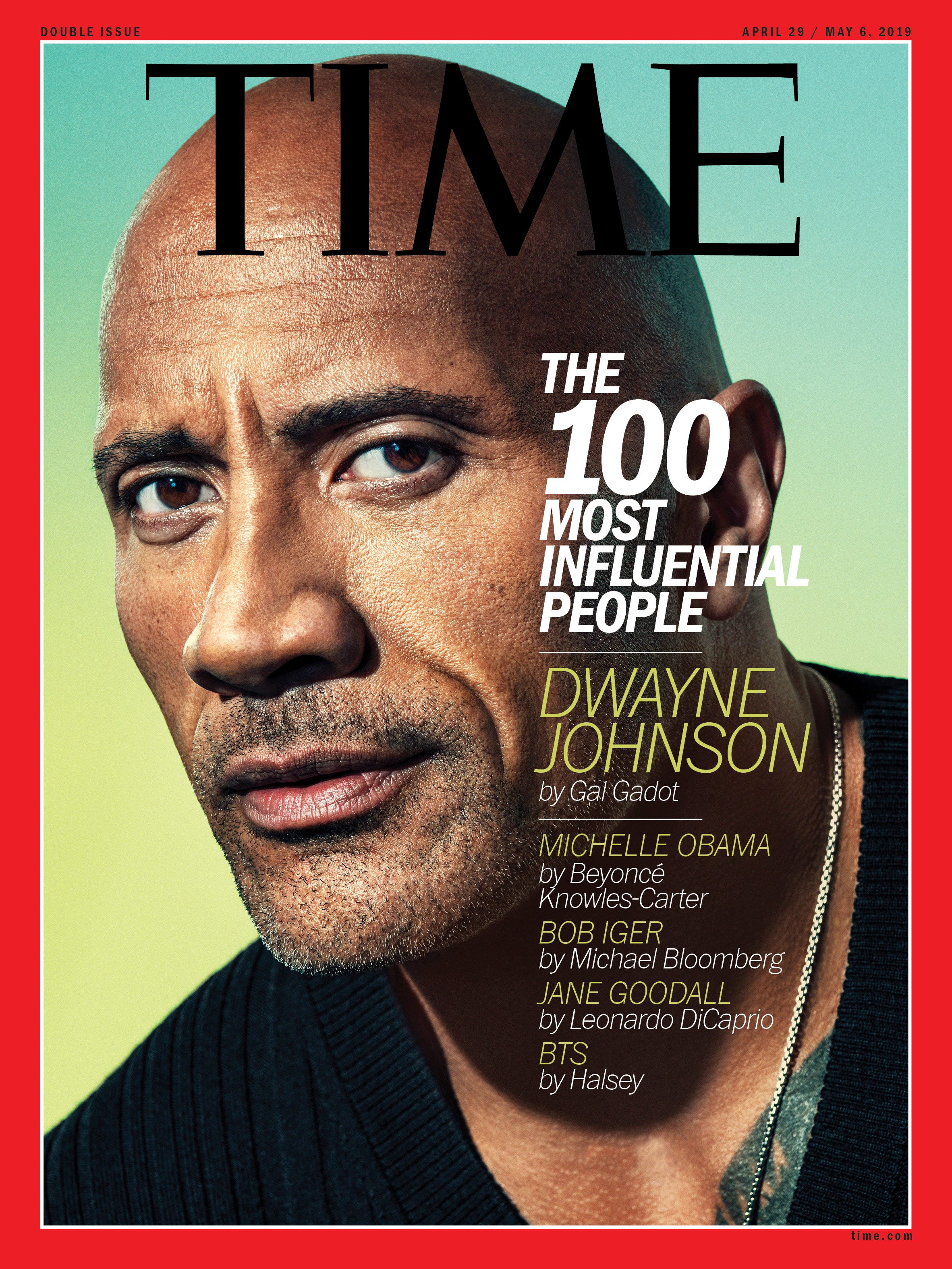
The concept of "100 influential photos" most prominently refers to Time magazine’s landmark 2016 project, 100 Photographs: The Most Influential Images of All Time, which cataloged a century of defining visual moments that shaped human history, culture, and politics. Examining this collection reveals how photography evolved from a mechanical recording device into a powerful catalyst for social change, political revolution, and collective empathy.
The Genesis and Scope of Visual History Collections
The endeavor to curate a definitive list of history-defining images requires looking beyond mere aesthetic beauty or technical mastery. An influential photograph derives its power from its ability to alter public consciousness, galvanize political movements, or capture a turning point in human civilization.
When Time assembled its century-spanning compilation in 2016, a team of curators, historians, and photo editors spent months vetting archives, interviewing photographers, and analyzing the cascading cultural effects of specific frames. The resulting collection is not merely an art gallery; it is a visual archive of human triumph, tragedy, scientific advancement, and moral reckoning.
Understanding these images requires evaluating several core dimensions:
- Catalytic Impact: The direct role the photograph played in shifting public policy, ending conflicts, or launching social justice movements.
- Technical Innovation: How the creation of the image pushed the boundaries of photographic technology, such as the transition from heavy glass plates to 35mm film, and eventually to digital capture.
- Ethical Considerations: The journalistic integrity, consent, and human cost involved in capturing moments of extreme crisis or vulnerability.
- Cultural Resonance: The enduring presence of the image in the global imagination, often transforming into a universal symbol or meme.
Defining Eras in Photographic History
Photography has undergone massive transformations since its inception in the 19th century. The timeline of influential imagery can be broken down into distinct technological and journalistic eras, each characterized by how images were captured, distributed, and consumed.
| Era | Primary Technology | Distribution Medium | Key Characteristics |
|---|---|---|---|
| Early Documentary (1839–1900) | Daguerreotypes, glass plate negatives | Engravings in print, physical exhibitions | Static subjects, long exposure times, foundational documentation of war and architecture. |
| The Golden Age of Photojournalism (1900–1950) | 35mm film, lightweight cameras (Leica), flash photography | Mass-circulation pictorial magazines (Life, Look, Paris Match) | Dynamic framing, spontaneous capture of human emotion, rapid international wire distribution. |
| The Television and Color Transition (1950–2000) | Color transparency film, motor drives, telephoto lenses | Global television broadcasts, glossy print magazines, newspapers | Immediacy of war coverage, iconic cultural portraiture, cementing of historical icons. |
| The Digital and Hyper-Connected Age (2000–Present) | Digital sensors, smartphones, cloud archives | Social media platforms, real-time global news streams | Decentralized creation, democratization of image-making, algorithmic virality. |
Iconic Categories of Influence
The 100 influential photos spanning modern history generally fall into several distinct thematic buckets. Each category demonstrates a different mechanism through which an image exerts power over the viewer.
1. War, Conflict, and Human Resilience
Images of conflict possess an unvarnished brutality that often punctures political rhetoric. Photographs like Nick Ut’s 1972 image of a napalm-burned girl running down a road in Vietnam, or Joe Rosenthal’s Raising the Flag on Iwo Jima (1945), did not just report on war—they actively shaped domestic and international perceptions of it.
The psychological weight of these frames stems from their raw immediacy. They strip away the abstract nature of geopolitical strategy and replace it with the vulnerable human form. In many cases, these images accelerated the political pressure that brought an end to hostilities, proving that the camera can be as formidable as any weapon on the battlefield.
2. Scientific Breakthroughs and Exploration
Photography has also served as humanity's window into the cosmos and the microscopic world. When Apollo 8 astronaut William Anders captured Earthrise in 1968, the photograph fundamentally altered how humanity viewed its place in the universe. Showing our planet as a fragile, blue marble suspended in an infinite void, the image became a cornerstone of the modern environmental movement.
Similarly, early medical X-rays, high-speed photography capturing a bullet piercing an apple, and deep-space imagery from advanced observatories expand the limits of human perception. These photographs validate scientific theories and inspire generations of researchers and explorers.
3. Civil Rights and Social Justice
Visual documentation has been indispensable in the fight for human rights. During the American Civil Rights Movement, press photographs of police dogs and fire hoses deployed against peaceful marchers in Birmingham, Alabama, shocked national and international audiences. These visual records made it impossible for citizens to remain neutral or claim ignorance about systemic oppression.
The power of these images lies in their incontrovertible evidence. In an era before digital manipulation concerns, a photograph carried a legalistic weight of truth that verbal testimony alone often struggled to achieve. They humanized marginalized groups and built broad coalitions for legislative reform.
Methodologies of Curation and Preservation
Curating a definitive list of historical photographs is fraught with challenges. Archivists and historians must balance technical achievement against historical impact, while also grappling with questions of representation and geographic bias.
Institutions such as the International Center of Photography (ICP), the George Eastman Museum, and the Library of Congress employ rigorous preservation standards to protect these cultural artifacts. Original negatives and vintage prints require precise temperature and humidity controls to prevent chemical degradation, fading, and emulsion decay.
Furthermore, the transition from physical archives to digital repositories has transformed how researchers access these images. High-resolution scanning allows scholars to examine fine details previously hidden in the shadows of darkroom prints, uncovering new historical context within familiar frames.
Common Controversies and Ethical Debates
The study of influential photography is inseparable from ethical debates regarding staging, digital manipulation, and the exploitation of subjects.
- Staged Reality: Historical instances exist where photographers rearranged elements within a frame to enhance dramatic effect, particularly during the American Civil War and the Great Depression. While this practice was sometimes accepted as a form of visual storytelling, modern journalism maintains strict prohibitions against altering the factual content of news images.
- Subject Consent: Many iconic photographs were taken without the explicit consent of the subjects, raising questions about privacy and dignity. The debate over whether the public's right to know outweighs an individual's right to privacy in times of tragedy remains a central ethical dilemma in photojournalism.
- The Gaze of the Outsider: A significant portion of historical photojournalism in developing nations has been captured by Western photographers, leading to critiques about cultural framing, exoticism, and the perpetuation of biased narratives.
Frequently Asked Questions
What makes a photograph historically influential?
A photograph becomes influential when it fundamentally shifts public opinion, alters the course of political events, or permanently changes how society perceives a major issue. Influence is measured by the cultural legacy and behavioral changes the image inspires long after it is captured.
Are all famous photographs considered photojournalism?
No. While many influential images are works of photojournalism, the category also includes fine art photography, scientific imaging, portraits, and commercial advertising that captured a distinct cultural zeitgeist or technological milestone.
How do historians verify the authenticity of historical photos?
Historians and archivists examine original negatives, camera metadata (in digital formats), photographer journals, and contemporaneous accounts. They also look for physical inconsistencies in print emulsions or digital files to detect tampering or misattribution.
Why are some influential photos controversial today?
Modern audiences evaluate historical images through contemporary ethical frameworks regarding consent, representation, trauma exploitation, and the historical power imbalances between the photographer and the subject.
Where can the original prints of these influential photos be viewed?
Original prints and authorized archives are typically housed in major cultural institutions, including the Library of Congress, the International Center of Photography, the Museum of Modern Art (MoMA), and specialized university collections around the world.
Practical Next Steps for Photography Enthusiasts
For those seeking to deepen their understanding of visual history, exploring primary archival collections offers invaluable insights. Visit accredited museum exhibitions, read critical analyses by photo historians such as Susan Sontag and Roland Barthes, and study the foundational portfolios of agencies like Magnum Photos. Engaging with these resources provides a richer appreciation of how a single fraction of a second can echo across centuries.