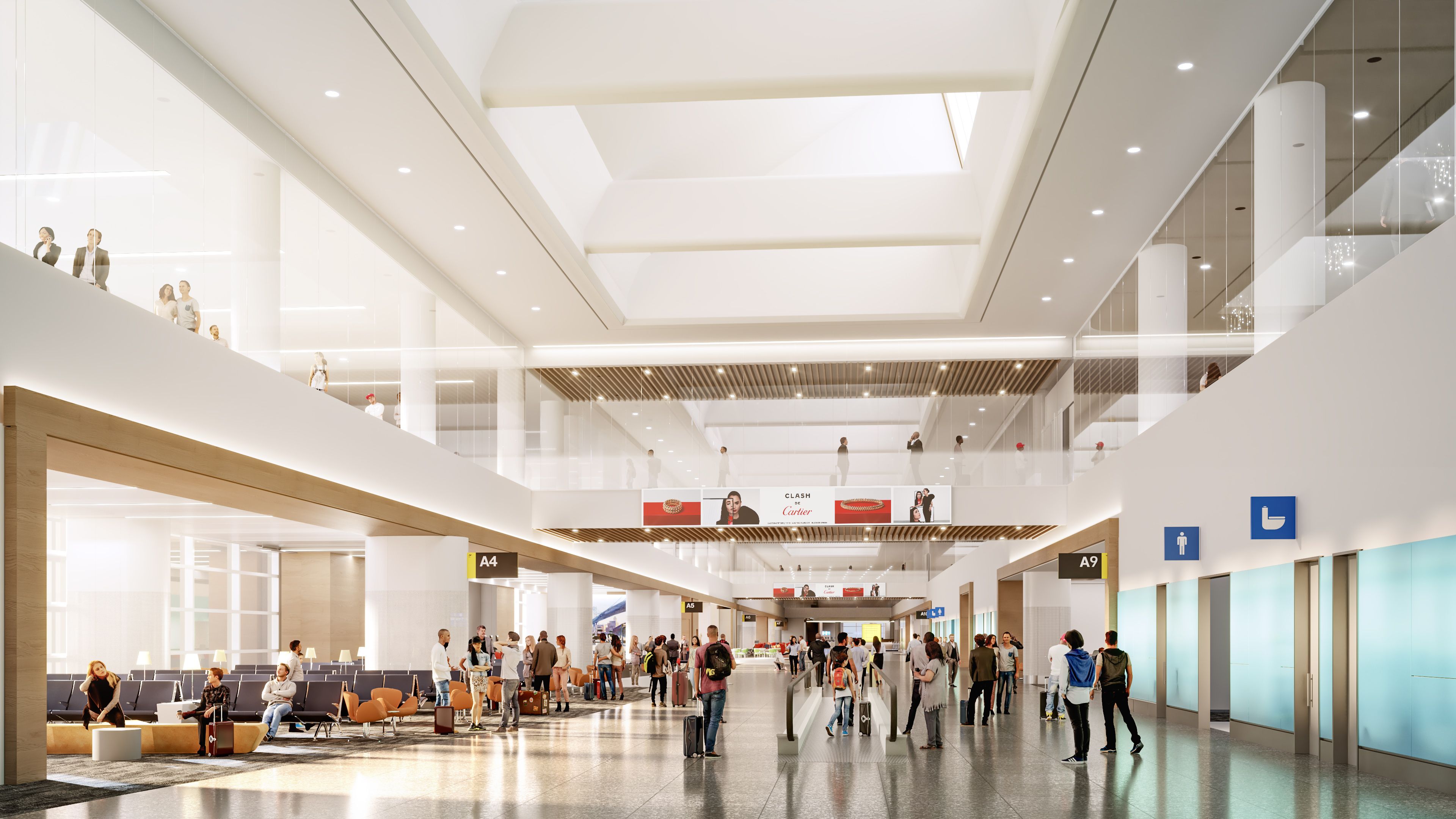
Terminal 1 at John F. Kennedy International Airport (JFK) functions as a major international gateway, handling a distinct portfolio of global carriers, specialized passenger services, and key transcontinental and intercontinental flight routes. Managed by Terminal One Group Association (TOGA)—a consortium consisting of specific foreign carriers operating out of the facility—Terminal 1 stands as a vital piece of aviation infrastructure within the broader New York metropolitan airport network. Understanding which airlines operate out of this terminal, along with its physical layout, amenities, and operational procedures, helps travelers navigate check-in, security screening, and boarding with minimal friction.
Introduction to JFK Terminal 1 and Operational Governance
John F. Kennedy International Airport is structured around multiple active passenger terminals, each maintaining its own distinct airline allocations, ground transportation access points, and passenger processing systems. Terminal 1 opened in May 1998 to accommodate the growing capacity demands of major international carriers and to replace an older facility on the same site. Unlike several other terminals at JFK that are directly managed by the Port Authority of New York and New Jersey or individual domestic trunk carriers, Terminal 1 is operated by a private consortium known as the Terminal One Group Association.
This consortium model involves key stakeholder airlines working collectively to maintain passenger services, coordinate gate management, and invest in terminal improvements. Over the years, Terminal 1 has become synonymous with high-volume long-haul international travel, serving as the New York hub for numerous flag carriers originating from Europe, Asia, the Middle East, and South America. Because the terminal operates at or near capacity during peak departure banks—typically in the late afternoon and evening hours—understanding its specific airline roster and operational nuances is essential for an efficient airport experience.
Complete Roster of Airlines Operating from Terminal 1
Terminal 1 hosts a diverse mix of international airlines, ranging from European legacy carriers to prominent Asian and Middle Eastern operators. Passengers must verify their specific terminal assignment prior to arrival, as code-share arrangements can sometimes cause confusion regarding which physical building handles check-in. The following table provides an overview of prominent airlines regularly assigned to JFK Terminal 1, along with their primary regions of origin and key operational characteristics.
| Airline Name | Country of Origin | Primary Hub / Focus City | Typical Route Types |
|---|---|---|---|
| Air France | France | Paris Charles de Gaulle (CDG) | Transatlantic, European Connections |
| Air China | China | Beijing Capital (PEK) | Transpacific, Asian Connections |
| Air Seoul | South Korea | Seoul Incheon (ICN) | Transpacific (Seasonal/Charter variations) |
| Austrian Airlines | Austria | Vienna International (VIE) | European Connections |
| Azerbaijan Airlines | Azerbaijan | Heydar Aliyev International (GYD) | Central Asian Connections |
| Brussels Airlines | Belgium | Brussels Airport (BRU) | European Connections |
| Cayman Airways | Cayman Islands | Owen Roberts International (GCM) | Caribbean Regional |
| China Eastern Airlines | China | Shanghai Pudong (PVG) | Transpacific, Asian Connections |
| EgyptAir | Egypt | Cairo International (CAI) | African and Middle Eastern Connections |
| EVA Air | Taiwan | Taoyuan International (TPE) | Transpacific, Asian Connections |
| Iberia | Spain | Adolfo Suárez Madrid–Barajas (MAD) | European Connections |
| ITA Airways | Italy | Rome Fiumicino (FCO) | European Connections |
| Japan Airlines (JAL) | Japan | Tokyo Haneda / Narita (HND/NRT) | Transpacific, Asian Connections |
| Korean Air | South Korea | Seoul Incheon (ICN) | Transpacific, Asian Connections |
| Lufthansa | Germany | Frankfurt (FRA) & Munich (MUC) | European Connections |
| Philippine Airlines | Philippines | Ninoy Aquino International (MNL) | Transpacific, Asian Connections |
| Royal Air Maroc | Morocco | Mohammed V International (CMN) | African Connections |
| Saudi Arabian Airlines | Saudi Arabia | King Abdulaziz / King Khalid (JED/RUH) | Middle Eastern Connections |
| Swiss International Air Lines | Switzerland | Zurich (ZRH) & Geneva (GVA) | European Connections |
| Turkish Airlines | Turkey | Istanbul Airport (IST) | Transcontinental, European/Asian Links |
Note: Airline operational bases, seasonal schedules, and terminal assignments at JFK are subject to periodic adjustments by the Port Authority of New York and New Jersey and airline management. Travelers should consult their specific carrier or the official JFK airport directory immediately prior to travel.
Terminal Layout and Passenger Processing Flow
Navigating JFK Terminal 1 requires an understanding of its multi-level structural design. The building is generally divided into three main operational tiers: the Arrivals/Baggage Claim level, the Check-in/Departures concourse, and the boarding gate level.
Ground Level: Arrivals and Ground Transportation
The ground floor is dedicated to passenger arrivals, customs clearance for international flights, baggage claim carousels, and ground transportation access. International arriving passengers clear U.S. Customs and Border Protection (CBP) facilities located on this level or an adjacent mezzanine, depending on current port configurations. Once clearing customs and exiting into the public arrivals lobby, travelers can access ground transportation options, including app-based ride-sharing pickup zones, authorized taxi stands, hotel shuttle buses, and scheduled van services.
Main Level: Check-in and Ticketing
The main departure hall houses the ticket counters and self-service kiosk stations for all operating airlines. Because Terminal 1 handles a high volume of wide-body aircraft (such as the Boeing 747, 777, 787, and Airbus A350, A380), check-in queues can become congested during peak departure banks. Passengers are generally advised to arrive at the airport at least three hours prior to international departures. Ticket counters typically open four hours before scheduled flight times.
Concourse Level: Security Screening and Boarding Gates
After completing check-in and dropping off checked luggage, passengers proceed to the centralized security checkpoints. Security operations are managed in coordination with the Transportation Security Administration (TSA), offering standard screening lanes as well as TSA PreCheck availability depending on daily staffing and scheduling.
Beyond security lies the departure concourse, featuring boarding gates numbered sequentially along the concourse arms. The airside environment includes duty-free retail shops, newsstands, currency exchange booths, sit-down restaurants, fast-casual dining options, and airline-operated or shared passenger lounges.
Passenger Amenities, Lounges, and Services
Terminal 1 provides a comprehensive suite of passenger services designed to support long-haul and international travelers. Premium cabin passengers, frequent flyer program elite members, and eligible credit card holders have access to several airline and alliance lounges within the terminal.
Airline Lounges
- Lufthansa Business and Senator Lounges: Offering dedicated spaces for eligible Lufthansa and Star Alliance passengers, featuring hot and cold food selections, premium beverages, quiet workspaces, and shower facilities.
- Air France Lounge: Providing French-inspired dining, dedicated VIP areas, and business services for Air France and SkyTeam premium travelers.
- Korean Air Lounge: Serving SkyTeam elite members and premium passengers with comfortable seating and refreshment services.
- Primeclass Lounge / Shared Lounges: Accessible via specific lounge network memberships (such as Priority Pass) or paid day-passes, offering baseline amenities including Wi-Fi, snacks, and beverages.
Accessibility and Special Assistance
Terminal 1 is fully compliant with the Americans with Disabilities Act (ADA), offering elevator access to all levels, ramps, accessible restroom facilities, and designated seating areas. Passengers requiring wheelchair assistance, unaccompained minor handling, or specific medical accommodations must coordinate directly with their operating airline at least 48 hours prior to departure to ensure proper ground-handling support is scheduled.
Ground Transportation and Inter-Terminal Connections
Reaching JFK Terminal 1 or transferring from other terminals requires navigating JFK’s complex surrounding roadway network and transit systems.
AirTrain JFK
The AirTrain JFK system is the most reliable method for transferring between terminals, parking lots, and rental car centers, as well as connecting to regional rail networks.
- Terminal Link: Traveling between terminals via the AirTrain is entirely free of charge. Passengers arriving at Terminal 8, Terminal 4, or Terminal 7 can board the AirTrain to reach Terminal 1 quickly.
- External Connections: The AirTrain connects JFK to the New York City subway system (via Jamaica Station and Howard Beach Station) and the Long Island Rail Road (LIRR), providing direct transit links to Manhattan, Brooklyn, and surrounding areas.
Driving and Parking
Vehicles accessing Terminal 1 for drop-off use the elevated roadway on the departures level. Pickups occur on the ground arrival level. Short-term and long-term parking is available via the airport's central garage facilities (specifically Garage 1 parking zones or designated economy lots with shuttle connections). Due to ongoing regional infrastructure projects around JFK, road traffic can experience significant delays; utilizing real-time navigation tools and allowing extra travel time is strongly recommended.
Frequently Asked Questions
Which airlines fly out of JFK Terminal 1?
Terminal 1 primarily serves a large roster of international legacy carriers, including Air France, Lufthansa, Korean Air, Japan Airlines, EVA Air, Turkish Airlines, and Swiss International Air Lines, among others. Domestic carriers do not typically operate from this facility.
How early should I arrive for a flight departing from Terminal 1?
For international flights departing from Terminal 1, airlines and airport authorities recommend arriving at least three hours before the scheduled departure time. This window accounts for peak check-in queues, passport verification, security screening, and boarding procedures for wide-body aircraft.
Is there a TSA PreCheck lane in JFK Terminal 1?
Yes, TSA PreCheck screening is available at Terminal 1, though operating hours can vary based on the daily flight schedule. Passengers should check their boarding pass for TSA PreCheck indicators and verify checkpoint availability upon arrival.
How do I transfer from Terminal 4 to Terminal 1?
The fastest way to transfer between Terminal 4 and Terminal 1 is by taking the complimentary AirTrain JFK system. The journey takes only a few minutes, and the system operates continuously 24 hours a day.
Are there luggage storage facilities inside Terminal 1?
Due to strict airport security regulations, short-term luggage storage (locker services) is generally unavailable inside the terminal building. Passengers must retain custody of their baggage at all times prior to check-in.
Conclusion and Next Actions
Navigating JFK Terminal 1 successfully depends on careful preparation, verifying your specific airline assignment, and accounting for the unique congestion patterns associated with high-volume international travel. Before heading to the airport, confirm your flight status directly with your airline, review baggage weight and dimension restrictions, and ensure all necessary passport and visa documents are organized. Utilize the AirTrain JFK system for smooth inter-terminal transfers and allow ample time for check-in and security processing to ensure a seamless journey.