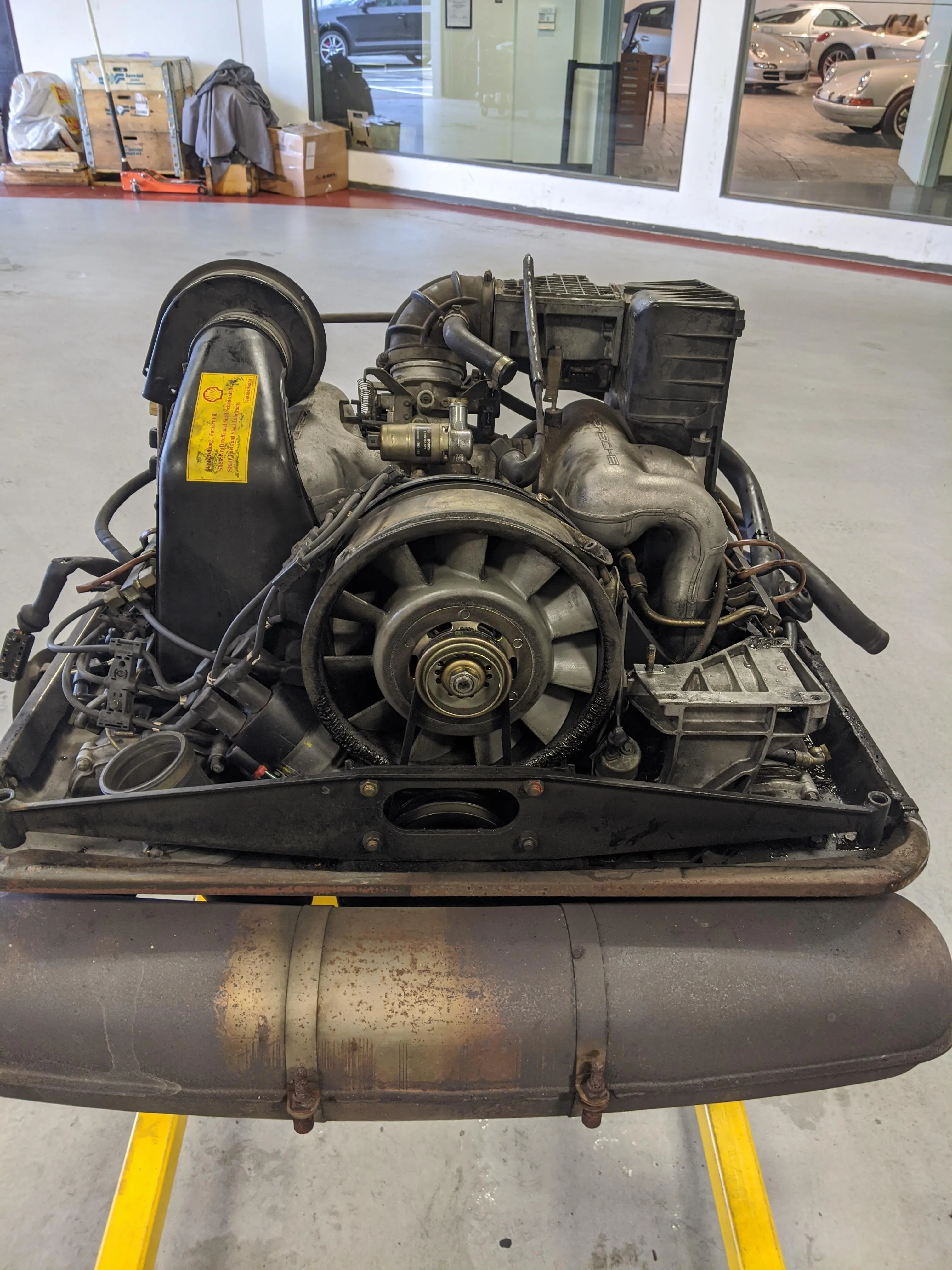
The Porsche 911 Carrera engine is defined by its rear-mounted, horizontally opposed "boxer" six-cylinder configuration, a layout it has maintained for over six decades. Current 2026 models utilize a sophisticated 3.0-liter twin-turbocharged unit or the groundbreaking 3.6-liter "T-Hybrid" system, combining traditional internal combustion with high-voltage electrification for immediate throttle response and reduced emissions.
For automotive enthusiasts and prospective owners in 2026, understanding the 911 Carrera engine requires looking at more than just horsepower figures. It is a study in thermal management, weight distribution, and the relentless refinement of the flat-six architecture. This overview examines the technical specifications, historical evolution, and the specific engineering choices that allow the Carrera to remain the benchmark for daily-drivable sports cars.
The Architectural Foundation: Why the Flat-Six?
The "Boxer" engine design is the heartbeat of every 911 Carrera. Unlike a V-type or inline engine, the pistons in a flat-six move toward and away from each other in a horizontal plane—much like boxers punching their gloves together before a match. This specific arrangement provides two primary advantages that define the 911's driving dynamics: a low center of gravity and inherent primary balance.
By laying the cylinders flat, Porsche engineers can mount the engine lower in the chassis. This reduces the vehicle’s polar moment of inertia, allowing for sharper turn-in and greater stability during high-speed cornering. Furthermore, the reciprocating forces of the opposing pistons cancel each other out, resulting in a naturally smooth power delivery that eliminates the need for heavy balance shafts found in other engine configurations.
In the 2026 Porsche 911 Carrera (the 992.2 generation), the engine remains positioned behind the rear axle. While this "rear-engine" layout presents challenges for weight distribution, Porsche has perfected it by using the engine's mass to provide incredible traction during acceleration and braking.
The Modern Powerplant: The 3.0-Liter Twin-Turbo (9A2evo)
As of 2026, the base 911 Carrera continues to utilize a highly refined version of the 3.0-liter twin-turbocharged flat-six, known internally as the 9A2evo. This engine was first introduced in the 991.2 generation to address tightening emissions standards and the demand for higher low-end torque.
Technical Specifications and Performance
The current 3.0-liter unit in the 992.2 Carrera has undergone significant updates. For the 2025 and 2026 model years, Porsche integrated the larger intercooler from the 911 Turbo models, placing it directly above the engine for improved thermal efficiency.
- Displacement: 2,981 cc
- Aspiration: Twin-turbocharged with variable turbine geometry (on higher trims)
- Power Output: Approximately 388–394 hp (Base Carrera)
- Torque: 332 lb-ft, available from as low as 2,000 RPM
- Injection: Direct Fuel Injection (DFI) with piezo injectors
The shift to turbocharging allowed Porsche to provide a "fatter" torque curve, making the Carrera feel significantly faster in real-world traffic compared to the naturally aspirated engines of the past. The turbos are positioned close to the exhaust manifolds to minimize lag, ensuring that the engine retains the "high-revving" character that owners expect from a Porsche.
The 2026 Breakthrough: The 3.6-Liter T-Hybrid System
The most significant development in the Carrera's engine history for the 2026 model year is the introduction of the T-Hybrid system in the Carrera GTS. This is not a traditional plug-in hybrid (PHEV) focused on electric-only range; rather, it is a "performance hybrid" designed to enhance the combustion process.
The Electric Turbocharger
At the heart of the T-Hybrid is an integrated electric motor situated between the compressor and the turbine wheel of the turbocharger. This motor instantaneously spins the turbo up to speed before exhaust gases take over, effectively eliminating turbo lag. Furthermore, the motor can act as a generator, recovering energy from the exhaust flow to charge the small 1.9 kWh 400V battery.
Permanent Magnet Synchronous Motor
The second component of the system is a permanent magnet synchronous motor integrated into the new reinforced eight-speed dual-clutch transmission (PDK). This motor provides up to 110 lb-ft of "torque fill" at low speeds, ensuring the engine never feels sluggish before the turbo reaches full boost. Because the electric motor handles the low-end grunt, Porsche was able to increase the displacement of the base engine to 3.6 liters without making the overall package significantly heavier.
Engineering Deep Dive: Cooling and Lubrication
A rear-mounted engine faces a unique challenge: airflow. Unlike front-engined cars that receive a direct blast of air through a grille, the 911 must "inhale" air through vents on the rear decklid.
Integrated Dry-Sump Lubrication
To handle the high G-forces of track driving, the Carrera engine utilizes an integrated dry-sump lubrication system. Instead of a simple oil pan where oil can slosh away from the pickup during hard cornering, Porsche uses a plastic oil oil sump with multiple suction stages. This ensures that every vital component—especially the crankshaft bearings and cylinder walls—remains lubricated even under 1.0G of lateral acceleration.
Thermal Management
In 2026, the cooling system is more complex than ever. It features an on-demand water pump and map-controlled cooling, which allows the engine to reach operating temperature faster (reducing cold-start emissions) and provides targeted cooling to the cylinder heads under heavy load. The intercoolers, relocated for the 992.2 generation, now benefit from larger air intakes, ensuring that intake air temperatures remain low even during repeated high-speed runs.
Comparison of Carrera Engine Generations
| Generation | Model Years | Engine Type | Displacement | Induction | Major Innovation |
|---|---|---|---|---|---|
| 993 | 1994–1998 | Flat-6 | 3.6L | Natural | Final Air-Cooled Engine |
| 996 | 1999–2004 | Flat-6 | 3.4L/3.6L | Natural | First Water-Cooled "Fried Egg" |
| 991.1 | 2012–2016 | Flat-6 | 3.4L/3.8L | Natural | DFI and 7-Speed Manual |
| 991.2 | 2017–2019 | Flat-6 | 3.0L | Twin-Turbo | Standard Turbocharging |
| 992.1 | 2020–2024 | Flat-6 | 3.0L | Twin-Turbo | Piezo Injectors & New PDK |
| 992.2 | 2025–Present | Flat-6 | 3.0L/3.6L | Turbo/Hybrid | T-Hybrid System (GTS) |
VarioCam Plus: The Secret to Versatility
One of the reasons the 911 Carrera engine can behave like a docile commuter car and a screaming race engine is VarioCam Plus. This system combines variable valve timing (VarioCam) with two-stage lift on the intake side.
At low speeds and light loads, the system uses a lower valve lift profile to improve fuel mixing and stability. When the driver floors the accelerator, the system switches to a high-lift profile, allowing more air into the cylinders to maximize power. For the 2026 models, the timing adjustment is faster and more precise than ever, enabling the engine to meet the stringent Euro 7 and EPA emissions standards while still producing nearly 400 horsepower in its base form.
Maintenance and Reliability Considerations
While Porsche engines are renowned for their longevity, the complexity of the modern turbocharged and hybridized units requires specific maintenance protocols.
- Oil Quality: The 2026 Carrera requires Porsche-approved C40 synthetic oils. Because of the turbochargers, using the correct oil is critical to prevent "coking"—the buildup of carbon deposits on the turbo shafts after high-heat cycles.
- Thermal Cycling: Modern 911s feature an "overrun" cooling function. After a spirited drive, it is often recommended to let the engine idle for a minute or drive gently for the last mile to allow the turbos to cool down, although modern electric water pumps often continue to circulate fluid after the engine is shut off.
- Spark Plug Intervals: Turbocharged engines are harder on spark plugs than naturally aspirated ones. Owners should adhere strictly to the 30,000-mile or 4-year replacement interval to prevent misfires under high boost.
- Hybrid Battery Health: For the T-Hybrid models, the 400V battery is designed to last the life of the vehicle, but maintaining a consistent charge through regular driving is recommended to ensure the lithium-ion cells remain healthy.
Frequently Asked Questions
Does the 2026 911 Carrera still sound like a Porsche?
While turbochargers and particulate filters (GPFs) have muffled some of the mechanical "clatter" of the old air-cooled engines, Porsche uses a symposer and tuned exhaust manifolds to maintain the characteristic flat-six howl. The 2026 models feature revised exhaust routing to enhance the acoustic experience, particularly in the mid-range.
Is the base Carrera naturally aspirated in 2026?
No. The last naturally aspirated Carrera was the 991.1 generation, which ended production in 2016. All 2026 Carrera models are either turbocharged or utilize the new T-Hybrid system. Naturally aspirated engines are now reserved for the GT3 and S/T special models.
How does the 2.9L engine compare to the 3.0L?
Some enthusiasts confuse the 911's 3.0-liter engine with the 2.9-liter V6 found in the Panamera or Macan. They are entirely different. The 911 uses a flat-six (horizontal) layout, while the 2.9-liter is a 90-degree V6. The flat-six is exclusive to the 911 and 718 model lines within the Porsche brand.
What is the life expectancy of a Porsche 911 engine?
With proper maintenance, modern water-cooled Porsche engines are capable of exceeding 150,000 to 200,000 miles. Key "failure points" of the early 2000s, such as the IMS bearing, were completely engineered out of the lineup starting with the 2009 997.2 generation.
Can the 2026 Carrera engine run on synthetic fuel?
Yes. Porsche is a leader in eFuels (synthetic fuels) and has tested the 992.2 engines extensively with carbon-neutral fuels. The 2026 Carrera engine management system is capable of adjusting timing and injection parameters to run efficiently on these sustainable alternatives as they become more available.
Final Recommendation for Owners
The 2026 Porsche 911 Carrera engine represents the pinnacle of internal combustion refinement. If you are looking for the purest expression of the flat-six, the 3.0-liter base Carrera offers a balanced, high-torque experience that is perfect for daily use. However, for those who crave the future of automotive performance, the 3.6-liter T-Hybrid in the GTS provides a level of responsiveness that was previously impossible without massive displacement. Regardless of the trim, ensure you follow the factory-recommended warm-up procedures and use only Porsche-spec fluids to preserve the precision engineering of this iconic powerplant.